Carnivorous Plant Seed Propagation Guide | Procedures from Sowing to Nursery Growing
This article explains how to grow carnivorous plants from seed. It introduces practical procedures for seed propagation, including how to obtain seeds, preparation for sowing, germination conditions by variety, nursery management, and timing for transplanting.
Key Takeaways
This article explains how to grow carnivorous plants from seed. It introduces practical procedures for seed propagation, including how to obtain seeds, preparation for sowing, germination conditions by variety, nursery management, and timing for transplanting.
Related Species
Growing carnivorous plants from seed is one of the greatest pleasures of cultivation. Watching the tiny seedlings that have just germinated develop magnificent trapping leaves over time offers a deep joy that is different from raising purchased seedlings. In this article, we explain the basics of carnivorous plant seed propagation and variety-specific tips.
How to Obtain Seeds
Carnivorous plant seeds can be obtained by either hand-pollinating and collecting seeds from your own plants, or by purchasing them.
Self-Collecting Seeds
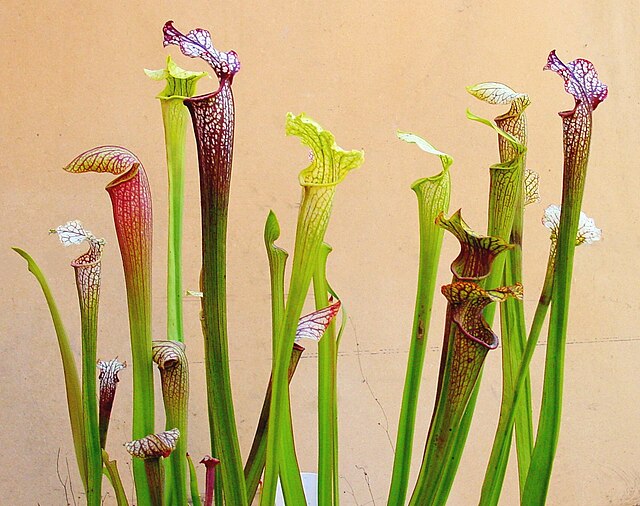
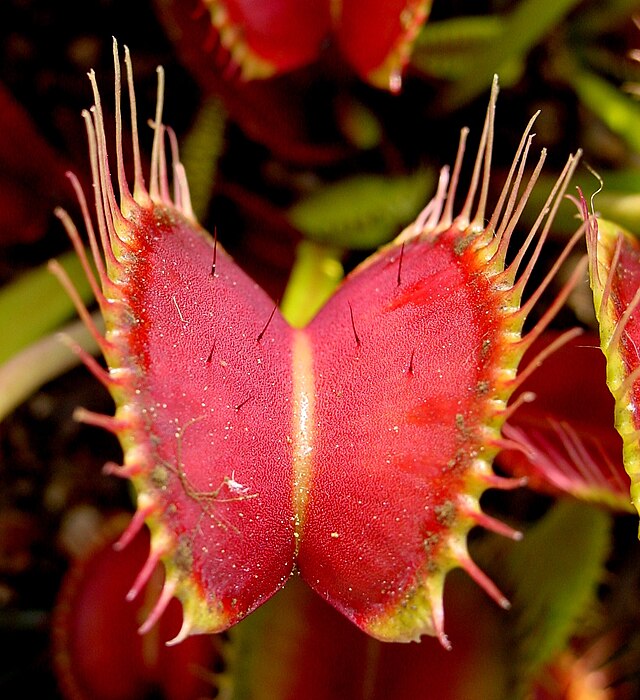
When collecting seeds from your own plants, hand-pollinate during flowering. Flower structure varies by variety, but basically involves applying pollen to the pistil. Venus flytraps and sundews can self-pollinate (pollinate using pollen from the same plant), but Sarracenia has self-incompatibility (a trait where pollen from the same plant rarely produces seeds), so pollen from a different individual is necessary.
Purchasing
Seeds can be purchased from specialty shops and growers. Freshness is crucial for carnivorous plant seeds, and germination rate declines the longer time passes after collection. In particular, seeds of some Drosera species and Nepenthes have short lifespans, so sow them as soon as possible after obtaining them.
Preparation for Sowing
Growing Medium
Because carnivorous plant seeds are extremely small, a growing medium with fine particles is appropriate. Use either pure peat moss (unamended, fine grade) or a mixture of peat moss and fine perlite in a 4:1 ratio. Moisten the growing medium thoroughly with water beforehand.
Container
Clear plastic containers (such as storage boxes or plastic cases) are convenient. Choosing one with a lid makes humidity management easier. Do not make drainage holes in the bottom; manage with bottom watering.
Sterilization
Since mold grows easily in growing medium, sterilize the medium by microwaving before sowing, or treat it with a fungicide (such as diluted Daconil) for added security.
Sowing Method by Variety
Venus Flytrap (Dionaea)
- Seeds are small black round grains. Optimal germination temperature is 20–25°C
- Scatter seeds on the surface of moist peat moss. Do not cover with soil (light-dependent seeds)
- Place the lid on to maintain high humidity and position in a bright location
- Germination takes 2–4 weeks. After germination, slightly open the lid to ensure ventilation
- Fresher seeds germinate more easily
Sundew (Drosera)
- Seeds are extremely small (smaller than sand grains). Handle with care
- Temperate species may require 4–6 weeks of cold treatment in a refrigerator before sowing (cold moist stratification)
- Tropical species do not require cold treatment. They can be sown directly
- The sowing method is similar to Venus flytrap. Scatter on the surface without covering with soil
- Germination takes 2–8 weeks. There is significant variation depending on the variety
Sarracenia
- Seeds are somewhat larger and easier to handle
- Germination requires 3–4 months of cold moist stratification. Mix seeds with moist peat moss, place in a zip-lock bag, and store in a refrigerator (4–5°C)
- After cold moist treatment, sow the seeds; they will germinate as temperatures warm
- Alternatively, you can sow outdoors in autumn and allow natural winter cold to provide stratification
- Germination takes 1–3 months after cold moist treatment
Nepenthes (Pitcher Plant)
- Seeds have a very short lifespan. It is ideal to sow within 1–2 weeks of collection
- Optimal germination temperature is 25–30°C. High temperature and high humidity are required
- Scatter on top of sphagnum moss without covering with soil
- Germination takes 4–8 weeks. Germination rate is largely dependent on seed freshness
Nursery Management
Light
Seedlings after germination need light, but direct sunlight is too strong. Manage them in bright shade or under fluorescent or LED lighting. 12–14 hours of light per day is ideal.
Humidity
Use the plastic container lid to maintain high humidity (80% or higher). However, if sealed too tightly, mold will develop, so open the lid once a day to ventilate.
Watering
Manage with bottom watering. Keep 1–2 cm of water constantly in the bottom of the container, ensuring the growing medium does not dry out. Tap water is fine, but rainwater or distilled water is preferable if available.
Mold Prevention
Mold is the greatest enemy during nursery management. Ensure ventilation as a preventive measure, and remove any mold immediately with tweezers if it appears. Spraying with diluted fungicide is also effective.
Fertilizer
Basically, do not fertilize carnivorous plant seedlings. As in nature, allow them to obtain nutrients from their trapping leaves. However, while seedlings are very small and the trapping mechanism is underdeveloped, applying very dilute liquid fertilizer by spray once a month may accelerate growth.
Timing for Transplanting
After germination, transplant seedlings to individual pots once they have reached a certain size.
- Venus Flytrap: When 3–4 leaves have developed and trapping leaves reach about 1 cm (3–6 months after germination)
- Sundew: When trapping leaves grow to about 5 mm (2–4 months after germination)
- Sarracenia: When tubular trapping leaves extend to 3–5 cm (6–12 months after germination)
- Nepenthes: When 3–4 leaves have developed (6–12 months after germination)
When transplanting, handle seedlings carefully with tweezers and take care not to damage the roots. The growing medium for transplanting can be the same as that used for mature plants.
The Charm of Seed Propagation
The charm of seed propagation lies in the individual variation. Even seedlings from the same parent will differ subtly in form and color, offering the pleasure of selecting especially beautiful individuals. Since Sarracenia hybrids can only be produced through seed propagation, seed propagation is an essential technique for enthusiasts who dream of creating original varieties.
Characteristics of Carnivorous Plant Seeds
Many carnivorous plant seeds have characteristics that differ from ordinary plants.
Venus Flytrap: Seeds are small and black; it is ideal to sow immediately after collection. Refrigerated storage maintains germination ability for about 6 months. Germination takes 2–6 weeks.
Sundew: Very fine seeds that are sown by scattering on the surface of peat moss. Soil covering is not necessary. The germination rate is relatively high, making it an easy group for beginners to attempt seed propagation.
Sarracenia: Seeds require stratification involving exposure to winter cold. Mixing seeds with moist sphagnum moss, storing in a refrigerator for 2–3 months, and then sowing increases the germination rate.
Key Points for Successful Germination
- Clean Growing Medium: Sterilizing peat moss in a microwave before use suppresses mold development
- High Humidity: Keep humidity at 90% or higher by covering with sealed containers or plastic wrap
- Appropriate Light: Many varieties require light for germination, so place seeds on the surface without covering with soil
- Patience: Depending on the variety, germination may take several months. Keep seeds moist and wait patiently
Finding Carnivorous Plant Seeds and Seedlings on GrowerDirect
On GrowerDirect, you can purchase fresh seeds and carefully-raised seedlings from specialist growers of carnivorous plants. You can also consult with growers about sowing tips and nursery management advice for each variety, so if you are interested in seed propagation, we encourage you to take advantage of this resource.