Source: Wikimedia Commons
Sarracenia Purpurea
BeginnerSarracenia purpurea
The most widespread North American Sarracenia with short tubular red-purple pitchers, very cold hardy.
Overview
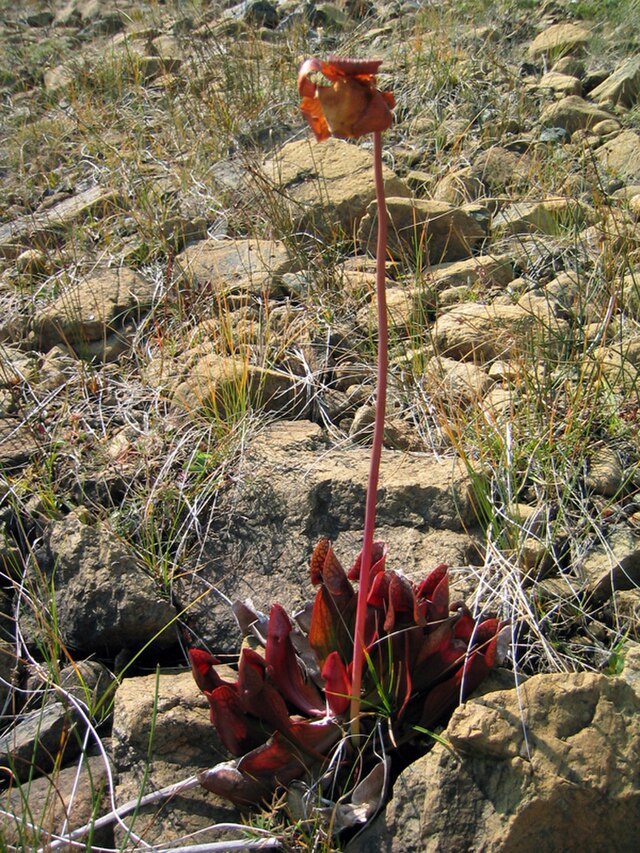
Sarracenia purpurea, the purple pitcher plant, is the most widely distributed Nepenthales carnivore in North America, ranging from the Gulf Coast to subarctic Canada and also naturalized in parts of Europe. Unlike most Sarracenia, its squat, pitcher-shaped leaves have an open, non-functional lid that allows rainwater to accumulate inside. The pitcher fluid is augmented by rainwater and supports a complex microbial ecosystem—including bacteria, protists, and inquiline invertebrates—that assists in prey digestion. Leaf coloration varies from green to deep red-purple. The species produces attractive reddish-purple flowers in spring. It is exceptionally cold-hardy, surviving outdoors in freezing climates. Cultivation requires acidic, nutrient-poor media (sphagnum or peat-perlite), tray watering with pure or rainwater, full sun, and mandatory winter dormancy.
Lifespan of the Sarracenia Purpurea
The Sarracenia Purpurea lives 10+ years.
Size of the Sarracenia Purpurea
The Sarracenia Purpurea grows to 15-30cm.
Temperature & humidity for the Sarracenia Purpurea
The Sarracenia Purpurea tolerates temperatures of -20〜35℃.
Basic Info
Origin
Eastern North America, from subarctic Canada south to the Gulf Coast, in peat bogs and acidic wetlands
Lifespan
10+ years
Size
15-30cm
Temperature
-20〜35℃
Humidity
60〜90%
Watering & Fertilizer
Insects (auto-capture)
Growing Tips
Light & Placement
Prefers a sunny position. Grown outdoors in full sun, the red-purple color deepens and the plant stays sturdy.
Watering
Tray-water to keep it moist with pure or rain water. Rainwater collecting in the open-hooded pitchers is natural and need not be emptied.
Soil & Repotting
Use pure sphagnum or peat moss with perlite. Do not fertilize; divide and repot when the rhizomes get crowded.
Temperature & Overwintering
Extremely cold hardy, overwintering outdoors even in cold regions. Winter dormancy matters; exposure to cold keeps it growing well.
Pruning & Shaping
A low, stout plant 15-30 cm tall. Cut dead pitchers at the base and divide the clump when it becomes crowded.
Sarracenia Purpurea FAQ
QWhat is the growing difficulty level for Sarracenia Purpurea?
Beginner. A variety suitable for beginners. No special equipment or experience is required—you can grow it without problems by setting up a basic cultivation environment.
QWhat temperatures can Sarracenia Purpurea tolerate?
Sarracenia Purpurea tolerates temperatures of -20〜35℃. This is the tolerated range, not the ideal growing temperature. Keep conditions well inside it and avoid sudden temperature changes.
QWhat is the lifespan of Sarracenia Purpurea?
The average lifespan of Sarracenia Purpurea is 10+ years. With proper cultivation environment and nutrient management, you can keep it healthy for a long time.
QHow large does Sarracenia Purpurea get?
The mature size of Sarracenia Purpurea is 15-30cm. This may vary slightly depending on cultivation environment and individual differences.
QHow should I water and fertilize Sarracenia Purpurea?
Sarracenia Purpurea: watering & fertilizer — Insects (auto-capture). Aim for appropriate frequency and amount.
QWhat is the typical price for Sarracenia Purpurea?
The price of Sarracenia Purpurea varies significantly by variety, characteristics, size, and lineage. Please check GrowerDirect's price guide for the latest market information.
Last updated: October 2, 2026
Growing Specifications
- USDA Zone
- 3–8
Sources: Missouri Botanical Garden - Sarracenia purpurea (Zone 3-8)
References & Sources
Edited & verified by: GrowerDirect Editorial Team
The classifications, regulations, and growing data on this page are created and verified based on the primary information database below.
Taxonomy & Authority
Accepted name: Sarracenia purpurea L.
Synonyms: Sarracenia purpurea var. typica Macfarl.
Authority databases: GBIF · POWO · ICPS cultivar registration (International Carnivorous Plant Society)
Nomenclature follows global taxonomic authority databases.
Regulations & Conservation Status
The genus Sarracenia is CITES Appendix II at the genus level (only S. oreophila and S. rubra subspecies jonesii/alabamensis are Appendix I). The species S. rubra itself is Appendix II.
Sources: CITES Appendices (carnivorous plants) - ICPS/Barry Rice / CITES & Carnivorous Plant Checklist (RBG Kew)
Regulations may change. Always verify the latest information with the relevant authorities.
Related Species
Find listings for this species
Related Articles
Complete Sarracenia Growing Guide | Variety Selection, Outdoor Cultivation, and Winter Dormancy
A complete guide to cultivating Sarracenia, a carnivorous plant native to North America. Learn the characteristics of major species and varieties, the advantages and environmental needs for outdoor cultivation in sunny locations, selection of soil and containers, watering and standing-water management techniques, winter dormancy care, and practical tips for growing healthy, thriving plants in Japan's climate.
Sarracenia Outdoor Cultivation Guide | Cold Hardiness and Year-Round Management
This outdoor Sarracenia cultivation guide covers cold hardiness by variety, with Sarracenia purpurea tolerating temperatures down to -20°C and Sarracenia flava around -15°C, then walks through year-round care across spring, summer, autumn, and winter, a 1:1 peat moss and perlite soil mix, and watering with the tray method at a depth of 2–3 cm.
Sarracenia Trap Function and Diverse Morphology
A detailed explanation of the unique trap mechanisms of Sarracenia carnivorous plants and the varied morphology that differs by species.
How to Grow Sarracenia (Pitcher Plant) | Humidity Management and Keeping Tubular Pitcher Leaves
How to cultivate healthy tubular pitcher leaves in Sarracenia. Detailed explanation of recreating the native habitat, optimal conditions for light, humidity, and soil, seasonal management (necessity of dormancy period), and pest management. A professional cultivation guide for experienced growers.
Can't find the plant you're looking for?
Post your wishes for free and growers with matching plants will contact you with introductions.