Sarracenia Outdoor Cultivation Guide | Cold Hardiness and Year-Round Management
This guide explains the benefits of outdoor Sarracenia cultivation, cold hardiness, annual management schedules, and care for soil, watering, and light.
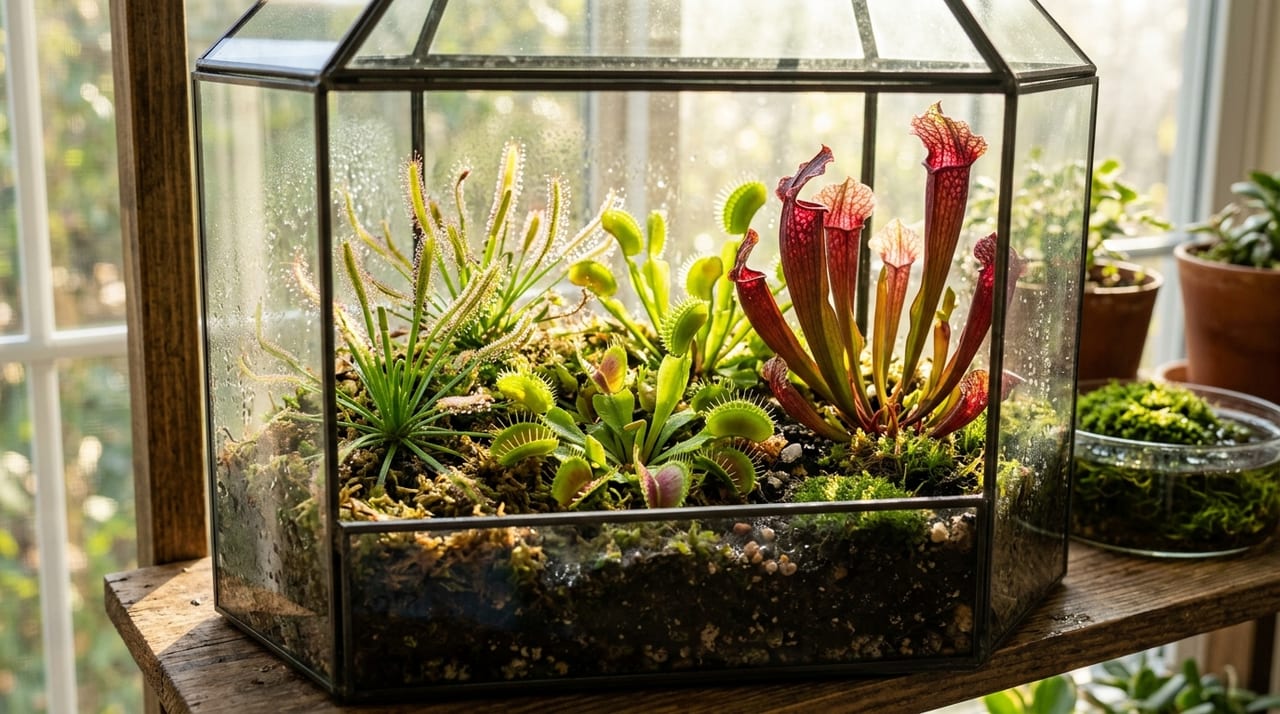
Key Takeaways
This guide explains the benefits of outdoor Sarracenia cultivation, cold hardiness, annual management schedules, and care for soil, watering, and light.
Related Species
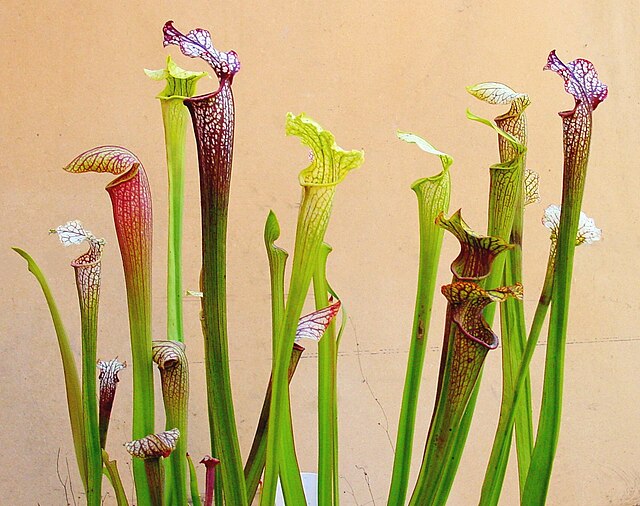
Sarracenia is a carnivorous plant native to North America that captures insects using tube-shaped leaves (pitchers). Among carnivorous plants, it has high cold hardiness and outdoor cultivation is possible in many regions of Japan. By growing it outdoors, you can enjoy its naturally vigorous form and vivid colors.
Benefits of Outdoor Sarracenia Cultivation
Colors Become More Vibrant With sufficient direct sunlight, red and purple coloration improves dramatically. Vivid colors that cannot be achieved with indoor cultivation are a distinctive appeal of outdoor growing.
Pitchers Grow Larger In environments with sufficient light, the pitchers grow thick and long. Some varieties reach heights of 80 cm or more, offering an impressive appearance.
Natural Insect Capture Outdoors, insects are captured naturally without the need for artificial feeding. You can observe the plant efficiently catching bees, flies, and other insects.
Natural Winter Dormancy Sarracenia requires winter dormancy. With outdoor management, natural temperature fluctuations ensure proper cycles of dormancy and growth.
Cold Hardiness
Sarracenia has very high cold hardiness among carnivorous plants, and snow falls in winter in its native habitat.
Cold Hardiness by Species
- S. flava (yellow pitchers): Tolerates down to around -15°C. One of the hardiest species
- S. leucophylla (white pitchers): Tolerates down to around -10°C
- S. purpurea: Has the strongest cold hardiness, tolerating -20°C and below
- S. minor: Tolerates down to around -10°C
- Hybrids: Often inherit the cold hardiness of their parents
Important Notes In potted cultivation, roots are exposed directly to outside air, making freezing more likely than in ground planting. Effective protections include burying the pot in the ground or surrounding it with styrofoam.
Annual Management Schedule
Spring (March–May): Growth Initiation
- Remove dead pitchers from winter
- New pitchers begin to emerge
- Resume water tray management in earnest
- Flowering period (choose whether to enjoy the flowers or remove them to conserve plant energy)
Summer (June–August): Peak Season
- Pitchers reach their largest growth
- Maintain water tray level carefully
- Provide plenty of direct sunlight
- Insect capture is most active
Autumn (September–November): Fall Colors and Dormancy Preparation
- Pitchers develop their most beautiful red and purple colors
- Pitchers produced in autumn have especially deep colors
- Pitchers begin to die back around November
Winter (December–February): Dormancy
- Aboveground parts die back and the plant enters dormancy
- Maintain water tray but keep water level low
- Protect pots in regions where freezing occurs
- Snow accumulation is not a problem (it provides insulation)
Soil and Planting
Soil Mix The basic formula is equal parts unadjusted peat moss and perlite mixed 1:1. Since the plant prefers acidic soil, do not add lime or dolomite. Sphagnum moss alone can also be used, but it degrades quickly and needs replacement every 1–2 years.
Pot Selection Deep plastic pots are recommended. Terracotta pots dry too quickly and are not ideal for water tray management. Use pots size 6 or larger for mature plants.
Watering and Water Tray Management
Sarracenia prefers constantly moist conditions. Water tray management is the foundation.
Water Tray Method Fill a saucer with 2–3 cm of water and keep the pot base constantly submerged. In summer, water evaporates quickly, so check the water level daily.
Water Quality Although Sarracenia has relatively good salt tolerance among carnivorous plants, long-term use of tap water with high TDS can lead to decline, so rainwater or distilled water is preferred. In regions with high TDS, combining rainwater is ideal. Never use fertilized water.
Light
Sarracenia requires direct sunlight. At least 6 hours of direct sunlight daily is ideal, and more light produces more vivid pitcher colors. While it can grow in partial shade, the pitchers tend to be thin and green.
Pest and Disease Management
Outdoor cultivation rarely has pest problems (in fact, the plant preys on pests). Aphids may occasionally appear on new growth, but remove them by rinsing with water or by hand. Insecticide use affects the bacteria inside the pitchers, so minimize its use.
Year-Round Management of Outdoor Sarracenia Cultivation
| Month | Management Tips |
|---|---|
| January–February | Dormancy. Cool conditions without freezing. Remove dead pitchers at the base |
| March | Ideal time to repot. Replace soil before new growth starts |
| April–May | New pitchers unfold. Provide plenty of water tray management and light. Fertilizing is unnecessary |
| June–August | Peak growing season. Watch for drying out. Shading is unnecessary (direct sunlight OK) |
| September–October | Slower growth. Preparation for winter. Gradually reduce water amount |
| November–December | Dormancy begins. Can overwinter outdoors (most varieties tolerate around -10°C) |
Key Points to Note for Outdoor Cultivation
Water Quality: Sarracenia prefers acidic soft water. Rainwater is more ideal than tap water. If using tap water, let it sit to allow chlorine to dissipate before using.
Soil: Acidic soil made from equal parts peat moss and Kanuma soil (or perlite) mixed 1:1 is appropriate. Calcareous soil is strictly forbidden.
Pest Control: Aphids and spider mites may occur outdoors. When using pesticides on carnivorous plants, avoid systemic types and use contact-type products instead.
Common Mistakes and Solutions
Mistake 1: Bringing Indoors in Winter Sarracenia requires dormancy, and overwintering in a warm indoors weakens the plant's structure the following year. Exposing it to cold outdoors is the correct management.
Mistake 2: Running Out of Water Tray In outdoor summer, water level drops in a day. If the water tray dries out, roots dry and pitchers won't develop that year. Use deeper trays and make morning checks a habit.
Mistake 3: Cutting All Dead Pitchers Even brown pitchers continue photosynthesis if the base is still green. The plant-friendly approach is to wait until they are completely dead, then remove them all together during spring division and repotting.
Biotope-Style Outdoor Cultivation
Creating a mini wetland in a garden or on a balcony and cultivating Sarracenia in a biotope style is also popular.
- Line shallow planters or trays with peat moss
- Plant Sarracenia and arrange sundew and bladderwort around it
- Fill with water to recreate a wetland environment
- Beautiful appearance and enjoy multiple species at once
Find Sarracenia on GrowerDirect
GrowerDirect connects you directly with specialized growers of hardy Sarracenia varieties suited for outdoor cultivation. Since you can consult on varieties that match your region's climate, you can cultivate confidently even for first-time outdoor growers.