Complete Guide to Pitcher Plant Management (Nepenthes and Sarracenia)
Explains how to grow two types of pitcher plants (Nepenthes and Sarracenia). Introduces in detail and practically the differences between Nepenthes highland and lowland species, outdoor management of Sarracenia, water management inside pitchers, and the necessity of dormancy.
Key Takeaways
Explains how to grow two types of pitcher plants (Nepenthes and Sarracenia). Introduces in detail and practically the differences between Nepenthes highland and lowland species, outdoor management of Sarracenia, water management inside pitchers, and the necessity of dormancy.
Related Species
What Are Pitcher Plants
"Pitcher plants" are a collective term for carnivorous plants with tubular or urn-shaped insect traps (pitchers). Two groups are particularly well known: Nepenthes (Utsubokazura) and Sarracenia, and each has significantly different growing environments and management methods.
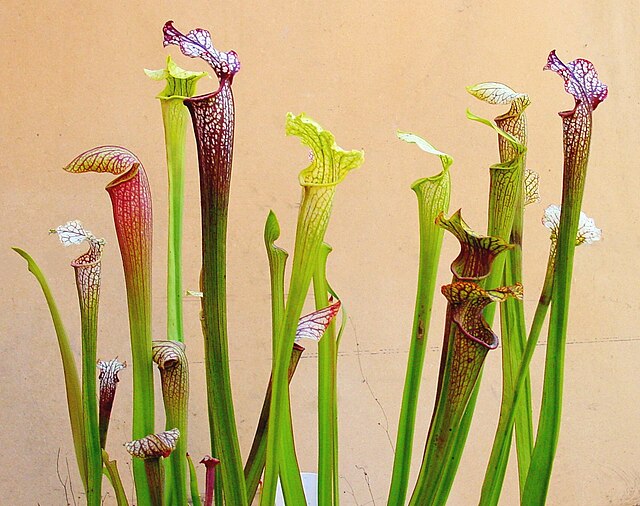
Nepenthes is a tropical epiphytic plant distributed from Southeast Asia to Australia and Madagascar, characterized by unique pitchers that develop hanging from the tips of vine-like stems. Sarracenia, on the other hand, is a temperate plant native to wetlands in the eastern United States, where its cylindrical pitchers standing upright from the ground are arranged in orderly rows—a spectacular sight. Although both employ the common strategy of luring insects and small animals into their pitchers and absorbing nutrients by breaking them down with digestive fluid, their required environments differ greatly. This article explains in detail the specific management methods suited to each plant's characteristics.
Nepenthes (Utsubokazura) Management
Nepenthes is broadly divided into "highland species (montane)" and "lowland species (tropical)," and even within the same genus, the environmental requirements differ completely. Be sure to confirm the species classification before purchase.
| Item | Highland Species | Lowland Species |
|---|---|---|
| Temperature | Large temperature differential of 25–30°C during the day, 10–18°C at night | Stable high temperature of 25–35°C (day-night temperature differential not necessary) |
| Light | Bright indirect light to weak direct sun | Moderately strong indirect light to weak direct sun |
| Humidity | 70–90% | 70–85% |
Highland Species Management (N. rajah, villosa, lowii, etc.)
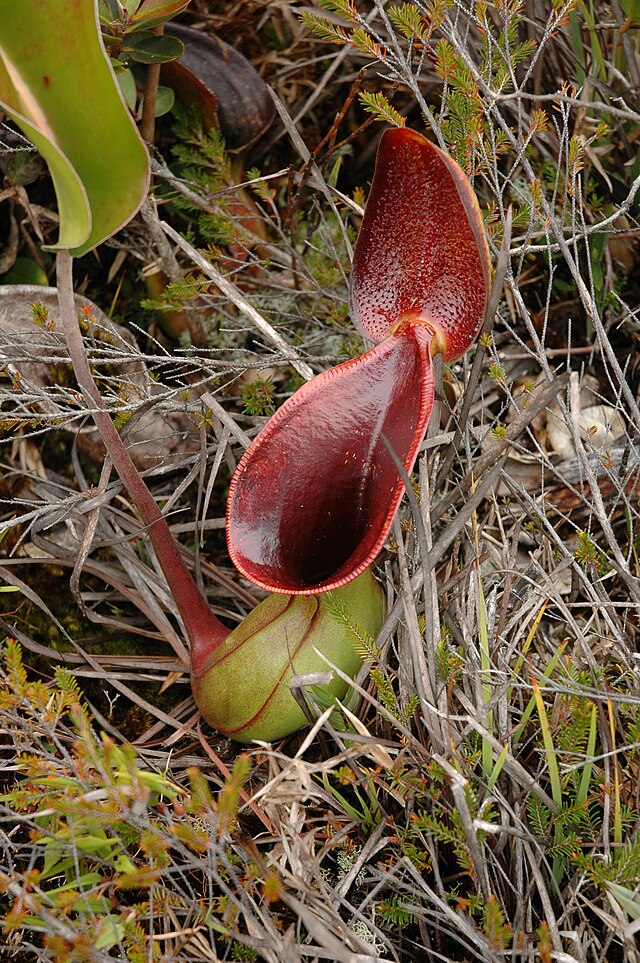
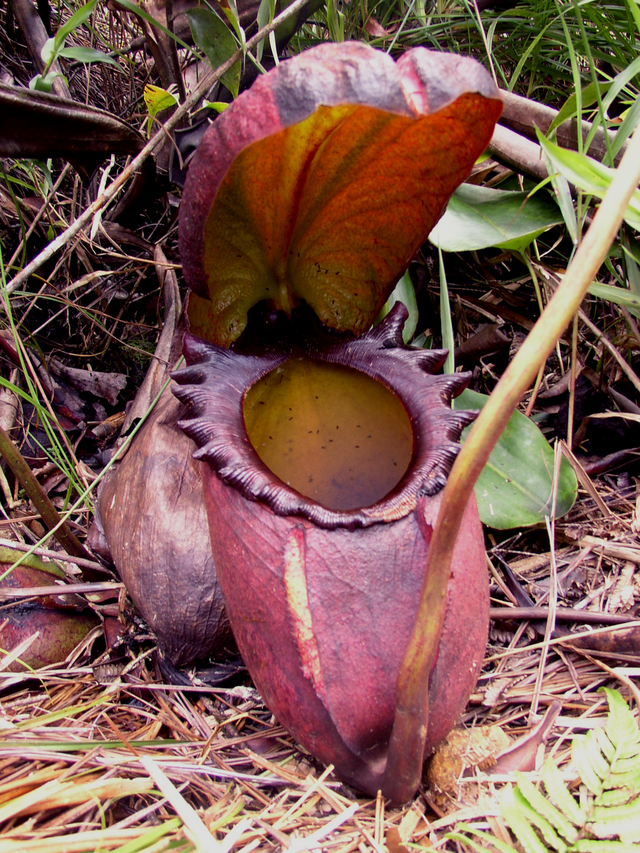
Highland species are native to high mountains at elevations above 1,500 m, making the day-night temperature differential the critical management factor. A large temperature difference of 25–30°C during the day and 10–18°C at night promotes pitcher formation and vibrant color development. Japan's summers become too warm both day and night, so cooling measures are essential. Nepenthes rajah, which produces some of the world's largest pitchers, and Nepenthes lowii, characterized by elongated pitchers, are exemplars of highland species; both require reproducing a cool, high-altitude environment for successful cultivation. You can manage this with air-conditioned indoor growing, specialized terrariums equipped with Peltier-based cooling devices, or by moving plants to a cooler box only at night—with some ingenuity, these approaches work.
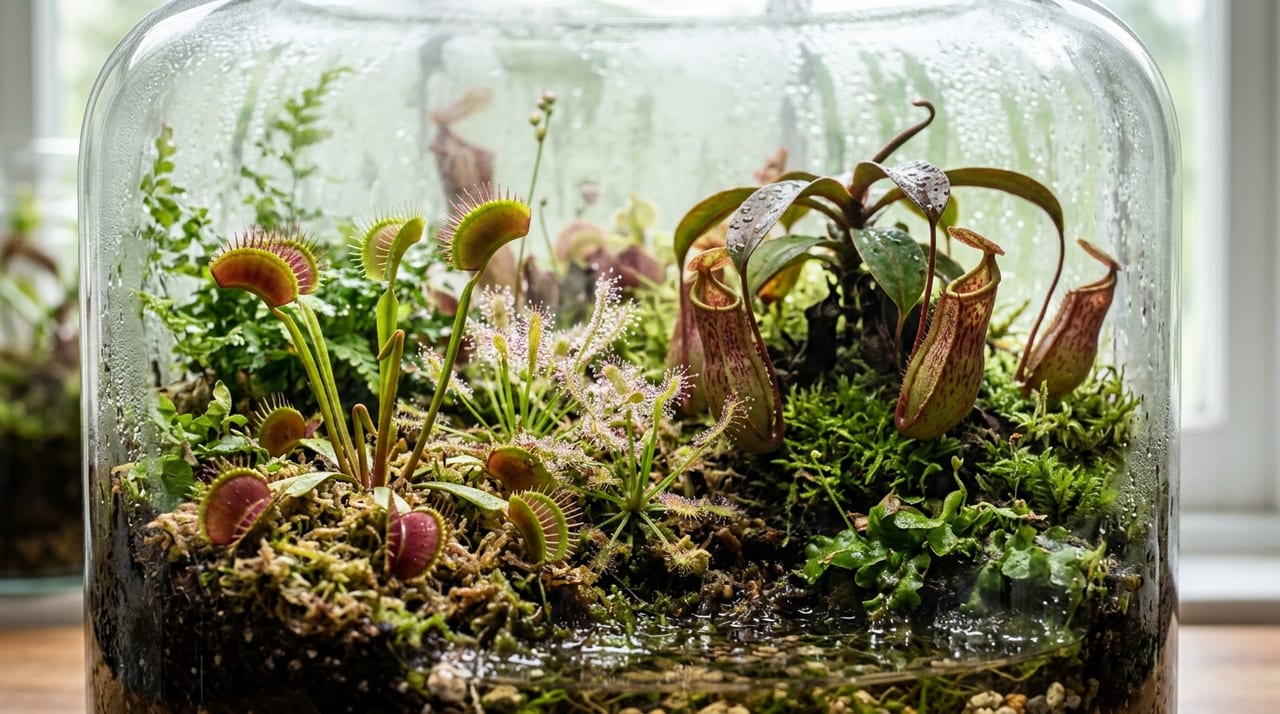
Bright indirect to weak direct sunlight is appropriate for light. Strong light causes leaf scorch, so using sheer curtains or shade cloth (30–50% shade rate) is ideal. Maintain humidity at 70–90%. Management in a dedicated greenhouse or sealed terrarium is most stable, and setting up an environment enclosed in glass or clear acrylic makes long-term maintenance much easier.
Lowland Species Management (N. alata, ampullaria, mirabilis, etc.)
Lowland species are native to warm, humid, low-altitude environments, so they prefer stable high temperatures of 25–35°C. Day-night temperature differentials are unnecessary and stable warmth is actually preferable. Japan's summers are relatively easy to grow in, and balcony or greenhouse management works well. In winter, you must maintain a minimum of 15°C, making indoor management essential.
Light should be moderately strong indirect to weak direct sunlight, with humidity around 70–85%. Because conditions need not be as strict as for highland species, we recommend beginners start with lowland species.
Common Nepenthes Management Points
Potting mix should be a mixture of red volcanic soil, sphagnum moss, and perlite. Standard potting soils with high organic matter cause root rot and should never be used.
Watering is typically done with "water trays" (keeping water in a tray beneath the pot), but constant submersion risks root rot. It is safer to water thoroughly after the surface soil has dried slightly. Use distilled water (purified or rainwater); prolonged use of mineral-rich tap water causes salt accumulation in the soil.
Water management inside the pitcher is also important. When a new pitcher unfolds, add a small amount of distilled or rainwater (about one-third of the pitcher). This prevents dilution of the digestive fluid and maintains proper digestive conditions.
Sarracenia Management
Sarracenia is a hardy carnivorous plant native to wetlands in the eastern United States and is primarily managed outdoors. As long as adequate sunlight is provided, it is far easier to manage than Nepenthes.
Light and placement: Sarracenia loves direct sunlight; at least 6 hours of daily sun is ideal. The stronger the light, the better the color and the more robust the pitcher growth. Outdoor management is best; place it in a sunny spot on a balcony or garden. Shading is basically unnecessary.
Water tray management: Keep the pot constantly in standing water (water tray cultivation). Water depth should be about 5–10 cm. Use distilled, rainwater, or soft water. If using tap water, let it sit overnight to remove chlorine before using. In summer, water evaporates quickly, so check water levels daily.
Winter dormancy management: Winter dormancy is essential for Sarracenia. As temperatures drop in autumn, leaves begin to die off naturally and the plant enters dormancy. In Japan's outdoor climate, dormancy occurs naturally, but in areas where the minimum temperature drops below −5°C, light frost protection is needed. Maintain a low-temperature environment of 0–10°C and manage with slightly dry conditions until spring, being careful not to let soil freeze solid. This low-temperature period during dormancy triggers vigorous spring growth and beautiful coloration the following year.
Summer heat management: On days when temperatures exceed 35°C, water tray temperature can rise and damage roots. Use a larger water tray to mitigate temperature rises, or place the container itself in shade.
Common Troubles and Solutions
- Pitchers don't form or wither: The main causes are insufficient light, low humidity, or temperature management failure. In particular, with Nepenthes, pitcher formation stops if humidity is too low. Consider transitioning to a terrarium environment.
- Root rot: Caused by potting mix high in organic matter, excessive water trays, or poor aeration. Remove rotted roots during repotting and repot in clean media.
- Pests (scale insects, spider mites): Often occur during sealed-environment management. Remove immediately using a damp cotton swab or diluted ethanol. Insecticides can harm carnivorous plants, so if using them, start with plant-safe products in small amounts.
- Damage from prolonged tap water use: Appears as leaf-tip dieback or stunted growth. Switch to distilled or rainwater, and regularly perform "water flushing" by pouring water from above to wash out salt accumulation in the soil.
Tips on Collection and Acquisition
Nepenthes are relatively easy to obtain at domestic specialty shops, succulent plant fairs, and carnivorous plant exhibitions and sales. Rare highland species are typically purchased from online specialty shops (domestic, Thai, or European sources). Since some species are regulated under the Washington Convention (CITES), it is important to choose certified plants from authorized sources when purchasing.
Sarracenia is relatively affordable and can even be found in home center carnivorous plant sections. It is highly collectible, and when multiple plants are displayed together, they form a spectacular forest of pitchers from spring through summer. For long-term enjoyment of pitcher plants, we recommend starting with the more manageable Sarracenia, progressing to lowland Nepenthes as you gain experience, and then advancing to highland species as a challenge.
For those who want to explore each group further, also see Complete Guide to Growing Nepenthes (Utsubokazura) | Management of Highland and Lowland Species and Complete Sarracenia Cultivation Guide | Species Selection, Outdoor Growing, and Overwintering. Choosing seed-grown or imported stock from growers with well-established growing conditions is also a shortcut to successful long-term cultivation.