Pitcher Plant Traps of Sarracenia: Mechanisms and Diverse Forms
This article provides a detailed explanation of the unique trap mechanisms found in Sarracenia carnivorous plants and their diverse forms across different species.
Key Takeaways
This article provides a detailed explanation of the unique trap mechanisms found in Sarracenia carnivorous plants and their diverse forms across different species.
Related Species
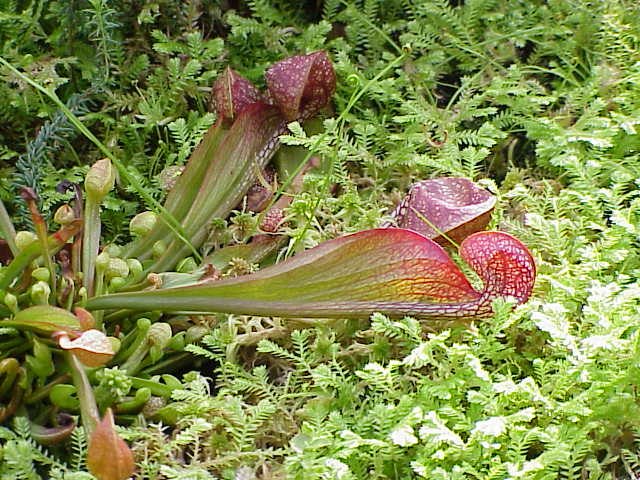
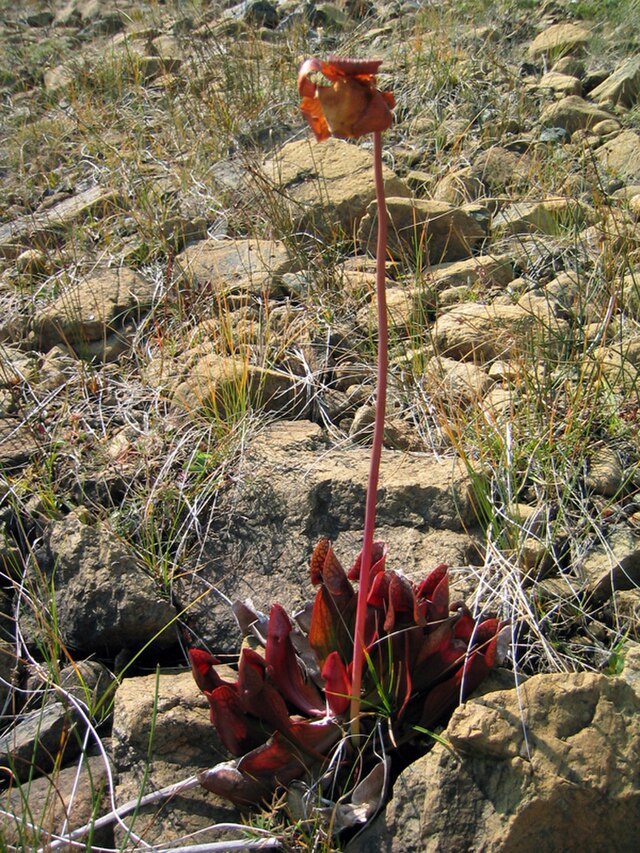
The Fascinating Mechanisms of Sarracenia Pitcher Traps
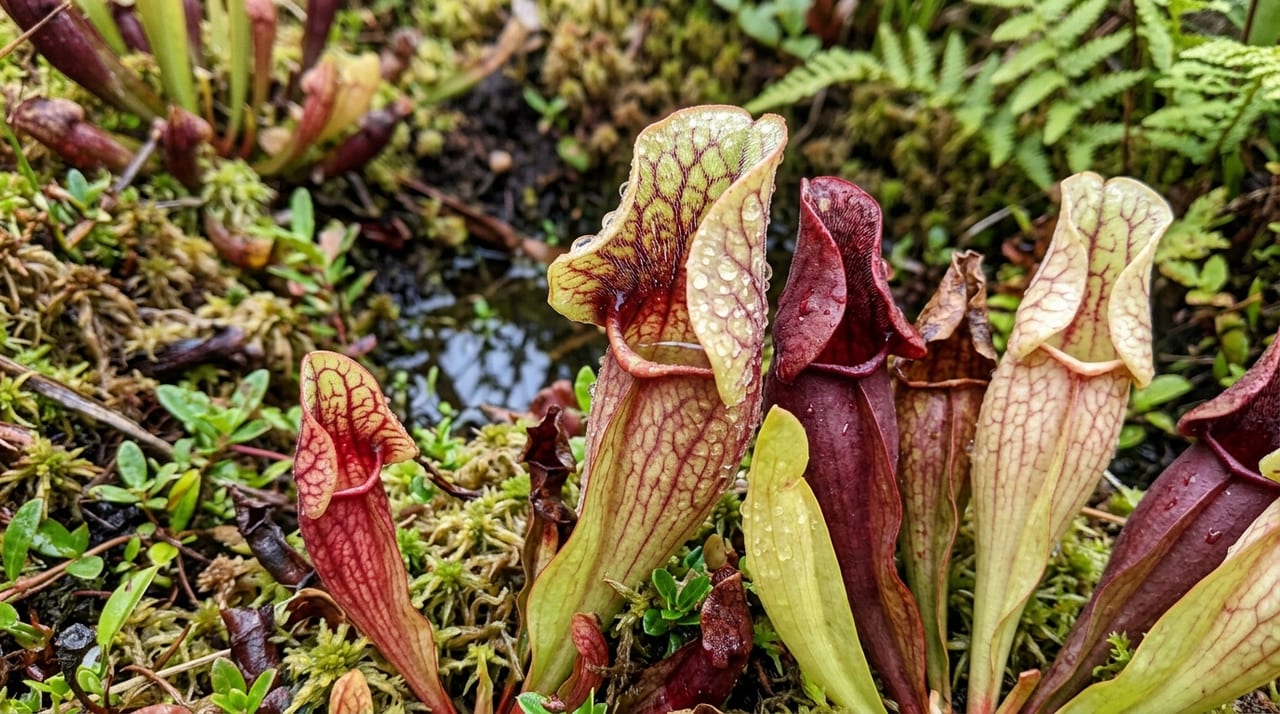
Sarracenia is a carnivorous plant genus native to North America, and the pitcher traps formed by its distinctive tubular leaves are known as particularly refined insect-capturing systems in the plant kingdom. These plants have undergone remarkable evolutionary adaptations to capture insects as a nutritional source in order to survive in nutrient-poor wetlands. In Japan too, the number of enthusiasts is growing, and their beautiful forms and fascinating ecology captivate many horticulturists.
Sarracenia's pitcher traps function as simple pitfall traps. The interior of the tubular leaves is densely covered with downward-pointing hairs, making it difficult for insects that enter to escape. Additionally, the inner walls of the leaves are covered with slippery wax, preventing insects from crawling upward. Digestive fluid accumulates at the bottom of the pitcher, where fallen insects are broken down and absorbed by the plant.
Diversity of Forms Across Species
Characteristics of Representative Species
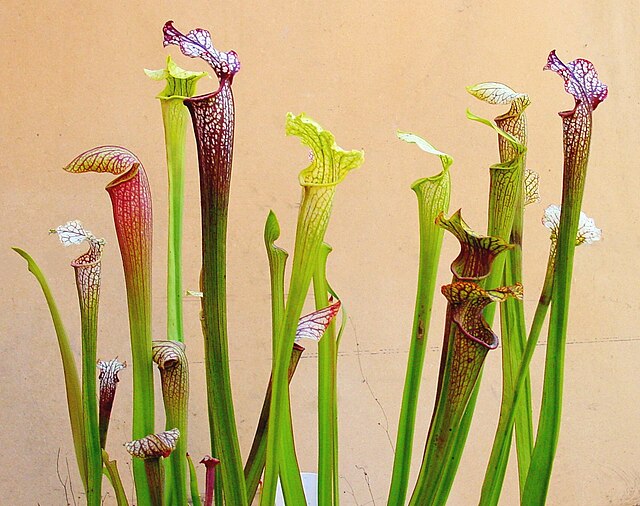
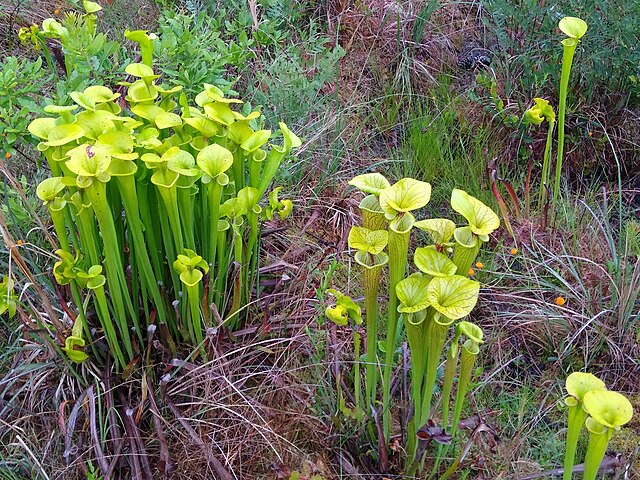
Currently, 8 species of Sarracenia are known, each possessing unique morphological characteristics. The most common Sarracenia purpurea has short pitchers that lie close to the ground, with a structure that easily collects rainwater. In contrast, Sarracenia flava has erect yellow-green pitchers that can reach heights approaching 1 meter.
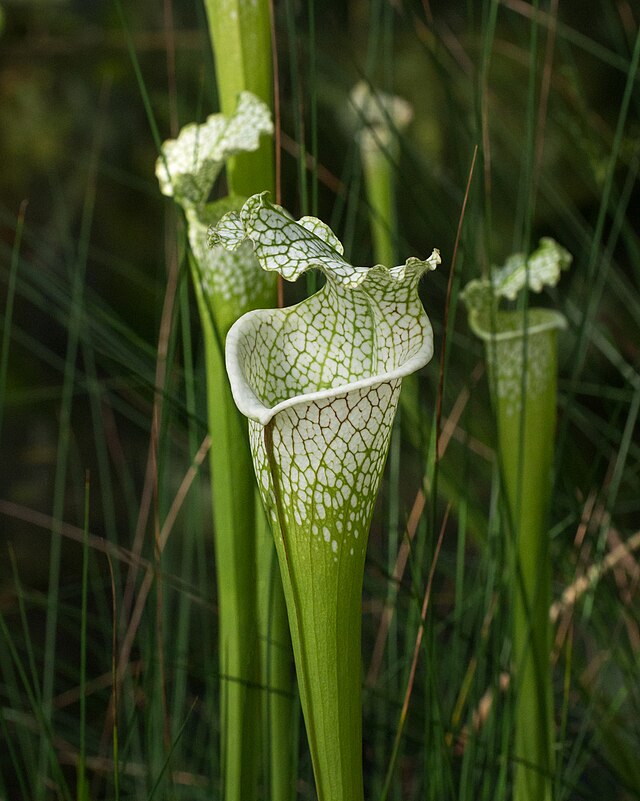
Sarracenia leucophylla is popular as a species with beautiful white markings and particularly high ornamental value. The pitchers of this species have a large opening at the top, and some individuals display red veining in a reticulated pattern. Sarracenia minor is small, with a characteristic hood at the top of the pitcher that prevents rainwater from entering.
The Special Form of Sarracenia psittacina
Particularly interesting is a species called Sarracenia psittacina. This species has a form that differs greatly from other Sarracenias, with pitchers that extend horizontally in a unique structure. The pitcher traps of psittacina have a special structure called a "lobster trap" that can capture aquatic insects and even small fish. The entrance to the pitcher is narrow, and the interior has a maze-like structure where prey that enters cannot find the exit.
This species is adapted to semi-aquatic environments and possesses the remarkable ability to survive even when completely submerged during floods. There are transparent window-like sections that serve to lure prey. Cultivation in Japan requires higher humidity and more stable water management than other species.
Key Points in Managing Form During Cultivation
Form Changes Due to Environmental Conditions
Sarracenia's form changes greatly depending on the cultivation environment. Plants receiving sufficient sunlight form more vivid coloration and sturdy pitchers. With insufficient light, the pitchers become slender and the color fades. During the growing season from spring through summer, at least 6 hours of direct sunlight per day is ideal.
Temperature management also affects form. By providing a winter dormancy period, healthy new growth forms in spring. In Japan's climate, it is appropriate to maintain dormancy below 5°C in winter and manage plants in the 20-30°C range from spring through autumn.
The Importance of Watering and Growing Medium
Proper water management is essential for maintaining healthy form in Sarracenia. Cultivation with water in a saucer is the standard, with water level maintained at approximately one-third the height of the pot. Always use soft water (rainwater, distilled water, or reverse osmosis water); avoid using tap water directly. Accumulation of minerals contained in tap water damages roots and prevents normal form maintenance.
Growing medium should be either sphagnum moss alone or a 1:1 mixture of peat moss and river sand. Fertilizer is basically unnecessary and can actually damage roots. If the pitcher traps are functioning normally, the plant can obtain sufficient nutrients from captured insects.
Practical Advice for Successful Cultivation in Japan
Seasonal Management
Spring (March-May) is an important period when new growth emerges. Providing adequate sunlight and water during this period determines the year's growth. Cut away old dead pitchers at the base to promote growth of new pitchers.
Summer (June-August) is the peak growing season. To manage high temperatures, double-potting for insulation or providing about 30% shade from afternoon sun can be effective. Insects naturally gather during this period, but there is no need to artificially feed them.
Autumn (September-November) is when pitcher color is at its most beautiful. As temperatures drop, red and purple pigmentation becomes more pronounced. Gradually reduce watering and begin preparing for dormancy.
Winter (December-February) is when the plant enters complete dormancy. The above-ground parts die back, but the underground rhizome remains alive. Maintain temperatures below 5°C while avoiding freezing. This dormancy period is essential for healthy growth the following year.
Troubleshooting
If pitchers fail to open or only small pitchers form, insufficient light is the most likely culprit. Poor growing medium or root-bound conditions can also be causes, so repotting every 2-3 years is recommended.
If leaf tips turn brown and die back, it is likely caused by water quality issues or dry air. For indoor cultivation in particular, it is important to maintain humidity above 50% by using a humidifier or placing water trays.
Pests such as aphids and spider mites can occur. These can be rinsed off with water or treated with diluted insecticide, but care must be taken not to allow pesticide into the pitcher interior.
Sarracenia carnivorous plants provide both the joy of cultivation and the fascination of observation through their unique forms and ecology. By providing appropriate conditions, it is possible to grow healthy plants with beautiful pitchers even in Japan. By understanding the morphological characteristics of each species and providing appropriate management for each, you will be able to enjoy a long relationship with these fascinating plants. The greatest appeal of Sarracenia cultivation is being able to feel firsthand, through growing these plants, the remarkable adaptability of plants and the mystery of evolution.