Nepenthes rajah's high-altitude adaptation strategy | Acclimatization process from lowland to highland environments
Nepenthes rajah is a highland species above 1,500 m elevation, and acclimatization from lowland environments requires phased steps. This article explains from Stage 1, lowering temperature over 8 weeks, through humidity and airflow management, light adjustment, and pitcher induction.
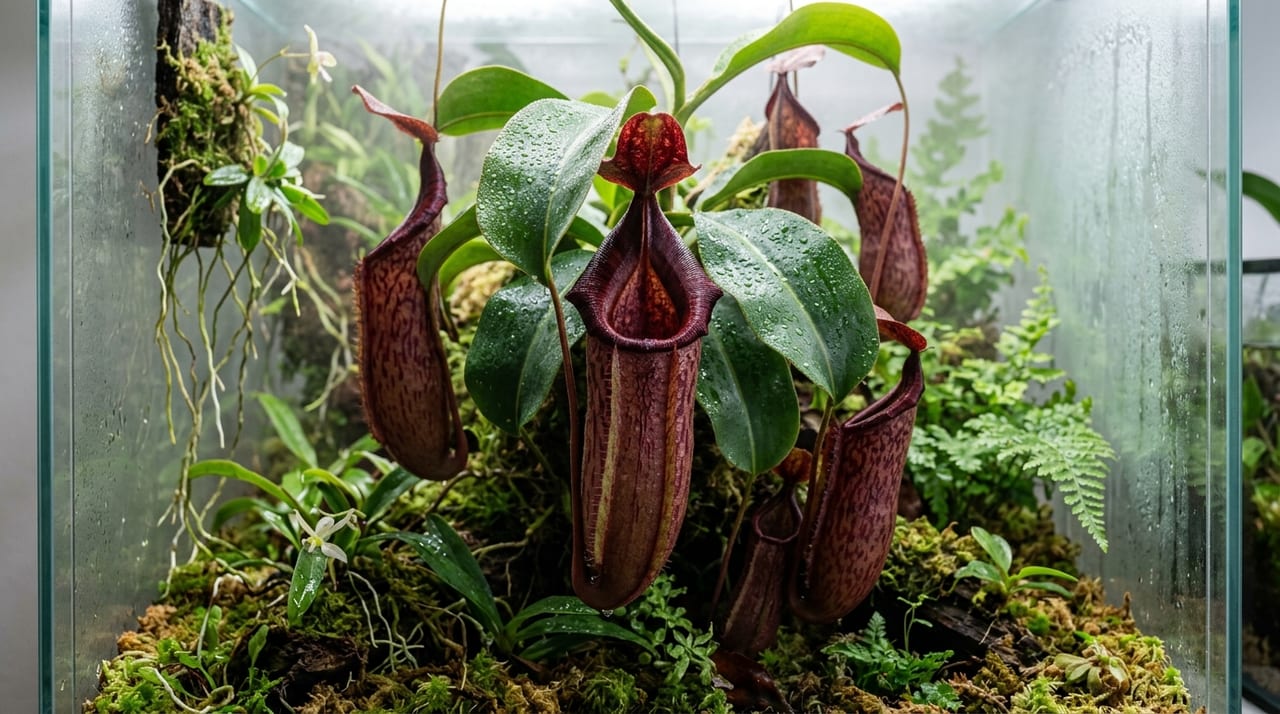
Key Takeaways
Nepenthes rajah is a highland species above 1,500 m elevation, and acclimatization from lowland environments requires phased steps. This article explains from Stage 1, lowering temperature over 8 weeks, through humidity and airflow management, light adjustment, and pitcher induction.
Related Species
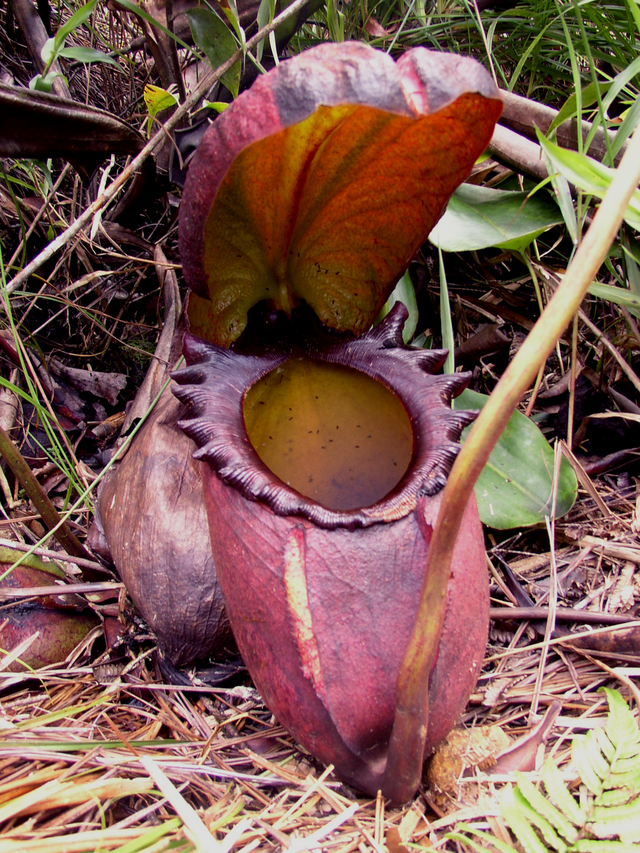
Nepenthes rajah, native to Mount Kinabalu in Sabah, Malaysia, is renowned among Nepenthes species for its exceptionally large pitchers. In its wild habitat, it forms giant pitchers measuring 30 cm or more in length and over 15 cm in width, capturing large insects and even lizards. However, its natural habitat is a high-altitude environment above 1,500 m elevation, which differs significantly from most common Nepenthes cultivation environments. Transitioning from a lowland-type Nepenthes at the time of acquisition to a highland-adapted type like rajah by gradually changing the environment requires more than simply "cooling it down." This article explains a reliable acclimatization process grounded in scientific evidence.
Understanding Nepenthes rajah's natural habitat environment
The high-altitude environment of Mount Kinabalu where rajah grows is characterized by subtropical and alpine climate, with daytime temperatures of 20–25°C and nighttime temperatures around 15°C. Temperature fluctuation throughout the year is minimal, and a stable cool state is the norm. The annual average temperature is approximately 18°C, and seasonal temperature variation does not show the large swings seen in Japan. Additionally, due to the high altitude, UV radiation tends to be abundant, but obscuration by fog and clouds occurs frequently, and direct sunlight is limited. Furthermore, it is characterized by constant damp mist-like rain, and relative humidity is consistently maintained above 70%.
In contrast, typical indoor cultivation environments in Japan reach above 25°C in summer and hover around 15°C in winter, resulting in large annual temperature fluctuations. Relative humidity also varies greatly by season, ranging from 40–80%. While lowland-type Nepenthes possess physiological flexibility to tolerate such fluctuations, rajah has evolved under the premise of stable, cool temperatures. For this reason, growing rajah in a typical Japanese environment causes problems such as the failure to form pitchers, or when formed, they remain small.
Stage 1: Gradual temperature reduction (8 weeks)
Acclimatization to rajah begins with a gradual reduction in temperature environment. Assume that immediately after acquisition, the plant is kept at normal room temperature (22–25°C). From this point, the goal is to lower the maximum temperature by 1°C every two weeks. Sudden temperature changes cause serious stress to the plant, leading to leaf wilting and root dormancy, so gradual adjustment is absolutely necessary.
Weekly schedule example:
- Weeks 1–2: Target daytime 23°C, nighttime 18°C
- Weeks 3–4: Daytime 22°C, nighttime 17°C
- Weeks 5–6: Daytime 21°C, nighttime 16°C
- Weeks 7–8: Daytime 20°C, nighttime 15°C
This adjustment gradually induces the root system and aboveground physiology to adapt to cold temperatures. During the process of adaptation to cold environments, the constituent lipids of cell membranes change, and physiological substances that protect against cold shock accumulate. Since this process requires more than a month, sudden cooling should be avoided as it causes stress to the plant, leading to leaf scorch and growth cessation. When observing temperature changes, not only maximum and minimum temperatures but also the daily average temperature is important.
Stage 2: Optimizing humidity and airflow management (12 weeks)
After temperature reduction has stabilized, adjust the humidity and airflow environment. The high-altitude environment where rajah grows naturally is characterized by stable relative humidity of 60–80%, along with gentle airflow. This unique environment is essential for the formation of large pitchers.
At this stage, construct an environment that realizes the following conditions. Relative humidity is ideally achieved through a setting that mimics natural mist formation, rather than continuous humidification with a humidifier. Perform light misting at 6:00 AM and 6:00 PM daily, maintaining a slightly drier state during the day (relative humidity 60–65%). This replicates the mist-rain pattern in wild habitats.
Simultaneously, maintain gentle airflow for approximately 12 hours per day, rather than 24 hours continuously, to prevent root rot while establishing a proper breathing environment. The key is to use a small fan to create indirect airflow, not direct wind. Airflow prevents excessive moisture buildup around the roots and ensures oxygen supply.
Stage 3: Adjusting light environment and inducing pitcher formation (ongoing management)
In the final stage, adjust the quality and intensity of light to promote the formation of rajah's characteristic large pitchers.
Among LED growth lights, selecting one with a color temperature of 3000K–4000K and providing 14 hours of illumination per day can synchronize with rajah's growth rhythm. In the initial stage, maintain a distance of 20 cm or more, gradually reducing the distance over 3 months, eventually bringing it to approximately 15 cm. The goal is to make the LED illumination as bright as possible without causing leaf scorch.
Throughout this entire process, constantly observe the plant's condition, and if yellowing or growth cessation is observed, flexible adjustment such as reverting to the previous stage is necessary.
Indicators of successful acclimatization and tips for long-term maintenance
Success of acclimatization can be judged by pitcher formation. When rajah adapts to a highland environment, the pitchers gradually become larger as the plant grows. In contrast, if adaptation fails, only small pitchers appear sporadically, and large pitchers never form.
For long-term maintenance after acclimatization, it is important to pay attention to the following points. Stabilize temperature as much as possible, targeting 15°C at night and 22°C during the day throughout the year. Maintain relative humidity above 70% through daily misting, and ensure constant airflow. Use fertilizer sparingly; monthly application of dilute liquid fertilizer is sufficient.