Humidity Management and Water System of Nepenthes | Understanding How the Trap Mechanism Works
Explains how Nepenthes (pitcher plants) capture prey and the impact of humidity on trap formation. Also introduces how digestive fluid works and the differences between lowland and highland species.
Key Takeaways
Explains how Nepenthes (pitcher plants) capture prey and the impact of humidity on trap formation. Also introduces how digestive fluid works and the differences between lowland and highland species.
Related Species
Nepenthes (Tropical Pitcher Plant)
View species details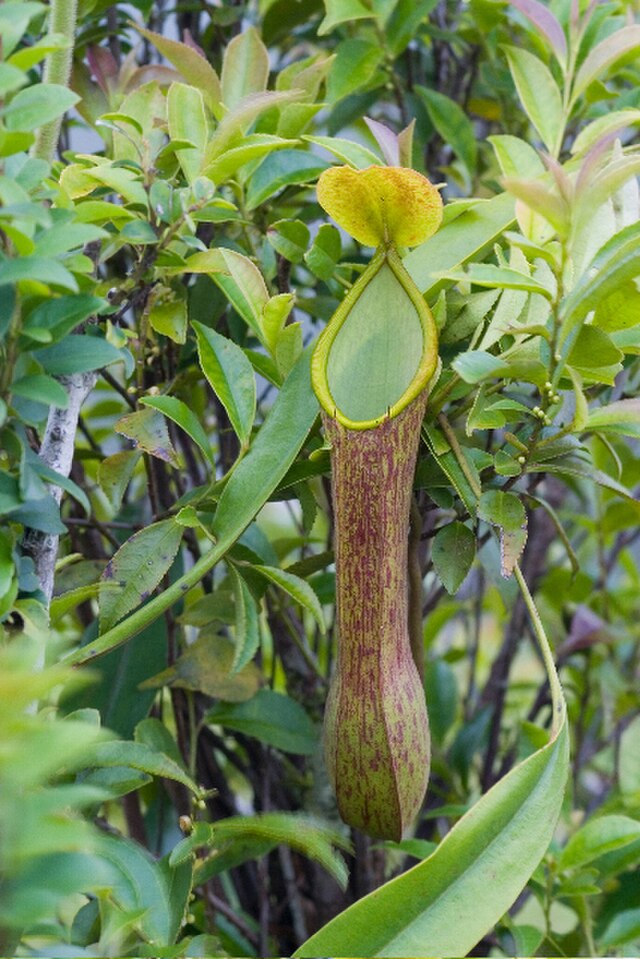
Nepenthes Alata
View species details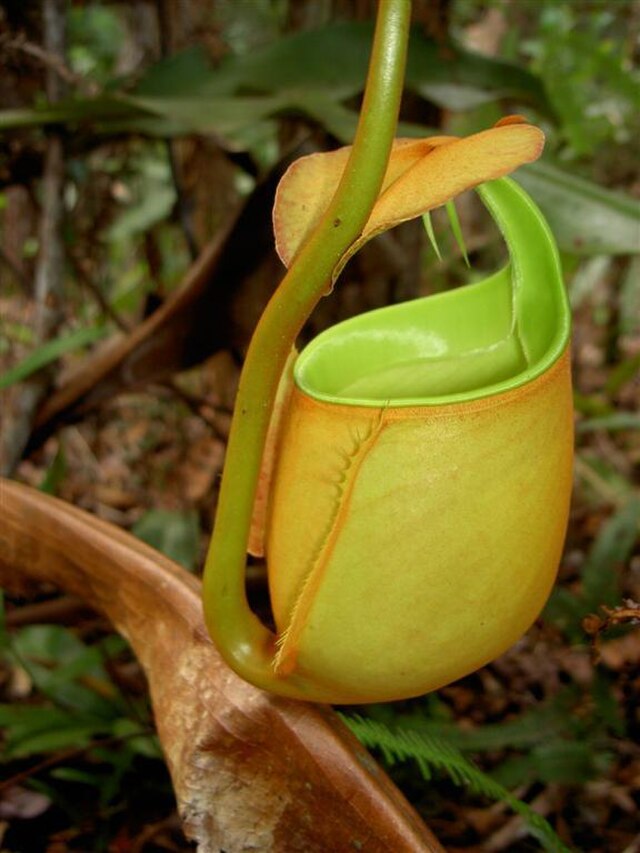
Nepenthes Bicalcarata
View species details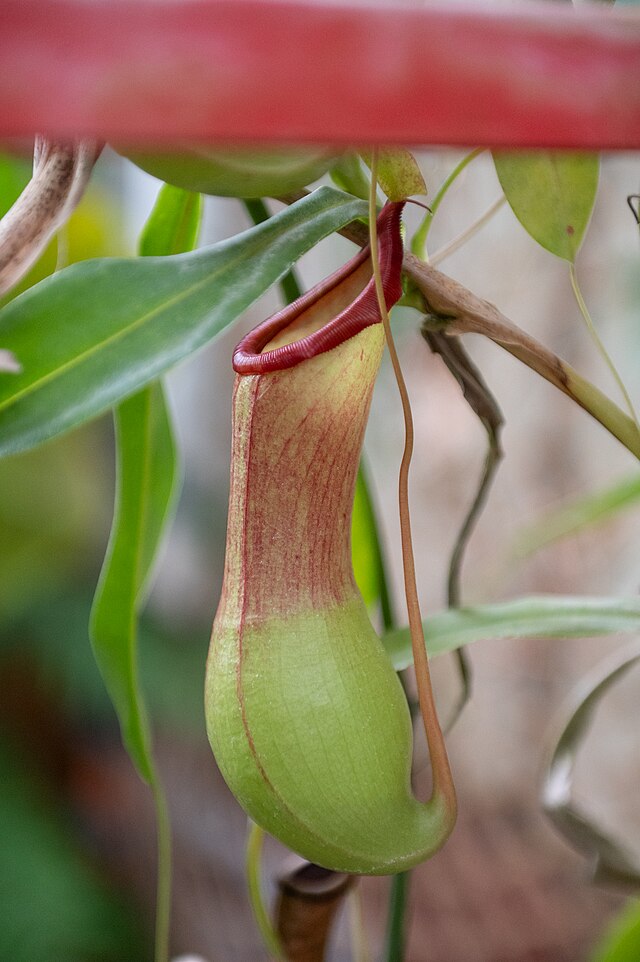
Nepenthes Gracilis
View species details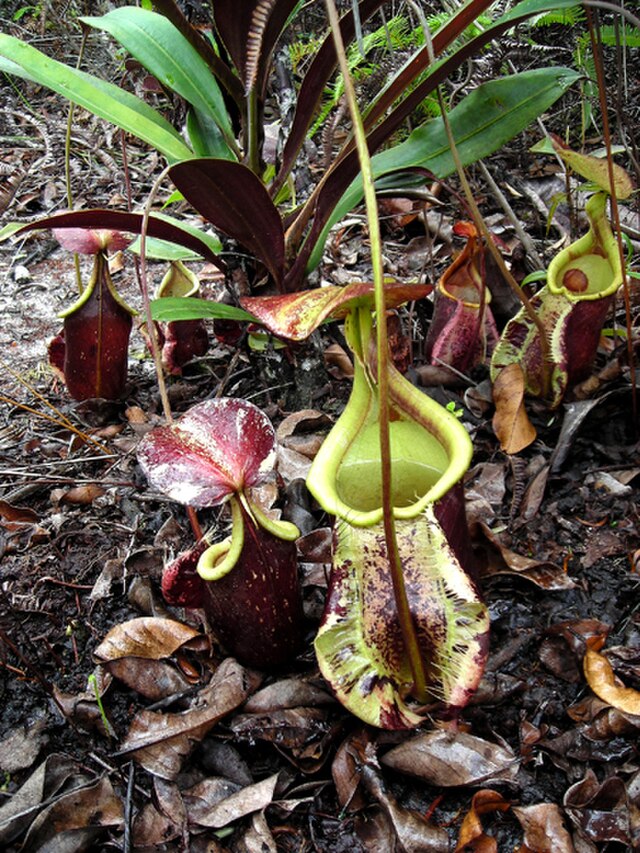
Nepenthes Rafflesiana
View species details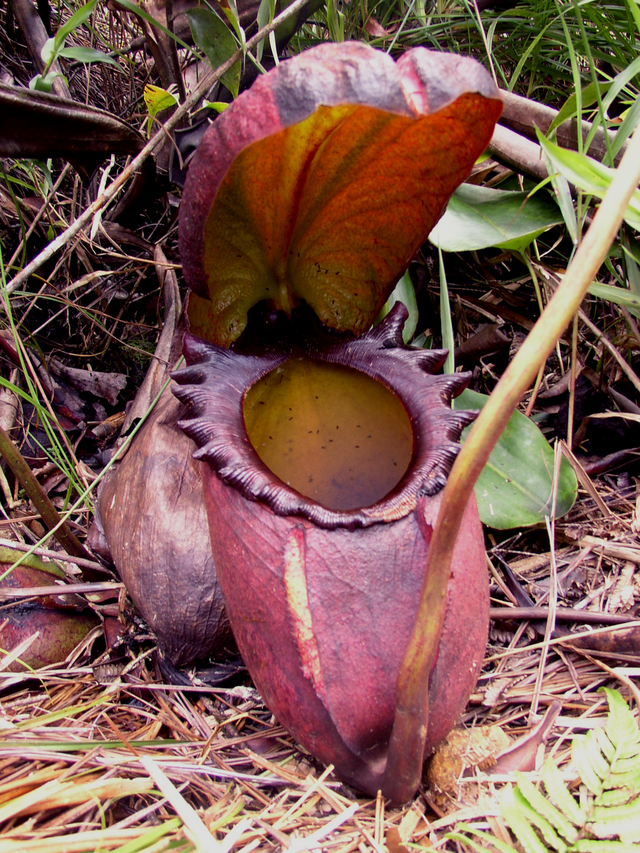
Nepenthes Rajah
View species details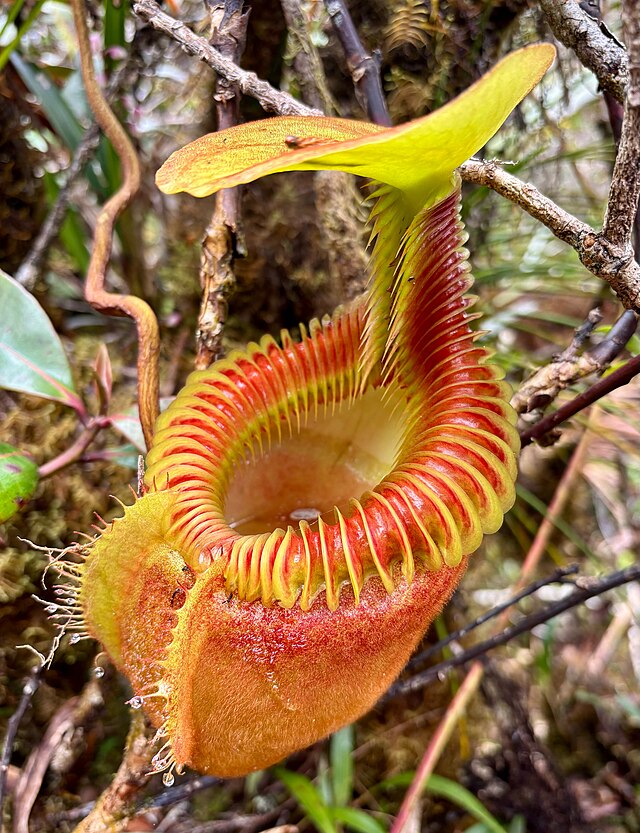
Nepenthes Villosa
View species detailsHow Nepenthes Pitcher Traps Function as "Snares"
The pitcher traps of Nepenthes (pitcher plants) are pouch-like organs hanging from the tips of tendrils, and their internal structure is far more intricately designed than appearances suggest. The success or failure of prey capture is determined primarily by three structures.
First is the "peristome," which rims the opening of the pitcher. The surface of the peristome features fine radial grooves that draw in rain and dew, maintaining a wet state. When an insect lands on this wet rim, its feet lose grip, and it slides directly into the pitcher. When the peristome has a glossy, fresh appearance, the pitcher is in its most active state.
Next is the waxy layer (wax zone) that covers the upper inner wall of the pitcher. Once prey has fallen, even if it attempts to climb up the wall, the fine wax crystals continuously deny it any foothold, making escape virtually impossible. It is said that even relatively dexterous arthropods like spiders have difficulty overcoming this wax layer.
And finally, there is the digestive fluid that pools at the bottom of the pitcher. This viscous liquid first restricts the prey's movement, and then digestive enzymes such as proteases break down proteins over several days. The nitrogen compounds produced from this breakdown are absorbed by the plant as essential nutrients for surviving in nutrient-poor wetland habitats. The perfection of this intricate structure is deeply tied to the humidity of the growing environment.
Why Humidity Determines Pitcher Completeness
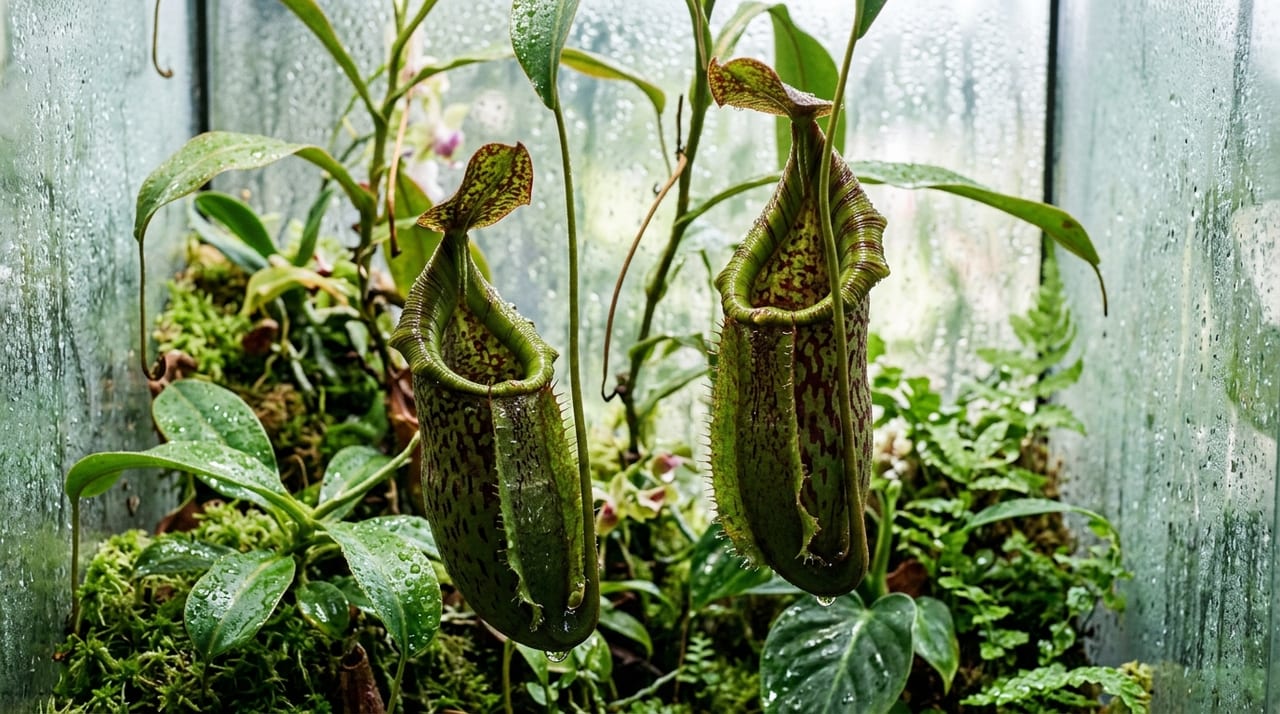
The pitcher forms as the tendril at the tip of the vine swells, but if humidity is low during this developmental stage, the pitcher withers and dies without fully expanding. This condition is called "pitcher drop," and since neither the peristome nor the wax layer develops properly, the pitcher cannot function as a trap even if it takes shape.
The humidity target varies by species, but most hybrid species commonly available form pitchers stably when relative humidity is maintained at around 60–70%. Beginner-friendly species such as Nepenthes alata and Nepenthes gracilis tolerate some drying, but if humidity falls below 50% for extended periods, pitcher formation tends to stall.
The main methods for maintaining humidity are as follows.
- Management in terrariums or vinyl greenhouses: Humidity is easier to maintain inside an enclosure, creating a stable environment
- Using a humidifier: Can raise humidity throughout the location, but should be combined with ventilation of the entire room
- Adding water to bottom trays: Placing trays filled with water around the plant raises humidity locally through evaporation
- Misting the leaves and area around the plant with a spray bottle: Convenient but short-lasting, so combining it with other methods is practical
However, if you block air circulation completely while raising humidity, the risk of mold and root rot increases. The key to long-term cultivation is maintaining humidity while ensuring air flows gently through the environment.
Managing Digestive Fluid and Pitcher Lifespan
The digestive fluid inside the pitcher is secreted by the plant itself, but in dry environments it evaporates, reducing its volume and digestive ability. Supplementing the pitcher with small amounts of rainwater or boiled and cooled water helps maintain the proper concentration of digestive fluid and extends the pitcher's lifespan. However, be careful with the amount and timing, as adding large quantities of tap water can cause chlorine and minerals to accumulate, damaging the pitcher.
A pitcher does not function indefinitely. The normal cycle is for it to reach the end of its usefulness and naturally wither a few months after forming. If old pitchers wither but new ones are developing at the tips of new tendrils, there is no problem; the key is managing the plant while observing its overall vigor. By habitually observing whether pitchers appear with each new leaf, you can quickly detect deficiencies in humidity or light.
Light and Fertilizer Balance Influence Pitcher Formation
Equally important as humidity is the balance of light and fertilizer. Nepenthes prefer bright light, but intense direct sunlight causes leaf scorch and dries out the pitcher's peristome. For indoor cultivation, the practical approach is to place the plant near a bright window filtered by sheer curtains or under grow lights at an appropriate distance. If light is insufficient, the vine elongates while pitchers barely form; if the foliage becomes pale, consider it a sign to reassess your light source.
Regarding fertilizer, there is a theory that if you apply too much nitrogen-rich liquid fertilizer to the soil, the plant receives sufficient nutrients through its roots, which reduces the need for it to form pitchers. In fact, it has been observed that Nepenthes produces pitchers less readily in nutrient-rich environments. If you want to develop strong pitchers, the basic approach is to apply fertilizer sparingly to the soil and rely on small insects entering the pitchers for nutrition. If you must supplement, the safest approach is to dilute liquid fertilizer 500–1000 times and apply only tiny amounts as foliar spray.
Highland and Lowland Species: Differences in Humidity Requirements
Nepenthes are broadly divided into "lowland species" and "highland species" based on the elevation of their native habitat, and their humidity requirements also differ.
Lowland species (such as Nepenthes rafflesiana and Nepenthes bicalcarata) grow naturally in tropical lowlands that are warm and humid year-round. They adapt relatively easily even to warm conditions similar to Japanese summers, forming pitchers stably indoors if 60–70% humidity is maintained.
Highland species (such as Nepenthes villosa and Nepenthes rajah) grow in misty mountains where there are large temperature swings between day and night. They are sensitive to both heat and dryness; if room temperature exceeds 30°C continuously during summer, pitcher formation stops and the plant may weaken. Year-round management in a typical Japanese home requires cooling measures during summer.
For those beginning cultivation, I recommend starting with hardy hybrid species that tend toward lowland types. As you gain experience by observing how pitchers form and how the plant responds to humidity, you can smoothly progress to highland species once your growing environment is well-established. The origin information and hybrid parentage listed on the product listing are very helpful in determining the cultivation difficulty, so please review them carefully before purchasing.
Summary: Humidity and Observation Are Key to Growing Pitchers
The Nepenthes pitcher captures prey through a three-part system: the slippery rim of the peristome, the waxy inner wall, and the digestive fluid. To make this intricate system function completely, sufficient humidity is essential from the stage of pitcher formation.
The foundation for stable pitcher formation is maintaining humidity awareness at 60–70% while balancing light and fertilizer. Even if old pitchers wither, if new ones are developing, the plant is healthy; continuing to observe new tendril tips connects to the long-term pleasure of cultivation. Since humidity and temperature requirements differ significantly by species, confirming lineage and origin information when purchasing and selecting plants suited to your growing environment is the shortcut to success.