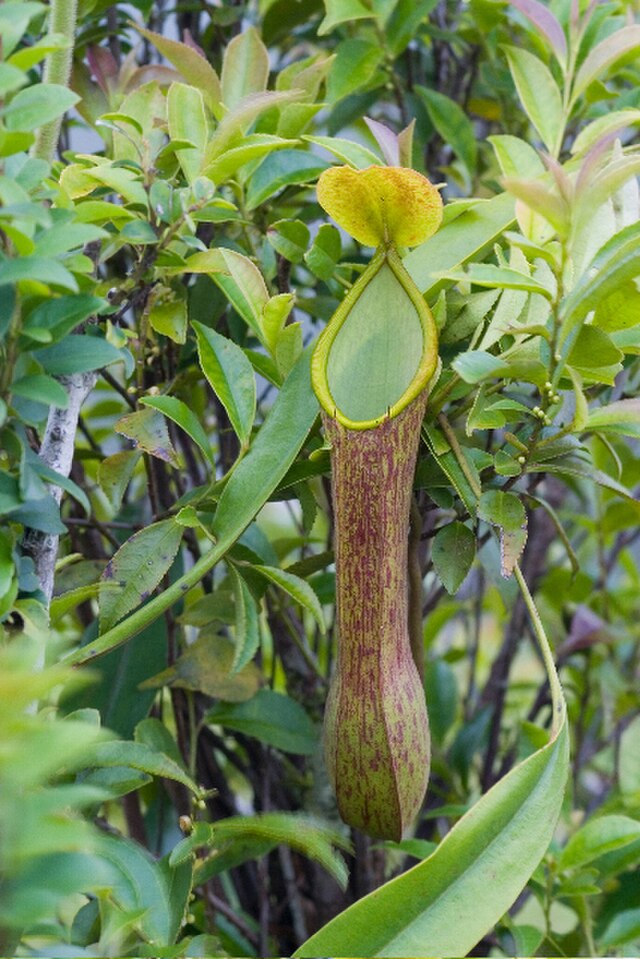
Source: Wikimedia Commons
Nepenthes Alata
BeginnerNepenthes alata
One of the easiest Nepenthes, growable indoors by beginners, producing many green pitchers.
About
Nepenthes alata is a species endemic to the Philippines, found on the islands of Luzon, Mindanao, and several others, typically in montane forest margins and grasslands between 600 and 2,000 m elevation. Fertilizer is generally unnecessary; diluted liquid fertilizer placed directly into pitchers is an optional supplement. N. alata is frequently recommended as a first Nepenthes for new growers.
Lifespan of the Nepenthes Alata
The Nepenthes Alata lives 10+ years.
Size of the Nepenthes Alata
The Nepenthes Alata grows to Vine 30-100cm.
Temperature & humidity for the Nepenthes Alata
The ideal temperature for the Nepenthes Alata is 15〜30℃.
It produces slender, yellowish-green to reddish pitchers in abundance and tolerates a relatively wide temperature range of roughly 15–30°C, making it one of the most beginner-friendly Nepenthes in cultivation. The species adapts well to household conditions, requiring sphagnum-based media, humidity above 60% for consistent pitcher production, and moderate watering without waterlogging.
Basic Info
Origin
Philippines (Luzon, Mindanao, and other islands), montane forest margins and grasslands at 600–2,000 m elevation
Lifespan
10+ years
Size
Vine 30-100cm
Temperature
15〜30℃
Humidity
60〜90%
Watering & Fertilizer
Insects (auto-capture)
Growing Tips
Light & Placement
Grow it in bright indirect light. It does fairly well in an ordinary indoor environment and is beginner friendly.
Watering
Water when the medium begins to dry, taking care not to overwater. Keeping humidity at 60% or more helps pitchers form reliably.
Temperature & Overwintering
The ideal range is 15-30°C. Intermediate between lowland and highland types, it should be kept indoors above 15°C in winter.
Soil & Repotting
Sphagnum moss alone is the standard medium. Keep it airy and replace old sphagnum when repotting.
Fertilizer
Fertilizer is generally unnecessary, though adding diluted liquid fertilizer into the pitchers is also effective.
Nepenthes Alata FAQ
QWhat is the growing difficulty level for Nepenthes Alata?
Beginner. A variety suitable for beginners. No special equipment or experience is required—you can grow it without problems by setting up a basic cultivation environment.
QWhat is the ideal temperature for Nepenthes Alata?
The ideal temperature for Nepenthes Alata is 15〜30℃. Avoid sudden temperature changes and maintain a stable environment.
QWhat is the lifespan of Nepenthes Alata?
The average lifespan of Nepenthes Alata is 10+ years. With proper cultivation environment and nutrient management, you can keep it healthy for a long time.
QHow large does Nepenthes Alata get?
The mature size of Nepenthes Alata is Vine 30-100cm. This may vary slightly depending on cultivation environment and individual differences.
QHow should I water and fertilize Nepenthes Alata?
Nepenthes Alata: watering & fertilizer — Insects (auto-capture). Aim for appropriate frequency and amount.
QWhat is the typical price for Nepenthes Alata?
The price of Nepenthes Alata varies significantly by variety, characteristics, size, and lineage. Please check GrowerDirect's price guide for the latest market information.
Last updated: August 31, 2026
Growing Specifications
- Hardiness (RHS)
- H1a
References & Sources
Edited & verified by: GrowerDirect Editorial Team
The classifications, regulations, and growing data on this page are created and verified based on the primary information database below.
Taxonomy & Authority
Accepted name: Nepenthes alata Blanco
Synonyms: Nepenthes alata var. biflora Macfarl., Nepenthes blancoi Blume
Authority databases: GBIF · POWO · ICPS cultivar registration (International Carnivorous Plant Society)
Nomenclature follows global taxonomic authority databases.
Regulations & Conservation Status
The genus Nepenthes, except for rajah/khasiana, is CITES Appendix II at the genus level. International trade requires permits.
Sources: CITES Appendices (carnivorous plants) - ICPS/Barry Rice / CITES & Carnivorous Plant Checklist (RBG Kew)
Regulations may change. Always verify the latest information with the relevant authorities.
Related Species
Find listings for this species
Related Articles
Developing Nepenthes Pitcher Traps Completely: Cultivation Secrets Through Environmental Management and Physiological Approaches
The carnivorous leaves of Nepenthes represent the masterpiece of an insect-trapping mechanism evolved over 200 million years. This article explains how to mature the carnivorous leaves completely and develop healthy plants with actual predatory function through humidity, light, and nutrient management.
Growing Pitcher Plants Without a Greenhouse: How to Get Pitchers to Form Indoors
Explains how to grow carnivorous pitcher plants (Nepenthes) indoors without a greenhouse. Covers reasons why pitchers fail to form and solutions, methods for maintaining humidity, variety selection, and tips for winter care.
Highland Nepenthes Growing Guide | Cool Management for High-Altitude Pitcher Plants
Explains the characteristics of high-altitude nepenthes (highland nepenthes), summer air conditioning management, and methods for controlling humidity and temperature.
How to Grow Nepenthes | Cultivation Techniques to Grow Larger Pitchers
We explain the basic cultivation methods for Nepenthes and the humidity, temperature, and light management techniques to grow beautiful pitchers large.
Can't find the plant you're looking for?
Post your wishes for free and growers with matching plants will contact you with introductions.