Growing Pitcher Plants Without a Greenhouse: How to Get Pitchers to Form Indoors
Explains how to grow carnivorous pitcher plants (Nepenthes) indoors without a greenhouse. Covers reasons why pitchers fail to form and solutions, methods for maintaining humidity, variety selection, and tips for winter care.
Key Takeaways
Explains how to grow carnivorous pitcher plants (Nepenthes) indoors without a greenhouse. Covers reasons why pitchers fail to form and solutions, methods for maintaining humidity, variety selection, and tips for winter care.
Carnivorous pitcher plants (Nepenthes) are tropical carnivorous plants with beautiful pitcher-shaped traps. While many people assume you need a greenhouse to grow them, with the right variety selection and environmental adjustments, they can thrive indoors in an ordinary home.
Greenhouse-Free Cultivation Possibilities
Many enthusiasts enjoy growing Nepenthes without a greenhouse. The key to success lies in two points: "selecting the right variety" and "making modest adjustments to the indoor environment."
Conditions for Easy Growth Without a Greenhouse
- Maintaining indoor temperatures above 15°C year-round
- Maintaining humidity at 50% or above (achievable with planning)
- Access to a bright windowsill or LED lighting
Easy-to-Grow Varieties Without a Greenhouse
Not all Nepenthes are suitable for indoors. The key is selecting hardy lowland varieties.
Recommended Varieties for Beginners
- N. alata: The hardiest beginner species. Relatively tolerant of lower humidity. Easy to source anywhere.
- N. ventricosa: Charmingly plump pitchers. Relatively cold-hardy.
- N. x hookeriana: A natural hybrid. Hardy with pitchers that form readily.
- N. x ventrata: A cross between ventricosa and alata. Very hardy with pitchers that form reliably.
- N. sanguinea: Beautiful red pitchers. Somewhat highland in character but highly adaptable.
Varieties to Avoid (Advanced Growers Only)
- N. rajah: Highly highland and requires cool conditions.
- N. lowii: Highland species; difficult to cultivate.
- N. villosa: Highland species; requires high humidity and low temperatures.
Reasons for Pitcher Failure and Solutions
The most common problem in Nepenthes cultivation is "pitchers not forming."
Cause 1: Insufficient Humidity
Indoor humidity can drop to 30–40% in winter, which prevents pitcher formation in Nepenthes.
- Solution: Use a humidifier. Place containers of water around the plant. Mist 2–3 times daily.
- Simple humidity solution: Fill a saucer with water and pebbles, then place the pot on top (ensuring the pot bottom doesn't touch the water).
Cause 2: Insufficient Light
In dim locations, insufficient energy prevents pitcher formation.
- Solution: Place in a bright windowsill. East- to south-facing windows are ideal.
- Using LED lights: Use grow lights for 8–12 hours daily.
Cause 3: Sudden Environmental Changes
Pitchers are prone to drying after purchase or relocation.
- Solution: Acclimate gradually to the new environment. Pay special attention to humidity management for 2–3 weeks.
- Remove dried pitchers and wait for new ones to form.
Cause 4: Underwatering
Nepenthes dislikes drying out.
- Solution: Water generously once the soil surface begins to dry. Bottom watering is also effective.
Techniques for Maintaining Indoor Humidity
Using a Humidifier
- Ultrasonic humidifiers are convenient and effective.
- Place near the plant, aiming for 50–70% humidity.
- If a humidifier is unavailable, hanging a damp towel nearby is also effective.
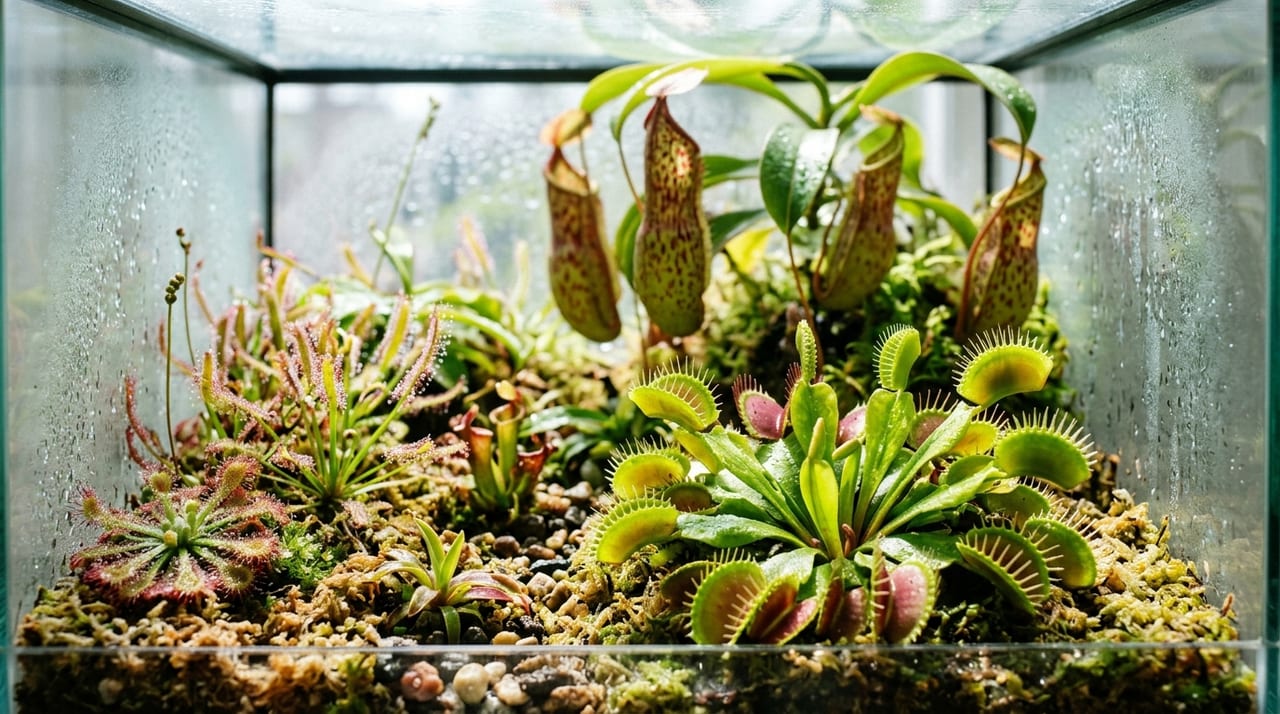
Simple Greenhouse (Wardian Case)
- Place the plant in a glass or acrylic case.
- These come in tabletop sizes, much less elaborate than a full greenhouse.
- Don't close the lid completely; leave a slight gap for ventilation.
Group Cultivation
- Clustering multiple plants together raises humidity through transpiration.
- Arrange ferns, mosses, and other humidity-loving plants around the Nepenthes.
Watering and Soil Mix
Soil Mix
- Sphagnum moss alone is most popular and easy to use.
- Peat moss + perlite (7:3) also works.
- Don't use standard potting soil (nutrient content can damage roots).
Watering
- Water generously once the sphagnum surface begins to dry.
- The key is not to let it dry out completely.
- Bottom watering is also possible; keep the water level shallow (about 1 cm).
- Tap water is fine. In areas with high chlorine, use settled water.
Tips for Winter Care
Without a greenhouse, winter is the biggest challenge.
- Maintain indoor temperatures above 15°C (watch nighttime temperatures when heating shuts off).
- Windowsills cool significantly at night; move plants to the center of the room at night.
- Watch for heating-related dryness. Supplement humidity with a humidifier or misting.
- Reduce watering frequency somewhat, but don't let it dry out completely.
- Growth slows, but healthy plants overwinter without issue.
About Fertilizer
- Fertilizer is generally unnecessary (they obtain nutrients by trapping insects).
- Indoors, insects are harder to catch; some growers add a tiny amount of very dilute liquid fertilizer to the pitchers once or twice monthly.
- Go easy on root fertilization. Use about one-quarter strength liquid fertilizer once monthly.
Tips for Getting Nepenthes to Form Pitchers
The biggest challenge for Nepenthes growers is "pitchers not forming." Several conditions must align for pitcher development.
Humidity: The most important factor. Pitchers need humidity above 70% to develop fully. In dry conditions, vines grow but pitchers fail to swell and dry up.
Light: Adequate light is essential for pitcher formation. Keep plants on a bright windowsill or under LED lighting.
Temperature: Lowland species thrive at 25–35°C; highland species at 15–25°C. Outside these ranges, pitcher formation becomes difficult.
Air Flow: Gentle air circulation promotes pitcher formation. Weak airflow from a small fan is effective.
Nepenthes Species and Cultivation Difficulty
| Species | Ideal Temperature | Humidity | Difficulty | Characteristics |
|---|---|---|---|---|
| N. alata | 20–35°C | 60%+ | Low | Ideal for beginners. Hardy. |
| N. ventricosa | 18–30°C | 60%+ | Low | Charmingly plump pitchers. |
| N. rajah | 15–25°C | 80%+ | High | World's largest pitchers. Highland species. |
| N. lowii | 15–25°C | 80%+ | High | Distinctive pitcher shape. Highland species. |
Common Mistakes and Solutions
Mistake 1: Blaming Only Humidity for Pitcher Failure
In greenhouse-free cultivation, pitcher failure often results from insufficient light and inadequate temperature fluctuation between day and night, not just humidity. First ensure adequate brightness, then address humidity.
Mistake 2: Adding Water to Dried Pitchers
Adding water to a dried pitcher won't restore function and risks diluting digestive enzymes and causing rot. The correct approach is to wait for new pitchers to form.
Mistake 3: Leaving Plants on Windowsills in Winter
Windowsills drop well below room temperature at night, and most Nepenthes suffer below 10°C. In winter, move plants away from windows and choose placement based on measured nighttime minimums.
Find Pitcher Plants on GrowerDirect
On GrowerDirect, you can buy hardy Nepenthes suited to indoor cultivation directly from specialist growers. Our strength is the ability to consult directly with growers about variety selection and specific care methods for greenhouse-free cultivation. Experience the beauty of pitcher-shaped traps with plants from GrowerDirect.