Watering and Humidity Management for Pitcher Plants (Nepenthes)
Watering and Humidity Management for Pitcher Plants (Nepenthes)。Pitcher plants (Nepenthes) are carnivorous plants native to the tropical rainforests of…
Key Takeaways
Watering and Humidity Management for Pitcher Plants (Nepenthes)。Pitcher plants (Nepenthes) are carnivorous plants native to the tropical rainforests of…
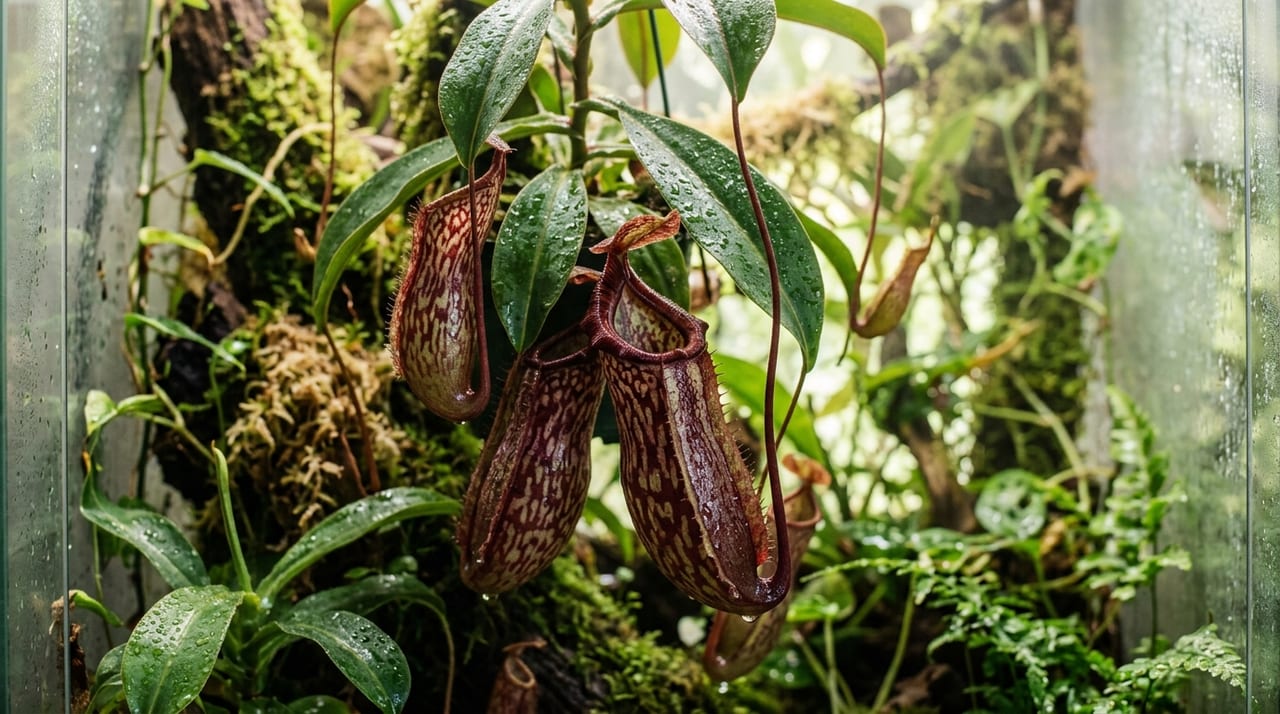
Pitcher plants (Nepenthes) are carnivorous plants native to the tropical rainforests of Southeast Asia. They are popular as foliage plants because of their distinctive pitcher-shaped trap leaves. However, endless questions persist: "How much should I water it?" and "The pitchers won't develop." Most of these issues are caused by improper watering and humidity management. This article explains in detail the fundamentals of water management aligned with the plant's ecology, and practical tips for each season.
Learning from Pitcher Plant ecology—water needs
In its natural environment, Nepenthes grows as an epiphyte on tree trunks and rock faces, absorbing moisture from the air and rainwater. Its roots are fine and delicate, and it dislikes being constantly waterlogged. On the other hand, when air humidity drops, water evaporates easily from the leaves, and this also interferes with pitcher formation.
In other words, Nepenthes requires two conditions: "air rich with plenty of moisture" and "soil that alternates between moderately wet and dry." This dual requirement is why it's considered more difficult than other houseplants. The ideal humidity is said to be 60–80%, and in typical indoor environments (especially when heating is used in winter), this level is usually insufficient without intervention.
Correct watering methods and water quality considerations
The basic rule for watering is "wait until the soil interior is nearly dry, then water thoroughly until water drains from the bottom of the pot." If you judge only by the surface, you may overwater when the interior is still moist. Insert your finger 1–2 cm into the soil to check the dryness level, or lift the pot to feel if it has become noticeably lighter.
After watering, always remove any water that accumulates in the saucer. Leaving it there can cause root rot and pest infestations.
Pay attention to water quality as well. Since Nepenthes prefers soft water, it is recommended to use water in the following order of priority:
- Rainwater or distilled water: Most suitable. Contains no minerals and places minimal stress on roots
- Tap water left to stand overnight: If chlorine is removed, it is essentially fine
- Hard water or mineral water: Contains high levels of calcium and magnesium; unsuitable as salt accumulates in the soil with long-term use
In summer, water during the cool morning and evening hours. If done during the heat of the day, the pot temperature rises rapidly and damages the roots. In winter, evaporation is reduced, so the soil dries more slowly. Be careful not to create overly moist conditions if you continue watering at the same pace.
Practical techniques for increasing humidity
For indoor humidity management, combining multiple methods is effective.
Misting leaves with a spray bottle is an easy method. Spray fine mist over the entire leaf surface in the morning and evening. When doing this, be careful not to get water inside the pitchers. If the digestive fluid inside the bags is diluted, the digestive function decreases.
Water tray method is another option. Place pebbles or small stones in a large tray, add water to about half the height of the stones, and place the pot on top. The evaporating water continuously raises the humidity around the pot. Since the bottom of the pot doesn't touch the water directly, you can also avoid root rot risk.
Using a humidifier is the most reliable method. If it has a timer function, it can automatically regulate humidity. However, avoid placing the plant so that the humidifier's air stream blows directly on it.
For smaller Nepenthes, covering the pot with a transparent plastic bag or simple case is also effective. If sealed too tightly, it can cause rot or disease, so create small air holes to ensure air circulation.
Seasonal management tips
Spring is an important time when new shoots emerge and pitcher formation begins. Gradually increase watering frequency as temperatures rise, and perform misting daily. Maintaining humidity of 60% or higher is key to pitcher formation.
Summer is the season of most vigorous growth, but evaporation is also intense. Watering only in the morning can sometimes lead to water stress, so you may need to check the soil in the evening and provide additional water. While it likes high heat and humidity, ensure good air circulation to prevent disease from dampness.
Autumn is a transitional period when you gradually reduce watering frequency. Suddenly reducing the amount stresses the plant, so adjust slowly according to weather and room temperature. When heating begins indoors, the air becomes dry, so be conscious of switching to humidity management practices.
Winter is the season requiring the most care. Water only minimally, adding small amounts after the soil is completely dry. In environments where the minimum temperature drops below 10°C, growth stops and root rot risk increases, so you need to implement both heat retention measures and prevent excessive moisture. The key is to maintain high air humidity with a humidifier or spray bottle, while keeping the soil relatively dry.
Common problems and solutions
Here is a summary of common issues with Nepenthes care and their causes.
| Symptom | Main cause | Solution |
|---|---|---|
| Leaf tips and margins turn brown and dry | Insufficient humidity or water stress | Increase misting frequency, check humidity at placement location |
| Pitchers wither partway or don't form | Insufficient humidity | Maintain 60–80% humidity consistently |
| Leaves turn yellow and fall off | Overwatering / root rot | Check soil dryness and reduce watering |
| Spider mites appear | Too dry | Increase leaf misting and regularly inspect leaves |
Leaf tip browning is noticeable and worrying, but it typically occurs if the plant is placed in a dry environment for several weeks. Improvement can be expected by changing the location or strengthening humidity measures. If the soil remains wet for extended periods and leaves are yellowing, root rot may be progressing. Remove the plant from the pot, check the condition of the roots, remove damaged parts, and repot in fresh soil.
Watering and humidity management for Nepenthes may feel difficult at first. However, by observing the plant daily and gradually adjusting the environment, you can grow healthy Nepenthes with many beautiful pitchers. Flexible responses to seasonal changes and management conscious of the water balance in both soil and air are the secrets to enjoying your plant long-term.