How to Grow Nepenthes | Cultivation Techniques to Grow Larger Pitchers
We explain the basic cultivation methods for Nepenthes and the humidity, temperature, and light management techniques to grow beautiful pitchers large.
Key Takeaways
We explain the basic cultivation methods for Nepenthes and the humidity, temperature, and light management techniques to grow beautiful pitchers large.
Related Species
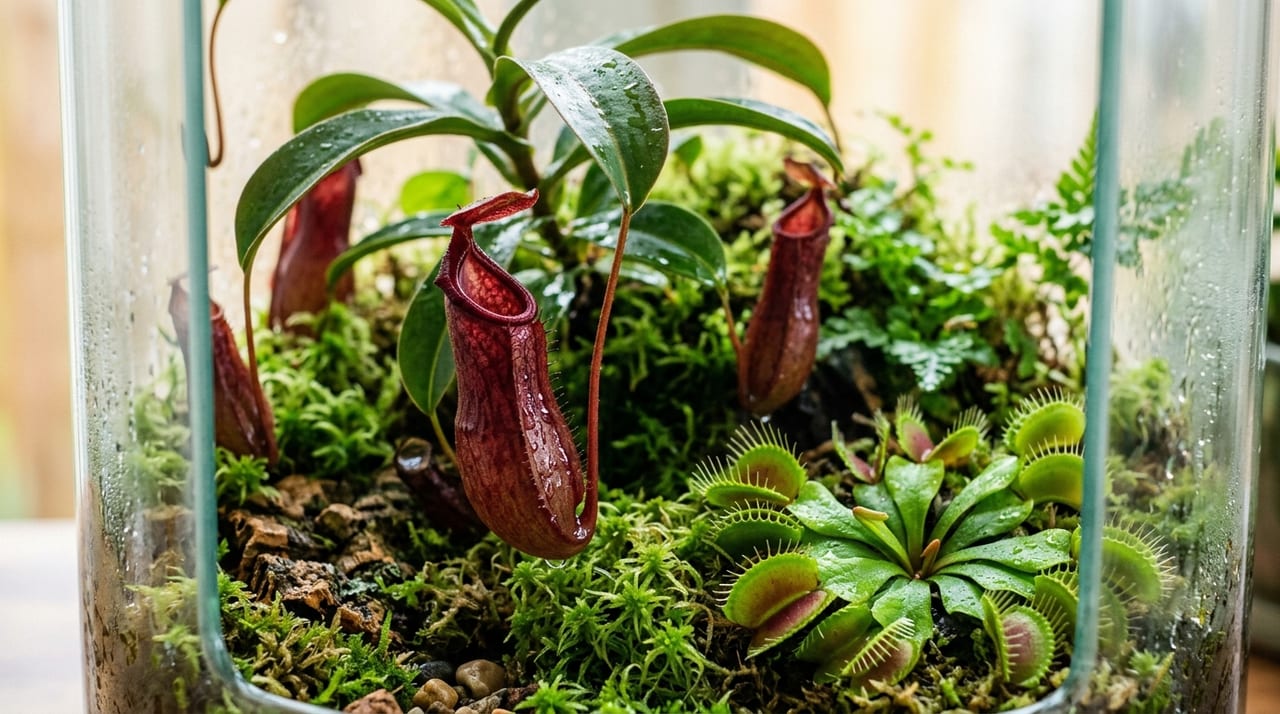
Nepenthes (pitcher plants) are prized primarily for their insect-trapping pitchers that hang down from the leaf tips. The shape and color of the pitchers vary greatly by variety, making these carnivorous plants highly collectible. Here we explain basic cultivation methods and techniques to grow pitchers large and beautiful.
Nepenthes Classification
Nepenthes are broadly classified into three types based on the altitude of their native habitat. The ideal temperature differs by classification, so please confirm this before purchasing.
Lowland species Native to altitudes around 0–1,000 m. They prefer warm, humid conditions year-round. N. alata, N. ventricosa, and N. ampullaria are typical examples. These are recommended for beginners.
Highland species Native to altitudes above 1,500 m. They prefer warm days and cool nights (approximately 25°C during the day, 15°C at night). Species such as N. rajah, N. lowii, and N. villosa tend to be large and beautiful, but they require night-time cooling and are difficult to cultivate.
Intermediate species Species native to altitudes around 1,000–1,500 m, or hybrids between lowland and highland species. They tolerate a relatively wide temperature range, and many varieties are easy to grow in typical Japanese indoor environments.
Basic Cultivation
Humidity Management Humidity is the most important factor in cultivating Nepenthes. Maintain 60% or higher, ideally 70–80%. If humidity is low, pitchers may not form, or only small pitchers will develop.
Methods to increase humidity:
- Place the pot on a tray filled with water
- Regularly mist the entire foliage with a spray bottle
- Use a plastic storage container or aquarium as a simple terrarium
- Place a humidifier nearby
Temperature Lowland species prefer 20–35°C, while highland species prefer 20–25°C during the day and 12–18°C at night. In winter, maintain a minimum of 15°C for lowland species and 10°C for highland species.
Light Bright indirect light is essential. Direct sunlight causes leaf scorch, so provide approximately 50% shade or light filtered through sheer curtains near a window. However, insufficient light also reduces pitcher size, so balance is important.
Watering Water thoroughly when the growing medium begins to dry. Unlike other carnivorous plants, constant water-tray management can cause root rot, so avoid this. However, excessive drying is also harmful.
Growing Medium Sphagnum moss alone, or a mixture of sphagnum moss and perlite in a 7:3 ratio, is standard. A mixture of peat moss and perlite also works. Balance between drainage and water retention is important.
Techniques to Grow Larger Pitchers
Maintain Stable Humidity Stable high humidity is essential for pitcher formation. Fluctuations in humidity between day and night cause pitcher tips to die. Managing plants in a plastic storage container or aquarium helps maintain stable humidity.
Adequate Light Intensity The more light, the larger the pitchers tend to be. However, avoid direct sunlight and provide bright indirect light to 30% shade. Using grow lights is also effective.
Ensure Air Circulation Though often overlooked, gentle air circulation promotes pitcher development. Plants grow larger pitchers in environments with gentle air movement than in completely sealed conditions. Sending weak air flow with a small fan is effective.
Fertilizer Nepenthes are sensitive to fertilizer, but proper application accelerates growth. Diluting orchid liquid fertilizer to one-quarter strength and applying a small amount inside the pitcher is safe. Apply carefully to roots, as concentration is critical.
Do Not Remove the Growing Point In general horticulture, pinching out the growing point promotes branching, but for Nepenthes, cutting the growing point can temporarily halt pitcher formation. Allowing natural growth is best.
Seasonal Care
Spring to Autumn (Growing Season) Growth is vigorous during this period. Provide ample humidity and light, and apply diluted liquid fertilizer once or twice a month. It is a rewarding season to watch new leaves and pitchers unfold continuously.
Winter Manage indoors in a heated space. Dryness from heating is the biggest challenge, so take thorough humidity measures. Growth slows, but pitchers continue to form if proper temperature is maintained.
Tips for Getting Pitchers to Form
The biggest challenge for Nepenthes growers is "pitchers not forming." Several conditions must be met for pitcher formation.
Humidity: The most important factor. Humidity above 70% is necessary for pitchers to develop. In dry conditions, vines grow but pitchers fail to expand and eventually die.
Light intensity: Insufficient light does not promote pitcher formation. Manage the plant in a bright window or under LED lighting.
Temperature: Lowland species prefer 25–35°C, highland species 15–25°C. Pitchers are less likely to form outside the ideal temperature range.
Air circulation: Gentle air flow promotes pitcher formation. Weak air from a circulator is effective.
Nepenthes Species and Difficulty Level
| Species | Ideal Temp. | Humidity | Difficulty | Characteristics |
|---|---|---|---|---|
| N. alata | 20–35°C | 60%+ | Low | Ideal for beginners. Hardy. |
| N. ventricosa | 18–30°C | 60%+ | Low | Cute chubby pitchers. |
| N. rajah | 15–25°C | 80%+ | High | Among the world's largest pitchers. Highland species. |
| N. lowii | 15–25°C | 80%+ | High | Unique pitcher shape. Highland species. |
Common Mistakes and Solutions
Mistake 1: Applying fertilizer directly to the growing medium Nepenthes roots are adapted to nutrient-poor environments and are damaged by regular fertilizer. If you wish to add nutrition, limit yourself to applying a small amount inside the pitcher.
Mistake 2: Removing old pitchers too soon Even dying pitchers continue to return nutrients to the plant until completely dead. Do not remove them while yellowed; remove them only after they have turned brown and dried.
Mistake 3: Washing roots during repotting Nepenthes roots are fine and easily damaged; washing causes significant harm. The safe method is to gently move the plant with the old sphagnum intact and add fresh medium around it.
Find Nepenthes on GrowerDirect
On GrowerDirect, you can purchase healthy Nepenthes directly from specialized growers. Selection ranges from hardy varieties for beginners to rare species for collectors. A major advantage is being able to consult directly with growers about cultivation conditions.