Highland Nepenthes Growing Guide | Cool Management for High-Altitude Pitcher Plants
Explains the characteristics of high-altitude nepenthes (highland nepenthes), summer air conditioning management, and methods for controlling humidity and temperature.
Key Takeaways
Explains the characteristics of high-altitude nepenthes (highland nepenthes), summer air conditioning management, and methods for controlling humidity and temperature.
Related Species
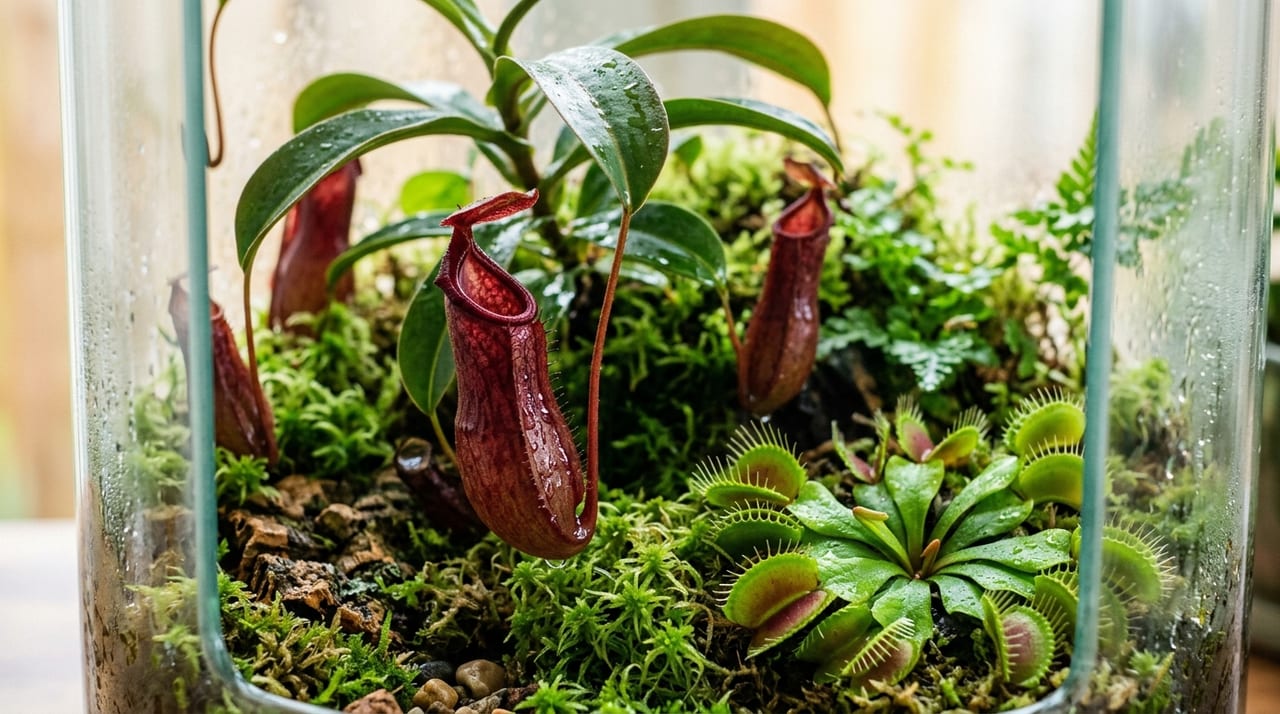
Among nepenthes (pitcher plants), species native to tropical high-altitude regions above 1,000 meters are called "highland nepenthes" and are extremely popular among carnivorous plant enthusiasts. The large and brilliantly colored pitchers (traps) are highly ornamental, and rare species such as N. rajah, N. villosa, and N. lowii exist in abundance. Maintaining a cool environment is the greatest challenge in cultivation, but with some ingenuity it is possible to grow them in Japan.
What Are Highland Nepenthes?
Highland nepenthes are native to cloud forests at altitudes of 1,500–3,000 meters, primarily on Borneo, Sumatra, and the Philippines. They grow in cool environments where daytime temperatures range from 18–25°C and nighttime temperatures from 10–18°C, constantly enveloped in mist in high-humidity locations.
Compared to commonly available nepenthes such as N. alata and N. ventricosa (lowland to intermediate species), highland species require a significant day-night temperature difference, and Japan's humid summers present a major challenge. However, the architectural beauty of their pitchers is unparalleled, and many enthusiasts find that once captivated by their appeal, they cannot look back.
In recent years, many hybrid varieties created by crossing highland species together, or between highland and lowland species, have become available. These hybrids are more heat-tolerant than pure highland species and are increasingly easier for beginners to grow.
Temperature Management Strategy
The most important aspect of highland nepenthes cultivation is temperature management. Ideal conditions are daytime temperatures of 20–28°C and nighttime temperatures of 12–18°C, with lowering the night temperature being key to healthy growth.
For summer management, indoor cultivation with air conditioning is the most practical approach. Set the air conditioner to 25–27°C during the day and lower it to around 20°C at night. While this increases electricity costs, setting up a dedicated plant room or cultivation space for centralized management is efficient.
Some enthusiasts modify simple coolers or wine refrigerators to create cultivation chambers. Installing a small cooling device with Peltier elements can efficiently cool a limited space. However, enclosed spaces suffer from poor air circulation, making a small fan essential.
In winter, conversely, care must be taken to ensure room temperature does not drop too low. Most highland species cease growing below 10°C, and below 5°C the plants may sustain damage. Indoor rooms with heating should not present problems, but be cautious of sudden temperature drops at night.
Light and Humidity Management
Highland nepenthes prefer bright but partially shaded environments. In their native cloud forests, they grow bathed in soft, mist-filtered light. For indoor cultivation, LED grow lights are the most manageable, offering the advantage of maintaining consistent light intensity and photoperiod.
Aim for 12–14 hours of daily light exposure, with medium light intensity. Very strong light promotes pitcher coloration but carries the risk of leaf scorch, so adjust based on plant condition.
Humidity of 70–90% is ideal. Using cultivation chambers or terrariums makes maintaining this humidity easier, but balance with air circulation is important. Complete enclosure causes air stagnation and promotes mold growth. Install a small PC fan to create gentle air movement.
Controlling an ultrasonic humidifier with a timer to deliver periodic misting is also effective. Note that ultrasonic humidifiers can leave white mineral deposits; using distilled water is recommended.
Growing Medium, Watering, and Fertilizer
For highland nepenthes growing medium, balancing drainage and water retention is crucial. Recommended mixes are sphagnum moss (living sphagnum is best) alone, or a blend of sphagnum moss 6 : perlite 2 : small-grain akadama 2. When living sphagnum is available, planting directly on top of living moss is also effective.
Water thoroughly when the medium surface begins to dry. Avoid water-tray methods; watering from above is more effective at preventing root rot. Rainwater or distilled water is ideal, though tap water passed through a filter works fine.
Fertilizer is essentially unnecessary, but if you wish to promote growth, a very dilute liquid fertilizer (approximately 5,000 times dilution) can be applied drop-by-drop into the pitcher. Avoid applying fertilizer directly to roots, as this risks root burn.
Readily Available Highland Species and Hybrids
Among pure highland species, N. ventricosa (high-altitude form) and N. spectabilis are relatively easy to cultivate. These have some heat tolerance and are ideal for beginners to highland nepenthes.
Popular hybrids include N. ventricosa × sibuyanensis, N. robcantleyi × veitchii, and N. lowii × ventricosa. They combine the beauty of highland species while maintaining moderate cultivation difficulty, making them well-balanced choices.
Pure ultra-highland species (N. rajah, N. villosa, N. macrophylla, etc.) are extremely expensive and present the highest cultivation difficulty. It is recommended to gain experience first with hybrid or relatively hardy highland species before attempting these.
Tips for Getting Nepenthes to Produce Pitchers
The greatest frustration for nepenthes growers is "pitchers not forming." Several conditions must align for pitcher development.
Humidity: The most critical factor. Pitchers require humidity above 70% to swell. In dry environments, vines may grow but pitchers wilt without developing.
Light: Without sufficient light, pitcher formation is not promoted. Manage the plant in a bright window or under LED lighting.
Temperature: Lowland species prefer 25–35°C; highland species 15–25°C. Outside these temperature ranges, pitchers form less readily.
Air circulation: Gentle air movement is said to promote pitcher formation. Applying weak circulation from a fan is effective.
Nepenthes Species and Cultivation Difficulty
| Species | Ideal Temperature | Humidity | Difficulty | Characteristics |
|---|---|---|---|---|
| N. alata | 20–35°C | 60%+ | Low | Ideal for beginners. Hardy |
| N. ventricosa | 18–30°C | 60%+ | Low | Chubby pitchers. Adorable |
| N. rajah | 15–25°C | 80%+ | High | World's largest pitchers. Highland species |
| N. lowii | 15–25°C | 80%+ | High | Unique pitcher shape. Highland species |
Seasonal Management Calendar
| Season | Daytime/Nighttime Temperature | Management Tips |
|---|---|---|
| Spring (Mar–May) | Day 20–25°C/Night 12–15°C | Growth resumes. Best time for repotting. Gradually increase light |
| Summer (Jun–Sep) | Day 25–28°C/Night 18–20°C | Greatest challenge. Lowering night temperature (AC, cooling chamber) is essential |
| Autumn (Oct–Nov) | Day 20–25°C/Night 12–18°C | Day-night temperature differential improves; ideal season for pitcher formation |
| Winter (Dec–Feb) | Maintain above 10°C | Below 5°C is strictly forbidden. Keep in heated indoor space and avoid sudden cold snaps |
Pests and Diseases
Highland nepenthes are relatively resistant to pests and diseases, but vigilance is necessary in enclosed cultivation environments.
- Scale insects and aphids: Appear on new growth and vine bases. If few in number, remove physically with a toothbrush; if numerous, use insecticides safe for carnivorous plants while monitoring plant condition.
- Spider mites: Thrive in dry, warm conditions and parasitize leaf undersides, feeding on sap. Maintain humidity and mist leaves regularly for prevention.
- Botrytis (gray mold): Gray fungal mold resulting from poor air circulation and excess moisture. Regularly remove dead leaves and old pitchers, and promote air circulation with fans to prevent.
- Root rot: The most common problem. Caused by constant water-tray methods or degraded substrate. Switch to overhead watering and refresh growing medium regularly.
Repotting Timing and Method
Spring (March–May), when growth resumes, is the best time for repotting. As growing medium ages, drainage declines and root rot ensues, so plan to refresh the sphagnum moss or soil blend every 2–3 years. Roots are delicate, so only lightly loosen old substrate and handle carefully without damaging them. After repotting, maintain high humidity, avoid direct sunlight, and convalescence will proceed smoothly.
For carnivorous plant cultivation basics, see Carnivorous Plants Indoors: Lighting Guide; for related pitcher plants, Cephalotus Care Guide is also helpful. You can find plants available to purchase in the carnivorous plants category.
Find Highland Nepenthes on GrowerDirect
Highland nepenthes are a rare sight in conventional garden centers. On GrowerDirect, you can purchase directly from specialist growers passionate about nepenthes cultivation. Sharing your home cultivation environment allows growers to suggest varieties and hybrids suited to your setup—a key advantage of the direct-sales model.