Carnivorous Plants LED Growing Guide | Optimal Light Intensity and Setup Examples for Indoor Cultivation
A complete guide to growing carnivorous plants indoors with LED lighting. Covers how to read product specifications including the wattage notation trap, differences between smartphone apps and quantum sensor PPFD measurement, light intensity guidelines for Sarracenia, Venus flytrap, sundews, butterworts, pitcher plants, winter dormancy illumination schedules, and metal rack arrangement examples by shelf level.
Key Takeaways
A complete guide to growing carnivorous plants indoors with LED lighting. Covers how to read product specifications including the wattage notation trap, differences between smartphone apps and quantum sensor PPFD measurement, light intensity guidelines for Sarracenia, Venus flytrap, sundews, butterworts, pitcher plants, winter dormancy illumination schedules, and metal rack arrangement examples by shelf level.
Related Species
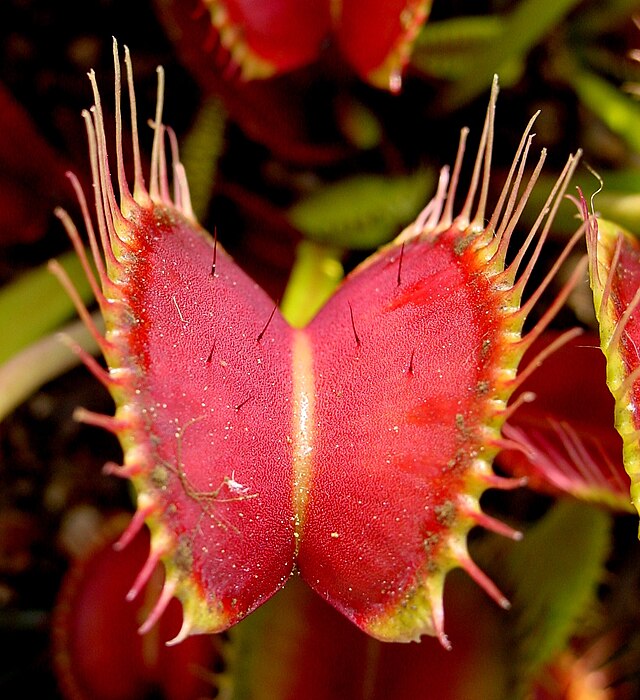
Most carnivorous plants thrive in strong sunlight, but indoor environments often struggle with insufficient light. By using plant growth LEDs, you can create a stable light environment year-round without relying on window placement. This guide systematically explains how to read product specifications, measurement methods, light intensity guidelines by species, seasonal management, and practical shelf setup examples.
Why Light Intensity Matters
Carnivorous plants grow wild in wetlands and degraded rocky areas with poor soil nutrients. These environments typically have little shade and receive abundant sunlight. Without sufficient photosynthesis, leaf color deteriorates and trap-catching ability declines. Generating traps and mucus secretion require energy, and photosynthesis is the source of that energy.
PPFD (Photosynthetic Photon Flux Density) Guidelines
PPFD is a measure of how much light a plant can use for photosynthesis, expressed in µmol/m²/s. Below are guidelines for major carnivorous plant groups.
Sarracenia
- Recommended PPFD: 300–600 µmol/m²/s
- A strong-light-loving North American wetland plant. Higher light intensity produces deeper red coloration
- Daily illumination duration: 14–16 hours (simulating long summer days)
Venus Flytrap (Dionaea muscipula)
- Recommended PPFD: 200–400 µmol/m²/s
- Prefers strong light but has slightly lower requirements than Sarracenia
- In winter dormancy, gradually reduce illumination to 12 hours or less from autumn onward
Sundews (Drosera)
- Varies significantly by species. Temperate species (D. rotundifolia, etc.): 150–300 µmol/m²/s; tropical species (D. capensis, etc.): 200–400 µmol/m²/s
- Tropical species do not require dormancy, so year-round illumination of 12–14 hours is possible
- Even among tropical species, there are variety differences. Drosera aliciae has a rosette shape with leaves spreading close to the ground, making uniform overhead lighting easier, and shows red coloration at the relatively lower level of 200 µmol/m²/s. Drosera spatulata has a wide environmental adaptation range and displays stable mucus secretion at 250–350 µmol/m²/s. Even within the tropical species, upright-stemmed types show differences in light reception between upper and lower parts, so securing slightly stronger light ensures even growth throughout the plant.
Butterworts (Pinguicula)
- Recommended PPFD: 100–250 µmol/m²/s
- Many species originate from Mexico and prefer bright indirect light over direct sunlight. Excessive light can cause leaf curling or dark reddening, so this plant benefits from somewhat lower light than other carnivorous plants
- Winter-growing species change to succulent winter leaves during the dry season, so reduce illumination duration during that period
Pitcher Plants (Nepenthes)
- Lowland species: 100–200 µmol/m²/s (can thrive in relatively low light)
- Highland species: 150–300 µmol/m²/s
- Direct sunlight causes leaf burn, so they prefer bright indirect light
Reading Product Specs — The Wattage Notation Trap
The most important thing to watch when choosing an LED is that wattage (W) is not an indicator of brightness. Wattage only shows power consumption and does not directly correlate with the actual light reaching your plants. Even two 20W LEDs can produce vastly different PPFD at plant level depending on LED chip efficiency, lens design, and light distribution angle.
Trustworthy manufacturers publish actual measured PPFD values at different distances. For example, they specify it like "PPFD 250 µmol/m²/s at 30 cm distance," clearly indicating how much light reaches plants at each height. Conversely, products with only vague specifications like "equivalent to ○○W" or "incandescent equivalent" cannot be evaluated for actual light intensity.
Lumen (lm) and lux (lx) readings also require caution. These units measure brightness according to human eye sensitivity, with different wavelength weighting than plant photosynthesis efficiency. In particular, red-blue-dominant LEDs appear dim in lux measurements, so relying only on lux underestimates light intensity. For plant applications, always reference PPFD or PPFD distribution graphs.
PPFD Measurement Methods — Smartphone Apps vs Quantum Sensors
Accurate understanding of light intensity requires measurement, but precision varies greatly depending on the method.
Smartphone Illuminance Apps Apps using smartphone cameras or ambient light sensors are convenient but measure only lux (illuminance), not PPFD itself. They work by applying an approximate conversion factor (which varies with the light source spectrum) to estimate PPFD, so they are at best rough estimates. With spectrally skewed light sources like LEDs, error margins are large, and sensor differences between phone models compound this. These apps work for relative comparison in your own space—"brighter versus dimmer"—but have low reliability for absolute values.
Dedicated PPFD Meters (Quantum Sensors) Quantum sensors for plant cultivation are designed to directly count the photon count of photosynthetically active radiation (400–700 nm). They are less sensitive to spectral bias and allow you to compare readings directly to cultivation guidelines. Prices range from inexpensive basic models at a few thousand yen to tens of thousands for calibrated versions, but owning one makes layout decisions much easier if you manage multiple species at different light levels. A practical approach is to use smartphone apps for rough estimation, then confirm critical plants with a quantum sensor.
Types of Plant Growth LEDs and How to Choose
Full-Spectrum LED A design incorporating multiple wavelengths—red, blue, green, white, etc.—and outputting a spectrum close to natural light. Highly versatile and compatible with most carnivorous plant groups.
Red-Blue LED Panel Concentrates illumination on the wavelengths effective for photosynthesis: red (660 nm) and blue (450 nm). Energy-efficient but appears red-purple, which may be unsuitable for display purposes.
High Color Rendering LED Bar Adapted from office or display LEDs. Those with CRI Ra 90 or higher approximate full-spectrum light, appear natural to the eye, and allow you to enjoy plants while growing them.
The key when choosing is to confirm that PPFD measurement values are published. Wattage alone reveals nothing about actual light intensity.
Setting Illumination Duration
Using a timer outlet to control illumination for fixed periods is the standard approach.
- Temperate species (Sarracenia, Venus flytrap): Adjust seasonally from 12–16 hours in summer to 8–10 hours in winter. Winter dormancy significantly affects cultivation quality
- Tropical species (Nepenthes, tropical sundews): Maintain year-round at 12–14 hours for stable management
- Avoid abrupt changes: Sudden increases or decreases in illumination duration easily cause leaf burn or excessive growth. Change gradually over 1–2 weeks
Illumination Schedule for Inducing Winter Dormancy in Temperate Species (November–March)
Temperate species like Sarracenia and Venus flytrap develop more vigorous growth the following year when allowed to enter winter dormancy. In indoor LED cultivation without natural light variation, deliberately reduce illumination duration to trigger dormancy. Guidelines below.
- November: Shorten illumination to about 10 hours per day. Simultaneously lower the ambient temperature where plants are kept
- December–January: Reduce to 8 hours or less, mimicking the short days of dormancy. During this period, water sparingly and lower the water level in bottom-watering trays
- February: Maintain 8–9 hours. Do not forcibly increase light until growth buds start showing activity
- March: Once new buds appear, gradually return to 10–12 hours over stages
For any month, avoid large single-step changes; gradually adjust over 1–2 weeks. Paired with temperature management, this approach creates a dormancy cycle closer to natural conditions than light control alone.
Adjusting Light Distance
PPFD changes significantly with the distance between light source and plants. Generally, doubling the distance reduces light intensity to about one-quarter (inverse square law).
- For LED panels, 15–30 cm from plants is a typical guideline
- Measurement with a PPFD meter (quantum sensor) is most reliable
- When growing multiple plants, use stands of different heights to ensure all receive roughly the same PPFD
LED Setup Example Using Metal Racks
To grow multiple species in limited indoor space, attaching LED bars to each shelf of a metal rack is standard. Different light levels per shelf allow efficient placement of species with differing demands.
- Top shelf (high-light zone): Closest to the light source with highest PPFD. Position strong-light-loving temperate species like Sarracenia and Venus flytrap here. Keep LED and plants 15–20 cm apart and secure 300 µmol/m²/s or more
- Middle shelf (medium-light zone): Suited for tropical sundews and color-selection sundew varieties. At 20–30 cm distance, aim for approximately 200–300 µmol/m²/s
- Bottom shelf (low-light zone): Place species avoiding strong light, such as lowland Nepenthes or Pinguicula. Increase distance slightly or use lower-power bars, keeping it to 100–200 µmol/m²/s
Using trays on each shelf for bottom-watering simultaneously streamlines watering and light management. Light leaking through shelf gaps can make the lower shelf too bright, so if needed, use light shields or aluminum panels to partition light between shelves and stabilize management.
Signs of Insufficient Light and How to Address Them
Color Fading and Yellowing Insufficient light thins chlorophyll. Healthy Sarracenia and Venus flytraps show red tones, but if leaves turn uniformly green, it is time to increase light intensity.
Excessive Growth (Etiolation) Venus flytrap leaves become thin and elongated, and traps at leaf tips shrink. The plant is growing toward the light due to insufficient intensity.
Reduced Mucus Secretion If mucus from Drosera glandular hairs diminishes, light intensity or humidity may be insufficient.
How to Choose LEDs Suited for Carnivorous Plants
Most carnivorous plants favor strong sunlight, making LED lighting essential for indoor cultivation.
| Item | Recommended Spec |
|---|---|
| Light Intensity | 15,000–30,000 lux or more |
| Color Temperature | 5,000–6,500 K (daylight white to daylight) |
| Illumination Duration | 12–16 hours/day |
| LED Type | Full-spectrum plant growth |
Venus flytraps and Sarracenia in particular need intense light, requiring high-output LEDs positioned close. Conversely, some species like lowland Nepenthes or Pinguicula can thrive on moderate light.
Building an Indoor Cultivation Environment
Mounting LED bars on a metal rack and using bottom-watering trays is the standard indoor cultivation style. Positioning each shelf's LED and arranging species with different light demands on the upper shelf (high light) and lower shelf (low light) is efficient.
Humidity maintenance is also crucial. Placing a humidifier nearby or managing plants inside a clear storage container preserves humidity. However, avoid sealing too tightly, which promotes mold from excess moisture; remember to ventilate regularly.
Automatic management with a timer is recommended. Set lights to turn on and off at the same times daily, providing plants with a stable light cycle.
Common Mistakes and Improvements
Mistake 1: Choosing LEDs by wattage Power consumption is not a brightness indicator. The criterion should be PPFD; for products without published PPFD, your only option is to assess whether plants avoid etiolation in practice.
Mistake 2: Trying to compensate for insufficient intensity by extending illumination duration If you do not reach the required strength, extending hours without boosting intensity will not produce colorful traps and will cause excessive growth. First shorten the distance to secure intensity, then fix duration at 12–14 hours.
Mistake 3: Applying the same year-round illumination to temperate species Venus flytraps and Sarracenia enter dormancy when day length shortens. Continuing long illumination through winter prevents dormancy and degrades the next year's growth. Reducing illumination duration from November onward is proper management.
Purchase with Confidence from GrowerDirect
Managing LED light for carnivorous plants may seem difficult at first. GrowerDirect connects you with experienced growers of Venus flytraps, Sarracenia, pitcher plants, and more, and you can ask them directly about their specific lighting environments and cultivation methods. Setting up your environment before purchase ensures smooth growth.