Source: Wikimedia Commons
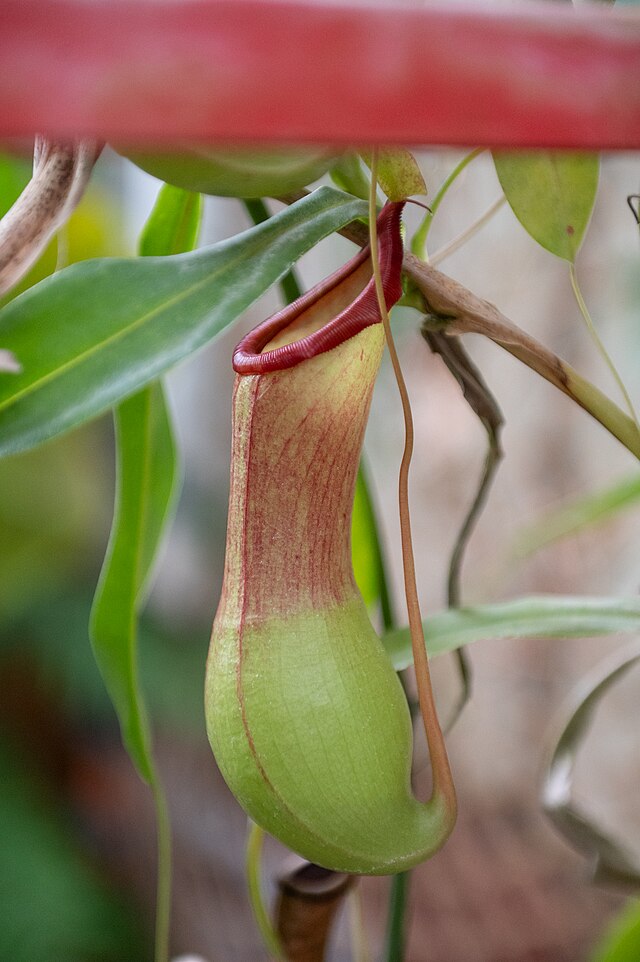
Nepenthes Gracilis
BeginnerNepenthes gracilis
A slender Nepenthes with a unique lid mechanism that flicks insects in with raindrop impact.
Overview
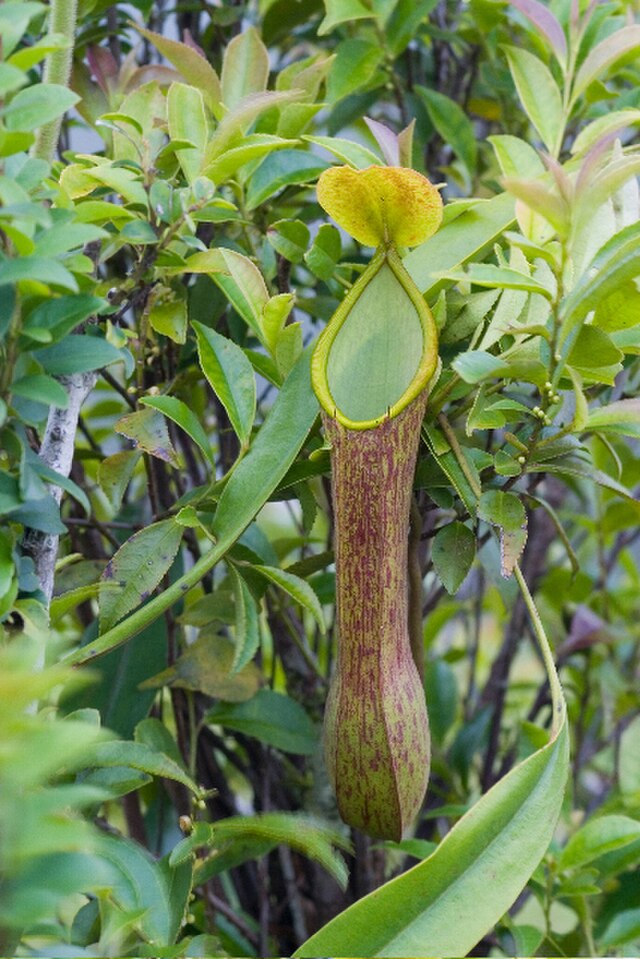
Nepenthes gracilis is a slender, vigorous lowland species widely distributed across the Malay Peninsula, Borneo, Sumatra, and Sulawesi. Its name (Latin for 'slender' or 'graceful') aptly describes its thin stems and narrow pitchers. The species is noted for a remarkable and well-documented prey-capture mechanism: raindrops striking the lid cause it to flex downward, catapulting insects resting on the underside of the lid into the pitcher fluid (reported in a 2012 study). This rain-assisted mechanism supplements conventional prey capture. N. It grows readily in sphagnum or peat-perlite media with consistent watering and is recommended as an excellent beginner's lowland Nepenthes.
Lifespan of the Nepenthes Gracilis
The Nepenthes Gracilis lives 10+ years.
Size of the Nepenthes Gracilis
The Nepenthes Gracilis grows to Vine 30-150cm.
Temperature & humidity for the Nepenthes Gracilis
The ideal temperature for the Nepenthes Gracilis is 22〜35℃.
gracilis is among the most adaptable and robust Nepenthes in cultivation, tolerating temperatures of 22–35°C and humidity above 50%.
Basic Info
Origin
Malay Peninsula, Singapore, Borneo, Sumatra, Sulawesi, Thailand, and Cambodia, lowland habitats
Lifespan
10+ years
Size
Vine 30-150cm
Temperature
22〜35℃
Humidity
60〜90%
Watering & Fertilizer
Insects
Growing Tips
Light & Placement
Very robust; with humidity of 50% or more it grows even in a bright spot indoors.
Watering
Use tray watering or simply never let the medium dry out. It is easy to grow with humidity of 50% or more.
Temperature & Overwintering
A lowland species with an ideal range of 22-35°C. It is cold sensitive, so keep it warm indoors in winter.
Soil & Repotting
Plant in sphagnum alone or a peat moss and perlite mix. It grows fast, so repot once the roots fill the pot.
Pruning & Shaping
Its slender stems climb to around 150 cm, so cut them back when they grow too long.
Nepenthes Gracilis FAQ
QWhat is the growing difficulty level for Nepenthes Gracilis?
Beginner. A variety suitable for beginners. No special equipment or experience is required—you can grow it without problems by setting up a basic cultivation environment.
QWhat is the ideal temperature for Nepenthes Gracilis?
The ideal temperature for Nepenthes Gracilis is 22〜35℃. Avoid sudden temperature changes and maintain a stable environment.
QWhat is the lifespan of Nepenthes Gracilis?
The average lifespan of Nepenthes Gracilis is 10+ years. With proper cultivation environment and nutrient management, you can keep it healthy for a long time.
QHow large does Nepenthes Gracilis get?
The mature size of Nepenthes Gracilis is Vine 30-150cm. This may vary slightly depending on cultivation environment and individual differences.
QHow should I water and fertilize Nepenthes Gracilis?
Nepenthes Gracilis: watering & fertilizer — Insects. Aim for appropriate frequency and amount.
QWhat is the typical price for Nepenthes Gracilis?
The price of Nepenthes Gracilis varies significantly by variety, characteristics, size, and lineage. Please check GrowerDirect's price guide for the latest market information.
Last updated: October 2, 2026
References & Sources
Edited & verified by: GrowerDirect Editorial Team
The classifications, regulations, and growing data on this page are created and verified based on the primary information database below.
Taxonomy & Authority
Accepted name: Nepenthes gracilis Korth.
Synonyms: Nepenthes korthalsiana Miq., Nepenthes angustifolia Mast., Nepenthes laevis Lindl., Nepenthes obrieniana Linden & Rodigas, Nepenthes gracilis var. arenaria Ridl. ex Macfarl., Nepenthes gracilis var. longinodis Beck, Nepenthes gracilis var. teysmanniana (Miq.) Beck, Nepenthes longinodis Beck, Nepenthes tupmanniana Bonstedt, Nepenthes gracilis var. elongata Blume, Nepenthes teysmanniana Miq., Nepenthes gracilis var. major B.S.Williams
Authority databases: GBIF · POWO · ICPS cultivar registration (International Carnivorous Plant Society)
Nomenclature follows global taxonomic authority databases.
Regulations & Conservation Status
The genus Nepenthes, except for rajah/khasiana, is CITES Appendix II at the genus level. International trade requires permits.
Sources: CITES Appendices (carnivorous plants) - ICPS/Barry Rice / CITES & Carnivorous Plant Checklist (RBG Kew)
Regulations may change. Always verify the latest information with the relevant authorities.
Related Species
Find listings for this species
Related Articles
Developing Nepenthes Pitcher Traps Completely: Cultivation Secrets Through Environmental Management and Physiological Approaches
The carnivorous leaves of Nepenthes represent the masterpiece of an insect-trapping mechanism that arose over a long course of evolution. This article explains how to mature the carnivorous leaves completely and develop healthy plants with actual predatory function through humidity, light, and nutrient management.
Growing Pitcher Plants Without a Greenhouse: How to Get Pitchers to Form Indoors
Explains how to grow carnivorous pitcher plants (Nepenthes) indoors without a greenhouse. Covers reasons why pitchers fail to form and solutions, methods for maintaining humidity, variety selection, and tips for winter care.
Highland Nepenthes Growing Guide | Cool Management for High-Altitude Pitcher Plants
An introduction to growing highland nepenthes. Covers the key points of managing summer temperatures with air conditioning at about 25–27°C during the day and 20°C at night while maintaining the ideal humidity of 70–90%, a potting mix of 6 parts sphagnum moss, 2 parts perlite, and 2 parts kanuma soil, and a guideline of keeping temperatures at 10°C or above in winter.
How to Grow Nepenthes | Cultivation Techniques to Grow Larger Pitchers
We cover how to grow Nepenthes, including the difference in ideal temperatures between lowland and highland species, how to maintain 70–80% humidity, and a 7:3 sphagnum moss and perlite potting mix, and we also explain the light, ventilation, and fertilizer needed to grow larger pitchers and why you shouldn't cut the growing point.
Can't find the plant you're looking for?
Post your wishes for free and growers with matching plants will contact you with introductions.