Source: Wikimedia Commons
Sarracenia Oreophila
AdvancedSarracenia oreophila
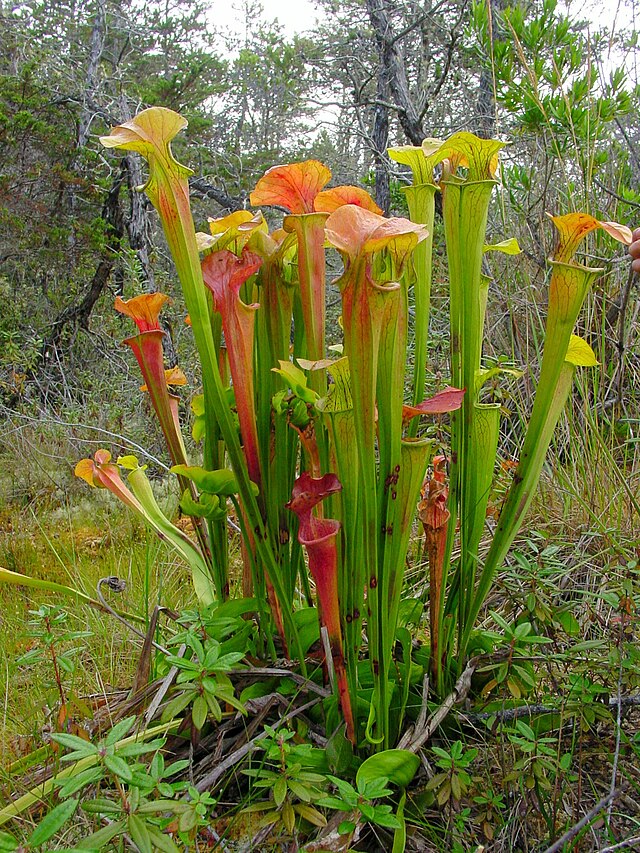
A highland Sarracenia, endangered and protected, with beautiful yellow-green tubes.
About
Sarracenia oreophila, the green pitcher plant, is a federally endangered species found only in scattered locations in the mountains of Alabama and, historically, North Carolina and Georgia in the United States. It is listed on CITES Appendix I, making wild collection and commercial trade strictly prohibited. The species superficially resembles S. flava in its tall, yellow-green pitchers, but uniquely among Sarracenia, it produces only flattened, non-carnivorous phyllodia in summer, with the carnivorous pitchers appearing in spring and autumn. Cultivation requires the standard Sarracenia conditions: acidic nutrient-poor media, tray watering with pure or rainwater, full sun, and mandatory cold winter dormancy. Its rarity makes it highly prized by collectors; most cultivated plants derive from seed or tissue culture.
Lifespan of the Sarracenia Oreophila
The Sarracenia Oreophila lives 10+ years.
Size of the Sarracenia Oreophila
The Sarracenia Oreophila grows to 30-50cm.
Basic Info
Origin
Limited highland wetland sites in Alabama and North Carolina, USA (federally endangered)
Lifespan
10+ years
Size
30-50cm
Temperature
10〜30℃
Humidity
60〜90%
Watering & Fertilizer
Insects (auto-capture)
Growing Tips
Light & Placement
Ample sun is essential. As a highland bog plant, give it an airy outdoor spot in full sun and avoid stagnant, humid corners.
Watering
Tray-water to keep it moist with pure or rain water. Continue tray watering even in summer, when the pitchers die and flat phyllodia appear.
Soil & Repotting
Use pure sphagnum or peat moss with perlite. Do not fertilize, and repot during dormancy to avoid damaging the rhizome.
Dormancy Care
Winter dormancy is essential. Expose it to outdoor cold; the top dies back but the rhizome survives, so do not discard it.
Pests & Cautions
Unlike other Sarracenia, it is normal for the pitchers to die in summer and be replaced by flat leaves. Do not mistake this for disease and dig it up.
Sarracenia Oreophila FAQ
QWhat is the growing difficulty level for Sarracenia Oreophila?
Advanced. A variety suitable for advanced growers. Requires advanced cultivation techniques and specialized equipment, with careful environmental adjustments needed.
QWhat is the lifespan of Sarracenia Oreophila?
The average lifespan of Sarracenia Oreophila is 10+ years. With proper cultivation environment and nutrient management, you can keep it healthy for a long time.
QHow large does Sarracenia Oreophila get?
The mature size of Sarracenia Oreophila is 30-50cm. This may vary slightly depending on cultivation environment and individual differences.
QHow should I water and fertilize Sarracenia Oreophila?
Sarracenia Oreophila: watering & fertilizer — Insects (auto-capture). Aim for appropriate frequency and amount.
QWhat is the typical price for Sarracenia Oreophila?
The price of Sarracenia Oreophila varies significantly by variety, characteristics, size, and lineage. Please check GrowerDirect's price guide for the latest market information.
Last updated: August 31, 2026
Growing Specifications
- USDA Zone
- 6–8
Sources: Missouri Botanical Garden - Sarracenia oreophila (Zone 6-8)
References & Sources
Edited & verified by: GrowerDirect Editorial Team
The classifications, regulations, and growing data on this page are created and verified based on the primary information database below.
Taxonomy & Authority
Accepted name: Sarracenia oreophila (Kearney) Wherry
Synonyms: Sarracenia oreophila var. ornata S.McPherson & D.E.Schnell, Sarracenia flava var. oreophila Kearney
Authority databases: GBIF · POWO · ICPS cultivar registration (International Carnivorous Plant Society)
Nomenclature follows global taxonomic authority databases.
Regulations & Conservation Status
In the genus Sarracenia, only S. oreophila and S. rubra subspecies jonesii/alabamensis fall under Appendix I (the species S. rubra itself is Appendix II).
Sources: CITES Appendices (carnivorous plants) - ICPS/Barry Rice / CITES & Carnivorous Plant Checklist (RBG Kew) / IUCN Red List: Sarracenia oreophila (CR)
Regulations may change. Always verify the latest information with the relevant authorities.
Related Species
Find listings for this species
Related Articles
Complete Sarracenia Growing Guide | Variety Selection, Outdoor Cultivation, and Winter Dormancy
A complete guide to cultivating Sarracenia, a carnivorous plant native to North America. Learn the characteristics of major species and varieties, the advantages and environmental needs for outdoor cultivation in sunny locations, selection of soil and containers, watering and standing-water management techniques, winter dormancy care, and practical tips for growing healthy, thriving plants in Japan's climate.
Sarracenia Outdoor Cultivation Guide | Cold Hardiness and Year-Round Management
This guide explains the benefits of outdoor Sarracenia cultivation, cold hardiness, annual management schedules, and care for soil, watering, and light.
Sarracenia Trap Function and Diverse Morphology
A detailed explanation of the unique trap mechanisms of Sarracenia carnivorous plants and the varied morphology that differs by species.
How to Cultivate Sarracenia (Pitcher Plant) | Humidity Control and Maintaining Tubular Carnivorous Leaves
Methods for maintaining healthy tubular carnivorous leaves in Sarracenia. Detailed explanation of replicating native habitat conditions, optimal parameters for light, humidity, and growing media, seasonal management (the necessity of winter dormancy), and pest and disease management. A professional cultivation guide for experienced growers.
Can't find the plant you're looking for?
Post your wishes for free and growers with matching plants will contact you with introductions.