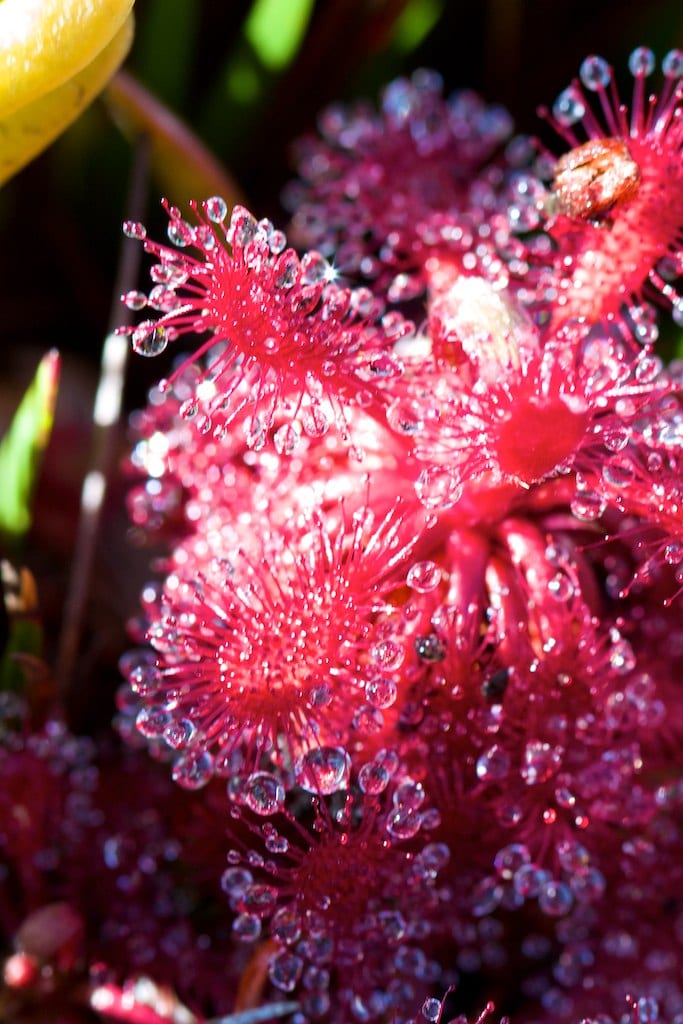
Source: Wikimedia Commons
Drosera roraimae
AdvancedDrosera roraimae
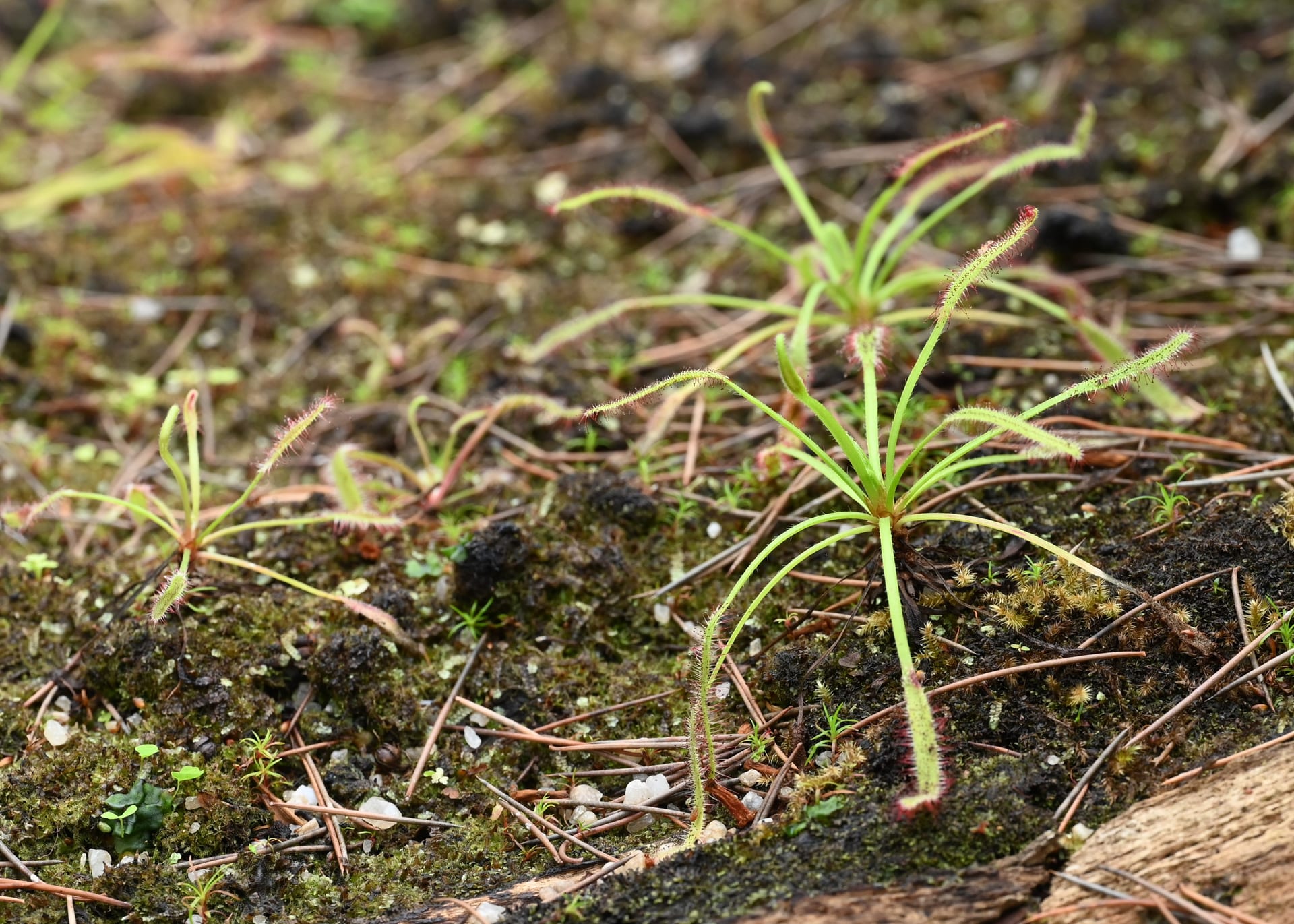
A highland sundew from South America whose type specimen was collected on Mount Roraima in the Guiana Highlands. It carries its sticky leaves on a short stem clothed in many dead leaves, and a glandular flower stalk bears about ten flowers.
About
Drosera roraimae is a perennial sundew of the Guiana Highlands, spanning Brazil, Guyana and Venezuela. It is named after Mount Roraima, the best known of the table mountains (tepuis), where the type specimen was collected. It was first treated as a variety of Drosera montana (var. roraimae) and raised to species rank by Maguire and Laundon in 1957. It has a short stem that keeps many dead old leaves, with the carnivorous leaves at the top, and a glandular flower stalk carrying about ten flowers. Detailed information on plant size and flower colour is scarce. Many carnivorous plants such as Heliamphora share the tepuis, and on Mount Roraima it has been photographed growing alongside bladderworts. In Japan it is sold in small numbers by specialist nurseries and at online auctions as a Guiana Highlands sundew. Success depends on recreating this cool, very humid highland climate, and coping with Japan's midsummer heat is the main challenge.
Source: Wikipedia (CC BY-SA 4.0)
Temperature & humidity for the Drosera roraimae
The summits of the Guiana Highlands' table mountains (tepuis) generally range from about 7 to 23°C, rarely freeze, and receive very heavy rainfall.
Basic Info
Origin
Guiana Highlands of South America (Brazil, Guyana, Venezuela)
Lifespan
Perennial
Size
Few published measurements
Temperature
10〜30℃
Humidity
60〜90%
Watering & Fertilizer
No fertilizer (catches small insects)
Growing Tips
Temperature & Overwintering
Its tepui habitat stays cool at roughly 7-23°C. In a Japanese summer it needs protection from heat, for example in an air-conditioned room.
Light & Placement
Likes bright light; growing under LED lights indoors is easiest.
Watering
From a very rainy habitat, it should never dry out; keep it moist on a tray of pure or rain water.
Soil & Repotting
Plant in pure sphagnum or a peat-sand mix without added fertilizer.
Pests & Cautions
Heat plus humidity invites mould; keep some air movement even in a humid enclosure.
Drosera roraimae FAQ
QWhat is the growing difficulty level for Drosera roraimae?
Advanced. A variety suitable for advanced growers. Requires advanced cultivation techniques and specialized equipment, with careful environmental adjustments needed.
QHow should I water and fertilize Drosera roraimae?
Drosera roraimae: watering & fertilizer — No fertilizer (catches small insects). Aim for appropriate frequency and amount.
QWhat is the typical price for Drosera roraimae?
The price of Drosera roraimae varies significantly by variety, characteristics, size, and lineage. Please check GrowerDirect's price guide for the latest market information.
Last updated: September 23, 2026
References & Sources
Edited & verified by: GrowerDirect Editorial Team
The classifications, regulations, and growing data on this page are created and verified based on the primary information database below.
Taxonomy & Authority
Accepted name: Drosera roraimae (Klotzsch ex Diels) Maguire & Laundon
Synonyms: Drosera montana var. roraimae Klotzsch ex Diels, Drosera montana var. robusta Diels
Authority databases: GBIF · GBIF Drosera roraimae (Klotzsch ex Diels) Maguire & Laundon
Nomenclature follows global taxonomic authority databases.
Regulations & Conservation Status
Not listed under CITES. Because the genus Drosera includes a designated Invasive Alien Species in Japan (D. intermedia), any Drosera imported into Japan must be accompanied by a species-name certificate. No paperwork is needed to buy or grow plants already in domestic trade.
Regulations may change. Always verify the latest information with the relevant authorities.
Related Species
Find listings for this species
Related Articles
Drosera (Sundew) Care Guide | Diverse Carnivorous Plants That Trap Insects with Sticky Secretions
Explanation of how to grow carnivorous Drosera (Sundew). We introduce the characteristics of beginner-friendly varieties such as Spatulata, Capensis, and Adelae, methods for water tray watering, light conditions, overwintering, and propagation through leaf cuttings.
Drosera Propagation Guide — Leaf Cuttings, Division & Seeds
Propagating sundews: leaf cutting technique, division method, seed sowing, and species-specific propagation recommendations.
Complete Guide to Sundew (Drosera) Cultivation | How to Bring Out the Beauty of Its Sticky Secretions
Explains varieties such as D. adelae and D. capensis, water-tray management, light requirements, and differences between temperate and tropical species.
Sundew Species and Cultivation Techniques | Bringing Out the Beauty of Mucilage
This article explains the characteristics of major sundew species and cultivation techniques (light, humidity, soil) for making mucilage shine beautifully.
Can't find the plant you're looking for?
Post your wishes for free and growers with matching plants will contact you with introductions.