The World of Rare Carnivorous Plants | The Charm of Cephalotus, Heliamphora, and Byblis
An introduction to rare carnivorous plants popular among collectors. This article provides detailed explanations of the characteristics, acquisition methods, and growing environments of Australian Cephalotus, the highland species Heliamphora from Tepui, and the iridescent Byblis.
Key Takeaways
An introduction to rare carnivorous plants popular among collectors. This article provides detailed explanations of the characteristics, acquisition methods, and growing environments of Australian Cephalotus, the highland species Heliamphora from Tepui, and the iridescent Byblis.
Related Species
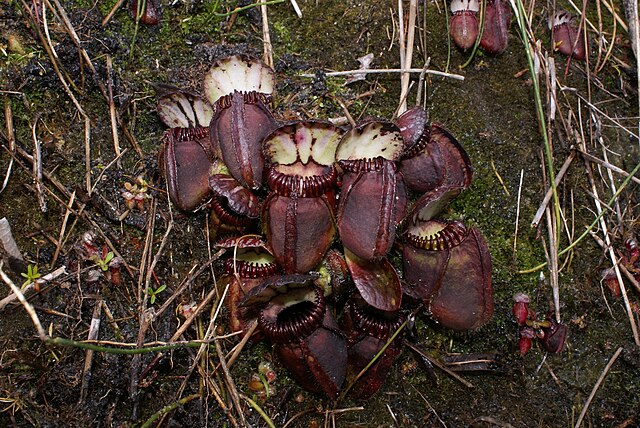
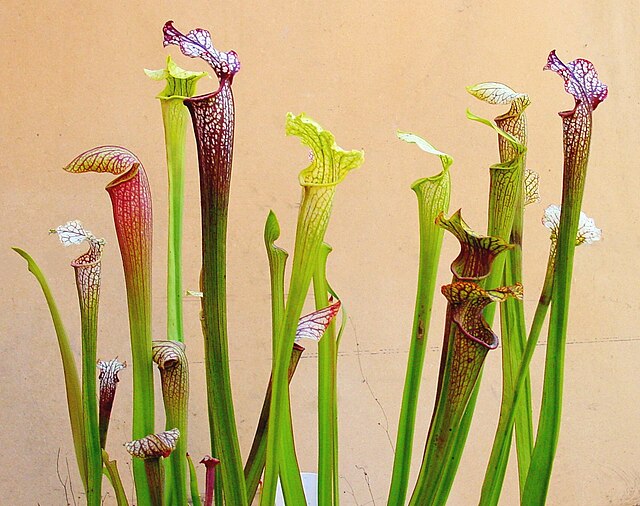
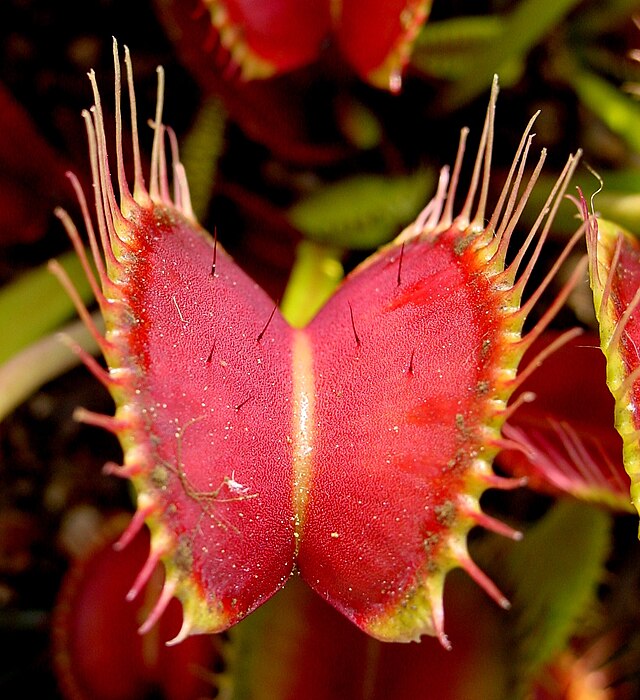
Among carnivorous plants, there are rare species that are difficult to cultivate and have limited distribution. Here, we introduce three genera that are particularly popular among collectors.
Cephalotus (Cephalotus follicularis)
Basic Information Cephalotus follicularis is a monotypic genus with a single species, endemic to limited coastal wetland regions in western Australia. It forms small pitchers (insectivorous leaves), with rib-like protrusions on the inner side of the lid and serrated edges that guide insects into the pitcher.
Characteristics
- Pitcher height is typically 2–5 cm. Even in large specimens, they rarely exceed about 8 cm
- Forms both insectivorous leaves and normal leaves (flat leaves). As light intensity increases, the proportion of insectivorous leaves increases
- Growth is extremely slow, taking several years from seed to flowering size
Growing Conditions
- Temperature: Dislikes high summer temperatures (35°C and above). Optimal range is 20–28°C
- Humidity: Maintain 60–90%. Thrives in high-humidity environments but also requires adequate air circulation
- Soil: Peat moss + perlite (1:1) or sphagnum moss + Kanuma soil
- Light: Bright indirect light to weak direct sunlight (prolonged direct sunlight can cause leaf burn)
- Water: Manage with water-logging. Tap water is unsuitable; use distilled water
Acquisition Domestic distribution is available but limited in quantity. Obtaining plants from specialized carnivorous plant producers or plant fairs is the most reliable method.
Heliamphora (Heliamphora)
Basic Information A highland carnivorous plant native to the Tepui (table-top mountains) located at the borders of Venezuela, Brazil, and Guyana in South America. It has pitcher-shaped traps but secretes little digestive fluid, relying instead on bacteria to decompose its prey. More than 30 species have been described to date.
Characteristics
- A spoon-shaped structure at the pitcher's opening prevents excessive rainwater from flooding the interior
- As Tepui is a remote environment at altitudes of 2,000–3,000 m and higher, each mountain has its own endemic species
- The optimal environment features sharp temperature fluctuations between day and night (20–25°C during the day, 5–15°C at night)
Growing Conditions
- Temperature management is the biggest challenge: Extremely sensitive to high summer temperatures (28°C and above); cooling with air conditioning or refrigeration units may be necessary
- Soil: Sphagnum moss alone, or peat moss + perlite (1:1)
- Light: Thrives even at relatively low light levels (PPFD approximately 100–200 µmol/m²/s), though color development improves with more light
- Day-night temperature differential: A temperature difference of 8–15°C promotes healthy growth
This is an advanced cultivar for experienced growers, difficult for the average home gardener, but remains popular among collectors due to its unique form and rarity.
Byblis (Byblis)
Basic Information An adhesive-trap carnivorous plant native to Australia and New Guinea, with 5–8 known species. Because the sticky fluid secreted by its glandular hairs shimmers like diamonds, it is also called the "Rainbow Plant."
Outwardly resembling sundew (Drosera), it is systematically a completely different plant group, believed to be more closely related to the fleabane family.
Characteristics
- Narrow linear leaves with countless glandular hairs densely packed to trap small insects with sticky secretions
- There are both annual species (e.g., B. liniflora) and perennial species (e.g., B. gigantea)
- B. gigantea is a large species that can reach heights of 60 cm or more
Growing Conditions
- Annual species (B. liniflora): Relatively easy to grow; suitable for beginners. Germination rates improve with smoke water (or smoke disk) treatment when growing from seed
- Perennial species (B. gigantea, etc.): Require a dry, warm climate and are weak against Japan's hot, humid summers
- Soil: Peat moss + perlite (1:1) or sandy soil
- Light: Prefers strong light. Target PPFD of approximately 300–500 µmol/m²/s
Acquisition Methods for Rare Species
There are several ways to acquire rare carnivorous plants:
- Purchase from specialized carnivorous plant producers: The most reliable method. You can also obtain detailed cultivation advice
- Plant fairs and markets: Available at carnivorous plant enthusiast events and plant fairs
- Cultivation from seed: Seeds of Cephalotus are available commercially, but germination and growth take considerable time
Cultivation Tips for Long-Term Enjoyment of Rare Species
Once you acquire a rare carnivorous plant, prioritize stabilizing the growing environment above all else. Rare species are often more sensitive to environmental changes than common varieties, and sudden temperature fluctuations or light variations can cause stress.
Management Immediately After Arrival
- For the first 2–3 days after arrival, avoid direct sunlight and acclimate in bright shade
- Transport stress may temporarily reduce vigor, but avoid making excessive environmental changes in response
- After removing packaging materials, mist the leaves and place in a high-humidity environment
Recommendation for Propagation To prepare for the possibility of plant loss, we recommend dividing plants or propagating from leaves early on. Having backup plants provides peace of mind for cultivation.
Comparison of Acquisition Sources
| Source | Advantages | Disadvantages |
|---|---|---|
| Specialist nurseries | Stable quality, accurate variety names | Higher prices |
| Enthusiast events | Encounter rare varieties | Held irregularly |
| Online auctions | Sometimes affordable | Variable quality |
| Personal import from overseas | Ultra-rare species available | Quarantine procedures required |
| GrowerDirect | Direct communication with growers | Number of listings varies seasonally |
Common Failures and Solutions
Failure 1: Acquiring a rare species as your first plant Cephalotus and Heliamphora have narrow tolerances for temperature, humidity, and water quality. It is more effective in the long run to be able to reliably grow Venus flytrap or Sarracenia for a year before attempting these species.
Failure 2: Acquiring without preparing for high-temperature periods Heliamphora is a highland species and suffers in Japanese summers where nighttime temperatures do not drop. Decide how you will manage the summer before acquiring the plant. You may need wine coolers or cooling devices.
Failure 3: Rushing propagation Rare species grow slowly, and dividing them too early can take years to recover. Prioritize growing a single plant to a substantial size before attempting to propagate.
Purchase with Confidence at GrowerDirect
Rare carnivorous plants are best welcomed only after appropriate environmental settings are in place—this is the first step to long-term cultivation. GrowerDirect features producers specializing in rare species, and you can consult about the growing environment before purchase. Rather than rushing to acquire the plant, we recommend preparing your setup first.