Source: Wikimedia Commons
Red Root Floater
BeginnerPhyllanthus fluitans
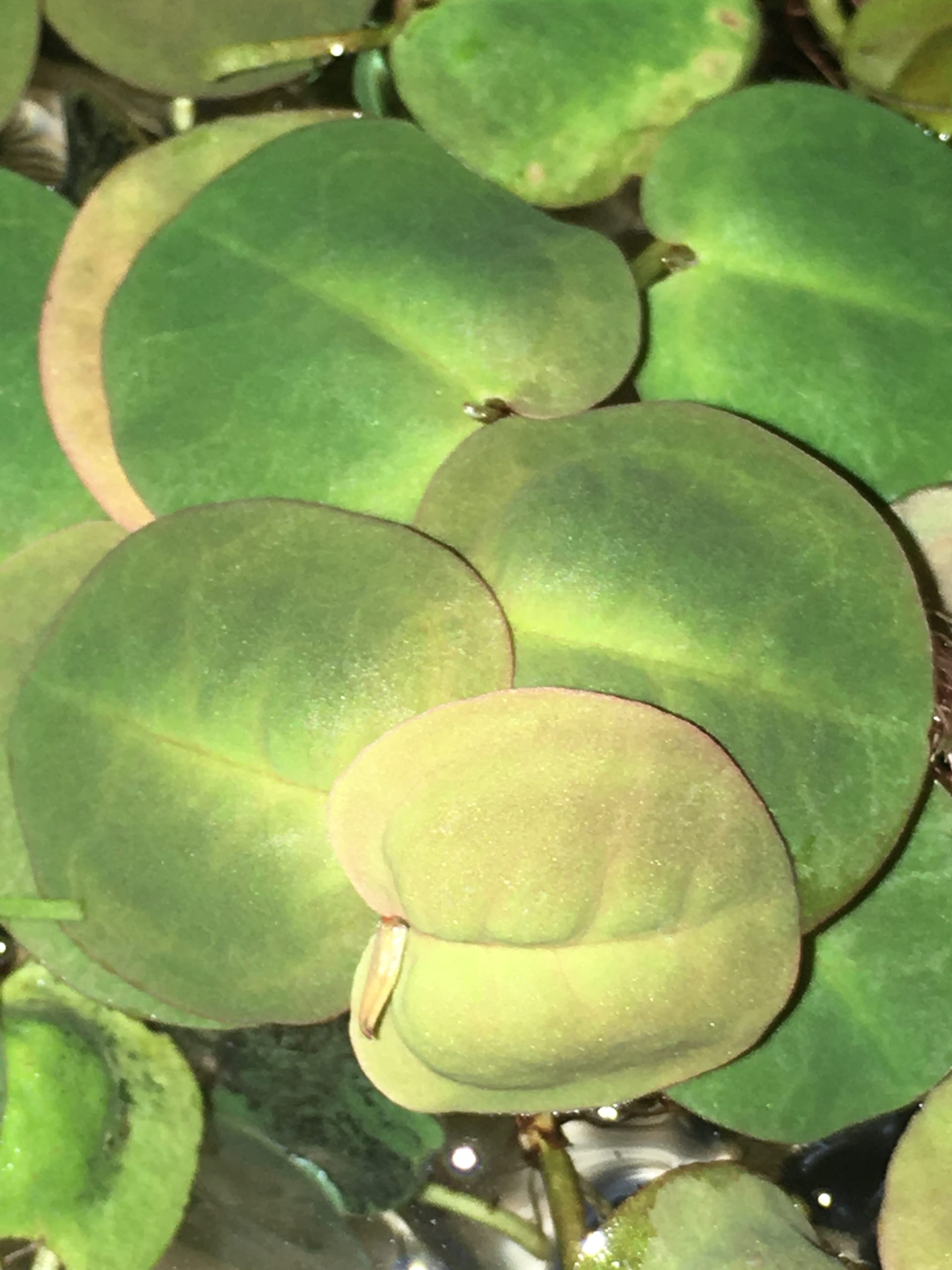
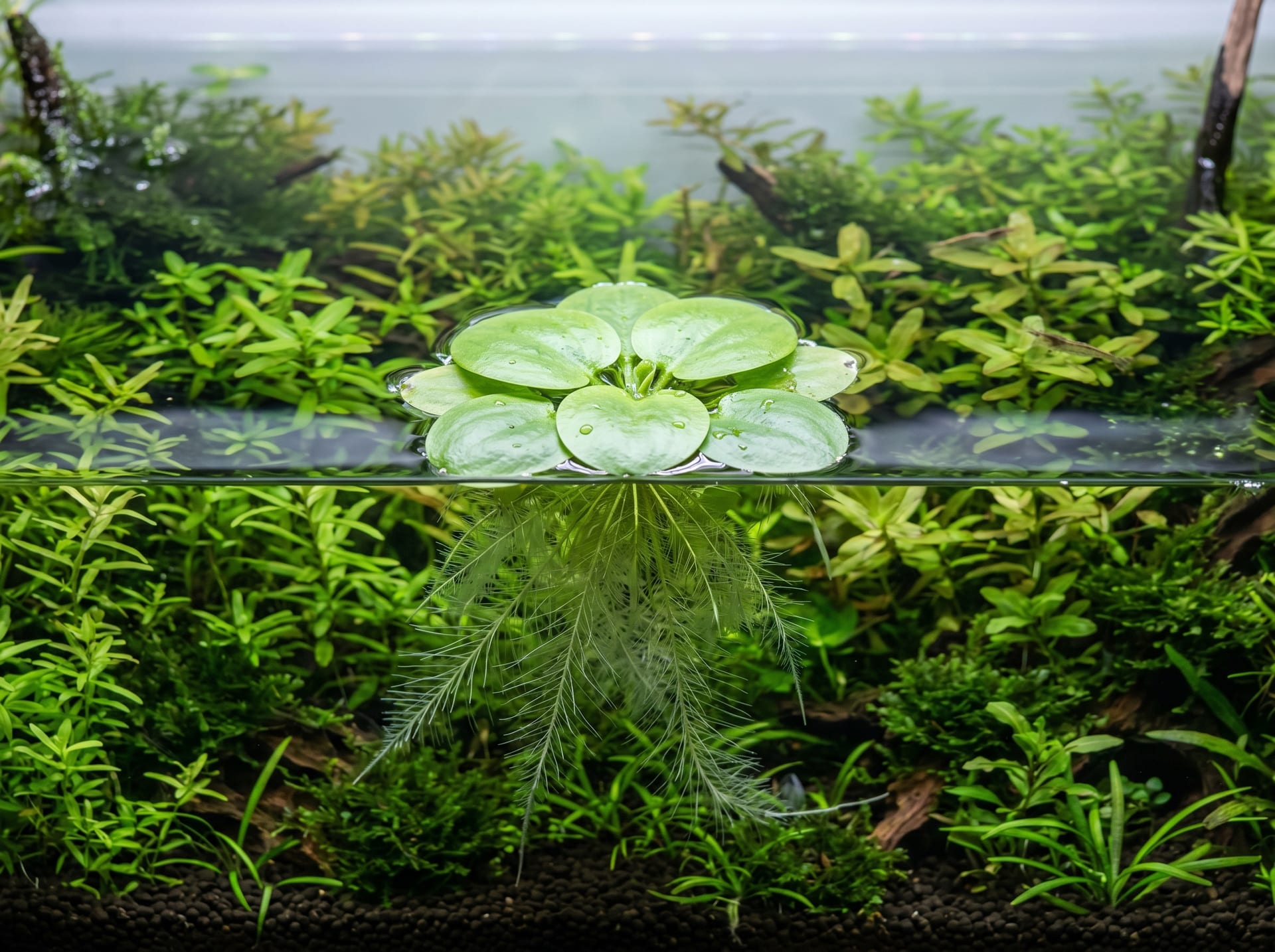
A floating plant with beautiful red roots and round leaves. Red roots floating on surface add accent.
Overview
Red Root Floater (Phyllanthus fluitans) is a floating aquatic plant in the family Phyllanthaceae, native to South America (Amazon River basin). While the small rounded leaf surface is green, under high-light conditions the leaves take on a reddish tint and the roots hanging below the water surface develop striking red to pink coloration, giving it a uniquely beautiful appearance. Its simple maintenance—simply floating on the water surface—is its great appeal, as a floating plant requiring no CO2 or substrate, easily enjoyed by beginners. Strong light is the key to color development, as insufficient light leaves both roots and leaves green. Its water purification properties (absorption of nitrates and phosphates) make it useful as a supplement for densely stocked tanks or water quality management. It also provides shelter for shrimp and small fish.
Temperature & humidity for the Red Root Floater
The ideal temperature for the Red Root Floater is 20〜28℃.
Optimal water temperature is 20–28°C, preferring slightly acidic to neutral water at pH 6–7.
Basic Info
Origin
South America (Amazon River basin)
Lifespan
Perennial
Size
Floating
Temperature
20〜28℃
Growing Tips
Lighting
Strong light is the key to red colouring; under high light the leaves redden and the roots turn red to pink. With too little light both stay green.
CO2 & Fertilizer
Needs neither CO2 nor substrate; it grows simply floating on the surface. It absorbs nitrate and phosphate, helping with water quality.
Water Temperature & Quality
A temperature of 20–28°C and slightly acidic to neutral water at pH 6–7 suit it. It also helps purify water in heavily stocked tanks.
Trimming & Propagation
It multiplies rapidly by division. Just split off plants and move them to another tank to propagate, and thin out any excess.
Notes
Overgrowth covers surface and blocks light
Red Root Floater FAQ
QWhat is the growing difficulty level for Red Root Floater?
Beginner. A variety suitable for beginners. No special equipment or experience is required—you can grow it without problems by setting up a basic cultivation environment.
QWhat is the ideal temperature for Red Root Floater?
The ideal temperature for Red Root Floater is 20〜28℃. Avoid sudden temperature changes and maintain a stable environment.
QWhat is the typical price for Red Root Floater?
The price of Red Root Floater varies significantly by variety, characteristics, size, and lineage. Please check GrowerDirect's price guide for the latest market information.
Last updated: July 5, 2026
References & Sources
Edited & verified by: GrowerDirect Editorial Team
The classifications, regulations, and growing data on this page are created and verified based on the primary information database below.
Taxonomy & Authority
Regulations & Conservation Status
Sources: Ministry of the Environment Designated Invasive Species List (Invasive Species Act) / CITES Appendix II listed plant taxa (family and genus level)
Regulations may change. Always verify the latest information with the relevant authorities.
Related Species
Find listings for this species
Related Articles
Rose Root Rot Prevention and Rhizosphere Management | Soil Improvement and Drainage Strategy to Extend Rose Lifespan
Professional techniques for solving rose root rot from the root cause: soil management methods that balance drainage and water retention, optimize rhizosphere conditions, and conduct regular soil diagnostics.
Rooting and Initial Care of Pachypodium Gracilius
Methods for encouraging root development in imported bare-root Pachypodium gracilius. Explains the preparation of pots, soil media, and temperature conditions; watering practices during rooting (maintaining primarily dry conditions); how to confirm successful rooting and interpret key indicators; initial post-rooting care; and seasonal management guidelines.
Root Rot Prevention and Root Zone Regeneration Management in Foliage Plants | Soil Selection, Watering, and Early Diagnosis & Recovery Techniques
Root rot is the greatest threat to foliage plants. This article covers practical knowledge from the mechanisms of root rot development to prevention, early-stage diagnosis and treatment methods, and ensuring long-term plant health through soil and watering management.
Rose Root Volume Management and Plant Health Preservation | Practicing Root Zone Limitation and Soil Improvement
In rose cultivation, root health is the most significant factor that affects flower quality. This article explains a root zone regeneration strategy through root volume assessment, soil improvement, and fertilizer management.
🩺 Common diseases
Can't find the plant you're looking for?
Post your wishes for free and growers with matching plants will contact you with introductions.