Preventing Rose Root Rot and Rhizosphere Management | Soil Improvement and Drainage Strategies to Extend Rose Plant Lifespan
The soil management method to fundamentally solve rose root rot problems. Detailed explanation of professional practical techniques from balancing drainage and water retention, optimizing rhizosphere environment, to regular soil diagnostics.
Key Takeaways
The soil management method to fundamentally solve rose root rot problems. Detailed explanation of professional practical techniques from balancing drainage and water retention, optimizing rhizosphere environment, to regular soil diagnostics.
Related Species
Rose root rot may seem to occur suddenly, but in reality it surfaces after soil deterioration has progressed over a long period. Even when the above-ground portion of the plant appears healthy, root damage may be quietly advancing in the rhizosphere. Because root health is invisible, daily management and regular diagnostics are essential. This article introduces practical methods for soil preparation, irrigation management, and long-term maintenance, based on an accurate understanding of the causes of root rot.
The True Causes of Rose Root Rot
The most common trigger for root rot is oxygen deficiency in the roots. While roses prefer moderate moisture, when roots are constantly submerged in water they cannot breathe, and harmful anaerobic microorganisms tend to proliferate.
Most often the main causes occur in combination.
- Excessive watering and stagnant water: When too much water is given to poorly draining soil, water accumulates around the roots and hypoxia persists.
- Pot drainage holes clogged or soil compaction: In potted plants, drainage holes may become blocked by soil or moss, or old soil becomes compacted and loses water permeability, preventing water from draining.
- Pathogen infection: Oomycetes such as those in the Phytophthora genus actively proliferate in high-humidity, low-airflow environments and rapidly invade roots and the stem base.
- Clayey field soil: In in-ground plantings, naturally clayey soil tends to have poor drainage, and roots may be damaged after prolonged summer rains.
- Immature compost mixed in: Incompletely decomposed organic matter generates gases in the soil and directly damages roots.
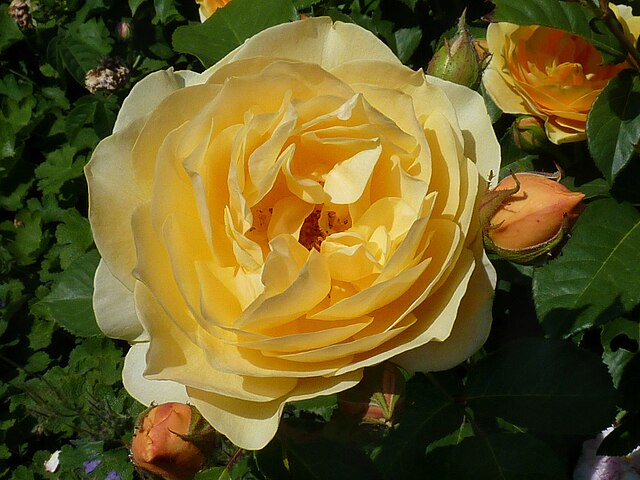
Regardless of cultivar vigor, any plant carries the risk of root rot if the rhizosphere environment is not properly established. Even hardy cultivars such as Graham Thomas and Leonardo da Vinci are no exception.
How to Combine Drainage and Water Retention in Potting Soil
Beginners who receive the advice to "improve drainage" often use only sand and pumice, resulting in insufficient water retention and plants drying out too quickly. What is important in creating rose soil is the balance of rapidly draining excess water while retaining appropriate moisture around the roots through capillary action.
A basic formula for reference is as follows.
| Material | Purpose | Approximate Ratio |
|---|---|---|
| Fired clay pellets (medium to large) | Create the framework for water permeability and aeration | 40–50% |
| Peat moss or coconut fiber (pellet) | Water retention, nutrient retention, and pH adjustment | 20–30% |
| Fully mature compost or leaf mold | Organic matter supply and microbial activity | 15–20% |
| Pumice (small to medium) | Additional reinforcement of aeration | 10–15% |
For potted plants, provide a drainage layer at the pot bottom with large pumice or pot shards spread 3–5 cm thick. Placing a pot bottom mesh between the drainage layer and potting soil prevents roots from entering the drainage layer and clogging.
When selecting fully mature compost, use compost that has an earthy smell when held and is decomposed to the point where the original materials are unrecognizable. Compost that is still partially fresh can damage roots during the decomposition process.
Rhizosphere Diagnosis: Distinguishing Healthy from Damaged Roots
Establishing the habit of regularly checking root condition allows you to detect problems early. For potted plants, observe during the annual repotting; for in-ground plants, observe in late March to early April just before budbreak by carefully digging around the plant base.
Characteristics of Healthy Roots
- White or pale cream color
- Firm and flexible, not easily broken
- Many fine roots, with visible new roots (white, short, hair-like roots)
Characteristics of Damaged Roots
- Discolored brown to black
- Crumble when touched lightly
- Slime or foul odor on root surface
If damage is confirmed, use clean scissors or a knife to cut away the discolored portions and dry them in shade for approximately half a day until the cut surfaces are dry. Then soak the roots in a diluted solution of a fungicidal pesticide (such as fluazinam or copper hydroxide) before repotting in fresh soil. If damaged roots exceed 30% of the total, also prune the above-ground portion proportionally to restore balance and aid plant recovery.
Thinking About Watering: "Daily Watering" Leads to Root Rot
Most rose root rot is caused by overwatering. A fixed routine of "watering every morning" is a habit that ignores the soil's actual moisture content. Continuing to water when soil is not dry keeps roots in constant hypoxic stress.
The simplest way to determine watering timing is to insert your index finger about 2 cm into the soil to check. If you feel moisture, skip watering; if dry, water thoroughly until water drains from the pot bottom. By repeating this "wet-dry cycle," roots maintain a healthy environment where they can absorb water while taking in oxygen.
During summer's high-temperature period, increased transpiration may require watering split between morning and evening, but in either case prioritize checking with your finger. Overhead watering that wets leaves tends to trigger powdery mildew and black spot disease, so make targeted root zone watering your standard practice.
For in-ground roses, after roots are well-established, relying on natural rainfall is ideal. Artificial watering is most effective when the surface soil is completely dry and leaves begin to wilt, providing water slowly over an extended period to reach deep into the rhizosphere.
Long-term Rhizosphere Maintenance and Soil Improvement
To keep roses healthy for the long term requires ongoing rhizosphere management, not one-year-only measures. We recommend incorporating the following points into your annual cycle.
Repotting and soil renewal: For potted plants, repot every 2–3 years; for in-ground plants, even when long-term planted in one location, partially excavating and replacing the surrounding soil every 3–4 years reduces pathogen density.
Regular organic matter supply: Mulching with leaf mold or fully mature compost spread thinly around the plant base increases soil microbial diversity and naturally suppresses proliferation of high-pathogenicity fungi. To avoid direct stem contact, apply mulch material leaving approximately 5 cm of clearance from the plant base.
Ensuring aeration: For potted plants, drain water from the saucer within 30 minutes of watering so it does not remain standing. Removing fallen leaves and dead branches around the plant base and ensuring good airflow and sunlight exposure are also important for suppressing pathogen proliferation.
Using organic fertilizers: Organic fertilizers such as bone meal, fish meal, and bat guano serve as food for beneficial microorganisms as they decompose slowly. When fertilizing in combination with synthetic fertilizers, including a certain proportion of organic matter enriches soil biota and stabilizes rhizosphere conditions.
Rhizosphere management may be unglamorous and unremarkable work, but it is the foundation for enjoying beautiful rose flowers year after year. Continuing steadily with these three elements—choosing the right soil, making wise watering decisions, and performing regular diagnosis and renewal—is the quickest route to creating plants free from root rot.