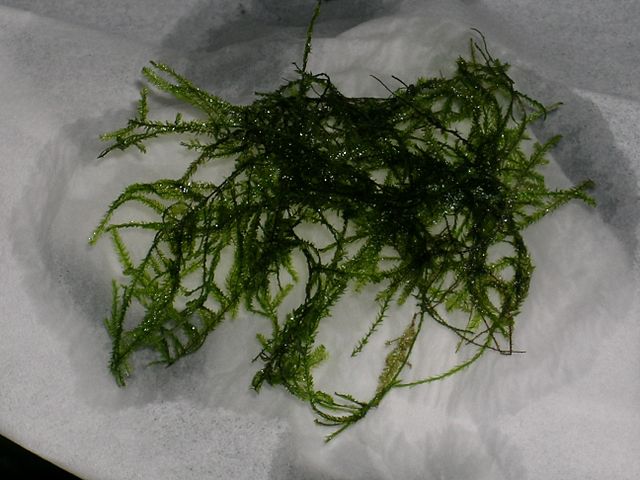
Source: Wikimedia Commons
Willow Moss
BeginnerFontinalis antipyretica
Epiphytic moss that attaches to driftwood and rocks. Perfect shrimp shelter. No CO2 needed, beginner-friendly.
About
Willow moss is a collective trade name for aquatic mosses — the name originally belongs to Fontinalis antipyretica, and species such as Taxiphyllum are also sold under it — that attach to driftwood, rocks, and other hard surfaces in the aquarium. Their soft, branching fronds sway gracefully in water currents, creating a naturalistic atmosphere that is central to Nature Aquarium and biotope layouts alike. Attachment is achieved by tying with fishing line; the moss adheres firmly within one to two months. It grows well under low to moderate light without CO2 supplementation, although CO2 injection encourages denser, more lush growth. The intricate structure provides excellent cover for breeding shrimp and fry, increasing its popularity in community tanks. Regular trimming of older portions maintains a tidy, attractive appearance.
Temperature & humidity for the Willow Moss
The ideal temperature for the Willow Moss is 20〜28℃.
Basic Info
Origin
Asia (widely distributed, centered in Southeast Asia)
Size
Spreads as creeping mat
Temperature
20〜28℃
Growing Tips
Lighting
Grows in low to medium light and needs no strong lighting. Attach it to driftwood or rock surfaces that light reaches.
CO2
Not needed (denser growth with CO2)
Water Temperature & Quality
Aim for 20–28°C. It serves as a breeding site for shrimp and a refuge for fry, so it is easy to manage in community tanks.
Substrate & Attachment
Wrap it onto driftwood or rock with fishing line and it attaches within one to two months. Do not plant it in the substrate.
Trimming & Propagation
Regularly trimming the old parts keeps it looking neat. Wrap the trimmings onto another piece of wood to propagate.
Cautions
Algae tangles in it easily, so prevent it with water changes and cut back overly thick parts to keep water flowing through.
Willow Moss FAQ
QWhat is the growing difficulty level for Willow Moss?
Beginner. A variety suitable for beginners. No special equipment or experience is required—you can grow it without problems by setting up a basic cultivation environment.
QWhat is the ideal temperature for Willow Moss?
The ideal temperature for Willow Moss is 20〜28℃. Avoid sudden temperature changes and maintain a stable environment.
QWhat is the typical price for Willow Moss?
The price of Willow Moss varies significantly by variety, characteristics, size, and lineage. Please check GrowerDirect's price guide for the latest market information.
Last updated: September 25, 2026
References & Sources
Edited & verified by: GrowerDirect Editorial Team
The classifications, regulations, and growing data on this page are created and verified based on the primary information database below.
Taxonomy & Authority
Accepted name: Fontinalis antipyretica Hedw.
Authority databases: GBIF
Nomenclature follows global taxonomic authority databases.
Regulations & Conservation Status
Sources: Ministry of the Environment Designated Invasive Species List (Invasive Species Act) / CITES Appendix II listed plant taxa (family and genus level)
Regulations may change. Always verify the latest information with the relevant authorities.
Related Species
Find listings for this species
Related Articles
Aquatic Moss Types and Attachment Techniques | From Willow Moss to Premium Moss
Explaining aquatic moss types and attachment methods. Introducing attachment techniques using thread, adhesive, and stainless steel mesh.
Bonsai Moss Guide — Species, Application, Care & Seasonal Management Basics
A complete guide to using moss in bonsai: its role and visual impact, major species such as Hypnum, Racomitrium, and Polytrichum, step-by-step application, seasonal care, and common failure points.
Bonsai Moss Application Techniques | Choosing Species and Tips for Successful Establishment
This guide explains the types of moss used in bonsai moss application, collection methods, application techniques, and management practices for successful establishment.
Moss Poles & Stakes Guide for Foliage Plants | Creating Beautiful Vining Plant Displays
Learn about types of stakes and how to choose them for vining foliage plants like Monsteras and Philodendrons. This guide introduces DIY moss pole methods, coco fiber poles, trellises, and other ways to train your plants.
🩺 Common diseases
Can't find the plant you're looking for?
Post your wishes for free and growers with matching plants will contact you with introductions.