Aquatic Moss Types and Attachment Techniques | From Willow Moss to Premium Moss
Explaining aquatic moss types and attachment methods. Introducing attachment techniques using thread, adhesive, and stainless steel mesh.
Key Takeaways
Explaining aquatic moss types and attachment methods. Introducing attachment techniques using thread, adhesive, and stainless steel mesh.
Related Species
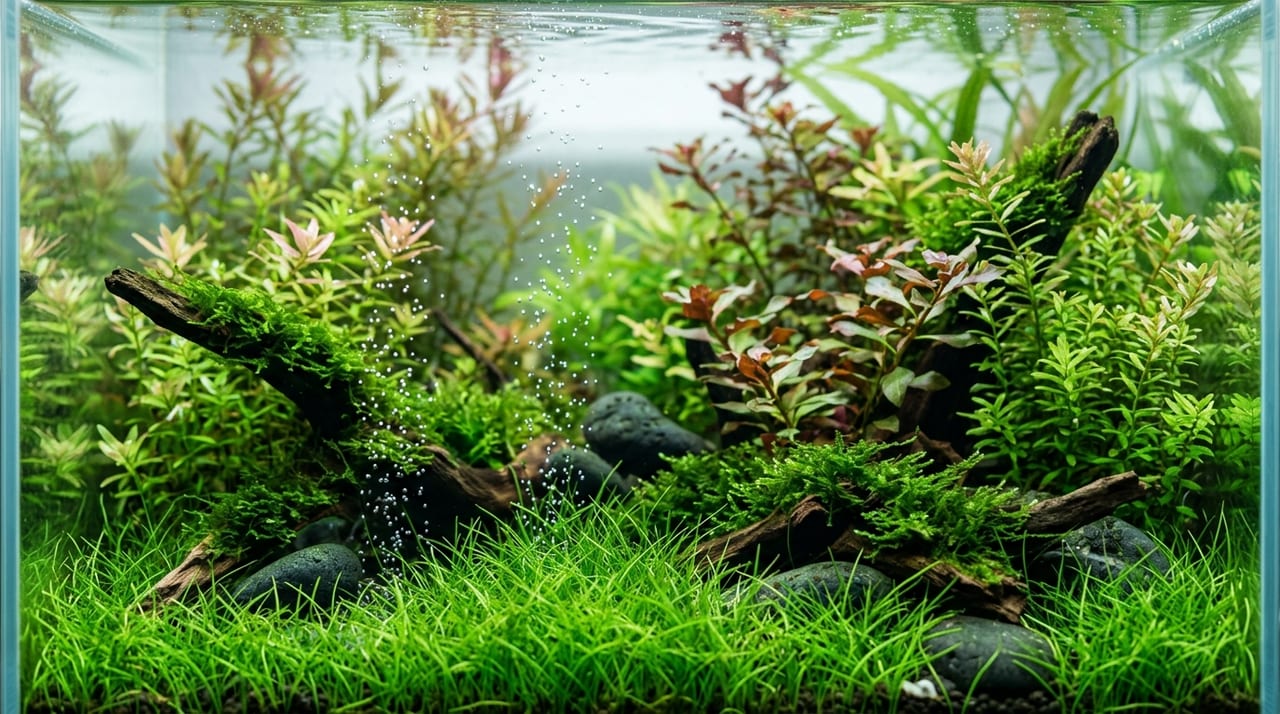
In the world of aquatic plant scaping, moss (bryophytes) holds a special place. Delicate green moss that attaches to driftwood and stones brings a natural beauty to the aquarium—as if you've captured a scene from a forest. Moss is hardy and grows without CO2 injection, is relatively affordable, and each species has its own distinctive character. For these reasons, moss is beloved by aquarists of all skill levels, from beginners to veterans.
This article explains the major moss types, their characteristics, and specific techniques for achieving beautiful, secure attachment.
Representative Moss Types and Characteristics
Though called "moss," these plants vary greatly in shape and nature. Understanding each species' unique qualities will significantly expand your scaping possibilities.
Willow Moss
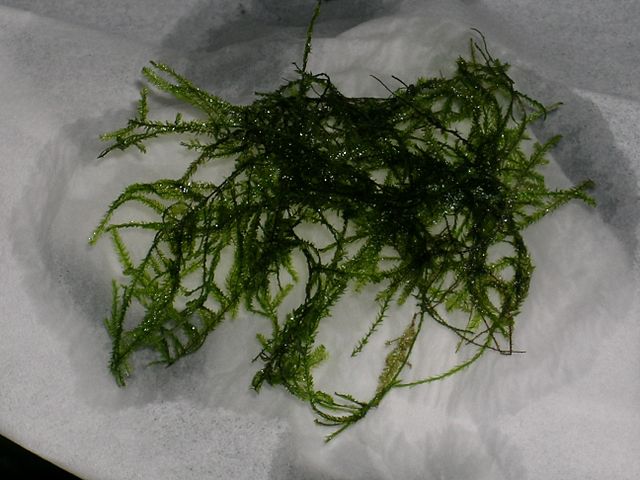
The most widely available moss for aquarium beginners. It grows vigorously with triangular branching, and adapts exceptionally well to water temperature and chemistry. Because it's easy to obtain and the price is stable, it's ideal for first-time moss growers. It's tough under trimming and lets you control volume freely.
South American Willow Moss
A relative of Willow Moss with more regular, symmetrical branching and an attractive triangular form. Growth is somewhat slower, but this allows you to create a dense, finely-textured appearance more easily, resulting in a natural-looking layout.
Christmas Moss
Named for its distinctive layered branching that resembles a Christmas tree. This moss has enough presence to stand as the focal point of a layout. When attached to the side of driftwood, it creates remarkable visual impact. It requires slightly more experience than Willow Moss, but the resulting layouts are exceptionally beautiful.
Flame Moss
A unique moss characterized by growth directed upward, as if flames were rising. While other mosses spread horizontally or downward, Flame Moss creates vertical movement, making it valuable when you want to add dimension and dynamism to your layout.
Weeping Moss
True to its name (weeping = drooping), the branches grow and hang downward. When attached to the upper portion of tall driftwood, it creates a fantastical effect like a drooping willow or waterfall. It's especially popular in nature aquascapes designed to recreate natural scenes.
Phoenix Moss (Fissidens)
Sometimes called "premium moss" because of the beautiful, uniform arrangement of flat, leafy structures. Growth is extremely slow, requiring patience in management, but its unique texture and orderly beauty are unlike other mosses—many experienced aquarists say that once they've used it, they can't do without it.
Attachment Basics | Why Attachment Is Necessary
Moss naturally extends rootlets to fix itself to stones and driftwood. However, newly placed moss in an aquarium hasn't yet attached, so water currents wash it away. Manual attachment helps secure it until the moss can establish its rootlets on its own.
The time needed for attachment depends on species and environment, but a general guideline is 4–8 weeks.
3 Attachment Techniques | Merits and When to Use Each
There are several methods for attachment. Here are three representative techniques. Choose based on your goal and materials.
Cotton Thread Wrapping (Most Standard Method)
The most popular and fail-proof method.
Steps:
- Spread moss thinly over driftwood or stone (if layered too thickly, the interior will deteriorate)
- Gently wrap with cotton thread, tying securely several times so it doesn't come loose
- Place in the aquarium and wait 4–6 weeks
Tips: Cotton thread is biodegradable and dissolves naturally as attachment completes. Nylon thread doesn't dissolve, so you'll need to remove it later. If you place moss too thickly, light won't reach the interior and it may die. Spreading it thinly and uniformly is the key to beautiful attachment.
Instant Adhesive (For Immediate Fixing)
This method suits situations where you want to set up moss outside the tank or fix it in tight spaces.
Steps:
- Apply a small amount of gel-type instant adhesive (aquatic-plant and livestock-safe) as dots to the moss underside
- Press onto the substrate and hold for a few seconds
Tips: Using too much adhesive damages the moss. Apply in small dots—use the minimum amount necessary. Pre-drying the substrate surface beforehand improves adhesive strength.
Stainless Steel Mesh (For Moss Walls and Mats)
Ideal for creating flat moss walls or moss mats.
Steps:
- Prepare two sheets of stainless steel mesh and sandwich thin moss between them
- Secure the mesh edges with cable ties or thread
- Install on the tank background or floor
Tips: Incorporating this into your background layout creates an immersive effect—the entire tank feels wrapped in green. Keep the moss layer thin and ensure light and water flow reach throughout the structure.
Management Tips for Growing Beautiful Moss
Care after attachment is equally essential for maintaining moss beauty over time.
- Regular trimming: Unattended moss grows increasingly thick, and the interior becomes prone to dying. Trim the surface lightly every 2–3 months to let light through.
- Maintain water flow: Adequate current effectively supplies nutrients to moss and removes waste. Weak flow allows algae to accumulate.
- Lighting duration: 8–10 hours of lighting per day supports healthy growth. Strong light isn't necessary, but too little will stop growth.
- CO2 injection: Not essential, but small amounts speed growth and produce richer green coloration.
Conclusion
Moss is a diverse plant group that appeals to aquarists of all skill levels through its variety of species and flexible attachment techniques. Whether choosing an easy-to-start option like Willow Moss or enjoying the long-term cultivation of Phoenix Moss, you can select based on your lifestyle and layout goals.
Using the three attachment techniques—cotton thread, instant adhesive, and stainless steel mesh—for different purposes helps you reliably achieve the layout you envision.
At GrowerDirect, you can purchase various moss species, including premium varieties like Phoenix Moss and Christmas Moss, directly from growers. Begin your ideal aquatic landscaping journey in a trusted, transparent trading environment where you can see the grower's face.