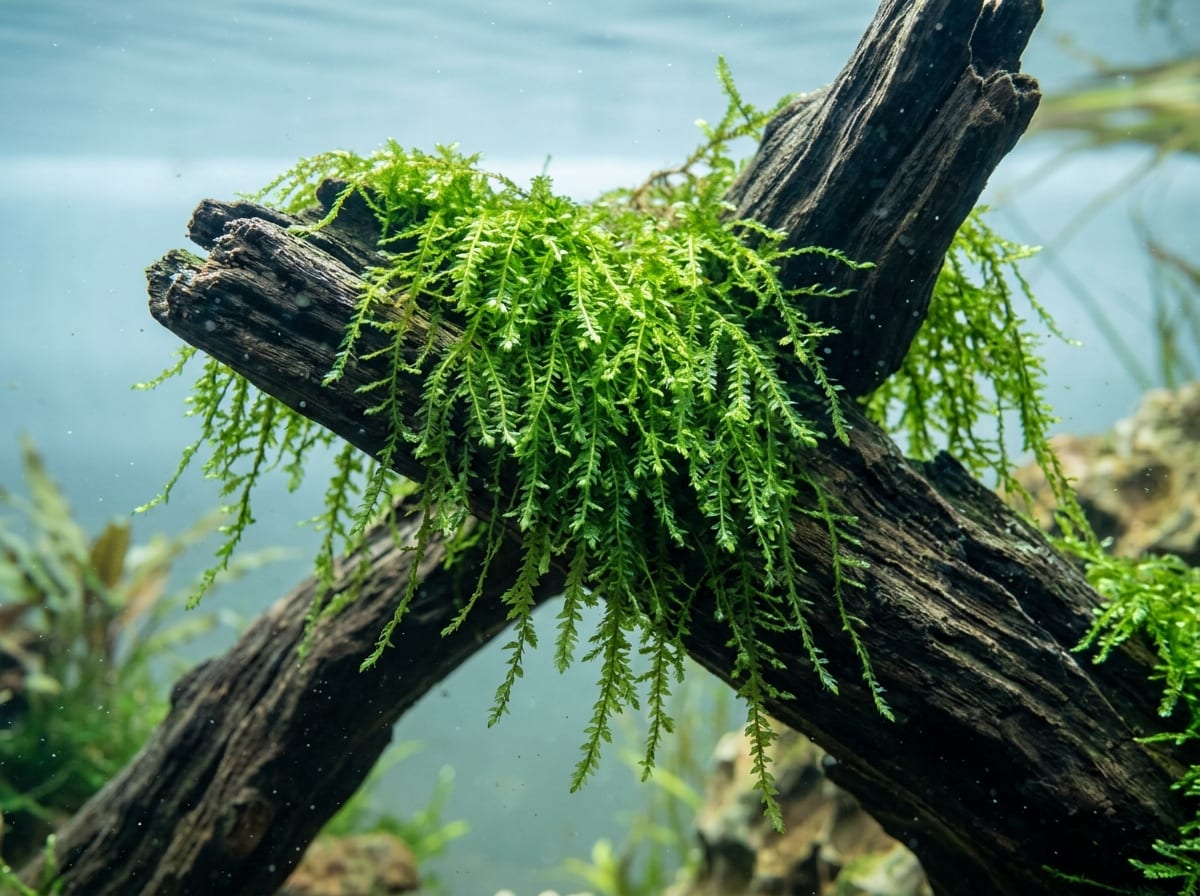
AI-generated image
Weeping moss
BeginnerVesicularia ferriei
An aquatic moss with bright green, teardrop-shaped shoots that hang downward. Draped from branches of wood it adds depth and shadow to a layout. Undemanding and fairly quick-growing.
About
Weeping moss (Vesicularia ferriei, Hypnaceae) is believed to come from China and was spread by a South-East Asian aquatic plant nursery. 'Weeping' describes its habit: bright green, teardrop-shaped shoot tips hang downward, the feature that separates it from willow moss and South American moss, which spread sideways or upward. It is a fleshy moss about 1–3 cm tall; attached to branches or roots of driftwood its drooping growth adds depth and contrast. It is undemanding, growing in medium light with little CO2, and fairly fast, so trim it often with scissors to keep its shape. GBIF treats names described from Japan, such as Vesicularia japonica, as synonyms of this species. Tissue-culture cups are produced for aquaria. It is a staple moss at specialist shops in Japan.
Size of the Weeping moss
The Weeping moss grows to 1–3 cm tall with drooping shoots.
Basic Info
Origin
Believed to come from China
Lifespan
Perennial
Size
1–3 cm tall with drooping shoots
Temperature
20〜28℃
Watering & Fertilizer
Little CO2 or fertiliser needed
Growing Tips
Lighting
Grows in medium light.
CO2 & Fertilizer
Manages with little CO2.
Water Temperature & Quality
Undemanding about water; keep within normal tropical tank temperatures.
Substrate & Attachment
Tie it to branches or roots of driftwood to show off its drooping habit.
Trimming & Propagation
Grows fairly fast; trim often with scissors. Trimmings can be tied elsewhere.
Cautions
Attach it high up so it can hang. Never release plants into the wild.
Weeping moss FAQ
QWhat is the growing difficulty level for Weeping moss?
Beginner. A variety suitable for beginners. No special equipment or experience is required—you can grow it without problems by setting up a basic cultivation environment.
QHow large does Weeping moss get?
The mature size of Weeping moss is 1–3 cm tall with drooping shoots. This may vary slightly depending on cultivation environment and individual differences.
QHow should I water and fertilize Weeping moss?
Weeping moss: watering & fertilizer — Little CO2 or fertiliser needed. Aim for appropriate frequency and amount.
QWhat is the typical price for Weeping moss?
The price of Weeping moss varies significantly by variety, characteristics, size, and lineage. Please check GrowerDirect's price guide for the latest market information.
Last updated: September 23, 2026
References & Sources
Edited & verified by: GrowerDirect Editorial Team
The classifications, regulations, and growing data on this page are created and verified based on the primary information database below.
Taxonomy & Authority
Regulations & Conservation Status
Not listed in CITES (no match in Species+). Not regulated under Japan's Invasive Alien Species Act or Species Conservation Act. Never dump aquatic plants into rivers, ponds or ditches, or flush them away with tank water. Drain unwanted plants and trimmings and dispose of them as household waste.
Sources: Species+ (CITES listing check) / Ministry of the Environment: list of Invasive Alien Species (Invasive Alien Species Act)
Regulations may change. Always verify the latest information with the relevant authorities.
Related Species
Find listings for this species
Related Articles
Aquatic Moss Types and Attachment Techniques | From Willow Moss to Premium Moss
Explaining aquatic moss types and attachment methods. Introducing attachment techniques using thread, adhesive, and stainless steel mesh.
Bonsai Moss Guide — Species, Application, Care & Seasonal Management Basics
A complete guide to using moss in bonsai: its role and visual impact, major species such as Hypnum, Racomitrium, and Leucobryum, step-by-step application, seasonal care, and common failure points.
Bonsai Moss Application Techniques | Choosing Species and Tips for Successful Establishment
This guide explains the types of moss used in bonsai moss application, collection methods, application techniques, and management practices for successful establishment.
Moss Poles & Stakes Guide for Foliage Plants | Creating Beautiful Vining Plant Displays
Learn about types of stakes and how to choose them for vining foliage plants like Monsteras and Philodendrons. This guide introduces DIY moss pole methods, coco fiber poles, trellises, and other ways to train your plants.
🩺 Common diseases
Can't find the plant you're looking for?
Post your wishes for free and growers with matching plants will contact you with introductions.