Aquatic Plant Guide: Characteristics and Cultivation of Popular Species
Featuring popular aquatic plant species including Anubias, Buce, Rotala, Cryptocoryne, and Willow Moss. This guide explains the characteristics, cultivation difficulty, CO2 requirements, and layout examples for each species in detail.
Key Takeaways
Featuring popular aquatic plant species including Anubias, Buce, Rotala, Cryptocoryne, and Willow Moss. This guide explains the characteristics, cultivation difficulty, CO2 requirements, and layout examples for each species in detail.
Related Species
The Benefits Water Plants Bring to Your Aquarium
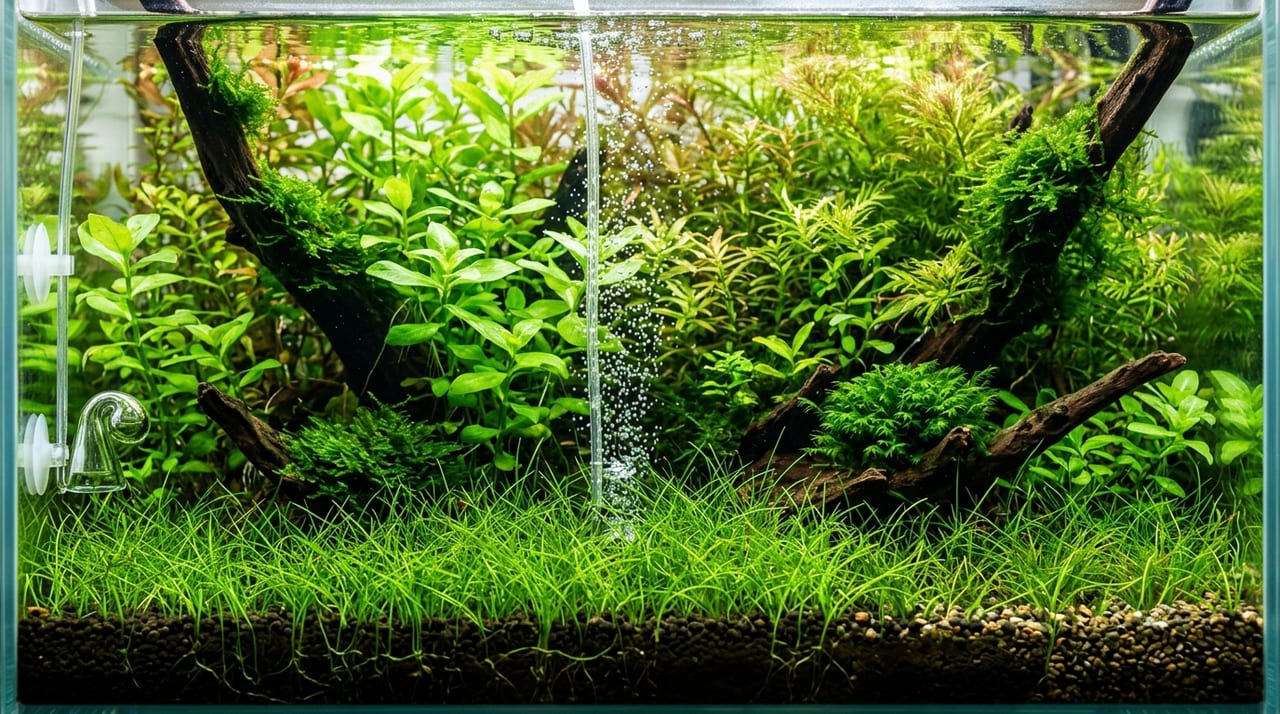
Water plants are far more than mere decoration. Through photosynthesis, they supply oxygen and purify water by absorbing ammonia and nitrates resulting from fish waste and leftover food. They also provide hiding places for fish and shrimp, reducing stress. Furthermore, aquatic plant layouts create visual depth—carpeting plants, moss-like growth on driftwood, and red Rotala stretching across the background—transforming your tank into a living landscape.
The biggest hurdle beginners face is "there are too many types; I don't know which to choose." Understanding the specific needs of each plant—whether CO2 is necessary, light requirements, and whether to attach or plant in substrate—makes selection far simpler. This guide organizes eight popular species by category and explains the characteristics and cultivation tips for each.
Beginner Species That Don't Require CO2
Anubias Nana
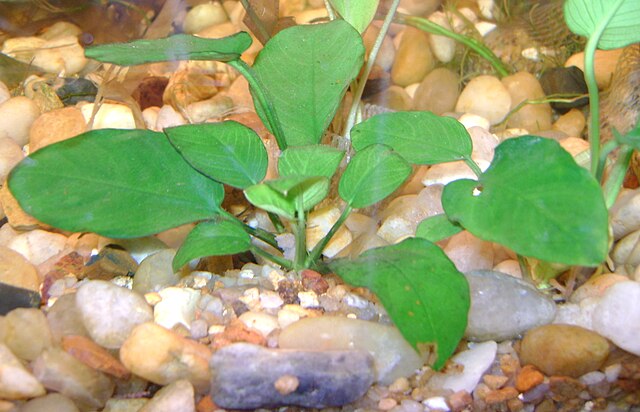
A classic plant distinguished by round, deep green leaves. Although it grows slowly and can trap algae more easily, this also means trimming is minimal and maintenance is straightforward. It thrives without CO2 and tolerates low light.
The key to cultivation is never burying the rhizome in substrate. Burying causes rot and death; instead, secure it to driftwood or rock using fishing line or glue to attach it naturally. Once attached, it remains remarkably stable and can be enjoyed for years.
Willow Moss
A fine-leaved, moss-like aquatic plant with exceptional versatility. It grows without CO2, tolerates low light, and attaches easily by tying to driftwood or rock with thread. Once established, it creates a soft, natural texture and serves as an excellent hiding place for shrimp and fry. Trimming is simply cutting back overgrown portions with scissors. Low-cost and ideal as your first aquatic plant.
Microsorum
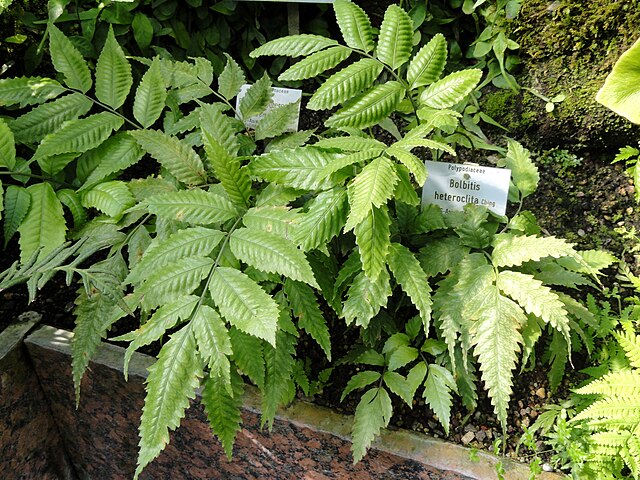
A Southeast Asian fern that, like Anubias, is a hardy attachment-type plant. Available in varieties like Windlovei (wavy leaves) and Narrow (fine-leaved), offering visual diversity. Placing it in the midground or background creates depth and natural scenery. It's easy to grow without CO2 and beloved by both beginners and advanced aquarists.
Intermediate Species for Midground and Background
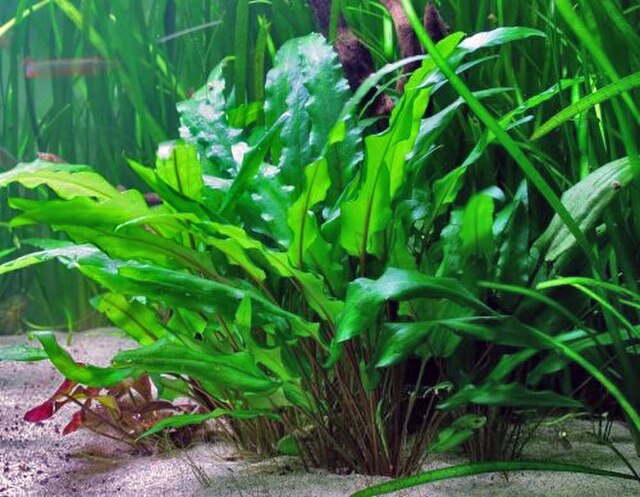
Cryptocoryne
A rosette-type plant with diverse leaf colors (green, brown, reddish) and shapes. It requires planting in substrate where it develops roots and, once established, is very hardy and long-lasting. However, early after introduction, it may experience "Cryptocoryne melt"—a phenomenon where leaves dissolve due to environmental change. If roots survive, new growth typically emerges once the plant acclimates. The correct approach is to wait patiently rather than remove it prematurely.
Buce
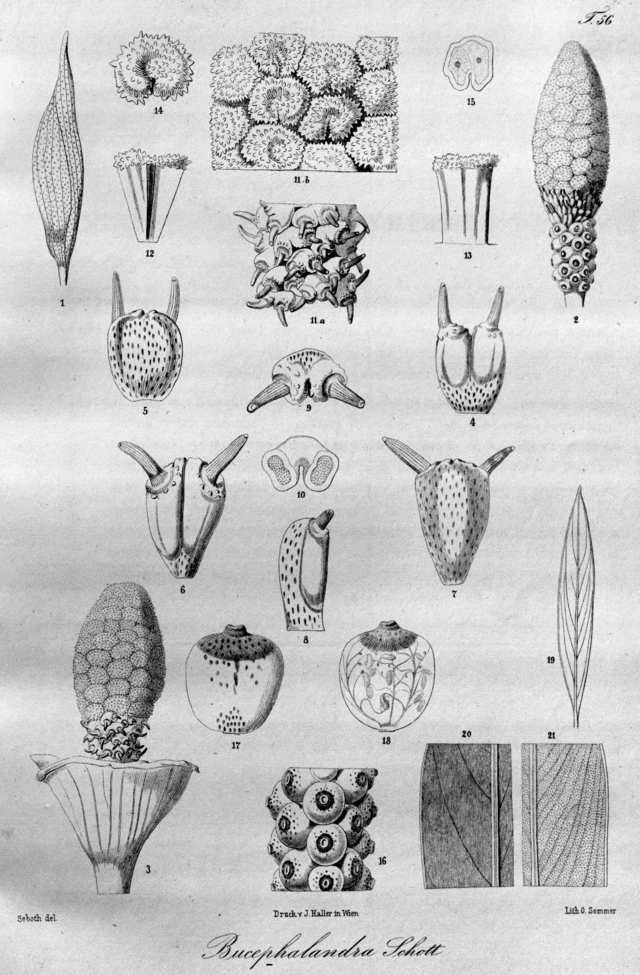
A rare species from Borneo with iridescent sheen across its leaf surface—an exceptionally beautiful plant. When given CO2 and intense light, the iridescence becomes even more striking. Like Anubias, it attaches to driftwood and rock, and though it grows slowly, its beauty captivates enthusiasts. It boasts tremendous variety and high collectibility.
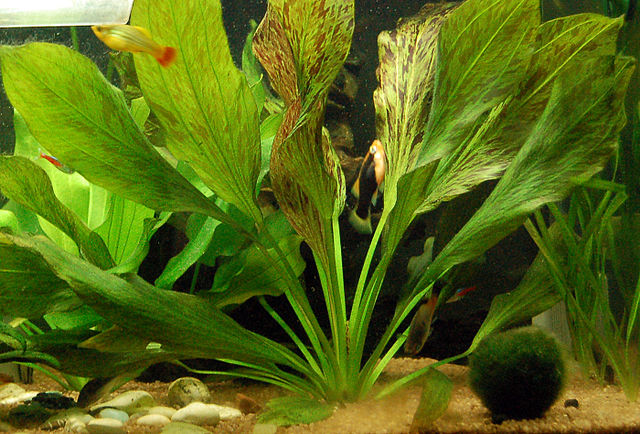
Echinodorus
A large rosette-type plant with substantial leaves that command attention. It grows without CO2 and has strong root development, but the crown must not be buried or it will rot—roots can go deep, but keep the crown shallow. In 60cm+ tanks, it shines as the focal point of the background, creating impressive visual weight. Smaller tanks may require a dwarf variety, so matching your tank size to species selection is essential.
Advanced Species That Shine with CO2 Injection
Rotala
A stem plant archetype with fine stems bearing tiny leaves. Varieties range from green Rotala rotundifolia to the striking red Rotala indica with CO2 and strong light, to pink-hued Rotala sp. "Nanseang"—planting multiple stems together creates beautiful color gradients in the background. Regular trimming and replanting (inserting cut stems back into substrate) maintain dense, beautiful growth.
Glossostigma
A foreground plant with small round leaves that spread horizontally, creating a carpet effect. When successful, it is breathtaking, but it requires high light and CO2 injection—without sufficient conditions, it grows upward instead of spreading horizontally. Dense planting and encouragement to spread sideways is key to success. This is an advanced species best attempted after establishing ideal tank conditions.
Basic Structure of Aquatic Plant Layouts
Creating a beautiful aquatic layout requires understanding the three-layer structure: foreground, midground, and background.
- Foreground (low, spreading): Glossostigma, Hair Grass, etc.
- Midground (medium height): Anubias Nana, Buce, Cryptocoryne, etc.
- Background (tall, substantial): Rotala, Echinodorus, Microsorum, etc.
Combining driftwood and rock, placing tall plants toward the back and shorter ones toward the front naturally creates depth and natural scenery. Rather than aiming for perfection from the start, begin with hardy, low-difficulty species and gradually develop your layout—this approach ensures long-term enjoyment.
GrowerDirect's Safe and Reliable System
GrowerDirect provides a platform where you can purchase aquatic plants directly from growers. Conventional shop distribution often lacks transparency about origin and care conditions, but GrowerDirect lets you review seller profiles and growing environments before purchasing—offering genuine peace of mind.
- Reduced pesticide and snail risk: Professionally managed aquatic plants carry minimal pesticide contamination and unwanted snail risk, making them easier to introduce into existing tanks
- Access to rare varieties: Unlike shops, GrowerDirect helps you find hard-to-find species like rare Buce varieties with limited market circulation
- Plants arrive in peak condition: Fewer intermediaries mean less transport stress, so healthy, vigorous plants arrive at your door
- Direct consultation with growers: "Can I grow this without CO2?" "I have a 60cm tank—will this work?" Being able to ask the seller directly is GrowerDirect's greatest advantage
When choosing aquatic plants, explore GrowerDirect seller pages. Your perfect plant awaits.