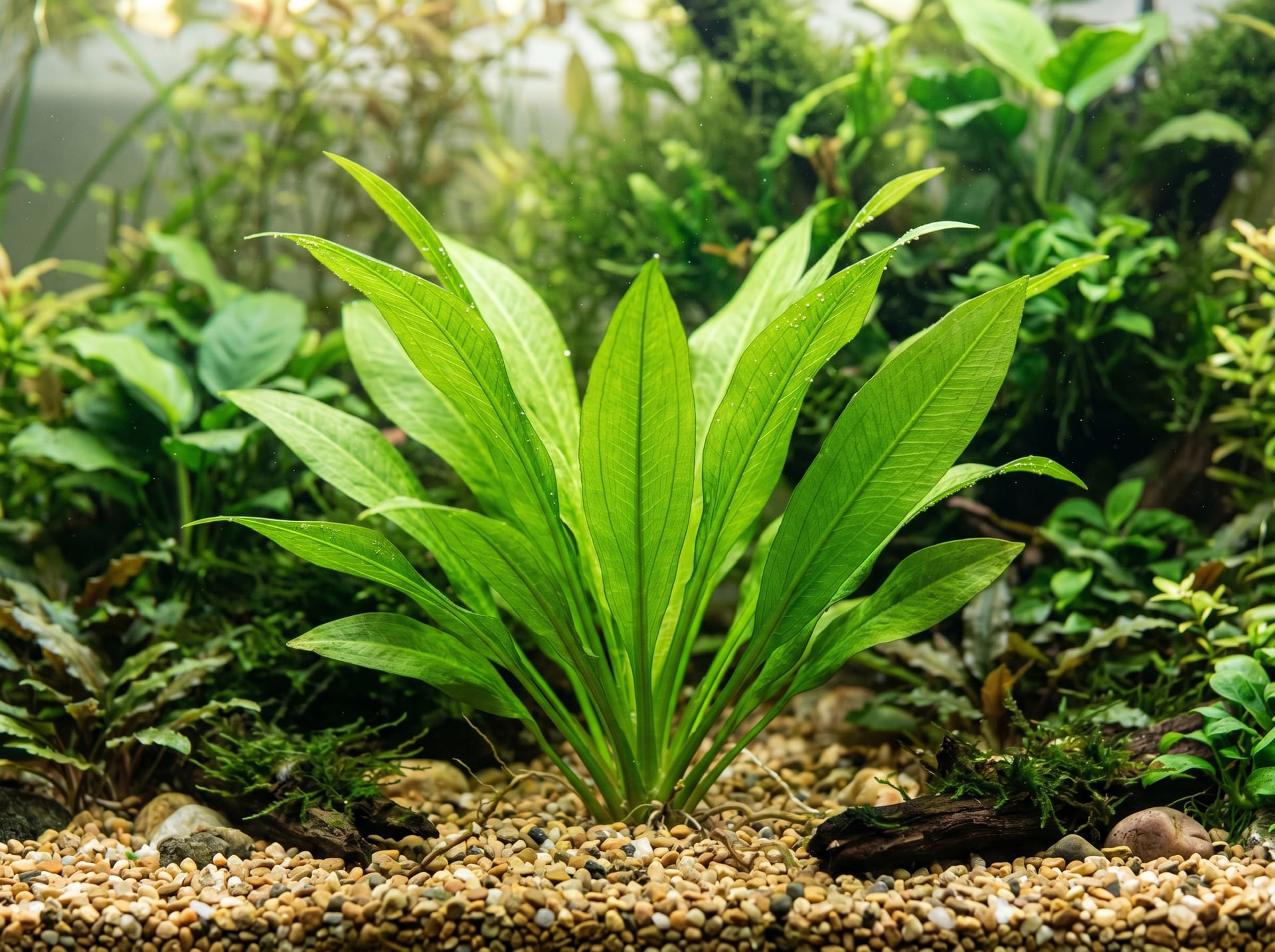
AI-generated image
Amazon Sword
BeginnerAquarius grisebachii
A representative aquatic plant with large sword-shaped leaves. Gives strong presence as background centerpiece.
About
Echinodorus amazonicus — the 'Amazon Sword' — is one of the most recognizable aquarium plants, native to the Amazon River basin of South America. Its long, sword-shaped leaves radiate from a central rosette, and when positioned as a centerpiece in the background of a large aquarium it commands immediate attention. The root system is extremely vigorous, penetrating deeply into the substrate; nutrient-rich aquasoil and root tabs placed near the base reward the plant with dramatically larger, more robust foliage. CO2 supplementation is not required but accelerates growth and increases leaf size. Propagation via plantlet-bearing runners is straightforward. Broad water-parameter tolerance — accepting a wide range of pH and hardness values — makes it one of the most forgiving large aquarium plants available. Mature specimens can reach 50 cm or more, so tank dimensions should guide species selection.
Size of the Amazon Sword
The Amazon Sword grows to 20-50cm.
Basic Info
Origin
Amazon River basin, South America
Lifespan
Perennial
Size
20-50cm
Temperature
20〜28℃
Watering & Fertilizer
Root tabs
Growing Tips
Lighting
Medium lighting is enough for good growth. Its large sword-shaped leaves block light, so place it in the centre background where it will not shade other plants.
CO2 & Fertilizer
Grows well without CO2, but injection makes the leaves larger and more robust. Burying root fertiliser at the base is highly effective.
Substrate & Attachment
It roots very vigorously and deeply, so it pairs excellently with nutrient-rich soil. Lay the substrate fairly thick.
Trimming & Propagation
It sends out runners that form plantlets, so propagation is easy. Cut off a plantlet once it has rooted and plant it.
Housing
Grows large, so a 60cm or larger tank is recommended
Amazon Sword FAQ
QWhat is the growing difficulty level for Amazon Sword?
Beginner. A variety suitable for beginners. No special equipment or experience is required—you can grow it without problems by setting up a basic cultivation environment.
QHow large does Amazon Sword get?
The mature size of Amazon Sword is 20-50cm. This may vary slightly depending on cultivation environment and individual differences.
QHow should I water and fertilize Amazon Sword?
Amazon Sword: watering & fertilizer — Root tabs. Aim for appropriate frequency and amount.
QWhat is the typical price for Amazon Sword?
The price of Amazon Sword varies significantly by variety, characteristics, size, and lineage. Please check GrowerDirect's price guide for the latest market information.
Last updated: September 25, 2026
References & Sources
Taxonomy & Authority
Related Species
Find listings for this species
Related Articles
Complete Guide to Caring for Echinodorus (Amazon Sword Plant) | Managing and Propagating Bold Background Plants
Characteristics and care guide for aquatic Echinodorus (Amazon sword plant). Explanation of substrate nutrient management, propagation methods, and layout applications.
Complete Guide to Aquatic Plant CO2 Systems | Practical Manual from Setup to Daily Maintenance
CO2 is an essential element for aquatic plants to perform photosynthesis. This article covers everything needed to cultivate fast-growing stem plants and red-tinted aquatic plants, from selecting CO2 injection systems, installing solenoid valve regulators, positioning diffusers, to daily maintenance.
Aquatic Plant Tank Used Soil and Substrate Disposal and Recycling Methods | Correct Disposal Methods and Reuse Tips
Explains the correct disposal methods for used substrate in aquatic plant tanks. Introduces the proper disposal procedures according to local municipal rules and the concept of reuse for short-term usage.
Beginner-Friendly Aquatic Plants Without CO2 Supplementation | Cultivation Conditions and Tank Layout Strategies
You can create a beautiful aquarium without expensive CO2 equipment. This guide explains practical methods for selecting CO2-free aquatic plants that beginners can successfully grow, from cultivation conditions to tank layout strategies.
🩺 Common diseases
Can't find the plant you're looking for?
Post your wishes for free and growers with matching plants will contact you with introductions.