Complete Guide to Caring for Echinodorus (Amazon Sword Plant) | Managing and Propagating Bold Background Plants
A care guide for Echinodorus (Amazon sword plant). As a root-feeding type, it is managed by working base fertilizer into the soil and adding top-up fertilizer. The guide also covers propagation by separating runner plantlets once their roots have grown out, its preference for medium to high light, and how to deal with melting right after planting.
Key Takeaways
A care guide for Echinodorus (Amazon sword plant). As a root-feeding type, it is managed by working base fertilizer into the soil and adding top-up fertilizer. The guide also covers propagation by separating runner plantlets once their roots have grown out, its preference for medium to high light, and how to deal with melting right after planting.
Related Species
Introduction
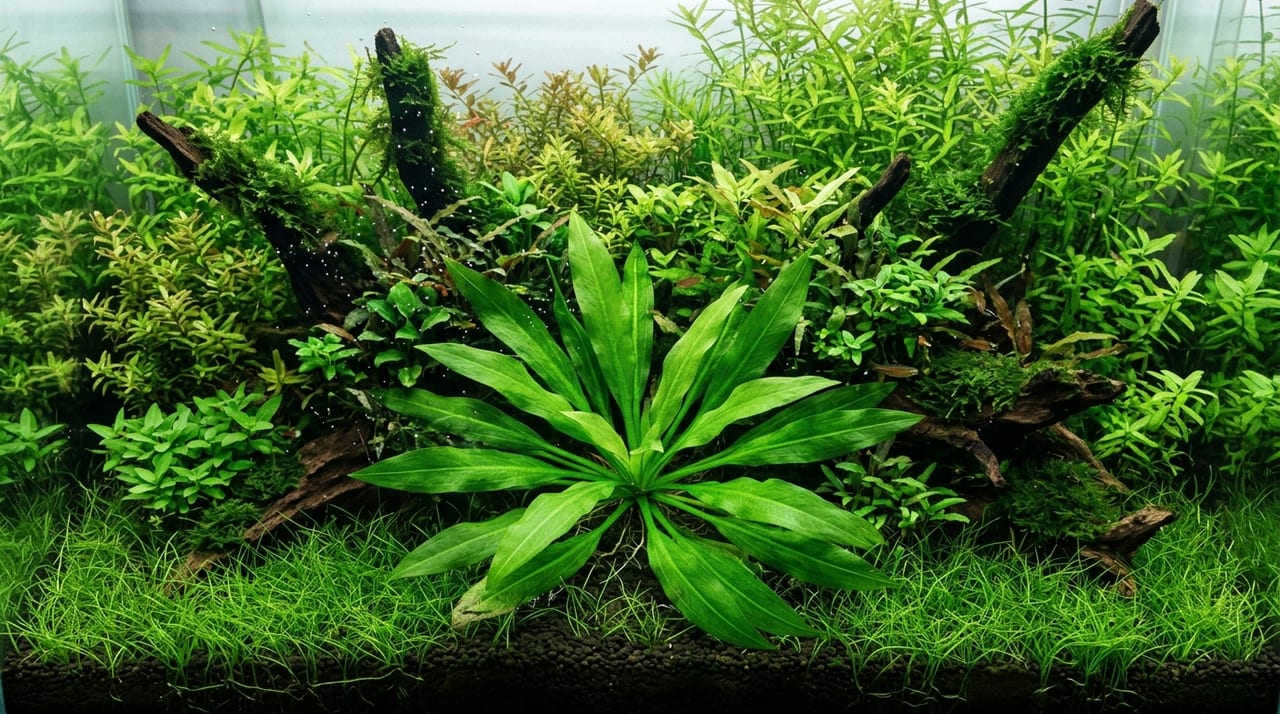
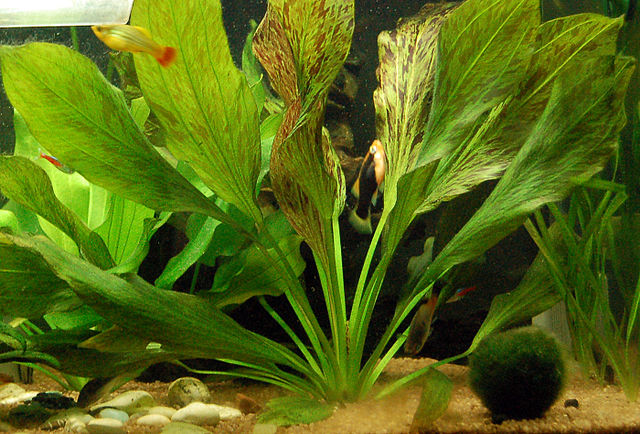
In aquatic plant layouts, the Echinodorus genus, commonly called the Amazon sword plant, is known as a representative background plant that adds presence and depth to the aquatic scenery. The sight of large sword-shaped leaves spreading radially creates a natural atmosphere reminiscent of South American waterside environments, and is favored by both beginners and advanced aquarists alike. This article introduces the characteristics of Echinodorus and management points for cultivating it beautifully.
Characteristics and Native Range of Echinodorus
Echinodorus is an aquatic plant of the Alismataceae family distributed primarily in waterside areas of the American continent, centered in South America. The genus contains a vast number of species and horticultural varieties, with considerable variation in size and leaf shape—from compact species that grow small to species large enough to become the centerpiece of an aquarium. Representative species include those known by the name Amazon sword plant and larger-growing species.
A major characteristic of Echinodorus is its nature as an amphibious plant capable of growing both underwater and on land. When water levels drop or conditions become like a wetland, it extends leaves above the water, blooms, and produces seeds. In an aquarium, this property can be utilized to grow plants large enough to protrude from the water surface, or conversely, to keep them submerged through trimming.
Substrate and Nutrient Management
Echinodorus is known as a "root-absorbing" type of aquatic plant. Rather than relying solely on liquid fertilizers in the water, the nutrient condition of the substrate where roots develop significantly influences growth quality. By incorporating substrate fertilizer as basal fertilization into soil, roots can absorb nutrients thoroughly.
When nutrients are insufficient, symptoms such as yellowing and transparency appear readily in the leaves. Conversely, in a nutrient-rich environment, large, thick leaves unfold one after another, developing into a presence-making form in the aquatic scenery. Regular supplemental fertilization of the substrate (such as the method of embedding tablet-form root fertilizer into soil) is also an effective management method when cultivating larger plants.
Propagation Methods
Echinodorus can be propagated through the following methods:
- Propagation by runners (stolons): The most common propagation method for Echinodorus. From mature plants, flower stalks (also called runners) extend, and small plantlets form at their nodes. Once these plantlets grow sufficiently and begin to develop their own roots, the runners can be cut and the plantlets established independently.
- Plant division: When a mature plant's rhizome section has multiple growth points, these can be separated and planted in different locations to increase the number of plants.
- Propagation from seed: As mentioned earlier, if emersed leaves develop and the plant flowers, propagation from seed is theoretically possible, but practical examples in aquariums are limited.
Lighting and Layout Applications
Echinodorus prefers medium to strong light intensity. When light is insufficient, leaves tend to become leggy, and the overall compactness of the plant is lost. CO2 supplementation is not essential, but adding it allows for more robust growth and faster leaf development.
In layouts, the large leaf volume can be leveraged by placing the plant in the background or mid-ground of the aquarium to create an aquatic scenery with depth. As it grows, leaves spread widely, so when planting, it is important to provide adequate spacing around neighboring plants with future size in mind—this is the key to maintaining a beautiful layout over the long term.
Summary
Echinodorus is a plant where substrate management centered on nutrient absorption through roots holds the key to growth. By being mindful of basal fertilization in soil and regular supplemental fertilization, you can cultivate large, beautiful leaves. The unique ability to grow in both water and on land is one of the charms not shared by other aquatic plants. For those seeking a presence-making background plant, this is certainly a variety worth considering.
Common Troubles and Solutions
In cultivating Echinodorus, the following troubles may be encountered:
| Symptom | Cause | Solution |
|---|---|---|
| Leaves wither one after another as if dissolving—"melting" | When the water quality or environment changes significantly, old leaves cannot adapt to the new environment and wither away. In most cases this occurs immediately after introduction to the aquarium | Remove withered leaves and patiently wait for the environment to stabilize. After some time, leaves adapted to the new environment begin to develop and the condition gradually improves |
| Yellowing begins from old leaves | A sign of nutrient deficiency | Review substrate supplemental fertilization and, if necessary, use liquid fertilizer concurrently to restore healthy leaf color |
When selecting a large-growing species, considering future size when choosing the aquarium is also an important consideration point. To avoid sudden water quality changes, immediately after introduction, adjust the water-change frequency to be slightly slower than usual and keep the environment stable until the plant settles—this is an effective precaution against melting.