Anubias Types and Complete Growing Guide | Rooting Aquatic Plants Perfect for Beginners
Detailed explanation of Anubias types, rooting methods, trimming, and propagation. Introducing the appeal of hardy aquatic plants that grow without CO2 and the characteristics of each variety.
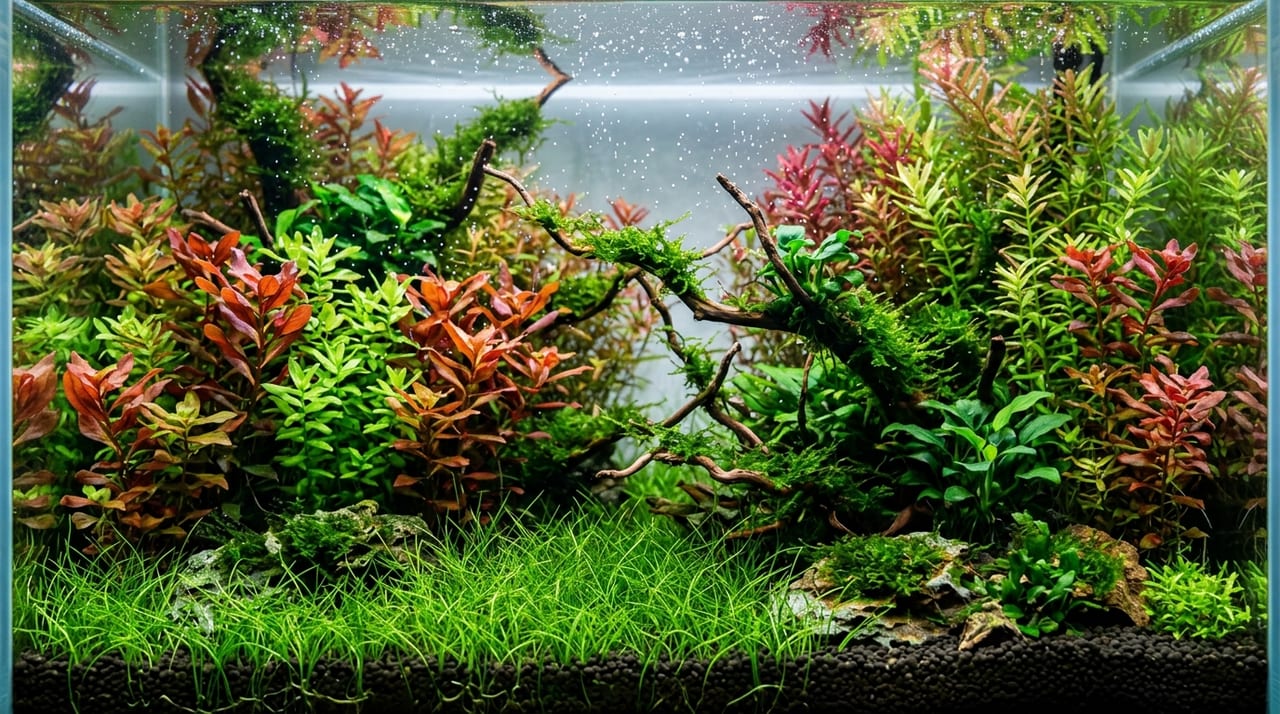
Key Takeaways
Detailed explanation of Anubias types, rooting methods, trimming, and propagation. Introducing the appeal of hardy aquatic plants that grow without CO2 and the characteristics of each variety.
Related Species
Anubias barteri var. barteri
View species details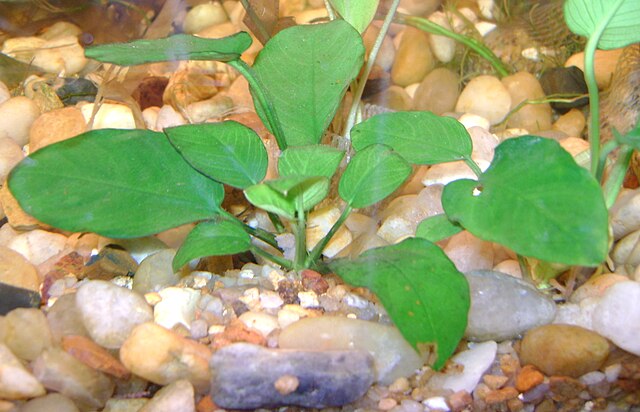
Anubias Nana
View species detailsAnubias barteri var. nana 'Gold'
View species detailsAnubias barteri var. nana 'Pangolino'
View species detailsAnubias Nana Petite
View species detailsAnubias is an epiphytic aquatic plant native to West Africa, and is one of the most recommended aquatic plants for beginners due to its thick leaves and hardy nature. It grows even without CO2 supplementation, tolerates low-light environments, and adapts to a wide range of water quality conditions. It is commonly used by attaching it to driftwood or rocks, and the ease of management without planting in substrate is also a major appeal. Here we explain in detail the varieties of Anubias and how to grow it.
Main Anubias Varieties and Their Characteristics
There are numerous Anubias varieties in circulation, with variations in size and leaf shape. The characteristics of representative varieties are as follows.
| Variety | Characteristics |
|---|---|
| Anubias Nana | The most widely distributed standard variety. Leaves are approximately 3-5 cm in size and can be used widely from small to large aquariums. Growth is slow but extremely hardy, representing a prime example of aquatic plants resistant to death |
| Anubias Nana Petite (Petite Nana) | A smaller version of Nana with leaves approximately 1-2 cm in size. Perfect as an accent for small aquariums or foreground placement, and attaching to thin driftwood branches allows for delicate expression |
| Anubias Barteri | Larger than Nana, with leaves reaching 10-15 cm in length. Used in mid to background areas, characterized by a distinctive plant form. Varieties include 'Coffeifolia' (wavy leaves) and 'Angustifolia' (narrow leaves) |
| Anubias Nana Golden | A variety with bright yellowish-green leaves. Growth is slightly slower than standard Nana and prefers light, but adds a bright accent to all-green layouts |
| Anubias Nana Pangolino | An ultra-small variety even smaller than Petite Nana, a rare species for collectors. Growth is extremely slow, but correspondingly requires less trimming maintenance |
| Anubias White | A beautiful variety whose leaves turn white to cream, with a medium-sized form. The degree of variegation varies between individuals, and it is important to select plants in good condition |
Rooting Methods and Placement Techniques
Anubias attaches by securing its rhizome to driftwood or rocks. Once you master the correct securing method, beautiful epiphytic expression is possible.
Driftwood and lava stone are the most common materials for rooting. The rougher the surface, the easier roots entangle and the more certain the attachment becomes. Avoid smooth materials (glass, tiles, etc.) as they are difficult for rooting.
There are three methods for securing: fishing line, cotton thread, and adhesive.
- Fishing Line: Transparent and inconspicuous, but remains after rooting is complete, so cotton thread is recommended if appearance is a concern
- Cotton Thread: Naturally decomposes within a few weeks, providing a clean appearance after rooting is complete
- Instant Adhesive (Gel Type): The most convenient method. Apply a small amount to the securing position on driftwood or rock, press the rhizome against it and hold for a few seconds to secure. Adhesives sold for aquatic plants are often safe for aquatic life, but confirm the ingredients before using in water
As an important note, the rhizome should not be buried in the substrate. The Anubias rhizome must always be exposed to water; if buried, the rhizome will rot and the plant will die. It is fine if only the roots enter the substrate, but the thick rhizome portion must always be exposed.
As a placement tip, positioning Anubias in the fork of driftwood or the indentation of a rock creates a natural epiphytic appearance. Placing multiple plants at intervals and aiming for a connected form as they grow is also a beautiful layout technique.
Growing Environment and Water Quality Management
Anubias adapts to a very wide range of environments, but understanding optimal conditions allows you to grow healthier plants.
| Item | Target Range |
|---|---|
| Light Intensity | Low to moderate. Excessive light promotes algae attachment, so modest lighting is easier to manage. Standard lighting duration is 6-8 hours; avoid direct sunlight and aquarium LED lighting is sufficient |
| CO2 Supplementation | Not required. While adding CO2 slightly accelerates growth, the greatest appeal is that it grows without problems without CO2, making it ideal for those wanting to maintain an aquatic plant tank at low cost |
| Water Temperature | The range of 22-28°C is suitable, with around 25°C being optimal. In typical tropical fish aquariums with heaters, there is practically no need to worry about water temperature |
| Water Quality | pH 5.5-8.0, adapts widely from soft to hard water. In most cases, Japanese tap water can be used as-is, and there is no need to worry as long as it is not extremely acidic or alkaline |
| Fertilizer | About half the standard amount of liquid fertilizer is sufficient. Since it is a slow-growing plant, providing more only deprives nutrients to algae. Trace element liquid fertilizers centered on iron and potassium are effective for maintaining leaf color |
Algae Prevention and Leaf Maintenance
Anubias's greatest weakness is that it is prone to algae attachment due to slow growth. Appropriate algae prevention is key to maintaining beautiful Anubias.
Black beard algae is the most troublesome enemy. It attaches to leaf edges and rhizomes, and once attached, is difficult to remove. Prevention is effective through regular water changes to prevent phosphate accumulation and positioning to avoid excessive direct water flow. Combined use with algae-eating creatures such as Yamato shrimp or Siamese flying fox is also recommended.
As a method for treating attached algae, wood vinegar or APT Fix can be applied directly to the algae with a cotton swab. Since Anubias has thick, sturdy leaves, it tolerates this treatment relatively well. After application, rinse lightly with water, and after a few days, confirm that the algae turns red and dies.
Brown algae (diatoms) often develop in the early stages of setup but naturally decreases as bacteria stabilize. Otocinclus is effective at removing brown algae.
Leaves heavily covered with algae should be boldly cut off. As long as the rhizome is healthy, Anubias continues to produce new leaves, so removing old leaves for a refresh is faster for visual recovery.
How to Propagate and Divide
Anubias is propagated through plant division (rhizome division). Though a slow-growing plant, it will definitely grow larger with long-term management.
- Aim for dividing when the rhizome has 5 or more leaves attached
- Cut the rhizome with a clean blade or scissors so each division has at least 3 leaves and roots (the cut does not need special treatment, but you may apply aquatic plant growth promoter if concerned)
- Secure each divided plant to new driftwood or rocks
- It takes 2-4 weeks for new shoots to emerge from the cut, but continue normal management without rushing
Because of its slow growth, once rooted, Anubias's strength is being able to maintain a beautiful state with minimal maintenance.
Propagation is also possible through emersed cultivation. When the rhizome is placed on moist sphagnum moss in a high-humidity environment (paludarium or sealed container), it grows while developing emersed leaves. Emersed leaves are thicker and sturdier than submerged leaves and tend to grow somewhat faster.
The ideal is to obtain beautiful rooted Anubias plants. On GrowerDirect, specialized aquatic plant growers sometimes sell plants already rooted on driftwood. Being able to obtain finished plants ready to use for layout is a unique advantage of direct sales from growers.