CO2-Free Aquatic Plant Guide | Beautiful Layouts Even in Low-Tech Tanks
Explanation of aquatic plant species and cultivation techniques that grow without CO2 addition. Introduction to layout methods centered on shade-loving plants.
Key Takeaways
Explanation of aquatic plant species and cultivation techniques that grow without CO2 addition. Introduction to layout methods centered on shade-loving plants.
Related Species
Beautiful Aquatic Plant Tanks Can Be Created Without CO2 Addition
When starting an aquatic plant tank, have you ever felt overwhelmed by information stating that "a CO2 injection system is necessary"? Cylinders, regulators, solenoid valves, diffusers—gathering all the equipment costs tens of thousands of yen, and the setup is complex, making it feel like a high hurdle for beginners.
However, in reality it is entirely possible to enjoy beautiful aquatic plant tanks without CO2 addition. This style, called "low-tech tanks," is also an approach favored by experienced hobbyists who cultivate aquatic plants slowly with simple management. In this article, we explain in detail from the basics of low-tech tanks, to recommended aquatic plants that grow without CO2, to layout tips.
What Is a Low-Tech Tank?
A low-tech tank is a style of aquatic plant tank that uses no CO2 injection system and maintains lighting with standard LEDs. While "high-tech tanks" combine CO2, powerful lighting, and precise fertilizer management to cultivate a wide variety of aquatic plants, low-tech tanks make good use of natural nutrient cycling to slowly cultivate hardy aquatic plants.
Benefits of Low-Tech Tanks
- Lower initial and maintenance costs: You can cut tens of thousands of yen in expenses since CO2 equipment is unnecessary
- Easy management: With minimal equipment inspection and adjustment, it's easy to maintain even for busy people
- Safe for aquatic life: There is no risk of oxygen depletion from excessive CO2 addition, making it safe for fish and shrimp
- Reduced algae growth: Since high light intensity is not required, explosive algae proliferation is easier to prevent
- Suited for long-term maintenance: Since growth is slow, the aquascape doesn't collapse easily and you can enjoy a stable landscape for a long time
Drawbacks of Low-Tech Tanks
- Growth is slow, and it takes time before plants fill out with volume
- The variety of aquatic plants that can be cultivated is somewhat limited
- Red plants that prefer high light intensity and fine-leafed foreground plants may be difficult to cultivate
Despite these drawbacks, it is the ideal style for beginners to "first enjoy aquatic plant tanks." For those who want to learn more about species that grow without CO2 addition, also check out 10 Beginner-Friendly Aquatic Plants That Grow Without CO2 Addition.
10 Recommended Aquatic Plants That Grow Without CO2
Aquatic plants suited to low-tech tanks often have high photosynthetic efficiency even in low light and low CO2 conditions. All of the following 10 species are hardy, easy for beginners to handle, and can achieve beautiful layouts.
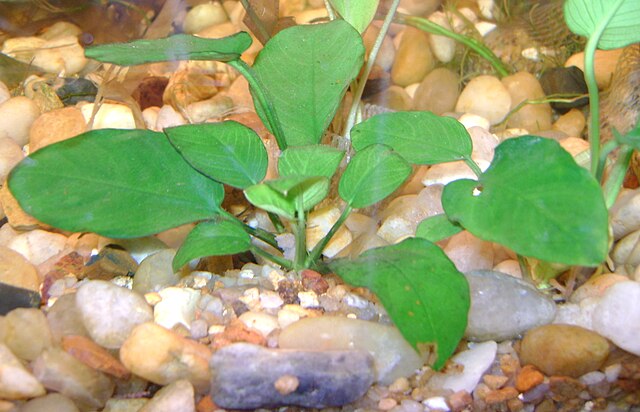
- Anubias Nana: The quintessential low-tech aquatic plant. Characterized by thick, hard leaves, it prefers shade because algae forms when exposed to direct sunlight. Attaching to driftwood or rocks is the basic approach. Details on cultivation are explained in Complete Guide to Anubias Species and Cultivation.
- Willow Moss: Creates a natural moss-covered atmosphere when attached. Also serves as a hiding place for shrimp, with excellent compatibility with aquatic life.
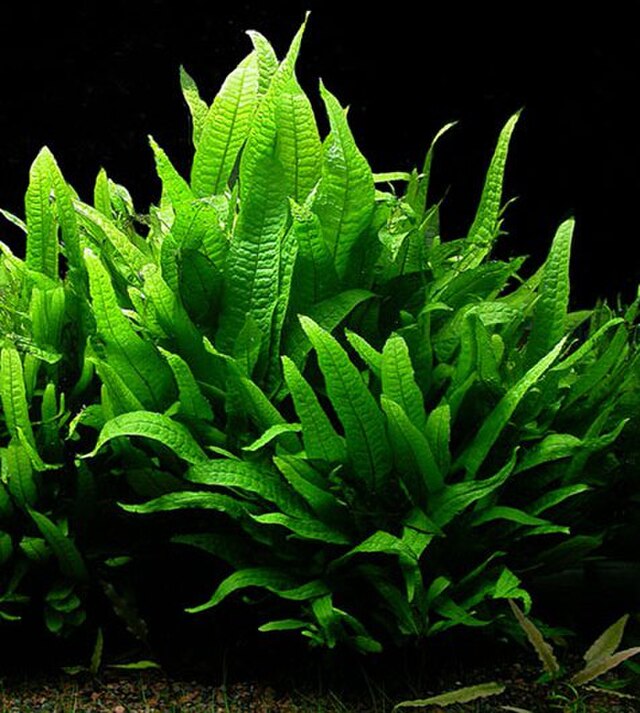
- Microsorum: Beautiful fine, elongated leaves characteristic of ferns, and grows even in shaded areas. Many variations such as Square and Narrow Leaf are available.
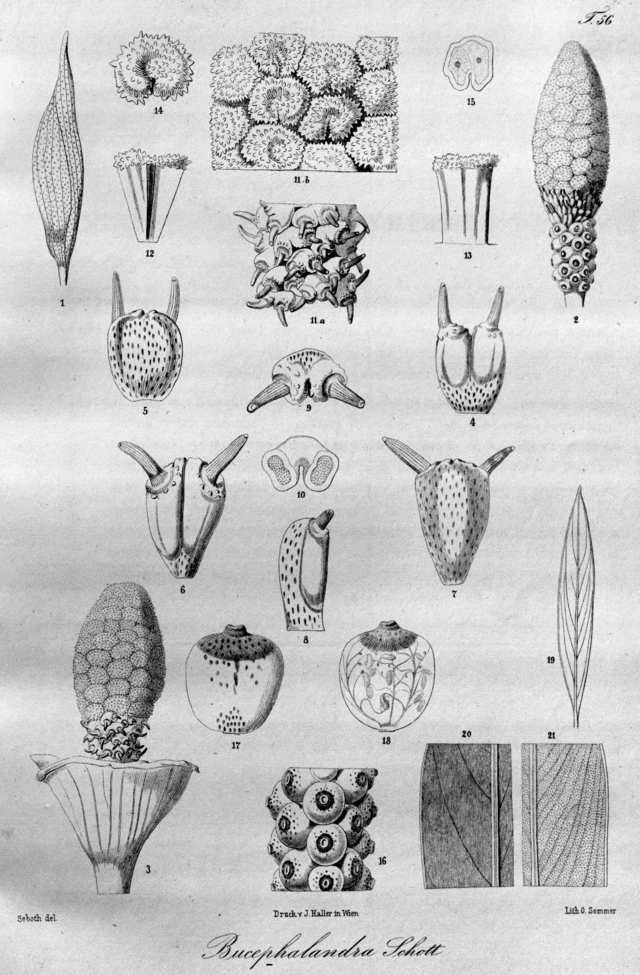
- Bucephalandra: A rare species with rapidly rising popularity in recent years. The iridescent sheen of the leaves is beautiful, growth is very slow but hardy, and it is easy to manage as it attaches to surfaces.
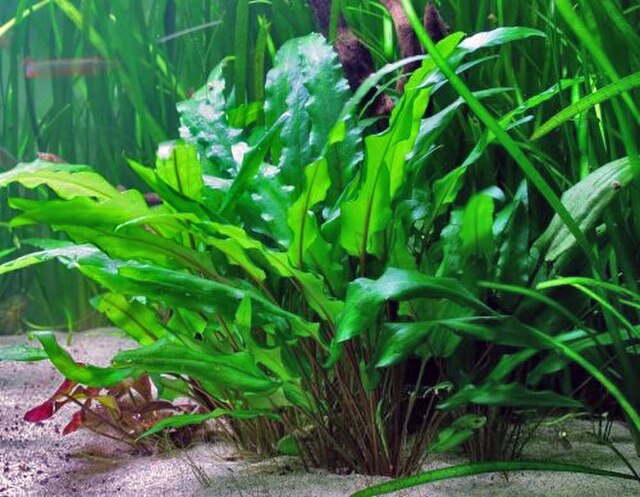
- Cryptocoryne: A standard species planted in the substrate. Comes in many varieties such as Wendtii, Beckettii, and Balansae, with diverse leaf colors and shapes. Causes of melting and solutions are detailed in Cryptocoryne Cultivation Guide.
- Vallisneria: Excellent as a background plant with fine, elongated leaves that wave in the current. Naturally propagates by sending out runners, creating an impressive landscape when grown in groups.
- Hornwort: A floating aquatic plant that grows without rooting. Highly effective at water purification and nitrate absorption, ideal for combination with fish tanks.
- Amazon Sword: A large rosette-type aquatic plant with impressive presence. Suited to tanks 60cm or larger, and excels as a main plant in the mid to background areas.
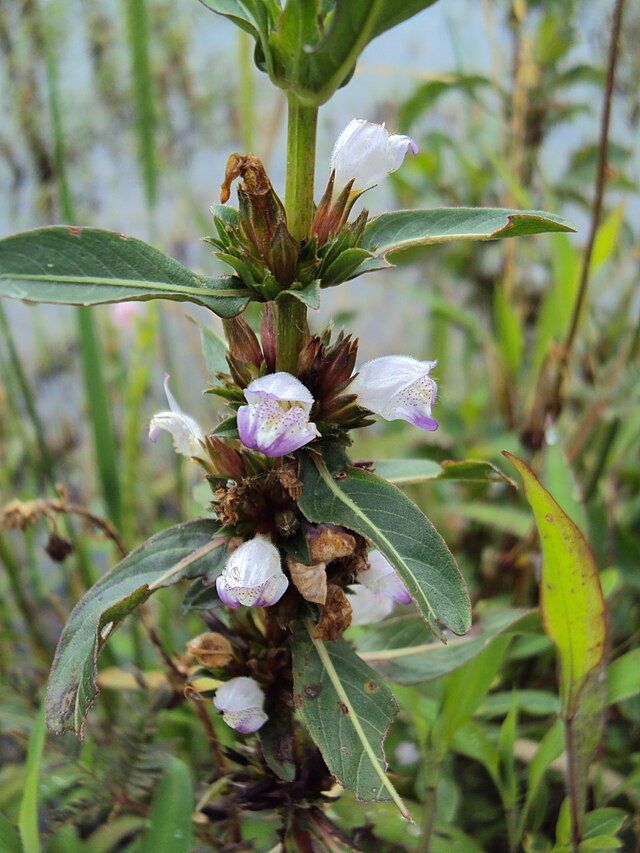
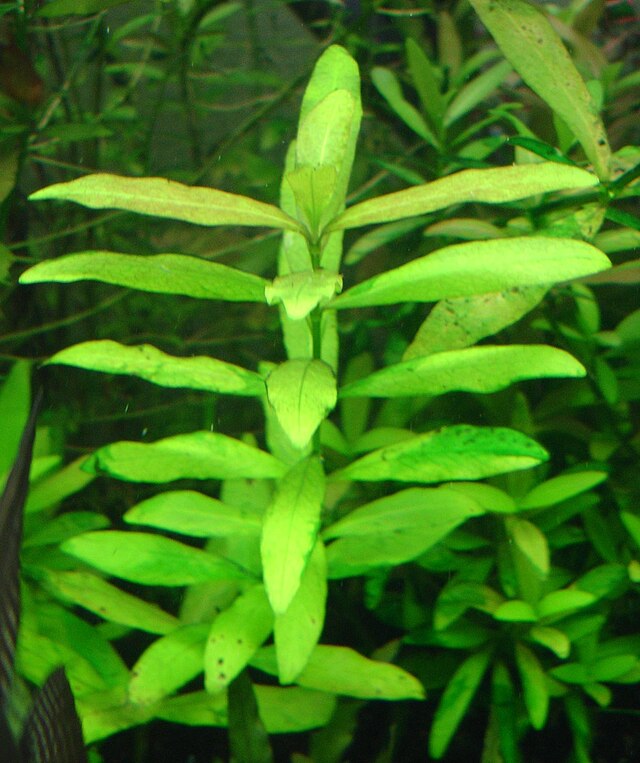
- Hygrophila Polysperma: Particularly hardy among stem plants with stable growth. Repeated trimming creates volume and a beautiful bushy appearance.
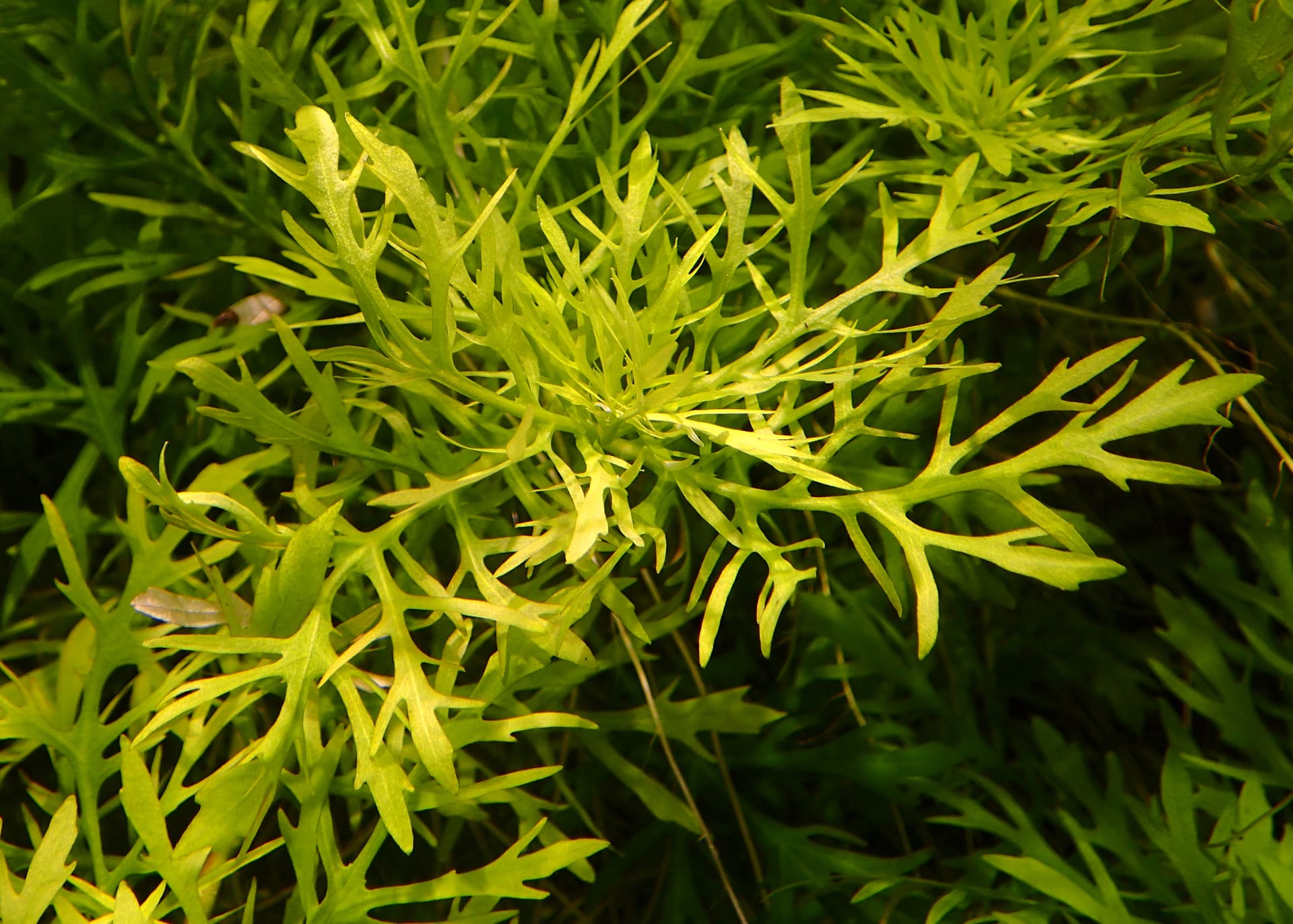
- Water Wisteria: Jagged leaves create a unique presence. Grows robustly even without CO2 and is valued as a background plant.
Layout Examples and Techniques for Low-Tech Tanks
In tanks without CO2, since the variety of usable aquatic plants is limited, material selection and layout design become especially important.
Natural Layout with Driftwood as the Main Feature
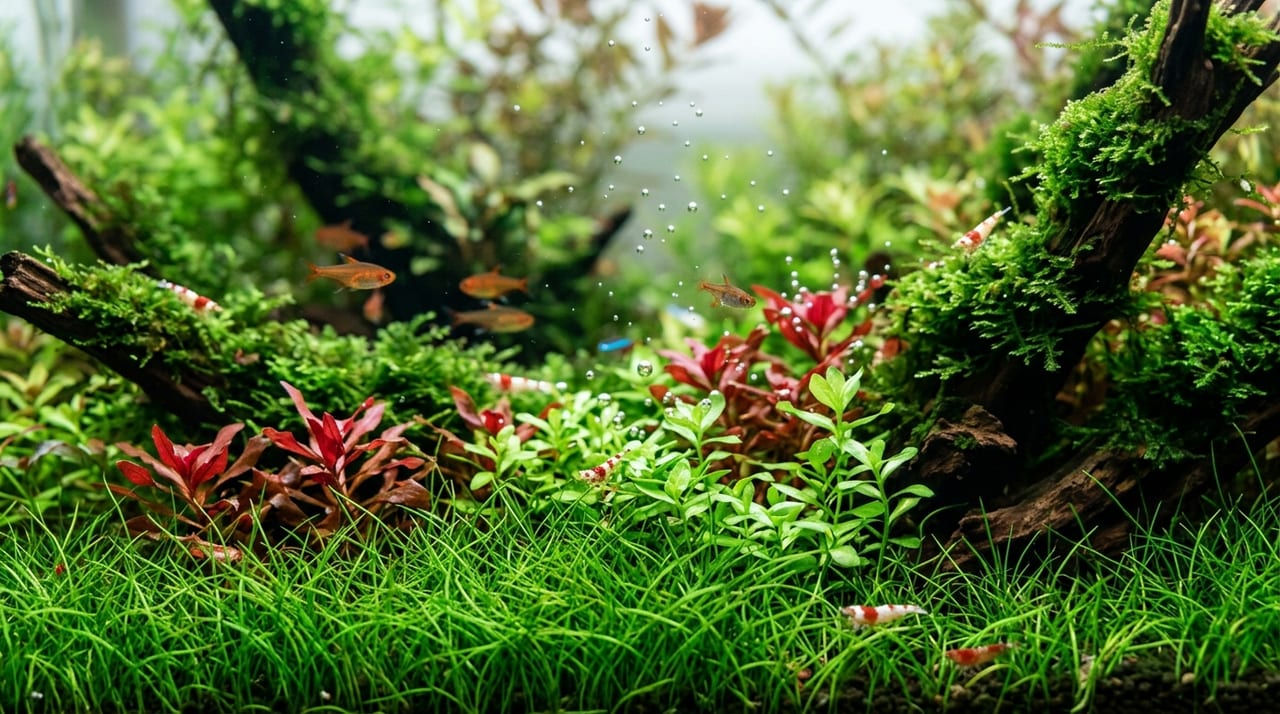
Layouts featuring driftwood as the main element pair excellently with low-tech aquatic plants. Attach Anubias Nana, Willow Moss, and Microsorum to the driftwood, and plant Cryptocoryne in the substrate. Positioning a large piece of driftwood in the center of the aquarium in a triangular composition creates depth and three-dimensional effect. As time passes, the attachment becomes more established, and the atmosphere becomes more natural—this is the essence of this style.
Simple Stone Scape Layout
Low-tech aquatic plants also blend well with stone-scape layouts featuring Dragonstone or Seiryu Stone as the main element. Attach Bucephalandra in the gaps between stones, and finish simply by laying gravel or Amazonia in the foreground. Planting Vallisneria in the background creates depth and increases the overall finished quality.
Basic Layout Rules
- Low foreground, high background: Depth is created by keeping the foreground low and the background high
- Rule of odds: Positioning stones and driftwood in odd numbers makes it easier to achieve balance
- Use negative space: Avoiding overcrowding and leaving visible substrate space creates a refined impression
Daily Management Tips for Low-Tech Tanks
While the strength of low-tech tanks is that they are easy to manage, following the basics allows you to maintain a beautiful aquascape long-term.
- Lighting duration: Aim for 6–8 hours per day. Using a timer to maintain consistency is also effective for algae prevention
- Water changes: The basic routine is once a week, replacing about 1/4 of the water. Vacuum the substrate debris with a gravel siphon at the same time
- Fertilization: Add small amounts of potassium liquid fertilizer once or twice per week. Be careful not to over-fertilize since growth is slow
- Substrate: Nutritious soil or black sand is recommended. Absorbent soil also works fine for rooting
- Filter: An external filter or undergravel filter is sufficient. Keep water flow gentle to prevent CO2 from escaping
Purchase Aquatic Plants Directly from Growers on GrowerDirect
If you're looking for aquatic plants suited to low-tech tanks, try using GrowerDirect. GrowerDirect is a platform where you can purchase directly from growers and enthusiasts specializing in aquatic plants.
Aquatic plants purchased at shops carry the risk of pesticide treatment and damage from long-distance transport, but plants shipped directly from growers are often home-grown or self-propagated, making it easier to obtain plants in good condition.
If you mention at the time of purchase that you have "no CO2 addition and low-light conditions," growers can offer direct advice on species suited to your environment and care tips. You can find rare varieties like Bucephalandra and location-specific Cryptocoryne that are difficult to obtain at shops.
On GrowerDirect, you can also check seller reviews and transaction history, so even first-time purchases are safe and secure. Start your first low-tech tank with aquatic plants from a trusted grower.