Cryptocoryne Care Guide | Understanding Why Plants Melt and Exploring Diverse Varieties
Detailed guide to Cryptocoryne aquatic plant care. Learn why plants melt due to environmental changes and how to prevent it, choose the right substrate for root nutrient absorption, and discover the characteristics of many varieties.
Key Takeaways
Detailed guide to Cryptocoryne aquatic plant care. Learn why plants melt due to environmental changes and how to prevent it, choose the right substrate for root nutrient absorption, and discover the characteristics of many varieties.
Related Species
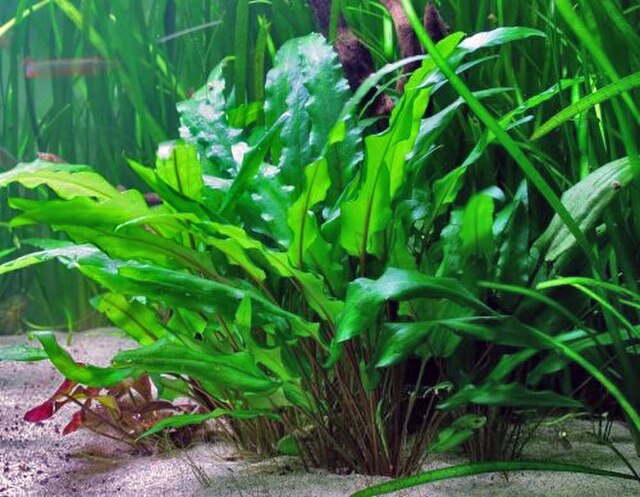
Cryptocoryne is an aquatic plant from the Araceae family native to Southeast Asia, with over 100 known species forming a highly diverse group. These plants are popular for their subdued leaf colors and hardy nature, but many enthusiasts struggle with a peculiar phenomenon called "melting." This article explains how to care for Cryptocoryne and how to address melting issues.
Characteristics and Appeal of Cryptocoryne
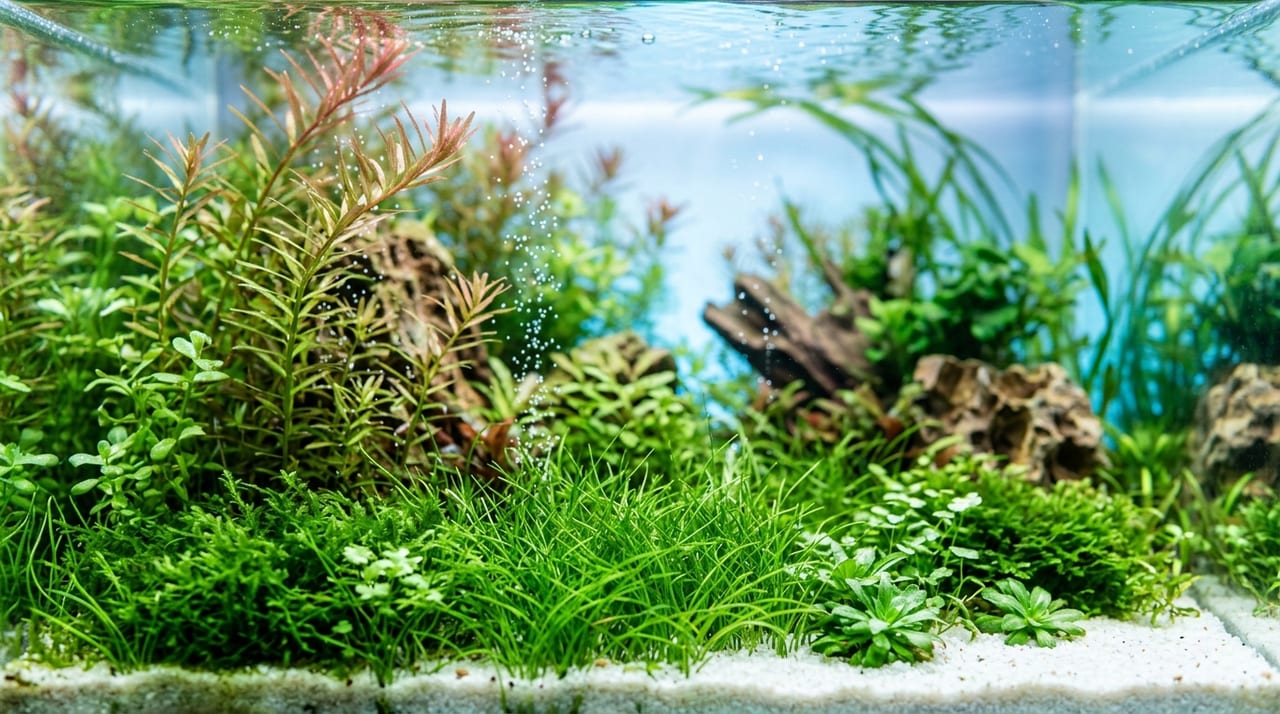
Cryptocoryne grows wild in tropical Asian rivers and wetlands, including Sri Lanka, Malaysia, and Indonesia. Leaf shapes vary remarkably by variety—some are narrow and elongated, others broad and wide, and some have wavy edges. Leaf colors range from green, brown, and reddish-brown to purple, offering rich variation. Even the same variety can display different appearances depending on growing conditions. Although growth is relatively slow, once established, these plants grow robustly with minimal pruning, which is why they are valued in aquatic plant layouts. Depending on the variety size, they can be positioned anywhere in the tank—foreground, midground, or background. Their rosette-like radial leaf arrangement creates a natural aesthetic, and when combined with driftwood or stones, they produce calm, serene aquascapes. Cryptocoryne can also be cultivated emersed (above water), and their use in terrariums and paludariums is growing.
Causes of Cryptocoryne Melting and How to Address It
The most famous characteristic of Cryptocoryne is the "melting" phenomenon, sometimes called "Cryptocoryne disease." When environmental conditions change, leaves can turn mushy and disappear entirely. The cause is stress from sudden environmental shifts—rapid changes in water chemistry (pH, hardness), significant temperature fluctuations, damage during replanting, or massive water changes can trigger it. The key point is that if the rhizome survives, the plant will recover even if all leaves have melted. Remove melted leaves promptly and leave the rhizome in the substrate; new leaves will emerge within several weeks to one or two months. If the rhizome is firm and solid, there is no problem. If it becomes soft and emits a foul odor, the rhizome has rotted and recovery is unfortunately unlikely. To prevent melting, the following measures are effective:
- Limit water change volume (no more than one-quarter of the tank)
- Make environmental changes gradually
- Avoid damaging roots when replanting
During the first one or two weeks after introduction, plants are especially sensitive to environmental changes, so avoid making drastic adjustments to heater or lighting settings as a preventive measure.
Substrate and Nutrient Management
Cryptocoryne absorbs nutrients actively through its roots. The choice of substrate significantly affects whether cultivation succeeds. Nutrient-rich substrates are the best match, and cultivating with nutrient-rich soils like Amazonia produces vibrant leaf colors and stable growth. If you are unsure about substrate selection, refer to the aquatic plant substrate and substrate guide as well. Larger grain sand can also be used, but solid fertilizers must be buried at the root zone. With gravel-type substrates, nutrients tend to run low, so add substrate fertilizers such as initial sticks periodically. A substrate depth of at least 5 cm is desirable to provide sufficient space for roots to develop. Once planted, Cryptocoryne should never be moved—frequent replanting causes melting. Decide Cryptocoryne placement during the layout design stage and leave it undisturbed thereafter. Low to moderate light is sufficient; high light is not necessary. CO2 supplementation is not required for growth, but adding it can accelerate growth slightly.
Representative Varieties and How to Choose
Cryptocoryne varieties become easier to select when classified by size.
- Small foreground varieties include Parva (the smallest species, 3–5 cm height) and Lucens (dense fine leaves, 5–10 cm height).
- The Wendtii group for midground placement is the most popular, including Wendtii Green, Wendtii Brown, and Wendtii Tropica, all of which are easy to grow and recommended for beginners. They reach 10–20 cm in height with leaf colors ranging from green to brown.
- For background placement, Balansae (long wavy leaves, 30–60 cm height) and Usteriana (large with strong presence) are suitable.
- Red-tinted varieties such as Beckett from Sri Lanka are valuable accents in aquascapes.
Selecting varieties to match tank size and layout direction minimizes mistakes. If you are unsure about overall layout composition, the aquatic plant layout basics guide is also helpful.
Emersed Cultivation and Propagation of Cryptocoryne
Cryptocoryne can be cultivated emersed as well as submerged, and emersed cultivation sometimes produces flowers. The advantages of emersed cultivation are faster growth compared to submerged cultivation and the opportunity to identify varieties through flower observation. For emersed cultivation, fill a pot with soil or akadama clay, and manage it with wading water (water level just reaching the pot base). Maintain humidity above 70% by covering with a case or misting regularly. Ideal temperature is 25–28°C. Once the mother plant grows sufficiently large, divide the plantlets to increase stock. Many Cryptocoryne species produce plantlets via runners (stolons), and when small shoots appear around the mother plant, they can be separated as independent plants. When moving runners-propagated plants from emersed to submerged cultivation, emersed leaves initially melt and transform into submerged leaves. This melting is a normal response—wait without worry.
Acquiring and Managing Cryptocoryne—Summary
Once acclimated to its environment, Cryptocoryne becomes a very low-maintenance aquatic plant. Once you overcome the "melting" that often occurs at introduction, you can enjoy its beauty for years. The three key management points are: never move it once planted, perform small frequent water changes, and ensure adequate nutrients in the substrate. Propagation occurs through runner plantlets; as new shoots appear around the mother plant, thin them appropriately to adjust density. Since Cryptocoryne displays completely different appearances depending on variety, combining multiple varieties adds depth to the aquascape. Placing Parva in the foreground, Wendtii in the midground, and Balansae in the background creates a highly finished layout using only Cryptocoryne. Because light and CO2 demands are modest, this plant is ideal for those seeking low-cost aquatic plant tanks.
The Joy of Collecting Cryptocoryne Varieties
With over 100 species, Cryptocoryne is a highly collectible aquatic plant group. One collection approach is organizing by origin. Species are distributed across different regions—Sri Lanka, Malaysia, Borneo—and there is enjoyment in creating biotope tanks that replicate the water chemistry of each region. Another popular approach is gathering varieties with different leaf colors and planting them in one tank to enjoy color gradations.
Cryptocoryne lacks flashiness, but possesses quiet, natural beauty, and the more time you spend with it, the more appealing it becomes. The correct way to appreciate Cryptocoryne is to plant it and never disturb it, enjoying its slow growth over time.
Obtaining Cryptocoryne at GrowerDirect
Cryptocoryne comes in an extremely wide variety, and rare regional variants and undescribed species are also available in the trade. Local shops often stock only limited varieties, but at GrowerDirect, you can purchase a diverse selection of Cryptocoryne from growers who specialize in cultivating these plants. Because growers provide accurate variety information and cultivation advice, GrowerDirect is recommended for everyone from first-time Cryptocoryne growers to serious collectors.