Guide to Selecting and Planting Tissue Culture Aquatic Plants | Benefits and Precautions
A detailed guide to the benefits and precautions of tissue culture aquatic plants. Covers the mechanism of sterile cultivation, how to select them at aquarium shops, planting procedures, how to handle agar, and practical care after introduction to the tank.
Key Takeaways
A detailed guide to the benefits and precautions of tissue culture aquatic plants. Covers the mechanism of sterile cultivation, how to select them at aquarium shops, planting procedures, how to handle agar, and practical care after introduction to the tank.
Related Species
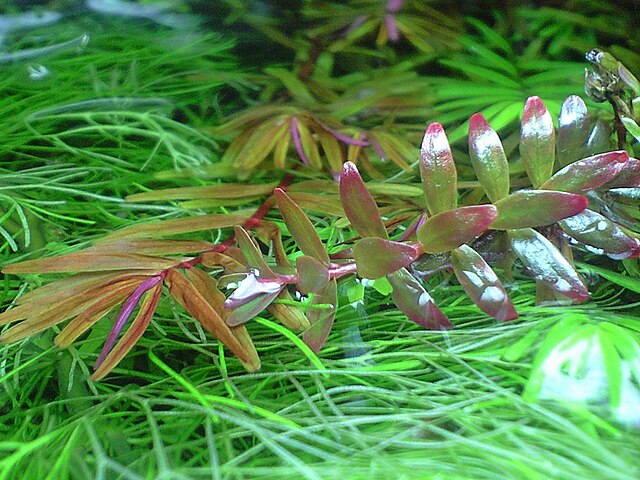
In recent years, "tissue culture cups" have rapidly become a standard distribution format for aquatic plants. These products contain small aquatic plants together with agar culture medium in transparent cups and are sold by many brands, primarily from overseas manufacturers. Here we explain tissue culture aquatic plants, which have characteristics different from traditional water-cultivated or aquatic forms, from how to select them to planting.
What Are Tissue Culture Aquatic Plants?
Tissue culture aquatic plants are aquatic plants propagated from plant cells or tissue fragments in a sterile laboratory environment. They are grown in containers filled with agar culture medium supplemented with nutrients and plant hormones, with temperature and light carefully controlled. Because they are produced in a factory-like environment, they offer uniform quality and stable supply.
The defining characteristic of tissue culture is that it is completely sterile. While ordinary aquatic plants may have microscopic snail eggs, pest insects, or algal spores attached to them, tissue culture aquatic plants are completely free of these. They are particularly valuable when you want to avoid introducing snails into a newly established tank or when you want to minimize the risk of pesticide residues in a shrimp tank.
Benefits of Tissue Culture Aquatic Plants
Pest and Snail-Free As mentioned above, because they are produced under sterile conditions, there is zero risk of contamination by pests or snail eggs. You can rest assured that difficult-to-eliminate organisms like planarians or hydra will not be introduced into your tank.
No Pesticides—Safe for Animals Tissue culture aquatic plants are produced without pesticides, making them safe to introduce into tanks containing pesticide-sensitive animals such as Amano shrimp or bee shrimp. Standard aquatic plants are sometimes treated with pesticides during cultivation on Southeast Asian farms, and residual pesticides can be fatal to shrimp. For more details, see Aquatic Plants and Fertilizers Safe for Shrimp; if you are setting up a shrimp tank, please check that article as well.
Variety Accuracy Because tissue culture propagates genetically identical plants from the parent stock, there is virtually no risk of variety misidentification. The accuracy of scientific names and variety names on labels is high, making tissue culture ideal for collectors.
Long-Term Storage Possible If left unopened, the cup can be stored for several weeks to about a month. Even if you cannot plant it immediately, you can maintain its condition by keeping it in a well-lit location. However, avoid direct sunlight.
Precautions with Tissue Culture Aquatic Plants
On the other hand, tissue culture aquatic plants do come with some specific precautions.
Small Size The aquatic plants in the cup are extremely small and may feel like they contain less volume compared to standard potted water-cultivated plants. One cup is typically insufficient to fill the foreground of a 60 cm tank, and multiple cups may be necessary.
Time Required to Adapt to Aquatic Environment The tissue culture environment is a special state that differs from both underwater and above-water conditions. Shortly after planting in the tank, growth may stagnate or some leaves may melt as the plant adapts to the environmental change. This adaptation period is typically 2–4 weeks.
Removal of Agar Required The agar culture medium must be completely removed before planting. If agar remains on the plant when it is placed in the tank, it will decompose and degrade water quality.
How to Select at the Shop
When purchasing tissue culture cups, check the following points:
- Color of plants in the cup: Are they a vibrant, healthy green? Are there no yellowed or browned areas?
- Condition of the agar: Is the agar not discolored, and are there no signs of mold?
- Seal of the cup: Is the lid firmly closed? Are there no signs of previous opening?
- Time since manufacture: If a manufacturing date or lot number is listed, choose a more recent one.
- Density of plants: Is there an adequate amount of plant material in the cup?
Popular brands include Tropica's 1-2-Grow series, ADA's BIO Aquatic Plant Forest, and Aquafeel products.
Planting Procedure
Tissue culture aquatic plants are planted according to the following procedure:
1. Removal of Agar Remove the plant from the cup and rinse away the agar in a bowl of water. Gently separate the plant with your fingers while removing the agar, and rinse under running water. Use tweezers to remove any remaining agar debris. It is important to work carefully to avoid damaging the roots.
2. Division into Bunches Divide the cleaned plant into small bunches. For foreground plants (such as Glossostigma or Cuba Pearl), dividing into small clumps approximately 1 cm square makes them easier to plant. For stem plants, divide them into bunches of 3–5 stems each.
3. Planting Use tweezers to plant in the substrate. Foreground plants spread better without gaps when planted at 1–2 cm intervals. Stem plants should be planted in the background at 3–5 cm intervals. The planting depth should be just enough to cover the roots; planting too deep will bury the growing point and cause the plant to die. For basic layout principles, see Introduction to Aquatic Plant Layouts.
4. Care After Planting Right after planting, aquatic plants tend to float easily, so you can keep the water level low or use a misting method instead. During the first 1–2 weeks, add CO2 and set the lighting to 6–8 hours per day to acclimate the plants. Begin adding liquid fertilizer sparingly one week after planting.
Varieties Well-Suited to Tissue Culture
Not all aquatic plants are available as tissue culture. Here are varieties that are especially easy to obtain as tissue culture cups and have high establishment rates after planting. If you also want to learn about beginner varieties besides tissue culture, see Top 10 Aquatic Plants for Beginners.
- Glossostigma: A classic foreground plant. Establishes well from tissue culture.
- New Large Pearl Grass: A popular species that forms a carpet even under low light.
- Various Rotala species: A representative stem plant with many color variations.
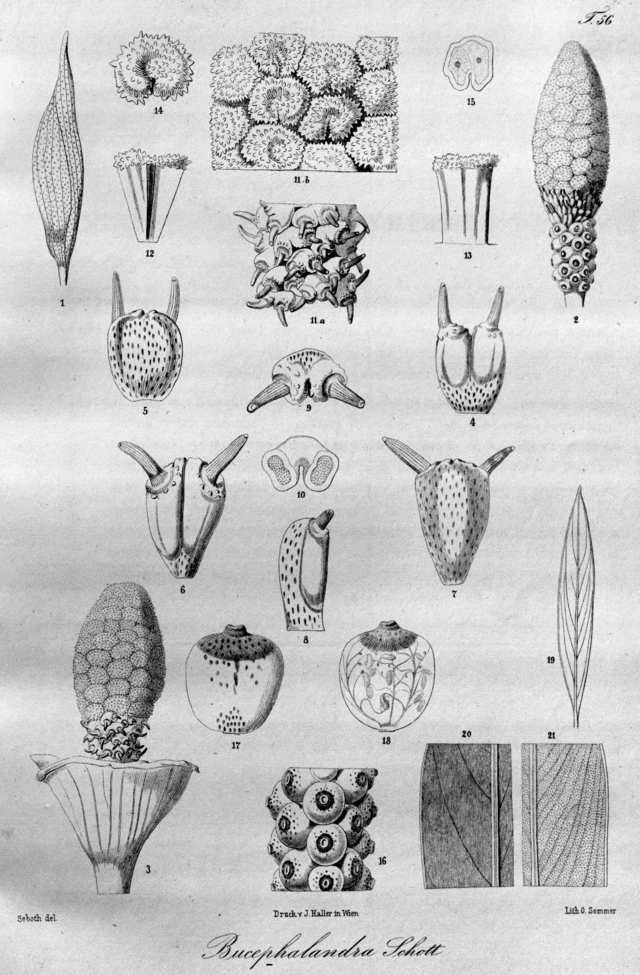
- Bucephalandra: A popular attachment plant. With tissue culture, there is no concern about snails.
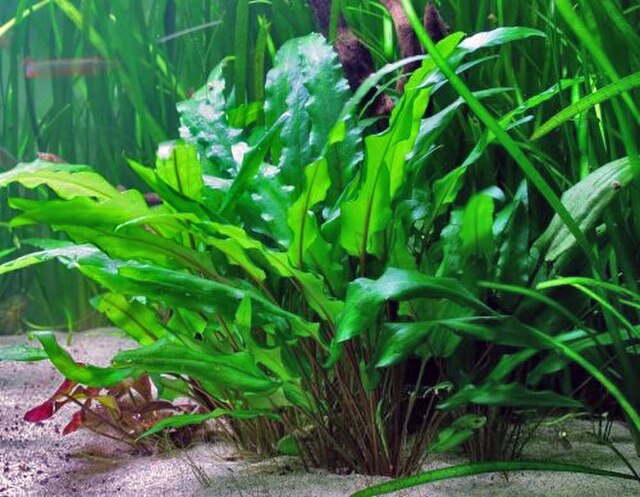
- Various Cryptocoryne species: Tissue culture is especially recommended for accurate varietal naming.
Cost Comparison: Tissue Culture vs. Standard Aquatic Plants
Let me compare the costs of tissue culture cups and standard potted aquatic plants. Tissue culture cups typically cost ¥600–¥1,200 per unit, and while the amount of plant material in one cup appears small, it often yields 15–30 bunches when divided. Standard potted aquatic plants, by contrast, usually cost ¥300–¥800 but contain only 5–10 stems. When calculated on a per-plant basis, tissue culture is often more economical. Furthermore, tissue culture offers added value through being "pest-free" and "pesticide-free," and considering the low risk of introduction into shrimp tanks, the cost-performance ratio is excellent. However, be aware that they require time to adapt to aquatic environments, the agar medium must be removed, and the plants may look temporarily unsightly during the transition to aquatic form before making your choice.
Find Tissue Culture Aquatic Plants on GrowerDirect
On GrowerDirect, you can purchase aquatic plants in various forms, including tissue culture, from growers who specialize in aquatic plant cultivation. If you communicate your tank's conditions to a grower, they can also advise you on whether tissue culture or standard seedlings would be more suitable. If you are looking for high-quality aquatic plants, check out offerings from growers on GrowerDirect.