10 Recommended Water Plants for Beginners | Carefully Selected Easy-to-Grow Species
We introduce 10 water plants recommended for beginners, limited to species that grow without CO2 injection. Anubias attaches within a few weeks when fixed to driftwood or rocks, and Hornwort costs roughly 100–300 yen. You'll also learn how to get started with the 5 species rated difficulty ★1.
Key Takeaways
We introduce 10 water plants recommended for beginners, limited to species that grow without CO2 injection. Anubias attaches within a few weeks when fixed to driftwood or rocks, and Hornwort costs roughly 100–300 yen. You'll also learn how to get started with the 5 species rated difficulty ★1.
Related Species
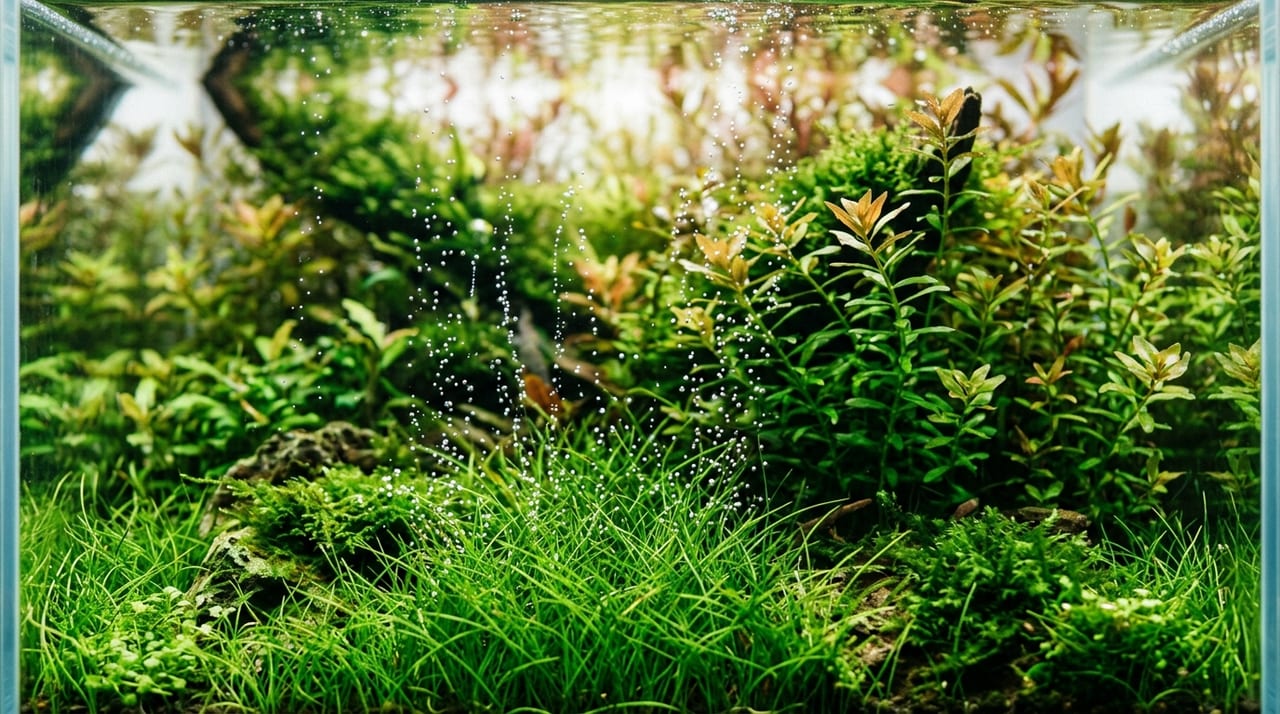
Adding water plants to an aquarium makes fish swim more vibrantly, and the overall appearance instantly becomes more natural. However, many people are hesitant, thinking "water plants seem difficult" or "don't they require CO2 supplementation?"
In fact, there are many hardy water plants that grow vigorously without CO2 supplementation. In this article, we carefully select 10 water plants that beginners are unlikely to fail with, and explain each one's characteristics and key cultivation tips in an easy-to-understand way. Those considering starting their first aquarium should definitely refer to this guide.
Attaching Plants | Growing by Anchoring to Driftwood and Rocks
Attaching plants grow by being fixed to driftwood or rocks without being planted in substrate. They offer high layout flexibility and don't require substrate selection, making them especially recommended for beginners.
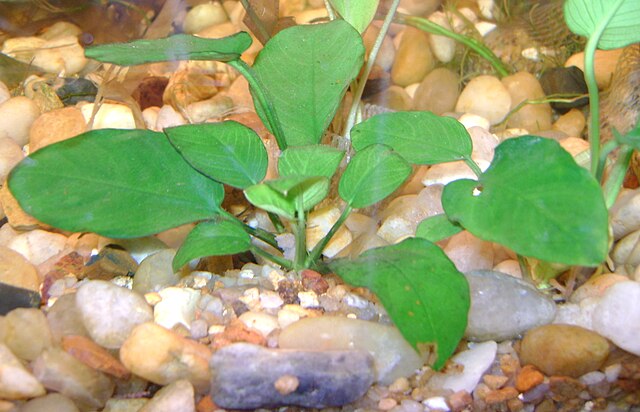
1. Anubias Nana
Difficulty: ★☆☆☆☆ / Price Range: ¥500–¥1,000
The quintessential beginner-friendly water plant. Characterized by thick, dark green leaves, it grows without issue even in low light and without CO2. When anchored to driftwood or rocks with fishing line or plastic ties, it will attach within a few weeks. Growth is slow, but this also means algae is less likely to grow, and it maintains its beautiful appearance for extended periods. The rhizome (the horizontal stem similar to a runner) can rot if buried in substrate, so always keep it exposed.
2. Microsorum
Difficulty: ★☆☆☆☆ / Price Range: ¥500–¥1,500
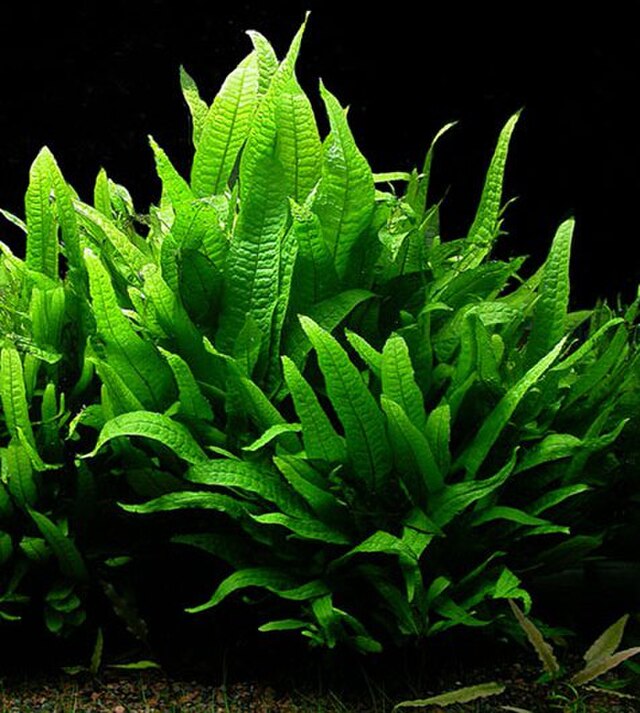
A fern relative with uniquely wavy leaf shapes that add accents to aquascaping layouts. With high attachment capability, it's typically grown by anchoring to driftwood or rocks like Anubias. As a shade-loving plant, it doesn't require strong light, and intense light like direct sunlight can actually encourage algae growth. Being hardy and long-lasting, once established, it can be enjoyed for years.
3. Willow Moss
Difficulty: ★☆☆☆☆ / Price Range: ¥300–¥800
A classic moss species with fine leaves that spread in an interwoven pattern. When spread thinly on driftwood and wrapped with fishing line, it gradually forms a beautiful green carpet-like attachment. It serves as a hiding place and spawning ground for shrimp and fry, making it excellent for aquatic life. Though growth is somewhat slow, it propagates from trimmed fragments, offering excellent value for money.
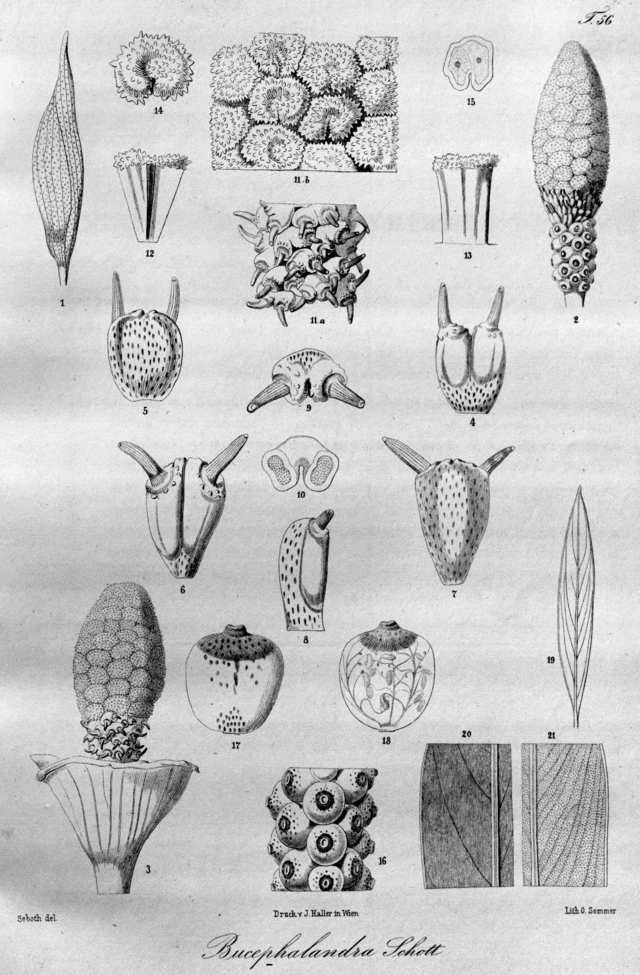
4. Bucephalandra
Difficulty: ★★☆☆☆ / Price Range: ¥800–¥3,000
A recently surging-in-popularity attaching plant. Many varieties feature a glittering, metallic sheen on the leaf surface, giving them a striking presence in the aquarium. Growth is extremely slow, making it less prone to algae. While somewhat pricey, once acquired, it provides years of enjoyment. It's sensitive to rapid water chemistry changes, so acclimate carefully when introducing it.
Floating & Plantable Water Plants | For Those Wanting an Easy Start
Water plants that grow without substrate, or those that grow equally well whether planted or floating, are the lowest-barrier category.
5. Ludwigia
Difficulty: ★☆☆☆☆ / Price Range: ¥100–¥300
Also called "goldfish plant," it's the ultimate classic. It grows simply by floating on water, and because it grows extremely fast, it absorbs excess nutrients in the water (nitrates and phosphates), greatly contributing to water purification. As a rootless floating plant, it requires no substrate. It also serves as a spawning ground for fish. Management is simple—just thin it out occasionally if it grows too much.
6. Anacharis (Elodea)
Difficulty: ★☆☆☆☆ / Price Range: ¥100–¥300
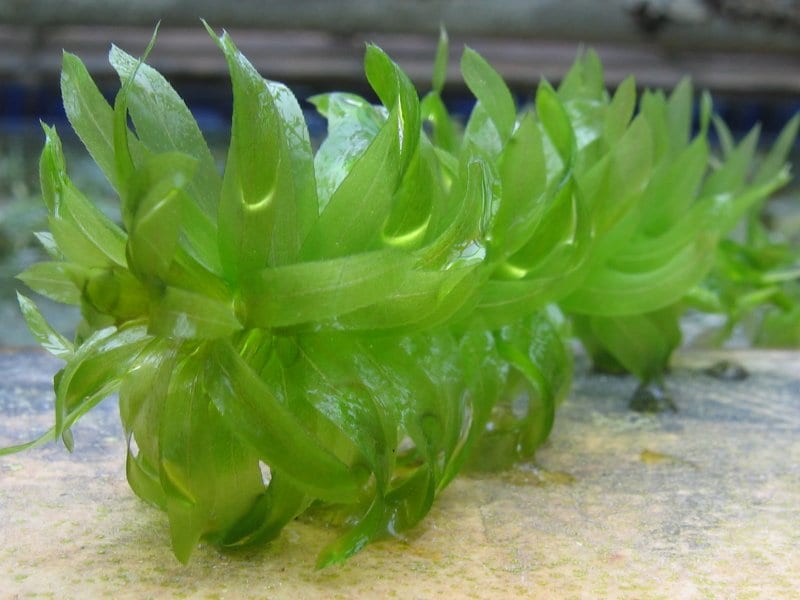
A versatile water plant that grows whether planted in substrate or left floating. So adaptable that it naturally grows in domestic waterways, making it perfect for medaka tanks due to its tolerance of low light and low temperatures. It photosynthesizes vigorously, and when lit, you can observe bubbles (oxygen) being released from the leaves—popular with children. Very affordable, it's ideal as a beginner water plant.
Stem Plants | The Stars of Planted Layouts
Stem plants have stems and leaves, and are grown by inserting them into the substrate. They grow quickly and can be propagated through "replanting," where trimmed stems are replanted.
7. Hygrophila polysperma
Difficulty: ★☆☆☆☆ / Price Range: ¥200–¥400
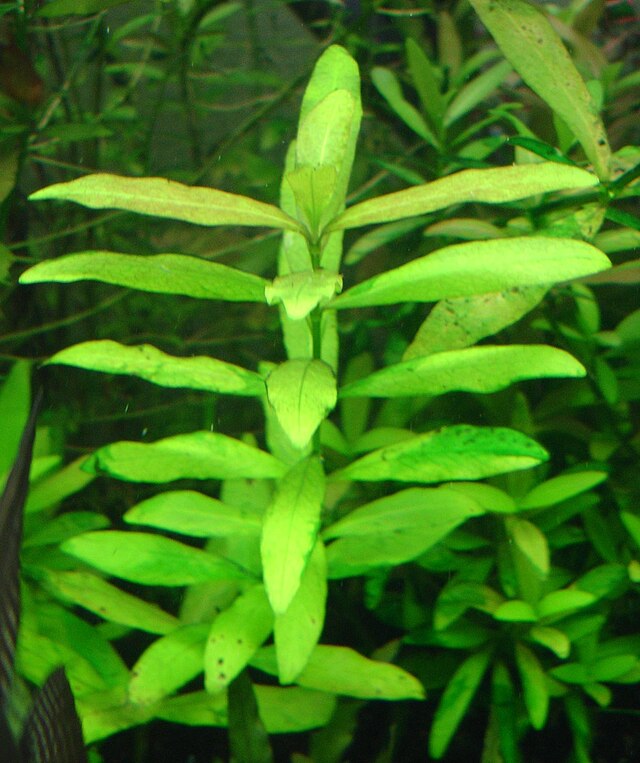
One of the easiest stem plants for beginners. Given sufficient light, it grows surprisingly fast and shoots up rapidly. When planted in the background of the tank, it creates depth in the layout. It propagates easily through replanting, so buying a single bundle can fill your tank with lush greenery.
8. Rotala rotundifolia
Difficulty: ★★☆☆☆ / Price Range: ¥300–¥600
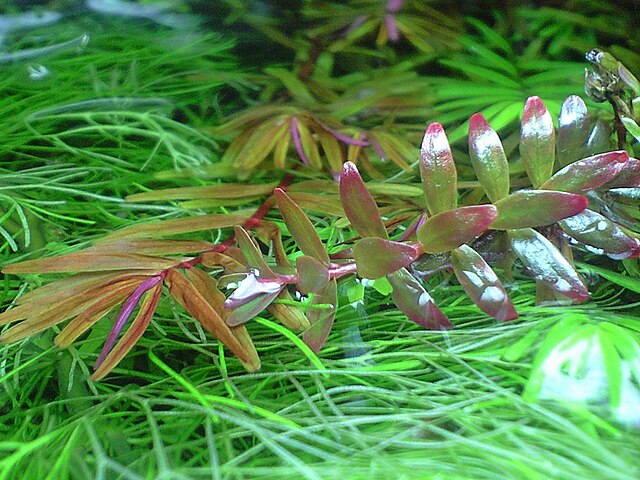
A stem plant with beautiful red-to-pink coloration. It grows without CO2, but the more light you provide, the more vibrant the colors become. It's recommended for adding red accents to tanks that tend to be entirely green. While it requires a moderate amount of light—raising difficulty slightly—it's still far easier to grow than other red-leaved aquatic plants.
Foreground & Midground Water Plants | Balancing the Overall Tank
9. Vallisneria
Difficulty: ★★☆☆☆ / Price Range: ¥200–¥500
Its slender ribbon-like leaves sway gracefully in the current, making it particularly popular as a background plant for large tanks. It naturally propagates through runners (horizontal stems), and once established, you can enjoy watching it form lush colonies. It grows especially well when the substrate contains nutrients.
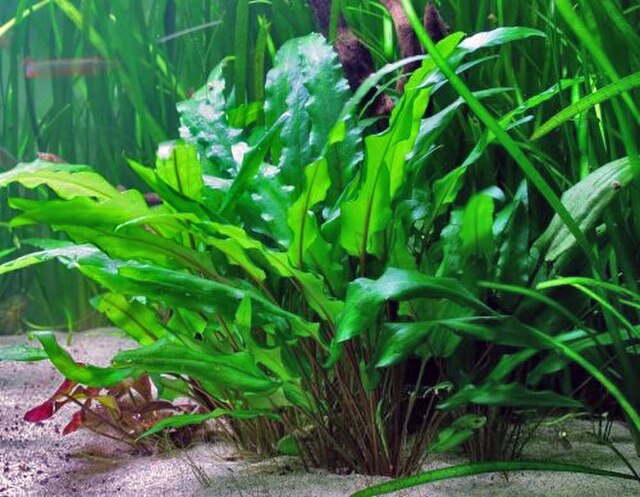
10. Cryptocoryne
Difficulty: ★★☆☆☆ / Price Range: ¥300–¥1,000
The quintessential shade-loving water plant for foreground to midground use. It comes in many varieties, with leaf colors ranging from green to brown to reddish-purple. "Cryptocoryne rot" can occur shortly after introduction, causing leaves to melt, but if the roots are alive, new shoots will emerge once it acclimates, so be patient. Once established, it's very hardy and well-suited for long-term cultivation.
Key Points for Choosing Water Plants
Here are the key points to help beginners avoid mistakes when selecting water plants.
- Attaching plants (Anubias, Microsorum, Willow Moss) require no substrate, are easy to arrange, and are perfect for your first step.
- Floating plants (Ludwigia, Anacharis) require no planting effort and have strong water-purifying effects, making them ideal for fish-focused tanks.
- Stem plants (Hygrophila, Rotala) grow quickly and offer a sense of accomplishment but require frequent trimming.
- When starting without CO2 supplementation, begin with the five ★☆☆☆☆ varieties first, and once you're comfortable, try the ★★☆☆☆ types.
Water plant health depends on the balance of "light, CO2, and nutrients." Don't aim for perfection from the start—first enjoy a life with water plants using hardy species.
Growers Marketplace's Safe & Secure System
Through Growers Marketplace, you can purchase water plants and other aquatic plants directly from growers. Bypassing retailers means you get clear information about growing conditions and fresh plants more easily—a major advantage. All communication is recorded on the platform, and payment terms are arranged directly between the grower and the buyer. If any issues arise, our support team handles them.
You can check how growers grow their plants and their management practices on their profiles and listing pages, allowing even beginners to purchase with confidence. When unsure about plant selection, try using the feature to ask growers directly. Advice from experienced growers provides practical information you won't find in field guides or web searches.