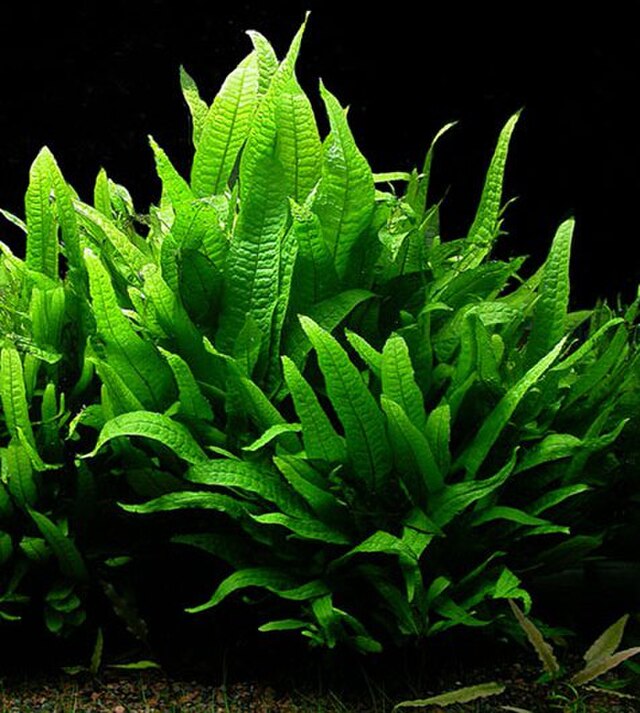
Source: Wikimedia Commons
Java Fern
BeginnerLeptochilus pteropus
A fern aquatic plant from Southeast Asia. Attaches to driftwood and rocks, popular for its unique leaf shape.
About
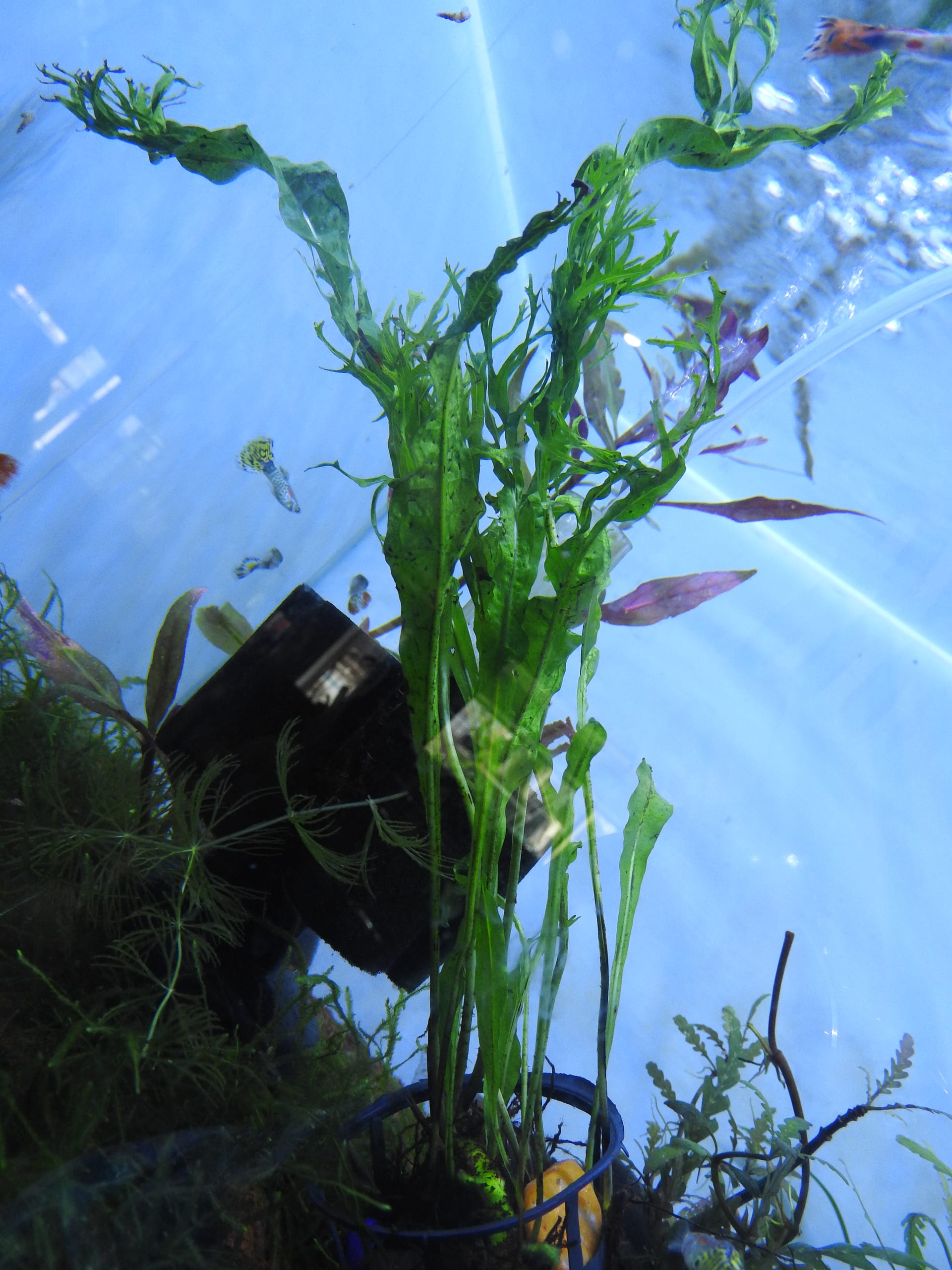
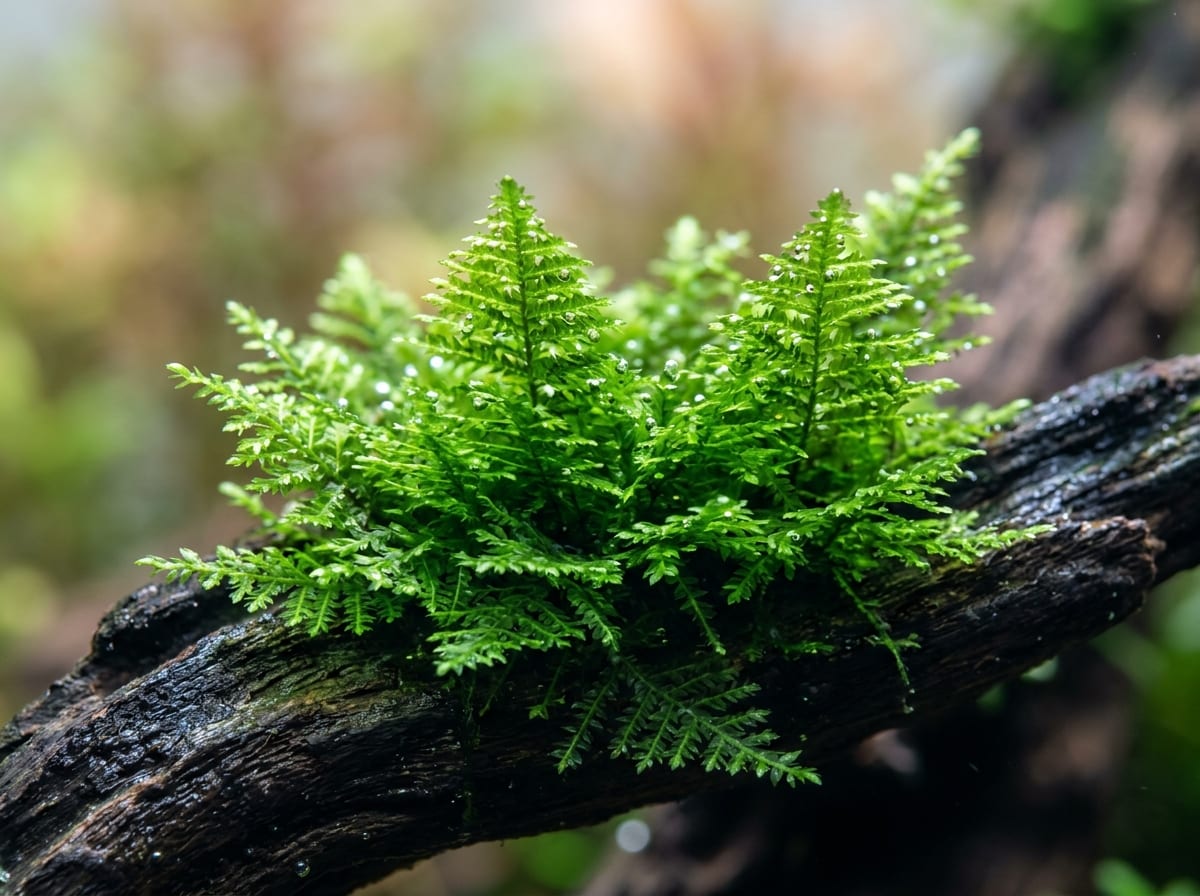
Microsorum pteropus, now botanically reclassified as Leptochilus pteropus, is a highly variable epiphytic fern native to Malaysia, Thailand, northeastern India, and parts of southern China, where it grows attached to riparian roots and rocks in and alongside streams. Under the trade name 'Java fern,' it has become one of the most universally used aquarium plants worldwide. Its thick, glossy, dark-green fronds provide a mature, substantial quality to compositions built around driftwood. The rhizome must be attached to hardscape — burying it causes rot — and the plant demands neither strong light nor CO2, making it accessible to complete novices. Propagation is distinctive: adventitious plantlets develop spontaneously on the tips and undersides of mature leaves, rooting and floating free to colonize nearby surfaces. Several distinct leaf-form varieties — narrow-leaf, trident, and needle-leaf among them — offer diverse aesthetic options.
Source: Wikipedia (CC BY-SA 4.0)
Size of the Java Fern
The Java Fern grows to 10-30cm.
Basic Info
Origin
Southeast Asia (Malaysia, Thailand, northeastern India, and southern China)
Lifespan
Perennial
Size
10-30cm
Temperature
20〜28℃
Watering & Fertilizer
Liquid fertilizer
Growing Tips
Housing
Attach to wood or rock (do not bury in gravel)
Lighting
Excellent shade tolerance lets it grow in low light, even in dim spots such as the shadow of driftwood.
CO2 & Fertilizer
No CO2 is needed. As an epiphyte it takes nutrients mainly from liquid fertilizer rather than substrate fertilizer, and light dosing is enough.
Trimming & Propagation
Plantlets form on the tips and undersides of mature leaves. Once grown, detach them and attach to wood or rock to propagate.
Cautions
Because it grows slowly, algae tends to settle on the leaves. Cut old or damaged leaves at the base and keep algae under control.
Java Fern FAQ
QWhat is the growing difficulty level for Java Fern?
Beginner. A variety suitable for beginners. No special equipment or experience is required—you can grow it without problems by setting up a basic cultivation environment.
QHow large does Java Fern get?
The mature size of Java Fern is 10-30cm. This may vary slightly depending on cultivation environment and individual differences.
QHow should I water and fertilize Java Fern?
Java Fern: watering & fertilizer — Liquid fertilizer. Aim for appropriate frequency and amount.
QWhat is the typical price for Java Fern?
The price of Java Fern varies significantly by variety, characteristics, size, and lineage. Please check GrowerDirect's price guide for the latest market information.
Last updated: August 31, 2026
References & Sources
Edited & verified by: GrowerDirect Editorial Team
The classifications, regulations, and growing data on this page are created and verified based on the primary information database below.
Taxonomy & Authority
Regulations & Conservation Status
Sources: Ministry of the Environment Designated Invasive Species List (Invasive Species Act) / CITES Appendix II listed plant taxa (family and genus level)
Regulations may change. Always verify the latest information with the relevant authorities.
Related Species
Find listings for this species
Related Articles
Complete Guide to Microsorum Types and Care | Tips for Growing Popular Attachment Aquatic Plants Beautifully
Microsorum, a standard attachment aquatic plant alongside Willow Moss. This guide covers the main types, methods for attaching to driftwood and rocks, light and water quality management, and trimming techniques.
Complete Guide to Aquatic Plant CO2 Systems | Practical Manual from Setup to Daily Maintenance
CO2 is an essential element for aquatic plants to perform photosynthesis. This article covers everything needed to cultivate fast-growing stem plants and red-tinted aquatic plants, from selecting CO2 injection systems, installing solenoid valve regulators, positioning diffusers, to daily maintenance.
Aquatic Plant Tank Used Soil and Substrate Disposal and Recycling Methods | Correct Disposal Methods and Reuse Tips
Explains the correct disposal methods for used substrate in aquatic plant tanks. Introduces the proper disposal procedures according to local municipal rules and the concept of reuse for short-term usage.
Beginner-Friendly Aquatic Plants Without CO2 Supplementation | Cultivation Conditions and Tank Layout Strategies
You can create a beautiful aquarium without expensive CO2 equipment. This guide explains practical methods for selecting CO2-free aquatic plants that beginners can successfully grow, from cultivation conditions to tank layout strategies.
🩺 Common diseases
Can't find the plant you're looking for?
Post your wishes for free and growers with matching plants will contact you with introductions.