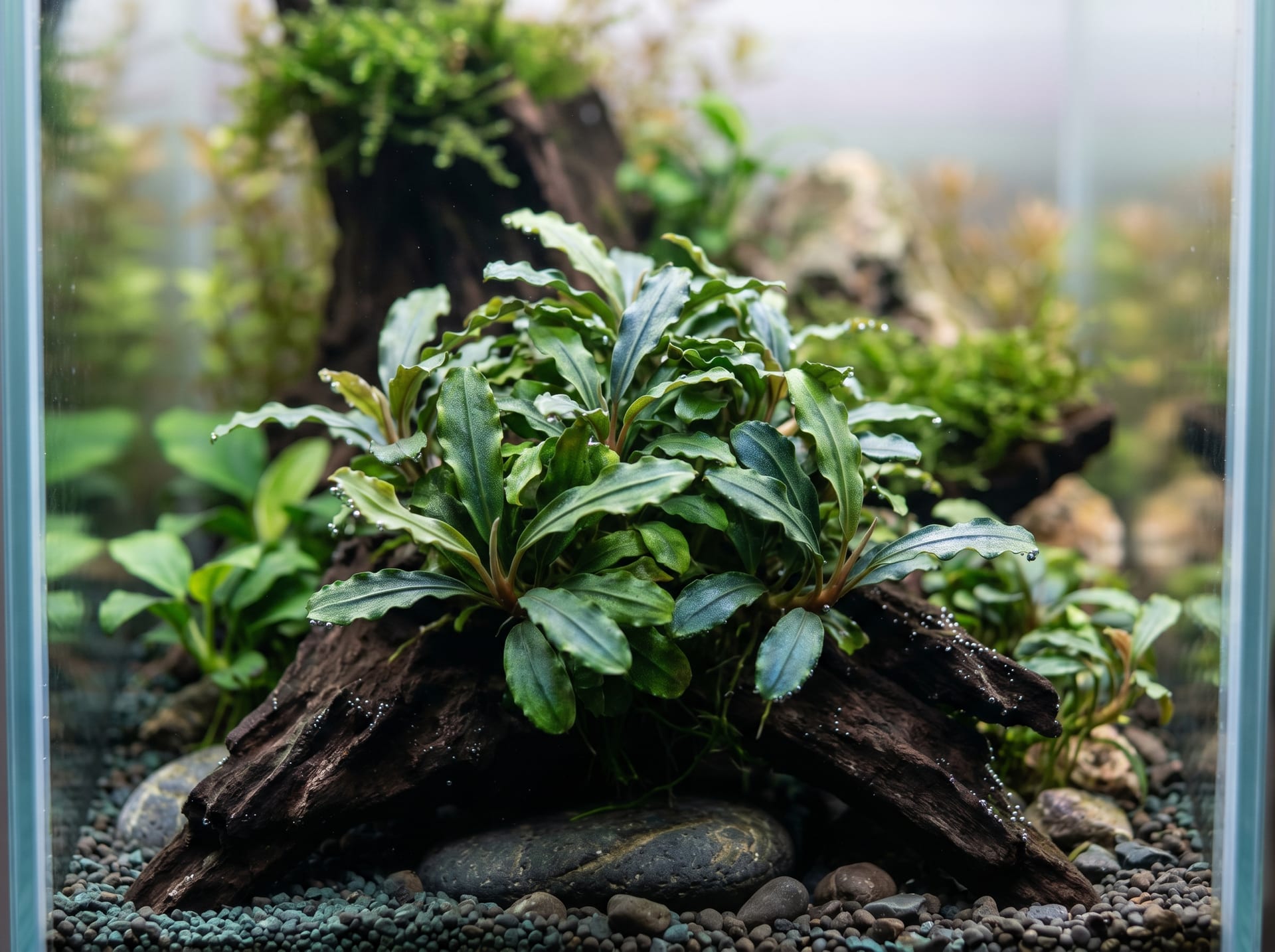
AI-generated image
Bucephalandra
IntermediateBucephalandra
Epiphytic plant endemic to Borneo. Unique texture and iridescent leaves popular with collectors. Slow but hardy.
About
Bucephalandra is a genus of rheophytic plants in the family Araceae, comprising over 30 formally described species — all endemic to the island of Borneo. Formally described by S.Y. Wong and P.C. Boyce, they inhabit stream stones and rock faces in moist tropical rainforest. The genus is celebrated for its extraordinary diversity of leaf form, color, and size, with many cultivars displaying iridescent blue-green highlights known as 'blue sheen.' Like Anubias, plants must be attached to hardscape rather than buried in substrate. Shade-tolerant and capable of growing without CO2, though supplementation accelerates growth. The combination of slow growth, stunning leaf diversity, and rarity has made Bucephalandra highly sought after among collectors worldwide.
Source: Wikipedia (CC BY-SA 4.0)
Size of the Bucephalandra
The Bucephalandra grows to 5-15cm.
Temperature & humidity for the Bucephalandra
The ideal temperature for the Bucephalandra is 22〜28℃.
Basic Info
Origin
Borneo (Malaysia and Indonesia)
Size
5-15cm
Temperature
22〜28℃
Growing Tips
Lighting
Shade-tolerant and can be grown even from low light. There is no need for strong light; modest lighting is sufficient.
CO2 & Fertilizer
CO2 is not required, but injection promotes growth. A small dose of liquid fertiliser is all the feeding it needs.
Water Temperature & Quality
A water temperature of 22-28°C is suitable. In the wild it grows on rocks in mountain streams, so it prefers clean water with some movement.
Substrate & Attachment
Like Anubias, grow it attached to driftwood or rock. Fix it with fishing line or glue so the rhizome is never buried in the substrate.
Trimming & Propagation
Growth is very slow and trimming is rarely needed. To propagate, divide the extended rhizome and attach the piece to another piece of wood.
Notes
Melting indicates environmental change — stabilize conditions
Bucephalandra FAQ
QWhat is the growing difficulty level for Bucephalandra?
Intermediate. A variety suitable for intermediate growers. Requires some cultivation experience and knowledge of environment management. Pay careful attention to temperature and humidity control.
QWhat is the ideal temperature for Bucephalandra?
The ideal temperature for Bucephalandra is 22〜28℃. Avoid sudden temperature changes and maintain a stable environment.
QHow large does Bucephalandra get?
The mature size of Bucephalandra is 5-15cm. This may vary slightly depending on cultivation environment and individual differences.
QWhat is the typical price for Bucephalandra?
The price of Bucephalandra varies significantly by variety, characteristics, size, and lineage. Please check GrowerDirect's price guide for the latest market information.
Last updated: September 17, 2026
References & Sources
Edited & verified by: GrowerDirect Editorial Team
The classifications, regulations, and growing data on this page are created and verified based on the primary information database below.
Primary sources
Related Species
Find listings for this species
Related Articles
Complete Guide to Growing Bucephalandra | Attachment Methods and Choosing Popular Varieties
Detailed guide on how to cultivate Bucephalandra, an aquatic plant native to Borneo. We introduce attachment methods, water quality management, propagation techniques, and popular varieties' characteristics and selection tips.
Bucephalandra Collection and Care Guide | The Jewel of Borneo Aquatic Plants
Explaining types and care methods for Bucephalandra. Introduction to attachment methods, variety collections, and fundamental knowledge of distribution and classification.
Complete Guide to Aquatic Plant CO2 Systems | Practical Manual from Setup to Daily Maintenance
CO2 is an essential element for aquatic plants to perform photosynthesis. This article covers everything needed to cultivate fast-growing stem plants and red-tinted aquatic plants, from selecting CO2 injection systems, installing solenoid valve regulators, positioning diffusers, to daily maintenance.
Aquatic Plant Tank Used Soil and Substrate Disposal and Recycling Methods | Correct Disposal Methods and Reuse Tips
Explains the correct disposal methods for used substrate in aquatic plant tanks. Introduces the proper disposal procedures according to local municipal rules and the concept of reuse for short-term usage.
🩺 Common diseases
Can't find the plant you're looking for?
Post your wishes for free and growers with matching plants will contact you with introductions.