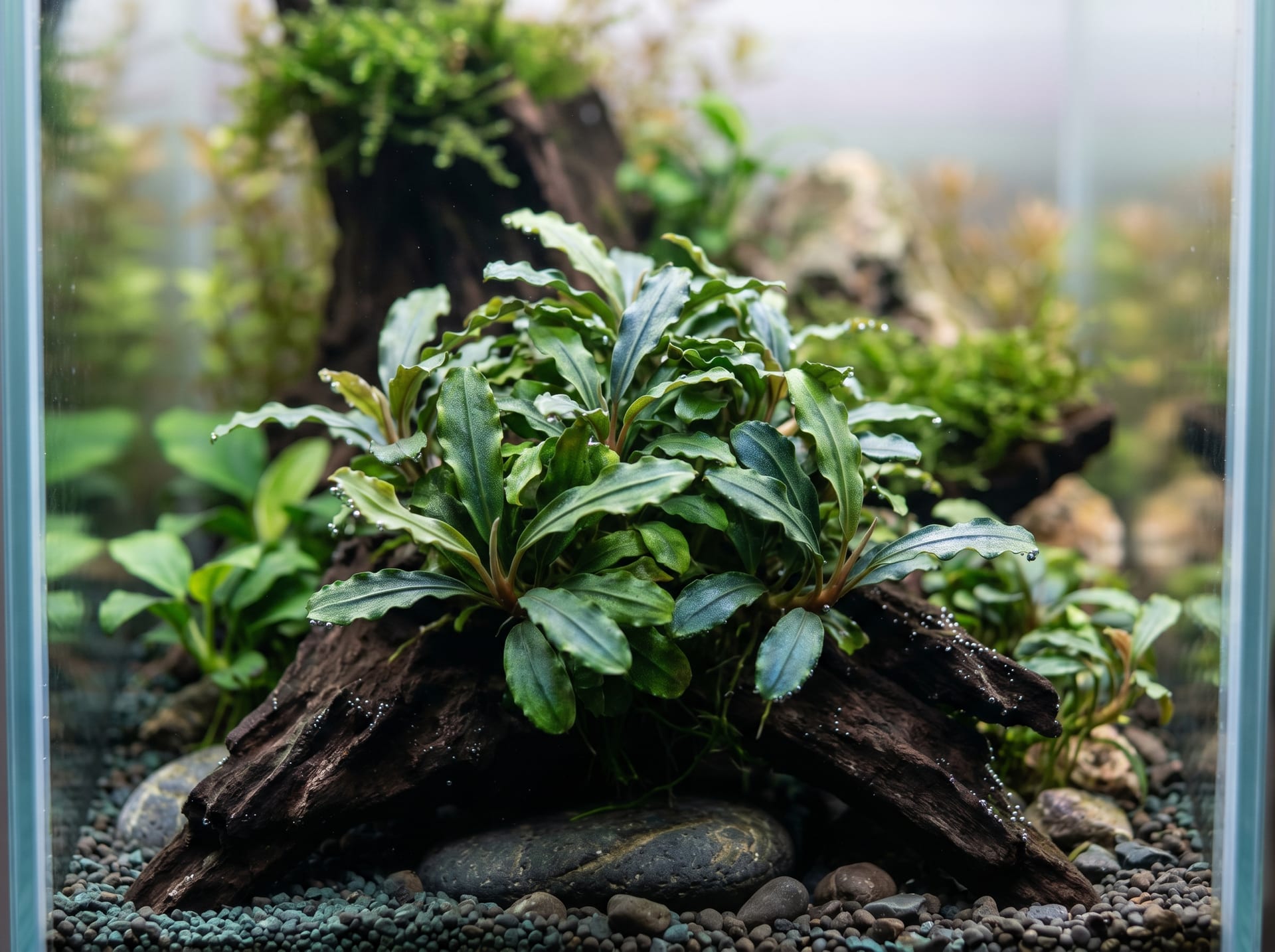
Bucephalandra
Epiphytic plant endemic to Borneo. Unique texture and iridescent leaves popular with collectors. Slow but hardy.
View Bucephalandra encyclopedia →0% commission on your first sales!Register by September 30, 2026 and your first 2 plants are commission-free!
Grower Wanted!
List your plants on GrowerDirect and sell directly to customers nationwide!
6 Transparency Commitments from GrowerDirect
Grower provide complete information for all Aquatic Plants listings. We guarantee transparency in variety, origin, light requirements, and difficulty level.
- Variety Clarity
- Live Photos
- Color Details
- Origin Transparency
- Light Requirements
- Difficulty Level
Browse all 134 varieties
Difficulty Level
Verified growers wanted for Aquatic Plants
Growers are signing up now ahead of launch. Subscribe to be notified when new listings go live.
Getting alerts is free with a member account. When new listings match your saved search, we'll notify you by email and in-app.
Browse other categories
Are you growing aquatic plants?
Register as a grower and connect with buyers directly.
Apply as a growerBucephalandra key facts
- Growing Difficulty
- Intermediate
- Size
- 5-15cm
- Temperature
- 22〜28℃
- Lighting
- Shade-tolerant and can be grown even from low light. There is no need for strong light; modest lighting is sufficient.
- CO2 & Fertilizer
- CO2 is not required, but injection promotes growth. A small dose of liquid fertiliser is all the feeding it needs.
- Water Temperature & Quality
- A water temperature of 22-28°C is suitable. In the wild it grows on rocks in mountain streams, so it prefers clean water with some movement.
- Substrate & Attachment
- Like Anubias, grow it attached to driftwood or rock. Fix it with fishing line or glue so the rhizome is never buried in the substrate.
- Trimming & Propagation
- Growth is very slow and trimming is rarely needed. To propagate, divide the extended rhizome and attach the piece to another piece of wood.
- Notes
- Melting indicates environmental change — stabilize conditions
About Bucephalandra
Bucephalandra is an araceous rheophyte native to the fast-flowing streams and wet rock faces of Borneo (Malaysia and Kalimantan). From the 2000s onward, local collectors and botanists documented hundreds of distinct forms, turning it into one of the most sought-after aquarium plants worldwide. Its defining characteristic is a striking iridescence — leaves shift from blue and green to purple depending on the angle of light, producing a jewel-like effect under aquarium illumination. Leaf shapes range from rounded to elongated, and plants remain compact at 5–15 cm even when mature. Bucephalandra's resilience under low light and CO2-free conditions, combined with its ability to anchor onto rocks and driftwood via adhesive roots, makes it a versatile centerpiece or accent in nature aquascapes. Slow growth means minimal maintenance once established, and the sheer diversity of varieties gives hobbyists a lifetime of collecting to explore.
7 things to know before growing Bucephalandra
1Choose the Right Surface
Bucephalandra grows best when attached to driftwood or lava rock. Planting in substrate is possible, but burying the rhizome can cause rot — only anchor the roots lightly. Tie it down with cotton thread or fishing line and remove it once the roots have taken hold.
2Protect the Rhizome
The thick green stem, known as the rhizome, is the plant's lifeline. Cutting or burying it too deeply can kill the plant. When trimming, cut near the base of the leaf stalk and avoid disturbing the rhizome itself.
3Grows Without CO₂
Bucephalandra is one of the few aquatic plants that can thrive without CO₂ injection. However, adding CO₂ noticeably accelerates growth and enhances the leaf's iridescent color. Beginners can start without CO₂ and consider adding it once they are more comfortable with the hobby.
4Low to Medium Light
Bucephalandra dislikes intense light, which can promote algae growth on its slow-growing leaves. Aim for low to moderate lighting using LEDs or fluorescent fixtures. Placing it in shaded foreground or midground positions in the aquascape works well.
5Soft, Slightly Acidic Water
Bucephalandra thrives in a pH of 6.0–7.5 and water temperatures of 22–28°C. It prefers soft to moderately hard water, making it an excellent match for soil-based nature aquariums. Avoid sudden water parameter changes; aim for weekly water changes of around one-third of the tank volume.
6Slow Growth — Be Patient
Bucephalandra grows very slowly — it can take several weeks for a single new leaf to unfurl. If conditions are right, the plant will gradually spread on its own. Avoid over-fertilizing in an attempt to speed growth, as excess nutrients will feed algae instead. Patience and a long-term perspective are key.
7Price Varies by Variety
With hundreds of named varieties, prices vary widely. Common varieties like Kedagang or Green Wavy are available for a few hundred yen, while rare collector forms can cost tens of thousands of yen. For first-time growers, starting with affordable and hardy varieties is strongly recommended.
Frequently asked questions about Bucephalandra
- Q.Can Bucephalandra grow without CO2 injection?
- A.Yes, Bucephalandra grows well without CO2 supplementation. Adding CO2 enhances leaf color and slightly accelerates growth, but it is not required. Starting without CO2 is perfectly viable for most setups.
- Q.Does it need to be planted in substrate?
- A.No substrate planting is needed. Attach the plant to rocks or driftwood using thread or aquarium-safe glue; the roots will grip the surface over time. Burying the rhizome in sand often causes rot, so avoid covering it.
- Q.My plant isn't growing — is that normal?
- A.It is completely normal for Bucephalandra to stall for 1–2 months after introduction while it acclimates. As long as leaves are not melting, the plant is likely fine. Given stable water quality and appropriate lighting, new growth will appear in time.
- Q.What should I do about algae on the leaves?
- A.Introducing algae-eating species such as Amano shrimp or otocinclus is the most effective first step. For stubborn algae, spot-treating with liquid carbon works well. Also review your lighting duration and water quality, as excess light or nutrient imbalance is often the underlying cause.
- Q.What is the difference between common and rare varieties?
- A.Varieties differ in leaf shape, color, iridescence intensity, and size. Common types are affordable, while rare collector forms can fetch tens of thousands of yen. Care requirements are nearly identical across varieties, so gaining experience with inexpensive types first is a sensible approach.
Handy Growing Tools for Bucephalandra
Learn more about Bucephalandra in the encyclopedia
View Bucephalandra encyclopedia entry →
Care difficulty, size, origin and light needs — all basics covered.
Bucephalandra related articles
Rare Attachment-Type Aquatic Plants Beyond Anubias, Bucephalandra, and Willow Moss | The Charm of Distinctive Varieties like Bolbitis
Beyond the standard attachment-type aquatic plants—Anubias, Bucephalandra, and Willow Moss—there are distinctive attachment-type aquatic plants like Bolbitis. This article introduces their charm, cultivation tips, and how to incorporate them into aquascaping layouts.
Complete Guide to Growing Bucephalandra | Attachment Methods and Choosing Popular Varieties
Detailed guide on how to cultivate Bucephalandra, an aquatic plant native to Borneo. We introduce attachment methods, water quality management, propagation techniques, and popular varieties' characteristics and selection tips.
Bucephalandra Collection and Care Guide | The Jewel of Borneo Aquatic Plants
Explaining types and care methods for Bucephalandra. Introduction to attachment methods, variety collections, and fundamental knowledge of distribution and classification.
More in this category
Can't find the plant you're looking for?
Post your wishes for free and growers with matching plants will contact you with introductions.