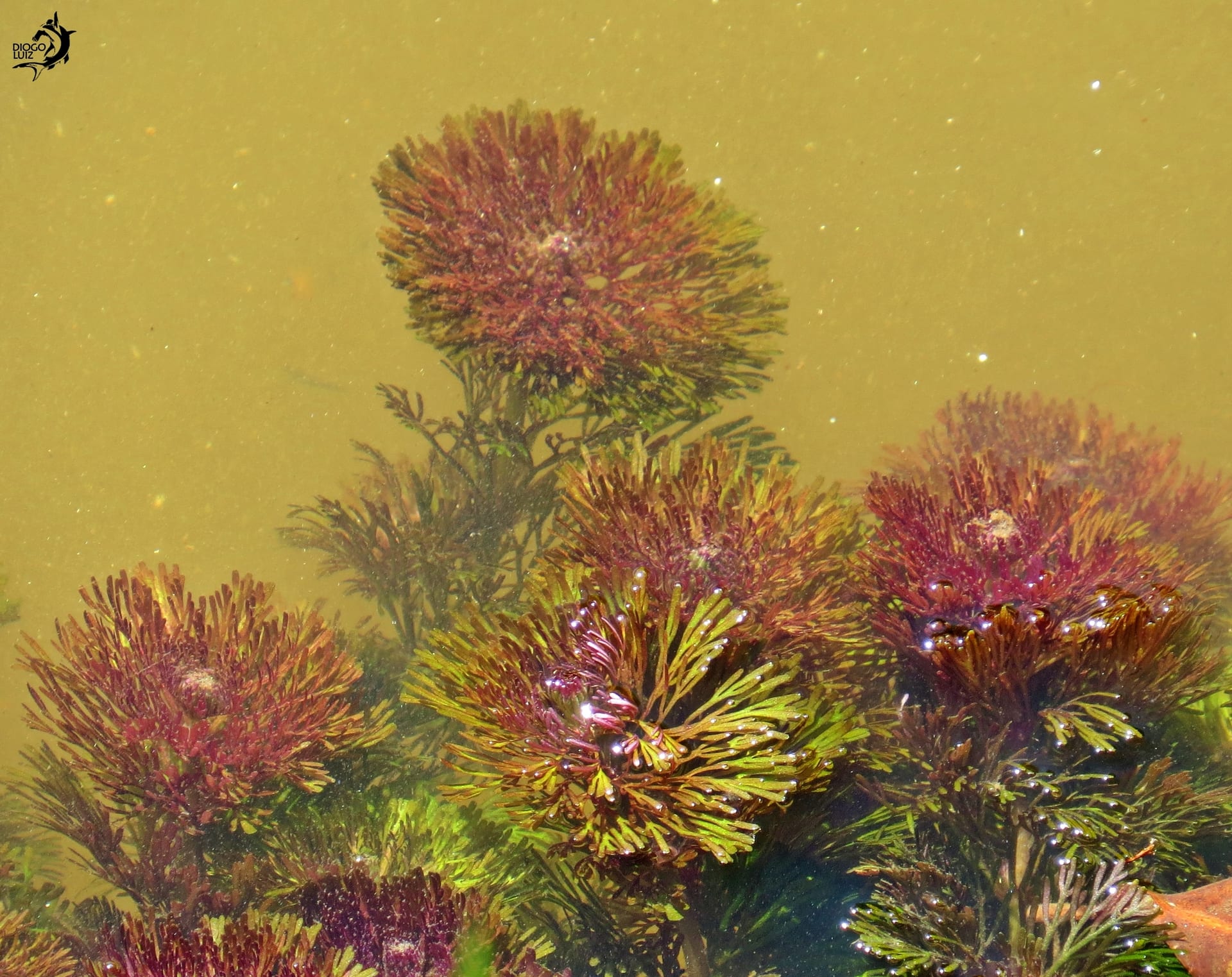
 © Diogo Luiz / CC BY-SA 4.0
Red cabomba
Red Cabomba is a stem plant whose finely feathered, fan-shaped leaves grow in whorls of three around each node. Under strong lighting, the foliage takes on a striking reddish-brown to wine-red hue that adds a bold splash of color to any aquascape. It's a distinct species from green Cabomba caroliniana, easily told apart by its whorled leaf arrangement. As a perennial, it can be grown as a long-term centerpiece, but holding onto that vivid color requires strong light and soft water, making it best suited to keepers with some aquatic-plant experience already.
View Red cabomba encyclopedia →0% commission on your first sales!Register by September 30, 2026 and your first 2 plants are commission-free!
Grower Wanted!
List your plants on GrowerDirect and sell directly to customers nationwide!
6 Transparency Commitments from GrowerDirect
Grower provide complete information for all Aquatic Plants listings. We guarantee transparency in variety, origin, light requirements, and difficulty level.
- Variety Clarity
- Live Photos
- Color Details
- Origin Transparency
- Light Requirements
- Difficulty Level
Browse all 134 varieties
Difficulty Level
Verified growers wanted for Aquatic Plants
Growers are signing up now ahead of launch. Subscribe to be notified when new listings go live.
Getting alerts is free with a member account. When new listings match your saved search, we'll notify you by email and in-app.
Browse other categories
Are you growing aquatic plants?
Register as a grower and connect with buyers directly.
Apply as a growerRed cabomba key facts
- Growing Difficulty
- Advanced
- Lifespan
- Perennial
- Size
- Stems 40–100 cm long
- Temperature
- 24〜30℃
- Watering
- Needs CO2 plus substrate and liquid fertiliser
- Lighting
- Strong light matters most; without it stems weaken and fall apart.
- CO2 & Fertilizer
- CO2 speeds growth greatly. Use a rich substrate and dose trace elements with nitrate and phosphate; shortages darken leaves and stretch internodes.
- Water Temperature & Quality
- Optimum 24–30°C; needs soft (KH 0–7°dKH), acidic water at pH 5–6.8.
- Substrate & Attachment
- Plant in a nutrient substrate; suits the background or midground as a red accent.
- Trimming & Propagation
- Replanting tops is easiest; left in place, the base resprouts from its top node.
- Cautions
- Not the same species as green cabomba. Never release plants into the wild; it has become invasive in some countries.
About Red cabomba
Red Cabomba is a stem plant with finely dissected leaves that turn reddish-brown to wine-red under strong light. Distinct from green Cabomba caroliniana, it needs intense lighting and soft water, making it a pick for experienced aquascapers.
7 things to know before growing Red cabomba
1Placement and Light
Red Cabomba develops its deepest reddish-brown to wine-red color under strong light. Plant it toward the middle to back of the tank, away from floating plants or taller stems that could shade it. If light is too weak, the color tends to fade toward green.
2Water Quality and Softness
Red Cabomba prefers soft water, and growth can slow noticeably in hard water. If your tap water is on the hard side, using softened or conditioned water helps keep the plant stable. Regular water changes also support consistent coloration.
3Adding CO2
Because red-colored aquatic plants photosynthesize actively, adding CO2 helps support steady growth and stable leaf color. It can still grow without CO2, but tends to fade or grow leggy more easily in that case. Pairing strong light with CO2 makes it easier to bring out the beauty of its whorled leaves.
4Choosing Substrate
Since it absorbs nutrients through roots along the stem, a nutrient-rich substrate helps support steady growth. It pairs well with soil-based substrates, which also help keep the water soft and slightly acidic.
5Trimming and Replanting
Since the stems can grow to roughly 40-100cm, regular trimming is needed to match your tank's height. Cut tops can be replanted as new stems, letting you propagate the plant while maintaining your layout. As lower leaves start to drop from long stems, trim and thin them out to keep the plant tidy.
6Seasonal Care
Growth tends to become unstable when water temperature swings widely, so try to keep it as steady as possible. Growth can slow during cooler periods, so avoid letting the water get too cold.
7Choosing a Healthy Stem
Look for stems that are firm, free of melting or dark discoloration, and show a vivid reddish-brown to wine-red color. Checking that the leaves form neat whorls of three at each node is also a good way to judge a healthy stem.
Frequently asked questions about Red cabomba
- Q.How difficult is Red Cabomba to grow?
- A.Red Cabomba is considered an advanced-level aquatic plant. It requires consistently strong light and soft water, so it's best attempted once you have some experience keeping aquatic plants.
- Q.Is it a different plant from green Cabomba?
- A.Yes, Red Cabomba is a different species from green Cabomba (Cabomba caroliniana). It can be distinguished by its leaves growing in whorls of three at each node.
- Q.How large does it grow?
- A.It's a perennial whose stems can grow to roughly 40-100cm in length. Trim it periodically to match the height of your tank.
- Q.What's the key to keeping the red color vivid?
- A.Strong lighting is essential for maintaining its color. Keeping the water soft and adding CO2 also helps the coloration stay more stable.
- Q.Can it be propagated?
- A.Yes, it can be propagated by cutting the stem tips and replanting them. Trimming back overgrown sections and reusing the cuttings as new stems is an easy way to maintain your layout.
Handy Growing Tools for Red cabomba
Learn more about Red cabomba in the encyclopedia
View Red cabomba encyclopedia entry →
Care difficulty, size, origin and light needs — all basics covered.
More in this category
Can't find the plant you're looking for?
Post your wishes for free and growers with matching plants will contact you with introductions.