 © Wigoelbar / CC BY-SA 3.0
Aponogeton ulvaceus
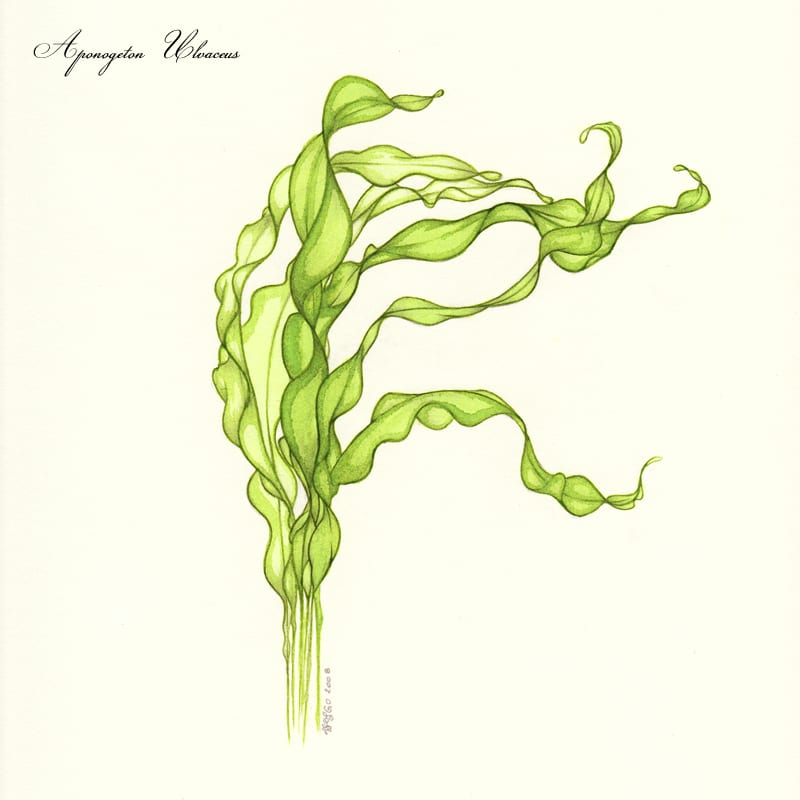
Aponogeton ulvaceus is a bulb (tuber) aquatic plant native to Madagascar, prized for its broad, translucent pale-green leaves with dramatically wavy edges. A single plant can put out more than 40 leaves and spread to roughly 50cm across, making it a striking centerpiece for larger aquariums. As a perennial that grows from a tuber, it can be kept for many years under the right conditions, though some forms go through a dormant period. Because it calls for a bit more attentive care than many aquarium plants, it suits hobbyists with some prior experience rather than complete beginners.
View Aponogeton ulvaceus encyclopedia →0% commission on your first sales!Register by September 30, 2026 and your first 2 plants are commission-free!
Grower Wanted!
List your plants on GrowerDirect and sell directly to customers nationwide!
6 Transparency Commitments from GrowerDirect
Grower provide complete information for all Aquatic Plants listings. We guarantee transparency in variety, origin, light requirements, and difficulty level.
- Variety Clarity
- Live Photos
- Color Details
- Origin Transparency
- Light Requirements
- Difficulty Level
Browse all 134 varieties
Difficulty Level
Verified growers wanted for Aquatic Plants
Growers are signing up now ahead of launch. Subscribe to be notified when new listings go live.
Getting alerts is free with a member account. When new listings match your saved search, we'll notify you by email and in-app.
Browse other categories
Are you growing aquatic plants?
Register as a grower and connect with buyers directly.
Apply as a growerAponogeton ulvaceus key facts
- Growing Difficulty
- Intermediate
- Lifespan
- Perennial; persists from its tuber
- Size
- Leaves 30–60 cm long; plant about 50 cm wide
- Temperature
- 24〜28℃
- Watering
- Rich substrate; grows better with CO2
- Lighting
- Grows in medium to strong light; strong light gives the leaves a reddish tint.
- CO2 & Fertilizer
- CO2 is optional but helps; root tabs near the tuber are useful.
- Water Temperature & Quality
- Optimum 24–28°C at pH 4.5–7.5; adapts to soft or hard water.
- Substrate & Attachment
- Plant the tuber shallowly with ample space; best as a solitary plant in large tanks.
- Trimming & Propagation
- Remove damaged leaves at the base. For forms that go dormant, keep the leafless tuber until it resprouts.
- Cautions
- It spreads about 50 cm, too large for small tanks. Never release plants into the wild.
About Aponogeton ulvaceus
Aponogeton ulvaceus is a Madagascar bulb plant with wavy, translucent leaves spreading to about 50cm wide. Learn its key traits, care basics, and answers to common questions.
7 things to know before growing Aponogeton ulvaceus
1Best Kept in Larger Tanks
Because a mature plant can spread to about 50cm across, it can quickly outgrow a 60cm tank. Plan for a 90cm or larger aquarium, or make sure it has plenty of open space away from other plants. Give it some vertical room too, since the leaves reach up toward the surface.
2Provide Moderate to Strong Light
Unfurling broad new leaves takes a fair amount of light, so aim for moderate to strong illumination. Under weak lighting, leaves tend to grow thin and stretched. Increase light gradually and watch for algae, since a sudden jump in intensity can encourage it.
3Use a Nutrient-Rich Substrate
A nutrient-rich substrate helps the tuber root in well. When planting, leave the top of the tuber slightly exposed rather than burying it completely, which helps prevent it from rotting.
4CO2 Helps Steady Leaf Growth
CO2 isn't required, but adding it supports photosynthesis and helps the plant put out large leaves consistently. It's a fairly hardy species that grows at a pH of about 4.5 to 7.5 and adapts to both soft and hard water.
5Handle the Tuber Gently When Replanting
The tuber is delicate, so be careful not to damage the roots when repositioning the plant. Once it has grown large enough to crowd the tank, that's a good time to rework the layout or refresh the substrate.
6Some Forms Go Dormant
Depending on the form, Aponogeton ulvaceus may enter a dormant period. A drop in leaf count or a pause in growth doesn't necessarily mean the plant has died — keep the water conditions stable and wait for new growth to resume.
7Choosing a Healthy Bulb
Look for a tuber that feels firm rather than soft when choosing a plant. Leaves free of major damage or dark blotches, with a translucent pale-green color, are a good sign of a healthy plant.
Frequently asked questions about Aponogeton ulvaceus
- Q.Is this a good plant for beginners?
- A.It's generally considered suited to intermediate hobbyists rather than complete beginners, since it has a few specific needs around lighting and substrate. Gaining some experience with aquarium plants first will make it easier to succeed.
- Q.How large a tank does it need?
- A.Since a mature plant can spread to about 50cm wide, a 60cm tank tends to feel cramped. A 90cm or larger aquarium is recommended.
- Q.Does fewer leaves mean the plant is dying?
- A.Depending on the form, this plant can go through a dormant period, during which leaf count drops or growth pauses. If you keep the water conditions stable, it will often put out new leaves again.
- Q.Where does it work best in an aquascape?
- A.With its large, broad leaves, it works well as a centerpiece toward the back or middle of the tank. Give it enough surrounding space so it doesn't crowd out other plants.
- Q.Is CO2 injection required?
- A.It's not strictly required, but adding CO2 supports steadier photosynthesis and helps the plant produce larger leaves. It can still be grown without CO2, though growth will tend to be somewhat slower.
Handy Growing Tools for Aponogeton ulvaceus
Learn more about Aponogeton ulvaceus in the encyclopedia
View Aponogeton ulvaceus encyclopedia entry →
Care difficulty, size, origin and light needs — all basics covered.
More in this category
Can't find the plant you're looking for?
Post your wishes for free and growers with matching plants will contact you with introductions.