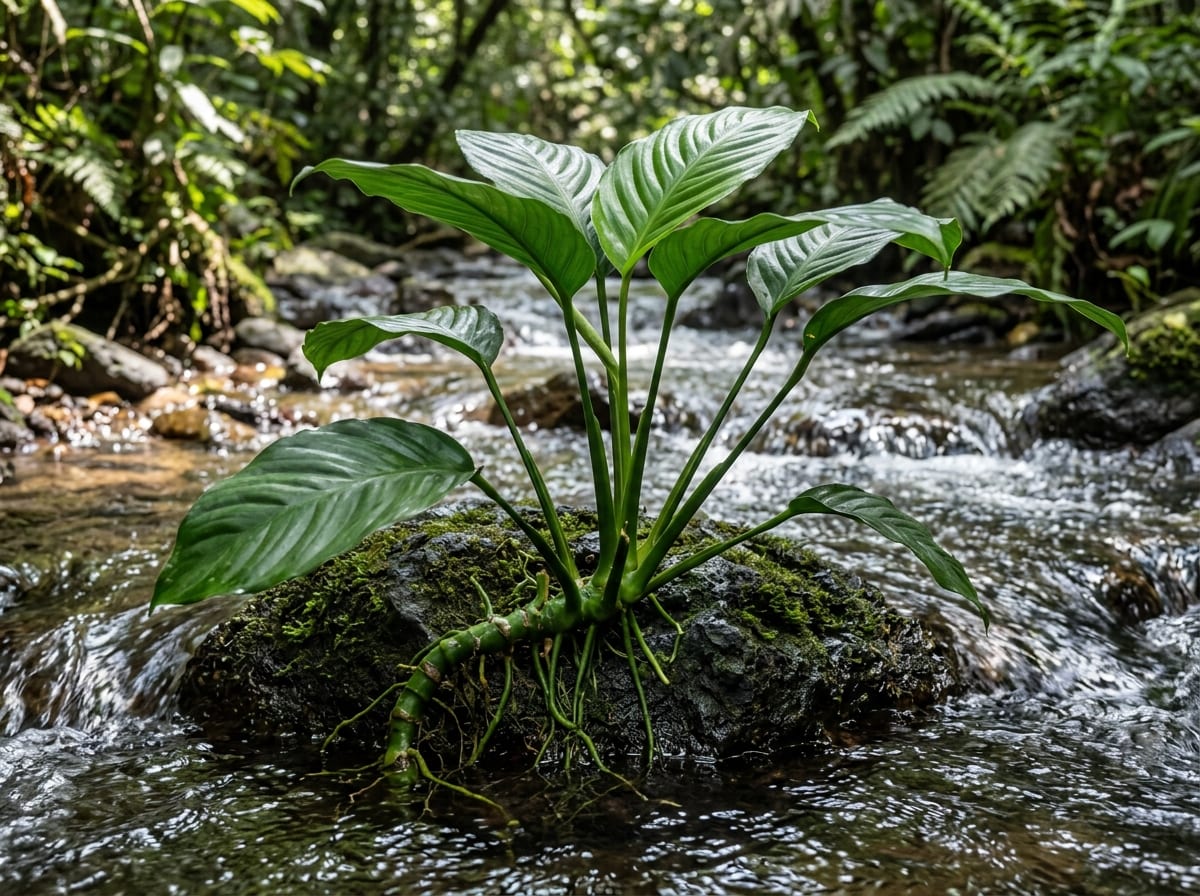
Anubias barteri var. barteri
Anubias barteri var. barteri is the classic form of Anubias, known for its thick, leathery, broad leaves. It grows noticeably larger than the popular Nana variety, and even young plants can be identified by their long leaf stalks. The tough leaf texture makes it resistant to grazing by herbivorous fish, and it thrives even under low lighting, making it a reliable choice for beginners. As a perennial, its leaves last for years, and the rhizome can be divided to keep the plant going over the long term. In an aquarium it typically reaches 20 to 40 cm in height, making it a striking option for mid- to background planting.
View Anubias barteri var. barteri encyclopedia →0% commission on your first sales!Register by September 30, 2026 and your first 2 plants are commission-free!
Grower Wanted!
List your plants on GrowerDirect and sell directly to customers nationwide!
6 Transparency Commitments from GrowerDirect
Grower provide complete information for all Aquatic Plants listings. We guarantee transparency in variety, origin, light requirements, and difficulty level.
- Variety Clarity
- Live Photos
- Color Details
- Origin Transparency
- Light Requirements
- Difficulty Level
Browse all 134 varieties
Difficulty Level
Verified growers wanted for Aquatic Plants
Growers are signing up now ahead of launch. Subscribe to be notified when new listings go live.
Getting alerts is free with a member account. When new listings match your saved search, we'll notify you by email and in-app.
Browse other categories
Are you growing aquatic plants?
Register as a grower and connect with buyers directly.
Apply as a growerAnubias barteri var. barteri key facts
- Growing Difficulty
- Beginner-friendly
- Lifespan
- Perennial; leaves last for years and plants can be kept indefinitely by dividing the rhizome
- Size
- 20–40 cm tall (in aquaria)
- Temperature
- 22〜26℃
- Watering
- Grows without CO2 or fertiliser; additions speed up growth
- Lighting
- Grows well in low light. Strong light encourages algae on the long-lived leaves, so place it in the shade of larger plants or wood.
- CO2 & Fertilizer
- Grows without CO2; CO2 and fertiliser make it grow faster and larger.
- Water Temperature & Quality
- Optimum 22–26°C. Hardness and pH matter little (grows at pH 5–8). Good water flow helps keep algae off the leaves.
- Substrate & Attachment
- The rhizome rots easily if buried. Tie it to driftwood or stone with fishing line, or plant it with the rhizome resting on top of the substrate.
- Trimming & Propagation
- Slow-growing. Propagate by cutting the rhizome, ideally at points with side shoots.
- Cautions
- Grows large, so it suits the mid- or background. Never release plants into the wild; drain and bin unwanted material.
About Anubias barteri var. barteri
Anubias barteri var. barteri is a hardy aquatic plant with thick, leathery leaves that thrives even in low light, making it great for beginners. It reaches 20 to 40 cm and can be propagated by dividing the rhizome for long-term enjoyment.
7 things to know before growing Anubias barteri var. barteri
1Low Light Is Fine
This plant grows well without strong lighting. Keep it out of direct sunlight — it does fine even shaded by taller plants nearby.
2Attach to Driftwood or Rock
Rather than planting it in substrate, it does best tied to driftwood or rock with thread or line until it attaches on its own. Burying the rhizome in substrate can cause it to rot, so avoid covering it.
3Not Fussy About Substrate
When grown attached to hardscape, it doesn't need any particular substrate. If planted in substrate instead, keep the rhizome resting on top rather than buried.
4Propagate by Dividing the Rhizome
Once the rhizome has grown long and the leaves become crowded, you can divide it into sections with a knife. Make sure each piece keeps some roots and a few leaves so it can attach and establish easily.
5Avoid Sudden Temperature Swings
This plant dislikes large swings in water temperature, so keeping it stable with a heater during seasonal changes matters. It tolerates cooler water to some degree, but extreme cold can weaken its growth.
6Identify It by Leaf Stalk Length
Even as a young plant, barteri is recognizable by its noticeably long leaf stalks, which set it apart from varieties like Nana. Choose a plant with undamaged, unblemished leaves and a firm, healthy rhizome.
7Slow, Steady Growth
Compared to many other aquatic plants, it grows slowly, which means less upkeep and makes it easy for beginners to manage. Thanks to its larger mature size, it works well as an accent in the mid- to background of a layout.
Frequently asked questions about Anubias barteri var. barteri
- Q.Can it grow without being planted in substrate?
- A.Yes, attaching it to driftwood or rock is the standard way to grow it. Burying the rhizome in substrate tends to cause rot, so attaching it or resting it lightly on top works better.
- Q.How is it different from Anubias Nana?
- A.Barteri grows larger than Nana and can be told apart even as a young plant by its longer leaf stalks. Both belong to the same Anubias group, but their mature size differs.
- Q.Why do the leaves sometimes turn brown or look damaged?
- A.Older leaves can sometimes look damaged after transplanting or when water conditions change suddenly, but this isn't a major concern as long as new leaves keep unfolding. Trim off the damaged leaves and keep conditions stable to help it recover.
- Q.Is it easy for beginners to grow?
- A.Yes, it adapts well to varying light and water conditions and is considered a beginner-friendly plant. It grows well even under low lighting, making it an easy species to start with.
- Q.How large does it grow?
- A.In an aquarium it typically reaches around 20 to 40 cm in height. Since it grows larger than Nana, it suits mid- to background placement.
Handy Growing Tools for Anubias barteri var. barteri
Learn more about Anubias barteri var. barteri in the encyclopedia
View Anubias barteri var. barteri encyclopedia entry →
Care difficulty, size, origin and light needs — all basics covered.
More in this category
Can't find the plant you're looking for?
Post your wishes for free and growers with matching plants will contact you with introductions.