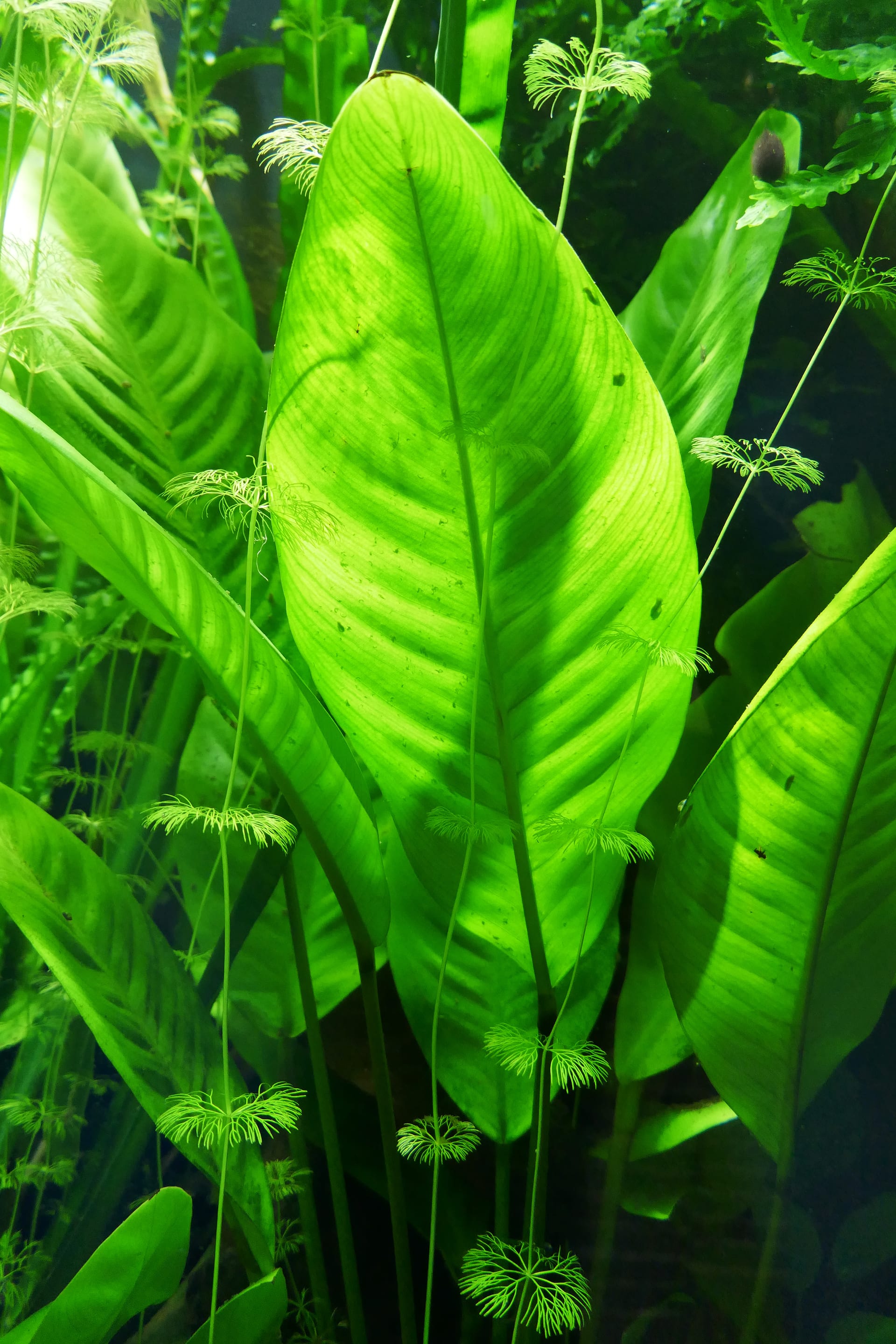
 © Ji-Elle / CC BY-SA 4.0
Anubias barteri var. glabra
Anubias barteri var. glabra is a variety of the ever-popular Anubias barteri, distinguished by narrower, elliptical-to-lanceolate leaves that are more elongated than the rounder foliage of nana or standard barteri. Its refined, streamlined leaf shape brings a delicate touch to aquascapes and looks striking once attached to driftwood or stone. Sometimes sold under names like "minima" or "lanceolata," it's prized for being remarkably tough and easy to grow, thriving even in low light or shaded spots, which makes it a great choice for anyone new to planted tanks. As a perennial, it can be propagated by division and kept going for years.
View Anubias barteri var. glabra encyclopedia →0% commission on your first sales!Register by September 30, 2026 and your first 2 plants are commission-free!
Grower Wanted!
List your plants on GrowerDirect and sell directly to customers nationwide!
6 Transparency Commitments from GrowerDirect
Grower provide complete information for all Aquatic Plants listings. We guarantee transparency in variety, origin, light requirements, and difficulty level.
- Variety Clarity
- Live Photos
- Color Details
- Origin Transparency
- Light Requirements
- Difficulty Level
Browse all 134 varieties
Difficulty Level
Verified growers wanted for Aquatic Plants
Growers are signing up now ahead of launch. Subscribe to be notified when new listings go live.
Getting alerts is free with a member account. When new listings match your saved search, we'll notify you by email and in-app.
Browse other categories
Are you growing aquatic plants?
Register as a grower and connect with buyers directly.
Apply as a growerAnubias barteri var. glabra key facts
- Growing Difficulty
- Beginner-friendly
- Lifespan
- Perennial; maintained by division
- Size
- 10–20 cm tall
- Temperature
- 22〜26℃
- Watering
- Grows without CO2 or fertiliser
- Lighting
- Thrives almost anywhere but avoid strong light; shade under larger plants keeps algae down.
- CO2 & Fertilizer
- Can be kept without CO2.
- Water Temperature & Quality
- Optimum 22–26°C; grows at pH 5–8.
- Substrate & Attachment
- Can be tied to stone or wood, wedged between rocks or fixed to the glass with suction cups. If planted, keep the rhizome above the substrate.
- Trimming & Propagation
- Very slow-growing. Propagate by dividing the rhizome.
- Cautions
- Sold under names such as 'minima', 'lanceolata' or 'afzelii', and size varies by plant. Never release plants into the wild.
About Anubias barteri var. glabra
Anubias barteri var. glabra features slender, elongated leaves, a striking contrast to rounder nana or barteri varieties. Tough and shade-tolerant, this beginner-friendly aquatic plant can be propagated by division for years of enjoyment.
7 things to know before growing Anubias barteri var. glabra
1Thrives in Low Light
Anubias barteri var. glabra grows well even under low light, so a spot in partial shade within the tank often works better than strong direct lighting, which can encourage algae growth. It's a forgiving plant that doesn't demand intense illumination.
2Attach to Wood or Rock
Because burying the roots in substrate can cause rot, the standard method is to tie or clip the plant onto driftwood or stone until it attaches naturally. This process typically takes a few weeks to a few months.
3Keep the Rhizome Exposed
The thick stem-like rhizome from which the leaves grow should never be buried in substrate or wool, as this leads to rot. When attaching or planting, make sure the rhizome stays fully exposed above the surface.
4Flexible on Water Conditions
This variety adapts well to a wide range of temperatures and water chemistry, thriving in typical tropical fish tank conditions without fussy adjustments. Just avoid extreme heat or sudden shifts in water quality.
5No CO2 Injection Required
Thanks to its tolerance for low light, this plant grows well without added CO2. Injecting CO2 can deepen leaf color, but it remains easy to keep even in a non-CO2 setup.
6Propagate by Dividing
As the rhizome lengthens and produces more leaves, you can propagate the plant by cutting the rhizome into sections with a clean blade. Each section can then be attached to its own piece of driftwood or stone to keep growing.
7Choose Firm Leaves and Roots
When selecting a specimen, check for leaves free of blackened or melting patches and a firm, healthy rhizome and root system. Healthy plants have slender, taut leaves and a rhizome in a bright green to brownish color.
Frequently asked questions about Anubias barteri var. glabra
- Q.How is it different from Anubias nana?
- A.Both belong to the Anubias barteri group, but var. glabra has narrower, elliptical-to-lanceolate leaves compared to nana's rounder foliage. It's sometimes sold under names like "minima" or "lanceolata."
- Q.Can I plant it directly in the substrate?
- A.It's not recommended, since burying the rhizome in substrate tends to cause rot. Instead, attach it to driftwood or stone, or rest it on the substrate surface with the rhizome left exposed.
- Q.Will it grow in a low-light tank?
- A.Yes, this variety is naturally tolerant of low light and grows well even under dim lighting or in shaded corners of the tank.
- Q.How big does it get?
- A.It typically grows to about 10-20cm in height, slightly larger than nana on average, but still a compact aquatic plant overall.
- Q.When and how do I divide the plant?
- A.Once the rhizome has lengthened and grown enough leaves, cut it into sections with a clean blade. Each section can then be attached to its own piece of driftwood or stone and will continue growing.
Handy Growing Tools for Anubias barteri var. glabra
Learn more about Anubias barteri var. glabra in the encyclopedia
View Anubias barteri var. glabra encyclopedia entry →
Care difficulty, size, origin and light needs — all basics covered.
More in this category
Can't find the plant you're looking for?
Post your wishes for free and growers with matching plants will contact you with introductions.