Moss
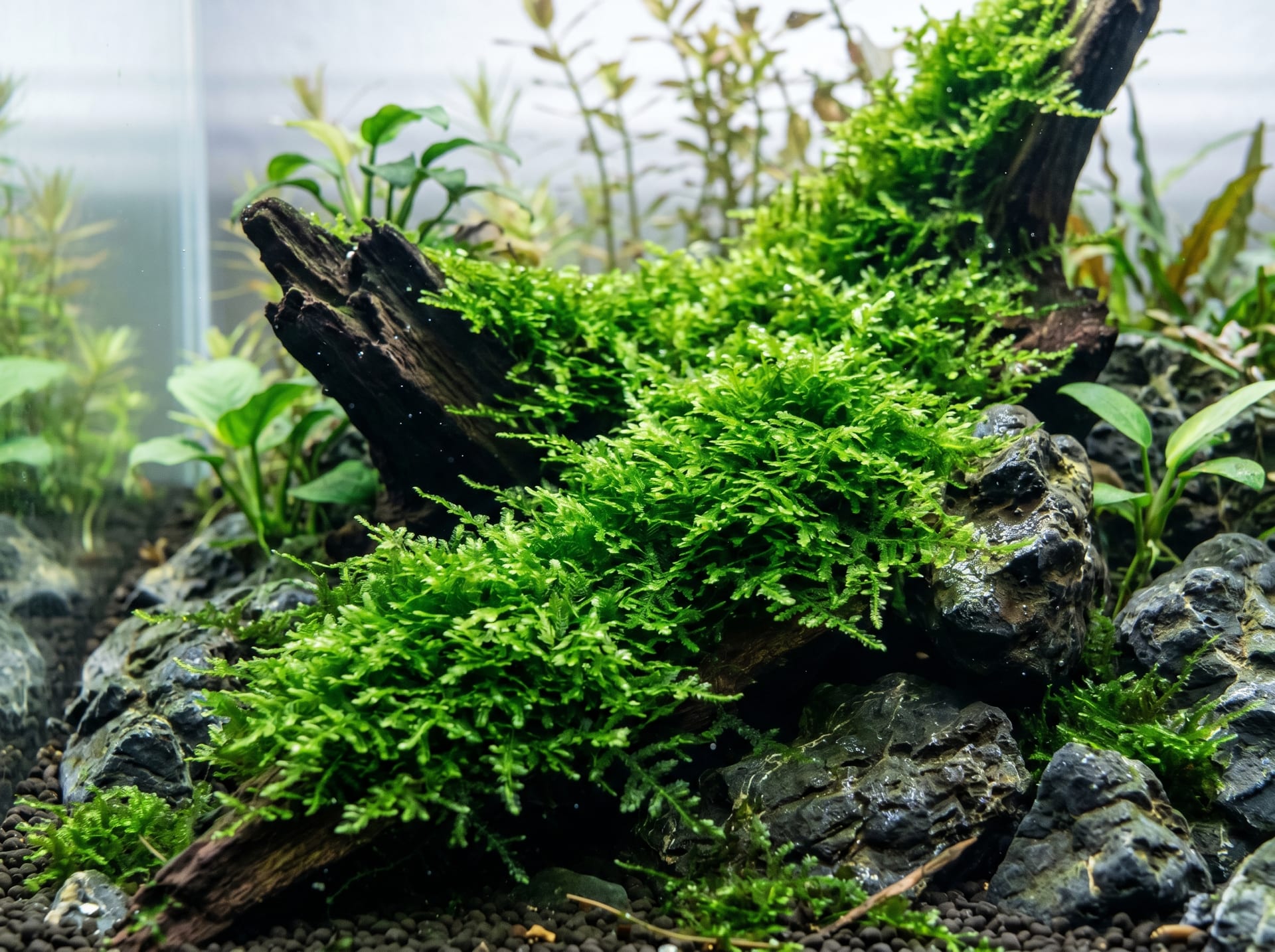
Mosses and liverworts are aquatic plants that attach to driftwood and rocks, creating lush green carpets that give aquariums a natural, tranquil look. Their relatively slow growth makes them easy to manage, and they pair wonderfully with small fish and shrimp. Many species thrive without CO₂ injection, making them an accessible choice for beginners.
Grower Wanted!
List your plants on GrowerDirect and sell directly to customers nationwide!
6 Transparency Commitments from GrowerDirect
Grower provide complete information for all Aquatic Plants listings. We guarantee transparency in variety, origin, light requirements, and difficulty level.
- Variety Clarity
- Live Photos
- Color Details
- Origin Transparency
- Light Requirements
- Difficulty Level
Browse all 134 varieties
Difficulty Level
Verified growers wanted for Aquatic Plants
Growers are signing up now ahead of launch. Subscribe to be notified when new listings go live.
Getting alerts is free with a member account. When new listings match your saved search, we'll notify you by email and in-app.
Browse other categories
Are you growing aquatic plants?
Register as a grower and connect with buyers directly.
Apply as a growerAbout Moss
Aquatic mosses belong to the bryophyte family and grow naturally in streams and wetlands across tropical, subtropical, and temperate regions worldwide. The most widely kept species is Java Moss (Taxiphyllum barbieri), native to Southeast Asia, prized for its strong attachment to driftwood and rocks and its remarkable hardiness. The small, branching fronds of aquatic moss overlap densely to form a textured mat, creating ideal shelter and foraging habitat for fry and shrimp. The greatest appeal of mosses in cultivation is their adaptability — they grow steadily under low light and without CO₂ injection, and tolerate a reasonable range of water conditions, making them forgiving for beginners. Their slow growth rate also means less frequent trimming, allowing aquarists to enjoy a lush, green display with minimal intervention over the long term.
6 things to know before growing Moss
1Attachment Takes Time
Attaching moss to driftwood or rocks requires securing it with fishing line or thread and waiting several weeks to a month for it to anchor. If it detaches before rooting, it will float freely, so make sure the initial tie-down is firm. Common species like Java moss have strong attachment abilities and are easy to work with.
2Low to Medium Light Is Fine
Mosses do not require intense lighting and grow well under low to medium light. Excessive light can encourage algae growth, so aim for 8 to 10 hours of light per day. Using a timer for your aquarium light helps maintain a consistent schedule with minimal effort.
3No CO₂ Injection Needed
Many moss species, including Java moss and riccia, can be grown without CO₂ injection, making them beginner-friendly. Adding CO₂ does accelerate growth and can enhance color vibrancy, but starting without it is a practical first step. You can always upgrade your setup later if desired.
4Best at 15–26°C
Most mosses thrive in water temperatures between 15°C and 26°C. Some species can melt or deteriorate when temperatures exceed 28°C for extended periods, so summer heat management is important. Consider using an aquarium fan or chiller to keep temperatures in a safe range.
5Excellent Match with Shrimp
The fine gaps between moss leaves create ideal breeding grounds for microorganisms, making moss a perfect feeding spot and shelter for shrimp such as cherry shrimp and Amano shrimp. It significantly improves survival rates for baby shrimp and is considered nearly essential in shrimp tanks. It also provides refuge for fish fry.
6Watch Out for Algae
Because moss has fine, dense leaves, algae that attaches to it is extremely difficult to remove. Excess nutrients and too much light are common causes, so adjusting water change frequency and lighting duration can help. Co-habiting with algae-eating species like Yamato shrimp or otocinclus is an effective preventive measure.
Frequently asked questions about Moss
- Q.What is the difference between Java Moss and other aquatic mosses?
- A.Java Moss is the most widely available and hardy species, making it ideal for beginners. Other mosses such as Riccia or Spiky Moss differ in form and growth pattern, each offering distinct aesthetic possibilities. Choose based on the look you want to achieve and your experience level.
- Q.Why is my moss turning brown?
- A.The most common causes are insufficient light, high water temperature, or poor water circulation within the moss mat. Check your lighting duration and water temperature first, and trim dense areas to improve light and flow penetration. Testing water parameters such as ammonia and nitrite is also advisable.
- Q.Do aquatic mosses need fertilizer?
- A.Mosses generally grow without fertilizer, though a small dose of liquid fertilizer can improve color and density. In tanks with fish or shrimp, waste provides sufficient nutrients in many cases, making supplementation unnecessary. Avoid over-fertilizing, as excess nutrients encourage unwanted algae growth.
- Q.How long does it take for moss to attach to driftwood?
- A.Attachment time varies with water temperature, light, and the condition of the moss, but signs of attachment typically appear within two to four weeks. Full attachment may take one to two months. Secure the moss with fishing line or an attachment mesh and avoid disturbing it before it has taken hold.
- Q.How often should aquatic moss be trimmed?
- A.Trimming frequency depends on growth rate, but once every one to two months is a general guideline. Light surface trimming is sufficient — there is no need to cut deeply into the mat. After trimming, use a net to remove loose cuttings before they disperse through the tank.
Handy Growing Tools for Moss
Moss related articles
Complete Guide to Microsorum Types and Care | Tips for Growing Popular Attachment Aquatic Plants Beautifully
Microsorum, a standard attachment aquatic plant alongside Willow Moss. This guide covers the main types, methods for attaching to driftwood and rocks, light and water quality management, and trimming techniques.
Rare Attachment-Type Aquatic Plants Beyond Anubias, Bucephalandra, and Willow Moss | The Charm of Distinctive Varieties like Bolbitis
Beyond the standard attachment-type aquatic plants—Anubias, Bucephalandra, and Willow Moss—there are distinctive attachment-type aquatic plants like Bolbitis. This article introduces their charm, cultivation tips, and how to incorporate them into aquascaping layouts.
Repotting Timing for Orchids and Potting Medium Selection: Characteristics and Best Uses of Bark, Sphagnum Moss, and Mixed Media
Learn how to determine the right time to repot orchids for long-term healthy growth, and understand the characteristics of each type of potting medium.
Complete Platycerium Mounting Guide | Seedling Selection, Sphagnum Moss, Mounting Methods & Detailed Watering Instructions
Complete guide to mounting platycerium. We walk you through seedling selection, board and materials preparation, using sphagnum moss, mounting techniques, and post-mounting watering and care—with detailed steps anyone can follow.
Complete Guide to Low-Tech Aquatic Plant Tanks Without CO2|Recommended Aquatic Plants and Setup Methods
Introduces 10 aquatic plant species that thrive without CO2 and under weak lighting. Covers selection of shade-loving species like Willow Moss, Anubias, and Cryptocoryne, species to avoid that demand high light, substrate and equipment selection, setup procedures, and algae control strategies.
10 Beginner-Friendly Aquatic Plants That Grow Without CO2 | Fail-Proof Types and Management Tips
Introducing 10 CO2-free aquatic plants suitable for beginners starting aquatic plant cultivation with minimal risk of failure. Detailed explanation of the characteristics, cultivation methods, and recommended use cases for each type, including Anubias, Microsorum, and Willow Moss.
More in this category
Can't find the plant you're looking for?
Post your wishes for free and growers with matching plants will contact you with introductions.