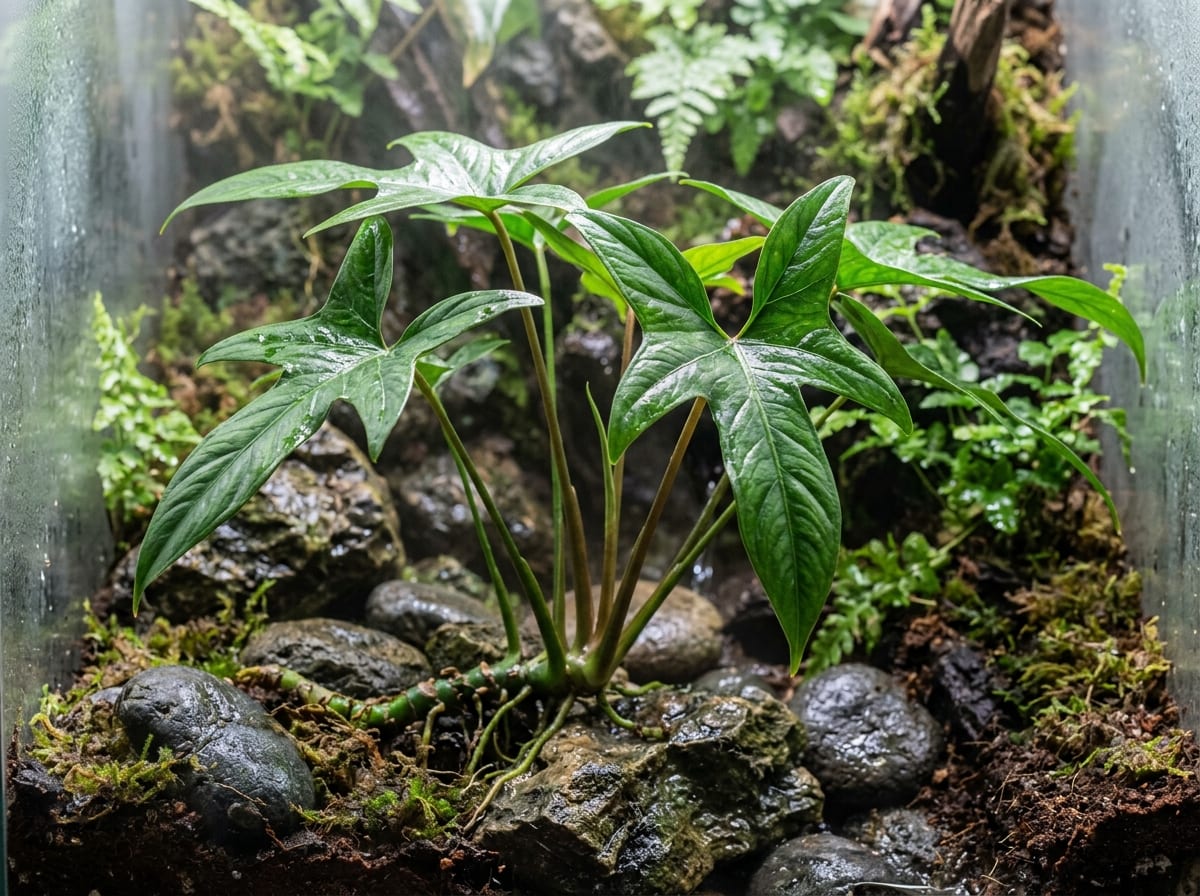
Anubias hastifolia
Anubias hastifolia is a large-growing member of the Anubias genus, known for its bold, spear-shaped leaves that split into three lobes as they mature. Grown emersed, its leaf stalks can reach up to 63 cm, with the central lobe extending as long as 26 cm, giving the plant a striking, substantial presence. It's considered less well adapted to permanent submersion, so it tends to do better planted above the waterline in a spacious paludarium than fully submerged in an aquarium, where its leaves generally stay smaller. As a perennial, it can be enjoyed for years when conditions suit it, though it's generally regarded as a plant for intermediate keepers rather than complete beginners.
View Anubias hastifolia encyclopedia →0% commission on your first sales!Register by September 30, 2026 and your first 2 plants are commission-free!
Grower Wanted!
List your plants on GrowerDirect and sell directly to customers nationwide!
6 Transparency Commitments from GrowerDirect
Grower provide complete information for all Aquatic Plants listings. We guarantee transparency in variety, origin, light requirements, and difficulty level.
- Variety Clarity
- Live Photos
- Color Details
- Origin Transparency
- Light Requirements
- Difficulty Level
Browse all 134 varieties
Difficulty Level
Verified growers wanted for Aquatic Plants
Growers are signing up now ahead of launch. Subscribe to be notified when new listings go live.
Getting alerts is free with a member account. When new listings match your saved search, we'll notify you by email and in-app.
Browse other categories
Are you growing aquatic plants?
Register as a grower and connect with buyers directly.
Apply as a growerAnubias hastifolia key facts
- Growing Difficulty
- Intermediate
- Lifespan
- Perennial
- Size
- Petioles up to 63 cm, central lobe up to 26 cm (emersed); stays much smaller submerged
- Temperature
- 22〜26℃
- Watering
- Can be kept without CO2 or fertiliser
- Lighting
- Prefers subdued light, emersed or submerged.
- CO2 & Fertilizer
- CO2 and fertiliser are not essential; underwater growth is extremely slow.
- Water Temperature & Quality
- Optimum 22–26°C in slightly acidic water (pH 5–7). Keep humidity high when grown emersed.
- Substrate & Attachment
- The rhizome rots easily if buried. Tie it to driftwood or stone with fishing line, or plant it with the rhizome resting on top of the substrate.
- Trimming & Propagation
- Propagate by dividing the rhizome. Established plants resent being moved, so choose the spot at the outset.
- Cautions
- Emersed leaves get big, so a spacious paludarium is needed to grow it to full size. Never release plants into the wild.
About Anubias hastifolia
Anubias hastifolia is a large Anubias species with spear-shaped, three-lobed leaves and stalks reaching up to 63 cm. Learn how this perennial suits paludarium-style emersed growing for intermediate keepers.
7 things to know before growing Anubias hastifolia
1Best Grown Emersed
Anubias hastifolia is considered poorly adapted to permanent submersion. Rather than fully submerging it in an aquarium, growing it emersed in a humid paludarium, with its leaves in open air, lets it reach its natural leaf size.
2Don't Bury the Rhizome
As with other Anubias species, burying the rhizome in substrate causes it to rot. Instead, tie it to driftwood or rock so the rhizome stays exposed while the roots attach naturally.
3Humidity Over Watering
In emersed setups, maintaining humidity inside the paludarium matters more than daily watering. Letting it dry out can damage leaf tips, so misting or an automatic mister helps keep conditions stable.
4Choose Its Spot From the Start
Growth is extremely slow underwater, and once established the plant dislikes being moved. Decide carefully at the outset where to mount it on driftwood or rock, or where to place it in the paludarium. If you want more plants, divide the rhizome.
5Watch Seasonal Temperature
Being a tropical plant, it needs protection from cold air and water temperatures in cooler seasons. As a perennial, keeping conditions stable lets it keep producing leaves year-round.
6Choose by Stalk and Leaf
When selecting a plant, look for firm leaf stalks and leaves free of dark blotches or melting patches. A specimen with clearly defined, spear-to-three-lobed leaves is a good sign of healthy growth.
7Submerged Leaves Stay Small
It can also be grown fully submerged as an aquarium plant, but its leaves tend to stay smaller than when grown emersed. If you want to see its large leaves, plan for emersed, paludarium-style growing instead.
Frequently asked questions about Anubias hastifolia
- Q.Can it be grown fully submerged in an aquarium?
- A.It can be kept submerged, but it's considered poorly suited to permanent submersion, and its leaves tend to stay smaller than when grown emersed. For its full-sized leaves, emersed growth in a paludarium is recommended.
- Q.How large does it get?
- A.Grown emersed, its leaf stalks can reach up to about 63 cm, with the central lobe extending as long as 26 cm. Submerged growth tends to stay noticeably smaller.
- Q.Is it suitable for beginners?
- A.It's generally considered an intermediate-level plant rather than one for complete beginners. It's easier to succeed with once you're comfortable with basic Anubias care, such as not burying the rhizome and avoiding strong direct sun.
- Q.What kind of substrate or mounting does it need?
- A.Rather than planting it with the rhizome buried in substrate, it does best mounted onto driftwood or rock so the roots can attach. In a paludarium, combining well-draining substrate with sphagnum moss around the mount works well.
- Q.How long can it be kept?
- A.As a perennial, it can be grown for several years or more when conditions suit it. The exact lifespan varies with growing conditions, so no single figure applies.
Handy Growing Tools for Anubias hastifolia
Learn more about Anubias hastifolia in the encyclopedia
View Anubias hastifolia encyclopedia entry →
Care difficulty, size, origin and light needs — all basics covered.
More in this category
Can't find the plant you're looking for?
Post your wishes for free and growers with matching plants will contact you with introductions.