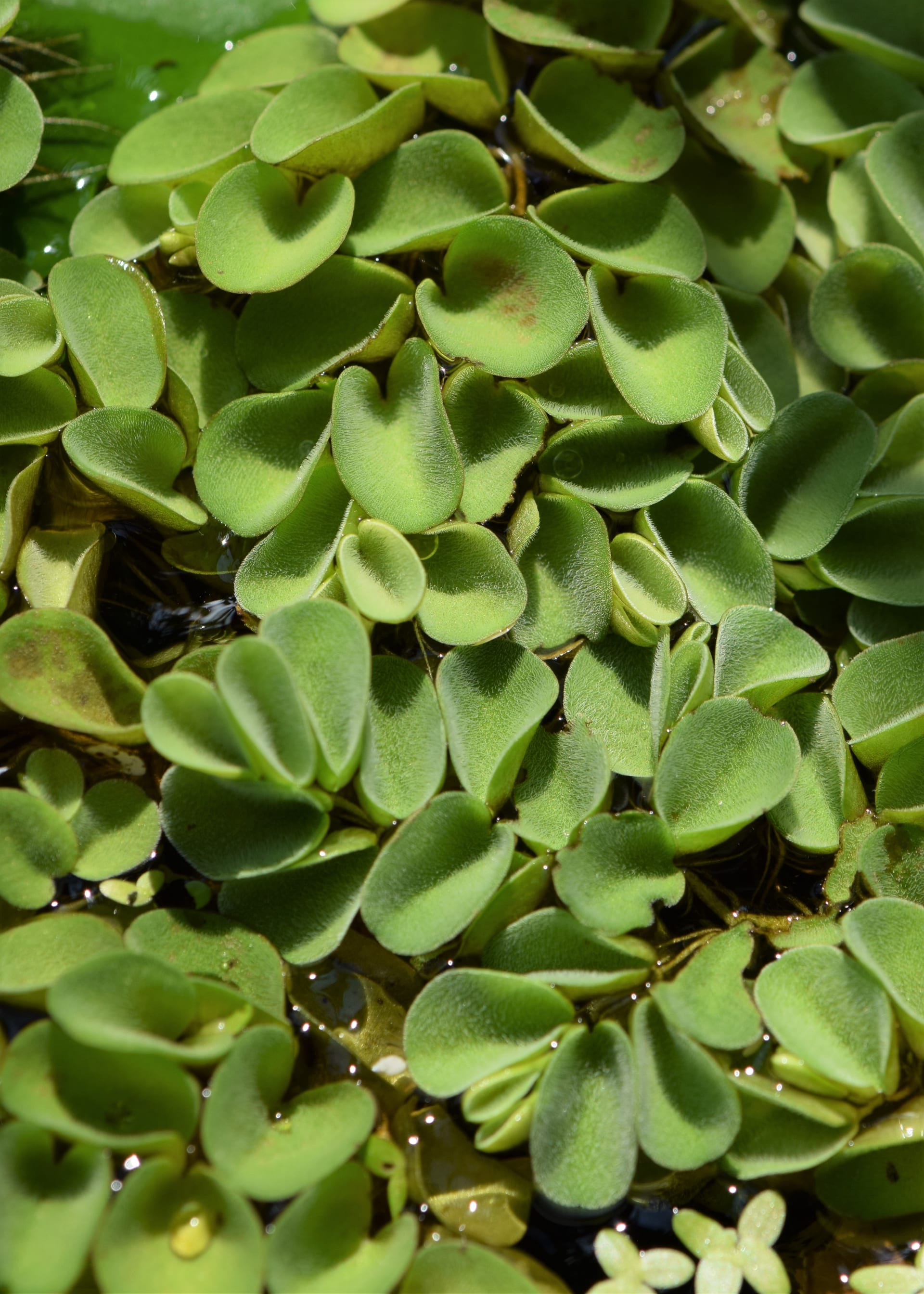
 © Krzysztof Ziarnek, Kenraiz / CC BY-SA 4.0
Salvinia cucullata
Salvinia cucullata is a floating fern native to tropical Asia, its bright green leaves covered in fine, velvety hairs. The leaves curl upward like tiny boats or hoods as they rise above the water's surface, creating a striking silhouette. Under good growing conditions, the leaves overlap into thick, cushion-like mats, while in less ideal conditions they flatten out, a subtle sign of how the plant is doing. As a perennial floater that naturally divides and multiplies on its own, it's considered an easy, beginner-friendly choice for anyone starting out with aquatic plants.
View Salvinia cucullata encyclopedia →0% commission on your first sales!Register by September 30, 2026 and your first 2 plants are commission-free!
Grower Wanted!
List your plants on GrowerDirect and sell directly to customers nationwide!
6 Transparency Commitments from GrowerDirect
Grower provide complete information for all Aquatic Plants listings. We guarantee transparency in variety, origin, light requirements, and difficulty level.
- Variety Clarity
- Live Photos
- Color Details
- Origin Transparency
- Light Requirements
- Difficulty Level
Browse all 134 varieties
Difficulty Level
Verified growers wanted for Aquatic Plants
Growers are signing up now ahead of launch. Subscribe to be notified when new listings go live.
Getting alerts is free with a member account. When new listings match your saved search, we'll notify you by email and in-app.
Browse other categories
Are you growing aquatic plants?
Register as a grower and connect with buyers directly.
Apply as a growerSalvinia cucullata key facts
- Growing Difficulty
- Beginner-friendly
- Lifespan
- Perennial floater; keeps multiplying by breaking apart
- Size
- Floating leaves a few cm; branches into thick mats
- Temperature
- 24〜28℃
- Watering
- Takes nutrients from the water; leaves go flat and small when starved
- Lighting
- Needs medium to strong light; without it the leaves stay flat and stunted instead of curling.
- CO2 & Fertilizer
- No CO2 needed. Supplement with liquid fertiliser, as leaves shrink when nutrients run low.
- Water Temperature & Quality
- Optimum 24–28°C; not fussy about water chemistry.
- Substrate & Attachment
- Grown floating; it cannot grow emersed. Open-topped tanks show off the upturned leaf margins.
- Trimming & Propagation
- Very fast-growing and multiplies as stems break apart; scoop out the surplus.
- Cautions
- Stunted plants are hard to tell from S. molesta, a Priority Control Alien Species in Japan. It can cover the surface, so never dump or release it outdoors.
About Salvinia cucullata
Salvinia cucullata: a tropical Asian floating fern with velvety green leaves that curl like tiny boats. A hardy, beginner-friendly aquatic plant that multiplies naturally.
7 things to know before growing Salvinia cucullata
1Placement and Light
In the wild, Salvinia cucullata grows only in sunny spots, and it needs moderate to strong light. Without enough light, the leaves fail to curl and become flat and thin, so keep it on a well-lit water surface in an aquarium, or in a bright spot outdoors. Because it can multiply until it covers the water, never dump it in outdoor ponds or waterways, and don't let it wash out of its container.
2Water Temperature and Quality
Being native to tropical Asia, this plant doesn't tolerate cold water or sudden temperature swings well. In an indoor tank, using a heater to keep the temperature stable helps it thrive. Strong water flow can push the leaves under the surface, so calm water is best.
3Managing Surface Coverage
As the floating leaves spread across the water's surface, an overgrown patch can block light from reaching plants or livestock below. Thin the colony out regularly to keep some open water. When it grows well, the leaves overlap into thick, cushion-like mats.
4No Substrate Needed
Since Salvinia cucullata is a fern that floats on the water's surface, it doesn't need soil or planting media of any kind. It draws nutrients directly from the water, so maintaining water quality takes the place of substrate care. Its roots trail freely underwater and never need to be anchored.
5How It Multiplies
As a perennial floater, this plant naturally produces offshoots that split off from the parent to increase in number. It multiplies on the water's surface without any special effort, making it easy for beginners to propagate. When it grows too dense, simply thin out the extra plants to keep things manageable.
6Seasonal Care
Because it comes from the tropics, growth can slow and leaves may suffer during cold months. Keeping the water temperature from dropping too far indoors helps it stay healthy year-round. If kept outdoors or in strong direct sun, watch for stress from summer heat and drying out as well.
7Choosing a Healthy Plant
When choosing a plant, look for leaves that are curled like little boats or hoods, plump and full rather than flat. It's best to avoid specimens with flattened, shriveled leaves or a lot of brown discoloration. Healthy roots trailing freely in the water are another good sign of a plant in good condition.
Frequently asked questions about Salvinia cucullata
- Q.Is Salvinia cucullata suitable for beginners?
- A.Yes, it's generally considered a beginner-friendly floating plant. As a perennial, it naturally divides and multiplies on its own without much special care. With basic temperature control and adequate light, it's an easy plant for first-time growers to manage.
- Q.How large does it grow?
- A.The individual floating leaves are only a few centimeters in size. However, as the plant branches and multiplies, the colony as a whole develops into a thick, cushion-like mass. Even though each leaf is small, it's worth leaving enough open water surface for the colony to spread.
- Q.Why do the leaves sometimes turn flat instead of cupped?
- A.Under good conditions, Salvinia cucullata's leaves curl upward like little boats or hoods, but under poor conditions they flatten out instead. This change is thought to be influenced by factors like light and water quality. Treat a shift in leaf shape as a cue to review the growing environment.
- Q.Does it need soil or substrate?
- A.No, it doesn't. As a floating fern that grows on the water's surface, it doesn't require any planting substrate. Since it draws nutrients from the water itself, maintaining water quality is the main focus of care.
- Q.What should I do if it multiplies too much?
- A.Because it naturally keeps dividing and multiplying, scoop out the excess whenever it feels overcrowded. Letting it cover too much of the surface can block light from reaching plants or livestock below, so regular maintenance is recommended. The plants you remove can be grown on in a separate container, but never dump unwanted ones in outdoor ponds or waterways; drain them and throw them away with household waste. Weak, flattened plants are hard to tell apart from giant salvinia (S. molesta), which is listed as a priority-control alien species in Japan, so take particular care not to let them escape.
Handy Growing Tools for Salvinia cucullata
Learn more about Salvinia cucullata in the encyclopedia
View Salvinia cucullata encyclopedia entry →
Care difficulty, size, origin and light needs — all basics covered.
More in this category
Can't find the plant you're looking for?
Post your wishes for free and growers with matching plants will contact you with introductions.