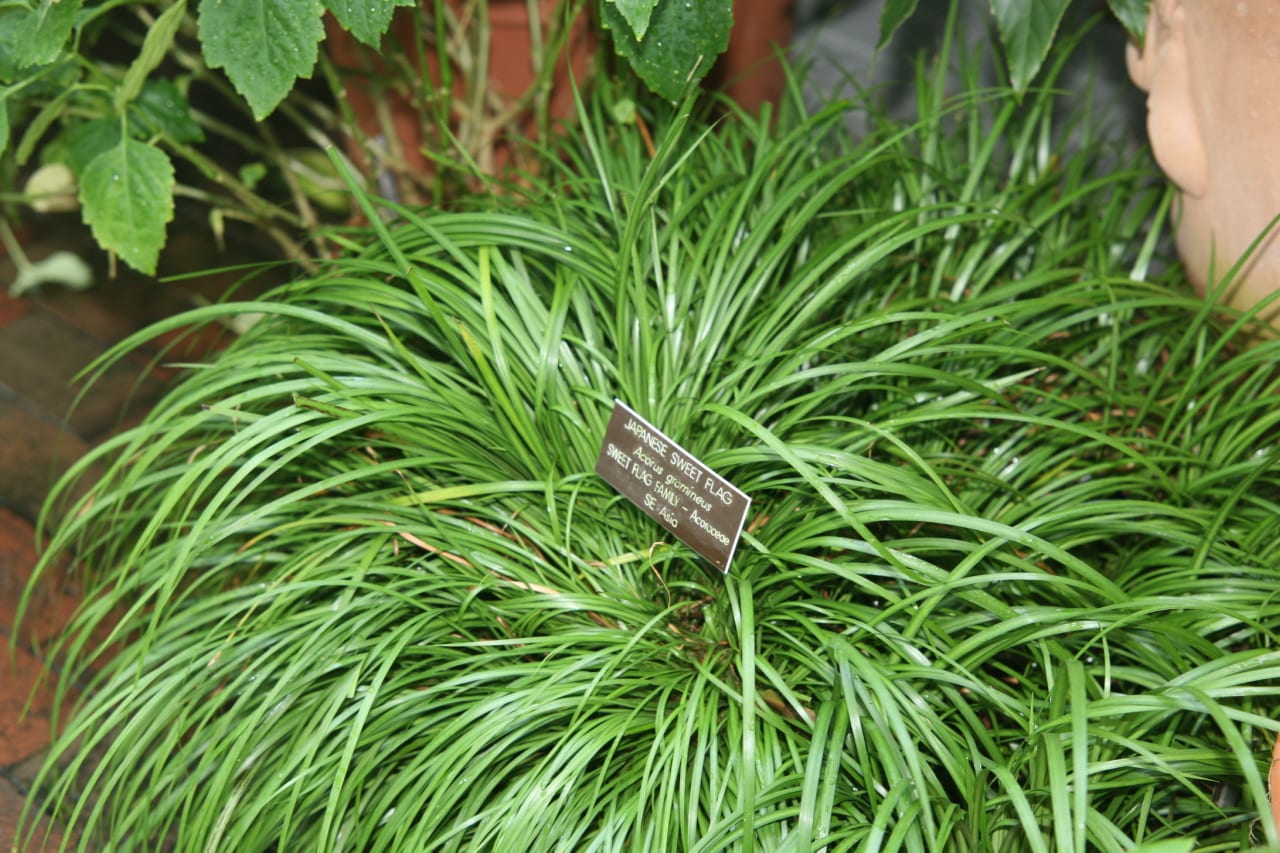
 © Cliff / CC BY 2.0
Japanese sweet flag
Japanese sweet flag (Acorus gramineus, known in Japanese as sekishou) is a native Japanese wetland plant that grows wild on rocky outcrops along mountain streams. Its slender, sword-shaped leaves fan out in graceful clusters, lending a cool, understated elegance to Japanese-style gardens and terrariums alike. As a hardy perennial, it is forgiving enough for beginners, and established clumps can be divided to keep the planting going for years. Leaves can reach up to about 30 cm on larger types, while dwarf cultivars stay compact, so there is a size to suit anything from a small pot to a terrarium backdrop. Whether used to edge a pond or simply enjoyed as a moisture-loving accent plant, it is an easy way to bring a touch of traditional Japanese charm into a home garden.
View Japanese sweet flag encyclopedia →0% commission on your first sales!Register by September 30, 2026 and your first 2 plants are commission-free!
Grower Wanted!
List your plants on GrowerDirect and sell directly to customers nationwide!
6 Transparency Commitments from GrowerDirect
Grower provide complete information for all Aquatic Plants listings. We guarantee transparency in variety, origin, light requirements, and difficulty level.
- Variety Clarity
- Live Photos
- Color Details
- Origin Transparency
- Light Requirements
- Difficulty Level
Browse all 134 varieties
Difficulty Level
Verified growers wanted for Aquatic Plants
Growers are signing up now ahead of launch. Subscribe to be notified when new listings go live.
Getting alerts is free with a member account. When new listings match your saved search, we'll notify you by email and in-app.
Browse other categories
Are you growing aquatic plants?
Register as a grower and connect with buyers directly.
Apply as a growerJapanese sweet flag key facts
- Growing Difficulty
- Beginner-friendly
- Lifespan
- Perennial; maintained indefinitely by division
- Size
- Leaves up to about 30 cm (dwarf cultivars shorter)
- Temperature
- 18〜23℃
- Watering
- Needs little fertiliser
- Lighting
- Grows at the waterside, in indoor pots or in terrariums; little is documented about its light needs.
- CO2 & Fertilizer
- No CO2 needed and little fertiliser.
- Water Temperature & Quality
- Prefers cool conditions, about 18–23°C; not suited to submerged culture in warm tropical tanks.
- Substrate & Attachment
- Grow it emersed with leaves above water. Dwarf forms used under water should be fixed to stone or wood with the rhizome unburied. In pots, ordinary potting soil kept moist is fine.
- Trimming & Propagation
- Very slow-growing; propagate by division.
- Cautions
- Taller forms weaken and die when fully submerged; choose dwarf cultivars for underwater use. Never release plants into the wild.
About Japanese sweet flag
Sekishou (Japanese sweet flag) is a hardy, easy-care native perennial with fan-shaped, sword-like leaves — ideal for gardens or terrariums.
7 things to know before growing Japanese sweet flag
1Bright, Partial Shade
Sekishou tolerates full sun, but constant dryness or intense direct light can scorch the leaf tips. Since it grows wild along mountain streams, it does best in bright, partial shade with soil that stays consistently moist — conditions easy to recreate in a terrarium or a pot kept near water.
2Never Let It Dry Out
Because it grows naturally on damp streamside rocks, sekishou does not tolerate drying out well. Water generously before the soil surface dries, and for potted plants, keeping a saucer of water underneath helps maintain the constant moisture it prefers.
3Choose Moisture-Retentive Soil
A soil mix chosen for water retention suits this plant better than one prized for drainage. Commercial aquatic-plant soil, or a blend of akadama and leaf mold, holds moisture well and makes ongoing care easier.
4Divide in Spring or Fall
As a perennial, sekishou can be divided to refresh a crowded clump or produce new plants. Doing this in early spring or early fall, when growth slows, puts less stress on the plant; each division should keep a few roots attached so it can establish well.
5Evergreen Through Winter
Sekishou is evergreen and rarely sheds all its leaves even in winter. If grown outdoors in a cold climate, protecting it from extreme drying or freezing helps the foliage stay attractive through the season.
6Full Submersion Needs Dwarf Types
While sekishou grows well in damp soil or along the water's edge, most types weaken if kept fully submerged. For aquarium or paludarium setups where the plant will stay underwater, choose one of the compact, short-leaved dwarf cultivars instead.
7Pick a Sturdy Base
When choosing a plant, look for glossy, healthy-colored leaves and a base that feels firm rather than loose. Avoid specimens with browned, dying leaf tips or a blackened base, since these are harder to nurse back to health.
Frequently asked questions about Japanese sweet flag
- Q.Is sekishou suitable for beginners?
- A.Yes — it is a hardy perennial generally considered easy to grow, even for beginners. As long as you keep the growing medium consistently moist, it needs little special care to thrive over the years.
- Q.Can it be grown fully submerged in water?
- A.It depends on the cultivar. Most sekishou plants do best in damp soil or along the water's edge and tend to weaken if kept fully underwater, so if you want to grow it submerged, choose one of the dwarf cultivars instead.
- Q.How big does it grow?
- A.The larger types can reach leaf lengths of up to about 30 cm, while dwarf cultivars stay noticeably shorter and more compact. This makes it easy to pick a size that fits a pot, garden bed, or terrarium.
- Q.How do you propagate it?
- A.Division is the standard method. As this perennial grows and the clump becomes crowded, splitting it into separate sections lets each new plant establish and keep growing independently.
- Q.Is it better suited to outdoor or indoor growing?
- A.Either works, as long as the growing medium stays consistently moist. Outdoors, a shaded spot near water suits it well; indoors, a terrarium or similarly humid setup helps maintain the moisture it needs.
Handy Growing Tools for Japanese sweet flag
Learn more about Japanese sweet flag in the encyclopedia
View Japanese sweet flag encyclopedia entry →
Care difficulty, size, origin and light needs — all basics covered.
More in this category
Can't find the plant you're looking for?
Post your wishes for free and growers with matching plants will contact you with introductions.