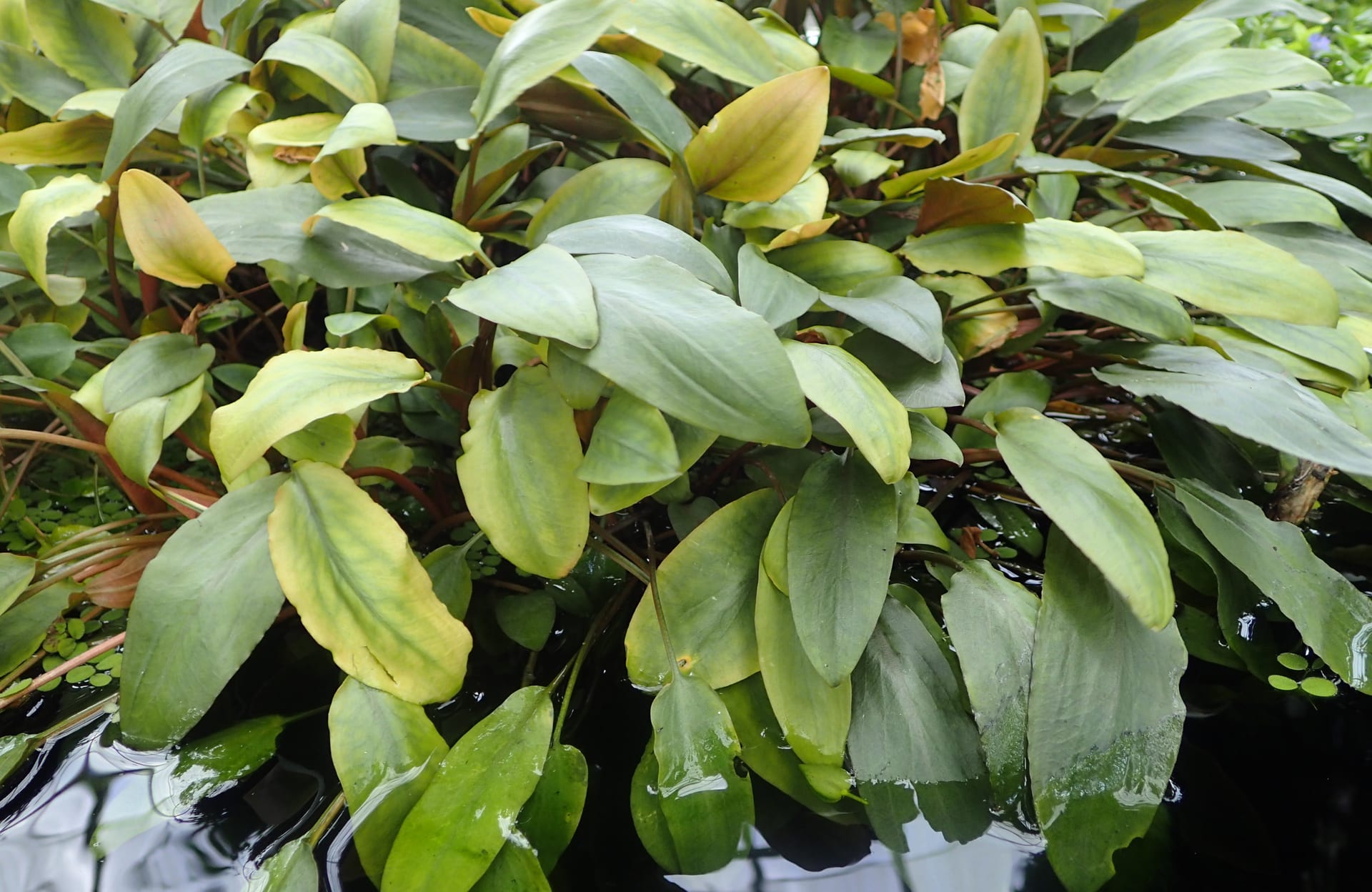
 © Krzysztof Ziarnek, Kenraiz / CC BY-SA 4.0
Cryptocoryne beckettii
Cryptocoryne beckettii is a hardy aquatic plant native to Sri Lanka that has been a staple in the aquarium hobby for more than 60 years. Its pointed leaves range from olive-brown to green on top, with a striking purplish tint underneath. One of its biggest strengths is adaptability: it grows well in both soft and hard water, making it a forgiving choice for beginners. As a perennial, it continually produces new plantlets along creeping runners, gradually filling in as a lush clump. Reaching roughly 10 to 15 cm in height, it works well in the midground of a planted tank.
View Cryptocoryne beckettii encyclopedia →0% commission on your first sales!Register by September 30, 2026 and your first 2 plants are commission-free!
Grower Wanted!
List your plants on GrowerDirect and sell directly to customers nationwide!
6 Transparency Commitments from GrowerDirect
Grower provide complete information for all Aquatic Plants listings. We guarantee transparency in variety, origin, light requirements, and difficulty level.
- Variety Clarity
- Live Photos
- Color Details
- Origin Transparency
- Light Requirements
- Difficulty Level
Browse all 134 varieties
Difficulty Level
Verified growers wanted for Aquatic Plants
Growers are signing up now ahead of launch. Subscribe to be notified when new listings go live.
Getting alerts is free with a member account. When new listings match your saved search, we'll notify you by email and in-app.
Browse other categories
Are you growing aquatic plants?
Register as a grower and connect with buyers directly.
Apply as a growerCryptocoryne beckettii key facts
- Growing Difficulty
- Beginner-friendly
- Lifespan
- Perennial; keeps spreading by offsets
- Size
- About 10–15 cm tall ('Petchii')
- Temperature
- 22〜26℃
- Watering
- Grows without CO2; substrate fertiliser helps
- Lighting
- Tolerates low light but grows better with more.
- CO2 & Fertilizer
- Grows without CO2 or fertiliser; additions speed growth.
- Water Temperature & Quality
- Optimum 22–26°C; tolerates soft to hard water and pH 5–8.
- Substrate & Attachment
- Grows a little faster in a nutrient-rich substrate.
- Trimming & Propagation
- Separate daughter plants from the rhizome and replant. Suits the midground, kept in shape by thinning.
- Cautions
- Sudden changes in light or water, or replanting, can trigger 'crypt melt'. If the rhizome survives, new leaves will follow, so leave it in place. Never release plants into the wild.
About Cryptocoryne beckettii
A hardy Sri Lankan aquatic plant with olive-brown to green leaves and purplish undersides. Cryptocoryne beckettii adapts to both soft and hard water, making it a classic, beginner-friendly choice.
7 things to know before growing Cryptocoryne beckettii
1Placement and Light Needs
Cryptocoryne beckettii doesn't need intense lighting and grows well even under moderate light. This makes it easy to place in the mid- to foreground of a tank, including spots partly shaded by taller plants.
2Tolerates Soft or Hard Water
This species adapts well to both soft and hard water, so you don't need to fuss over precise water chemistry. Still, it's best to avoid sudden shifts and change water gradually to minimize stress on the plant.
3Best Substrate to Use
Because it's a rooted plant, a nutrient-rich aquatic plant substrate suits it well. If using plain gravel instead, adding root fertilizer near the base helps keep growth steady.
4Replanting Without Root Damage
The roots tend to grow quite long, so when replanting, dig around the base rather than pulling the plant straight out to avoid damaging them. Give it a few days afterward to settle into its new spot.
5Leaves May Melt at First
Right after introducing the plant, or when conditions shift suddenly — such as a temperature change at the turn of a season — existing leaves may melt away, a reaction commonly seen across the Cryptocoryne genus. As long as the roots and new shoots remain healthy, fresh leaves will typically emerge once the plant settles in.
6Spreads via Runners
As a perennial, it multiplies by sending out runners that sprout new plantlets at their tips. Left alone, it will naturally spread into a fuller clump over time, making propagation largely hands-off.
7Choosing a Healthy Plant
Look for a specimen with vibrant, undamaged leaves that aren't torn or yellowing. A clearly visible purplish tint on the underside of the leaves is one sign of a healthy plant.
Frequently asked questions about Cryptocoryne beckettii
- Q.Is Cryptocoryne beckettii suitable for beginners?
- A.Yes, it's considered an easy, beginner-friendly aquatic plant. It adapts to both soft and hard water, so you don't need to be overly precise about water chemistry.
- Q.How big does it grow?
- A.It typically reaches about 10 to 15 cm in height. That makes it a convenient size for the mid- to foreground of a planted tank.
- Q.My plant's leaves melted — is it dying?
- A.Leaf melt right after introducing the plant, or following a change in conditions, is a common reaction across the Cryptocoryne genus, and it doesn't necessarily mean the plant is dying. As long as the roots and new shoots are healthy, new leaves will grow back once it settles in.
- Q.How does it propagate?
- A.As a perennial, it naturally multiplies by sending out runners that form new plantlets at their tips. It will gradually spread into a fuller clump without any special effort on your part.
- Q.Can it be planted alongside other aquatic plants?
- A.Since it doesn't need much light, it grows well even in spots shaded by taller plants, making it easy to combine in a layout. Leaving some space between plants helps avoid excessive root competition.
Handy Growing Tools for Cryptocoryne beckettii
Learn more about Cryptocoryne beckettii in the encyclopedia
View Cryptocoryne beckettii encyclopedia entry →
Care difficulty, size, origin and light needs — all basics covered.
More in this category
Can't find the plant you're looking for?
Post your wishes for free and growers with matching plants will contact you with introductions.