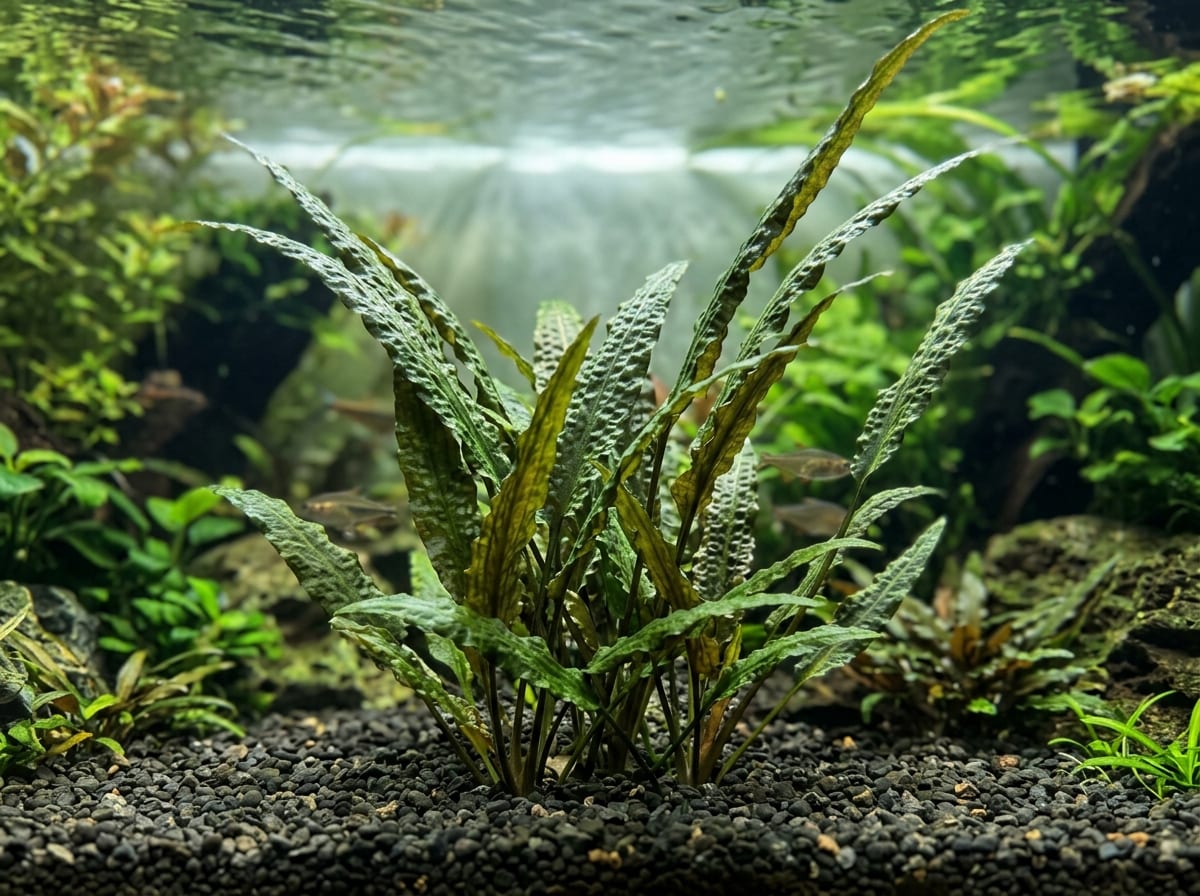
Cryptocoryne crispatula var. balansae
Cryptocoryne balansae is prized for its long, ribbon-like leaves with a distinctively wavy, crinkled surface. Left to grow, the leaves can stretch past 50cm, making this plant a striking centerpiece for the back of a planted tank. In the wild it grows in hard, limestone-fed water, and its leaf texture and curl often shift with water conditions. As a perennial, it spreads naturally over time by sending out runners that establish new plants. It's a hardy, low-maintenance species well suited to aquarists just starting out with aquatic plants.
View Cryptocoryne crispatula var. balansae encyclopedia →0% commission on your first sales!Register by September 30, 2026 and your first 2 plants are commission-free!
Grower Wanted!
List your plants on GrowerDirect and sell directly to customers nationwide!
6 Transparency Commitments from GrowerDirect
Grower provide complete information for all Aquatic Plants listings. We guarantee transparency in variety, origin, light requirements, and difficulty level.
- Variety Clarity
- Live Photos
- Color Details
- Origin Transparency
- Light Requirements
- Difficulty Level
Browse all 134 varieties
Difficulty Level
Verified growers wanted for Aquatic Plants
Growers are signing up now ahead of launch. Subscribe to be notified when new listings go live.
Getting alerts is free with a member account. When new listings match your saved search, we'll notify you by email and in-app.
Browse other categories
Are you growing aquatic plants?
Register as a grower and connect with buyers directly.
Apply as a growerCryptocoryne crispatula var. balansae key facts
- Growing Difficulty
- Beginner-friendly
- Lifespan
- Perennial; keeps spreading by runners
- Size
- Leaves 20–60 cm long; can exceed 50 cm
- Temperature
- 20〜26℃
- Watering
- CO2 optional; provide steady nutrients via water and substrate
- Lighting
- Medium to high light; good light brings out the hammered texture.
- CO2 & Fertilizer
- CO2 improves growth but is not essential; it grows most lushly with ample nitrate, phosphate and iron.
- Water Temperature & Quality
- Optimum 20–26°C. Prefers hard water (pH 6–9, KH 5–21°dH); calcium deficiency twists the leaves.
- Substrate & Attachment
- Plant in the substrate towards the back or in tall tanks, where the long leaves can trail.
- Trimming & Propagation
- Spreads by underground runners; cut stray runners through the substrate with a blade, or pull them up and replant near the parent.
- Cautions
- Sudden changes in light or water, or replanting, can trigger 'crypt melt'. If the rhizome survives, new leaves will follow, so leave it in place. Never release plants into the wild.
About Cryptocoryne crispatula var. balansae
Cryptocoryne balansae features long, crinkled ribbon-like leaves and forms a lush background planting. A hardy, beginner-friendly perennial that spreads via runners.
7 things to know before growing Cryptocoryne crispatula var. balansae
1Placement
Because the leaves can grow past 50cm, give this plant plenty of room in the background or side area of the tank. Planting it in the foreground can end up shading out other plants.
2Water Hardness
True to its limestone-region origins, balansae prefers neutral to slightly alkaline, moderately hard water. Very soft water can make it harder to grow well, so keep an eye on water parameters.
3Substrate
This plant favors a nutrient-rich substrate and draws a good amount of nourishment through its roots. Using aqua soil or a nutrient-enriched substrate helps the leaves develop more reliably.
4Timing Replanting
Cryptocorynes are sensitive to environmental change, and leaves can melt shortly after replanting. Keep layout changes to a minimum and give the roots time to settle in undisturbed.
5Propagation
As a perennial, it naturally multiplies by sending out runners under good conditions. Wait until a new plantlet has developed its own roots before separating it from the parent.
6Leaf Curling
A lack of calcium is known to cause the leaves to twist. Managing water hardness and mineral supply helps keep the leaves straighter and preserves their attractive crinkled texture.
7Trimming Old Leaves
Since the leaves grow quite large, regularly removing damaged or dying leaves keeps the plant looking its best and helps maintain water quality. Trim close to the base of the leaf.
Frequently asked questions about Cryptocoryne crispatula var. balansae
- Q.Is this a good plant for beginners?
- A.Yes, it's rated as beginner-friendly and easy to work with even if you're new to aquatic plants. It's a hardy perennial that can be enjoyed long-term with basic care.
- Q.How large does it grow?
- A.Leaves typically reach 20 to 60cm in length, and under good conditions they can exceed 50cm. It forms a substantial background planting in the tank.
- Q.Why do the leaves sometimes twist?
- A.In the wild it grows in hard, limestone-fed water, and a lack of calcium tends to make the leaves twist. Adjusting water hardness can help improve this.
- Q.How does it propagate?
- A.As a perennial, it naturally spreads by sending out runners once conditions are right. Wait until a new plantlet has rooted before separating it from the parent plant.
- Q.Can I plant it in the foreground?
- A.Since the leaves grow large and can exceed 50cm, it's better suited to the background or sides of the tank rather than the foreground. Position it carefully so it doesn't shade out other plants.
Handy Growing Tools for Cryptocoryne crispatula var. balansae
Learn more about Cryptocoryne crispatula var. balansae in the encyclopedia
View Cryptocoryne crispatula var. balansae encyclopedia entry →
Care difficulty, size, origin and light needs — all basics covered.
More in this category
Can't find the plant you're looking for?
Post your wishes for free and growers with matching plants will contact you with introductions.