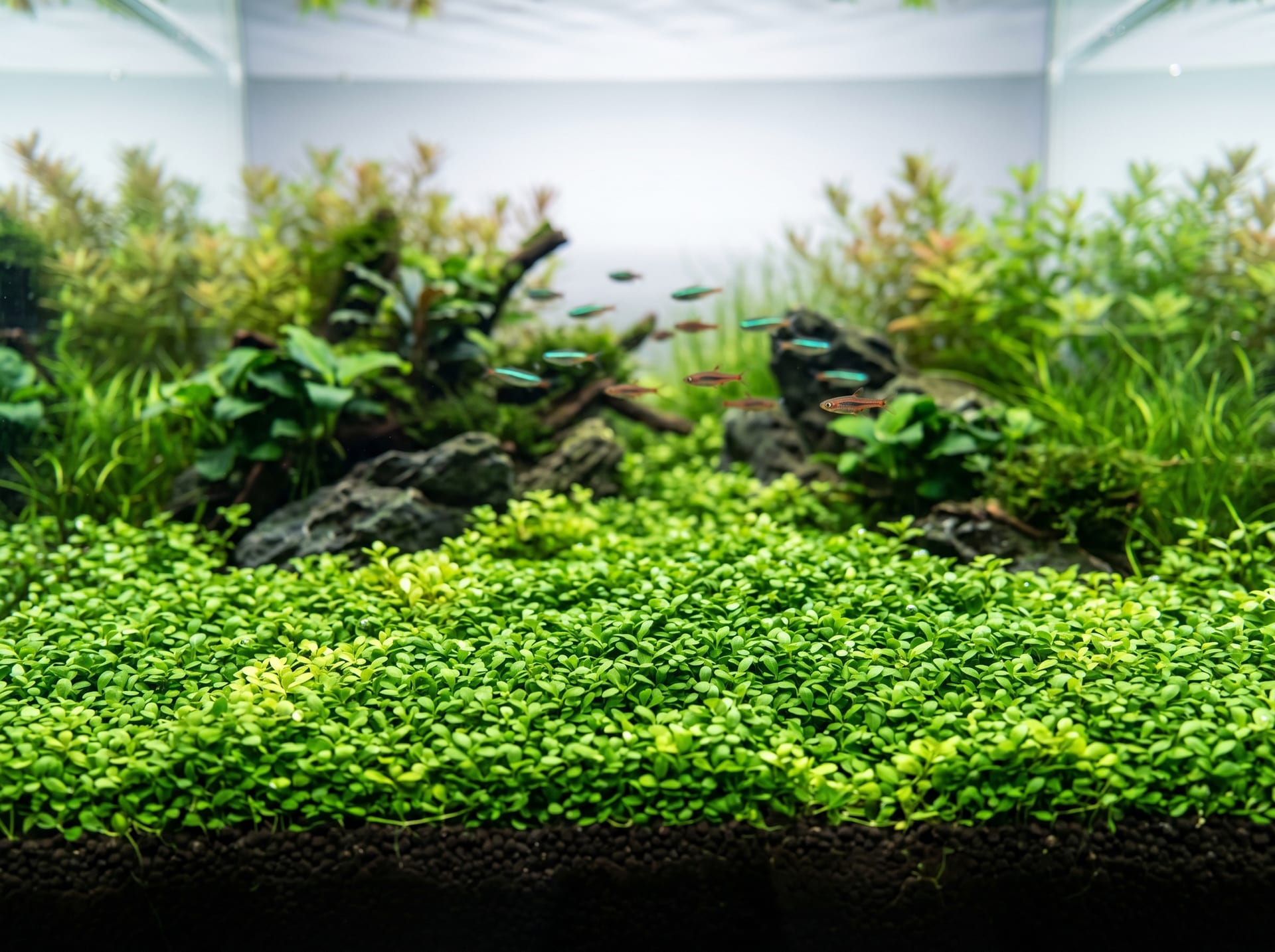
Foreground Plant
Foreground plants are aquatic plants that form a low, carpet-like cover across the front and bottom of an aquarium, with popular varieties including Glossostigma and Hairgrass. Their creeping growth habit creates a sense of depth and a lush, natural aquascape. With adequate lighting and CO₂ supplementation, even beginners can achieve a beautiful green carpet effect.
Grower Wanted!
List your plants on GrowerDirect and sell directly to customers nationwide!
6 Transparency Commitments from GrowerDirect
Grower provide complete information for all Aquatic Plants listings. We guarantee transparency in variety, origin, light requirements, and difficulty level.
- Variety Clarity
- Live Photos
- Color Details
- Origin Transparency
- Light Requirements
- Difficulty Level
Browse all 134 varieties
Difficulty Level
Verified growers wanted for Aquatic Plants
Growers are signing up now ahead of launch. Subscribe to be notified when new listings go live.
Getting alerts is free with a member account. When new listings match your saved search, we'll notify you by email and in-app.
Browse other categories
Are you growing aquatic plants?
Register as a grower and connect with buyers directly.
Apply as a growerAbout Foreground Plant
Foreground plants gained widespread attention following the global rise of "nature aquariums" in the 1990s, which sought to recreate natural waterscapes inside glass tanks. Glossostigma elatinoides, native to Australia with its tiny round leaves, became an icon of the Amano-style layout. Hairgrass evokes a swaying meadow with its slender blades, while Cuba pearl grass forms an intricate carpet of pearl-like miniature leaves. All foreground species share a creeping, horizontal growth habit that blankets the aquarium floor in vivid green, simultaneously creating depth, dimension, and a sense of natural scenery. Once adequate lighting and CO₂ are in place, maintenance is manageable, and the satisfaction of watching the carpet grow denser with each trimming is one of the genre's greatest rewards.
7 things to know before growing Foreground Plant
1High Light Is Essential
Most foreground plants require strong light; insufficient lighting causes them to grow upward rather than spreading horizontally. Use a high-output LED light suited to your tank size and aim for 8–10 hours of illumination per day. You can judge whether light is adequate by observing how well the plants creep along the substrate.
2CO₂ Boosts Growth Dramatically
While some foreground plants can grow without CO₂ injection, species like Glossostigma show dramatically improved growth and density with it. Even a simple DIY fermentation system injecting 1–2 bubbles per second can make a significant difference. Insufficient CO₂ also promotes algae growth, so monitor your plants and adjust accordingly.
3Choose the Right Substrate
Foreground plants spread by rooting shallowly across the substrate, so fine-grained soil or sand works best. Overly coarse substrate makes it difficult for roots to anchor, causing newly planted specimens to float up. Nutrient-rich aquasoil is particularly beneficial for foreground plants that have high fertilizer demands.
4Plant in Small, Dense Clusters
Divide purchased foreground plants into small portions of 1–2 stems and insert them at 1–2 cm intervals to encourage rapid carpet formation. Planting in large clumps can trap moisture inside, leading to algae growth or rotting. Using tweezers makes the fine work easier and helps avoid damaging the delicate roots.
5Trim Regularly to Maintain Carpet
As foreground plants grow thicker, lower layers are deprived of light and begin to die off. Trim horizontally and thoroughly every 2–4 weeks to encourage new growth from the base. After trimming, promptly remove floating clippings with a net to prevent them from decomposing and degrading water quality.
6Be Prepared to Battle Algae
Once algae take hold in a foreground carpet, removal becomes extremely difficult—black beard algae and cyanobacteria are particularly troublesome. Increasing water change frequency and introducing algae-eating shrimp or snails are effective preventive measures. During the initial tank cycling phase, algae outbreaks are especially common, so carefully balance lighting, CO₂, and nutrients.
7Difficulty Varies by Species
Foreground plants vary widely in difficulty. Dwarf Hairgrass and Cuba Pearl Grass are relatively challenging, while Glossostigma and Water Lawn are popular beginner-friendly choices. It is advisable to start with easier species and work your way up to more demanding varieties as you gain experience.
Frequently asked questions about Foreground Plant
- Q.Can I grow a foreground plant carpet without CO₂?
- A.Species like hairgrass and Glossostigma can grow without CO₂ injection, but growth is slow and achieving a dense carpet takes considerably longer. Without CO₂, compensate with stronger lighting and appropriate fertilization, and be prepared for a more patient approach.
- Q.Why are my foreground plants growing upward instead of spreading?
- A.The most common cause is insufficient light. When light is weak, plants etiolate—stretching upward to seek more. Review your lighting intensity and duration, and consider upgrading to a higher-output fixture if needed.
- Q.My plants keep floating out right after planting
- A.Foreground plants are prone to floating before their roots establish. Reduce water flow right after planting and plant small portions at spaced intervals to encourage faster anchoring. Once roots take hold in 1–2 weeks, the plants will stay stable.
- Q.Which foreground plant is best for beginners?
- A.Hairgrass (Eleocharis species) is a good beginner choice as it is relatively tolerant, widely available, and can grow without CO₂. Glossostigma is also popular but more dependent on high light, so it is best attempted once a strong lighting setup is in place.
- Q.How do I deal with algae growing on my foreground plants?
- A.If thread algae or cyanobacteria appear, first increase water change frequency to improve water quality. Adding a generous number of Amano shrimp is an effective biological control. For cyanobacteria outbreaks, carefully spot-treating the affected area with a small amount of hydrogen peroxide can also help.
Handy Growing Tools for Foreground Plant
Foreground Plant related articles
How to Grow Monte Carlo Without CO2 | Foreground Plant Carpet Maintenance Techniques for Low-Light & Shrimp Tanks
A guide explaining conditions, substrate, water parameters, and fertilizer adjustments for growing Micranthemum Monte Carlo without CO2 supplementation in low-light environments. Evidence-based guidance on maintenance suitable for coexistence with shrimp and achieving carpet growth even without CO2.
Tips for Creating Foreground Plant Carpets | Glossostigma, Cuba Pearl, New Large Pearl
Guide to creating beautiful green carpets with foreground plants. We introduce the characteristics and cultivation methods of Glossostigma, Cuba Pearl Grass, and New Large Pearl Grass, along with CO2, lighting, and substrate conditions, plus mist-method setup tips.
Foreground Plant Types and Planting Guide | Tips for Creating a Carpet
Explains the characteristics of foreground plant types such as glossostigma and Cuba pearl grass, and techniques for planting, trimming, light intensity, and CO2 management to create a beautiful carpet.
Foreground Plants (Carpet Plants) Comparison Guide | How to Grow HC, Monte Carlo, and Glossostigma
A comparative explanation of the 3 most popular foreground plants (carpet plants). Introduces differences in cultivation difficulty, CO2 requirements, and light requirements.
Complete Guide to Aquatic Plant Trimming | How to Cut Stem Plants, Foreground Plants, and Attachment Plants
We explain aquatic plant trimming methods by type. A beginner-friendly guide covering stem plant cutting and propagation, foreground plant trimming, attachment plant thinning, and post-trimming care.
More in this category
Can't find the plant you're looking for?
Post your wishes for free and growers with matching plants will contact you with introductions.