How to Grow Monte Carlo Without CO2 | Foreground Plant Carpet Maintenance Techniques for Low-Light & Shrimp Tanks
A guide explaining conditions, substrate, water parameters, and fertilizer adjustments for growing Micranthemum Monte Carlo without CO2 supplementation in low-light environments. Evidence-based guidance on maintenance suitable for coexistence with shrimp and achieving carpet growth even without CO2.
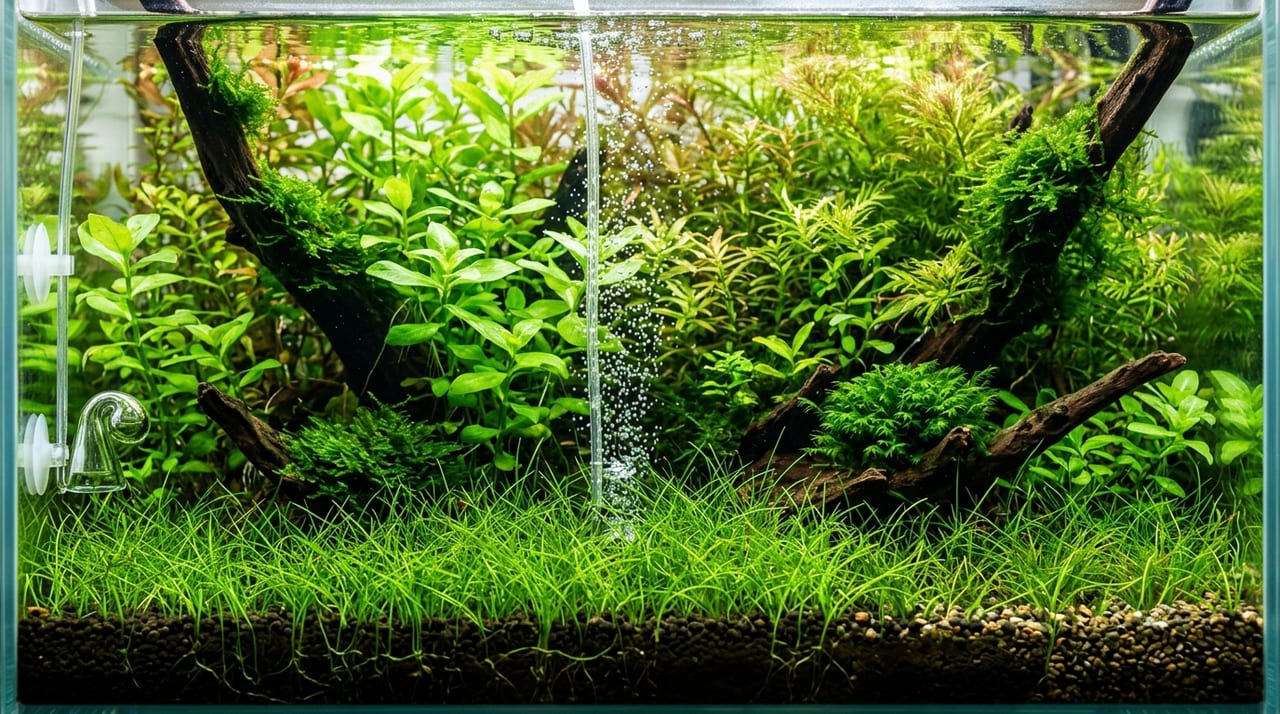
Key Takeaways
A guide explaining conditions, substrate, water parameters, and fertilizer adjustments for growing Micranthemum Monte Carlo without CO2 supplementation in low-light environments. Evidence-based guidance on maintenance suitable for coexistence with shrimp and achieving carpet growth even without CO2.
Related Species
Can Monte Carlo Grow Without CO2?
Micranthemum Monte Carlo (Monte Carlo) is known as a relatively easy-to-grow foreground plant when CO2 supplementation and high light are provided. However, there is constant demand for growing it without CO2 and even in low-light conditions. In shrimp tanks especially, rapid pH fluctuations caused by CO2 supplementation can stress shrimp, so many aquarists opt for CO2-free management.
To get straight to the point, Monte Carlo carpet growth is possible without CO2, but there are the following differences compared to CO2-supplemented setups.
| Comparison Item | With CO2 | Without CO2 |
|---|---|---|
| Time to carpet formation | 4–8 weeks | 3–5 months |
| Maintenance difficulty | ★★★ (frequent trimming) | ★★ (slow growth, infrequent trimming) |
| Algae risk | High with excess nutrients | Slow growth leaves excess nutrients, algae-prone |
| Compatibility with shrimp | Watch for rapid pH changes | Stable pH, shrimp-friendly |
The biggest advantage of CO2-free management is that pH fluctuation is minimal, making coexistence with shrimp much easier.
5 Conditions for Success Without CO2
Condition 1: Use High-Quality Substrate Soil
In a CO2-free environment, nutrient supply from the substrate is especially important. Use ADA Amazonia or substrate soil of equivalent quality.
- Thickness: 5–8 cm (for root-zone space and long-term nutrient supply)
- Grain size: Fine (easy root penetration, suitable for foreground plants)
- New substrate: watch for ammonia leaching during initial setup
Condition 2: Increase Light Intensity (Compensate for lack of CO2 with light)
Since there is no CO2 supplementation, increase light intensity as the driving force for photosynthesis.
| Light Intensity Guide | Suitability |
|---|---|
| 30–50 μmol/m²/s or less | Difficult to cultivate |
| 50–100 μmol/m²/s | Slow growth possible |
| ~40–50 PAR (medium light) | Practical range for CO2-free carpet formation. High light causes algae blooms under CO2 limitation, so avoid |
Lighting duration should be 8–10 hours per day as standard. To prevent algae, keeping it to around 6 hours for the first 2 weeks during setup is also effective.
Condition 3: Focus on Substrate Fertilizer Over Liquid Fertilizer
In a CO2-free environment, plant growth is slow, so excessive liquid fertilizer becomes a nutrient source for algae.
Recommended Approach
- Add only trace potassium liquid fertilizer (1–2 times weekly)
- Nitrogen and phosphorus supplied from substrate (do not add additionally)
- Iron: supplement in small amounts only if brown leaves appear
Condition 4: Maintain Soft, Slightly Acidic Water
| Water Parameter | Target |
|---|---|
| pH | 6.2–7.0 |
| TDS | 100–180 ppm |
| Hardness (GH) | 4–8 °dH |
Hard water (GH 10+) severely inhibits growth. Consider using RO water or water softening.
Condition 5: Divide Bundles into Fine Portions When Planting
In a CO2-free environment, planting density is critical to success.
- Break down pot seedlings into 1–2 stem units
- Plant at 2 cm spacing (dense planting promotes later carpet formation)
- Bury the base about 1 cm into the substrate
Managing Coexistence with Shrimp
Common Water Parameters for Shrimp-Compatible Monte Carlo
| Parameter | Monte Carlo | Bee Shrimp | Cherry Shrimp |
|---|---|---|---|
| pH | 6.0–7.2 | 6.0–7.0 | 7.0–7.5 |
| Temperature | 20–28°C | 20–25°C | 22–28°C |
| TDS | 100–200 | 100–160 | 150–250 |
Cherry shrimp pairs relatively well with Monte Carlo water parameters. Bee shrimp is also compatible, but keeping pH stable in the 6.2–7.0 range is critical.
Effect on Shrimp in CO2-Free Environments
In CO2-free setups, daytime pH fluctuation (the cycle of CO2 consumption and release from photosynthesis) is minimal, reducing pH shock risk to shrimp. In CO2-supplemented tanks, pH can shift 0.5–1.0 units between early morning (pre-CO2 injection) and daytime (peak supplementation), but CO2-free setups have virtually no such fluctuation.
Algae Management in Shrimp Tanks
High-light, CO2-free setups are prone to algae, so combine these measures:
- Yamato shrimp (the most effective algae eaters; Monte Carlo faces slight grazing risk but is acceptable)
- Otocinclus (removes algae from glass and leaf surfaces)
- Reduce liquid fertilizer, increase water changes (twice weekly)
Companion Plants Compatible with Monte Carlo
A foreground of only Monte Carlo can look monotonous. Adding CO2-free and low-light tolerant companion plants adds depth to the shrimp tank's visual appeal.
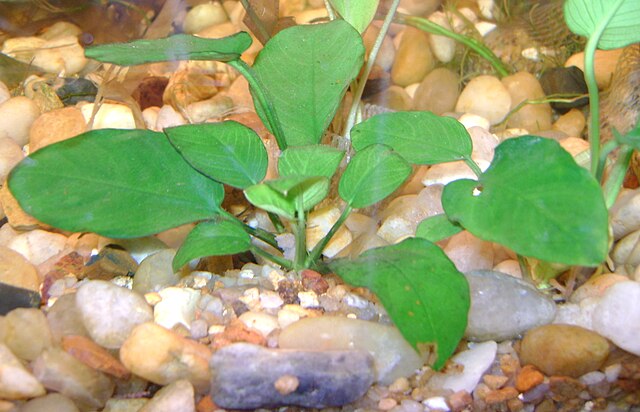
- Anubias nana: CO2-free and tolerant of low light. Attach to driftwood or rocks for a midground accent
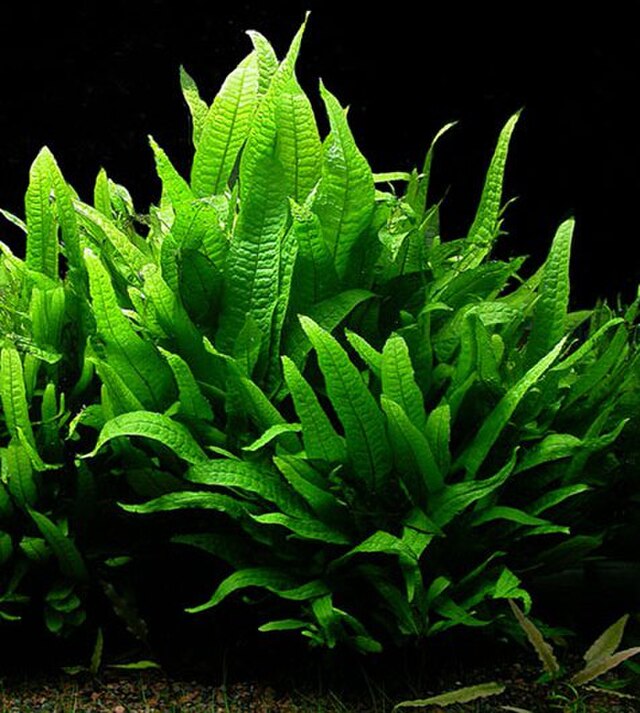
- Microsorum: A classic shade plant. Contrasting leaf shape to Monte Carlo carpet adds three-dimensionality
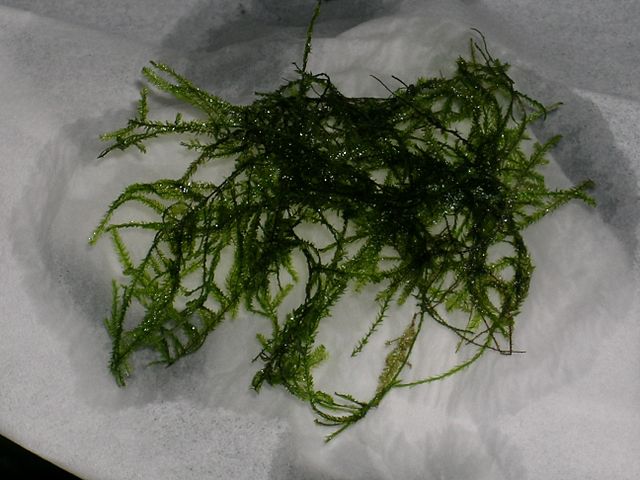
- Willow moss: Functions as hiding spots and nursery grounds for baby shrimp; a standard in CO2-free tanks
All coexist without issue in the same slightly acidic, soft-water environment as Monte Carlo, so consider them when expanding your layout options.
Trimming and Long-Term Maintenance in CO2-Free Setups
Trimming Frequency
In CO2-free setups, growth is slower than with CO2, so trimming intervals lengthen.
- Before/during carpet formation: no trimming needed
- After carpet formation: approximately once every 2–3 months
Dealing with Multi-Layering and Floating
Without trimming for extended periods, lower layers die and upper portions float up, creating "multi-layering."
Treatment Steps
- Trim the entire plant down boldly (leave 2–3 cm)
- Remove floating portions and replant
- Add a small amount of liquid fertilizer after trimming to promote recovery
Common Failures and Solutions
| Problem | Cause | Solution |
|---|---|---|
| Won't spread | Insufficient light or substrate fertilizer | Boost lighting + add substrate fertilizer |
| Yellowing or bleaching | Iron or magnesium deficiency | Add trace mineral liquid fertilizer in small amounts |
| Algae outbreak | Excess liquid fertilizer or light | Stop liquid fertilizer, shade, increase water changes |
| Floating | Poor rooting or multi-layering | Replant, bold trimming |
Summary
To create a Micranthemum Monte Carlo carpet without CO2, high-quality substrate, appropriate light intensity, soft slightly acidic water, and substrate-focused fertilization are the four keys. While carpet formation takes longer than with CO2 supplementation, the major advantage is minimal pH fluctuation and easier coexistence with shrimp.
The biggest secret to success with CO2-free management is patiently aiming for carpet formation over 3–5 months without rushing.