Rare Attachment-Type Aquatic Plants Beyond Anubias, Bucephalandra, and Willow Moss | The Charm of Distinctive Varieties like Bolbitis
Beyond the standard attachment-type aquatic plants—Anubias, Bucephalandra, and Willow Moss—there are distinctive attachment-type aquatic plants like Bolbitis. This article introduces their charm, cultivation tips, and how to incorporate them into aquascaping layouts.
Key Takeaways
Beyond the standard attachment-type aquatic plants—Anubias, Bucephalandra, and Willow Moss—there are distinctive attachment-type aquatic plants like Bolbitis. This article introduces their charm, cultivation tips, and how to incorporate them into aquascaping layouts.
Related Species
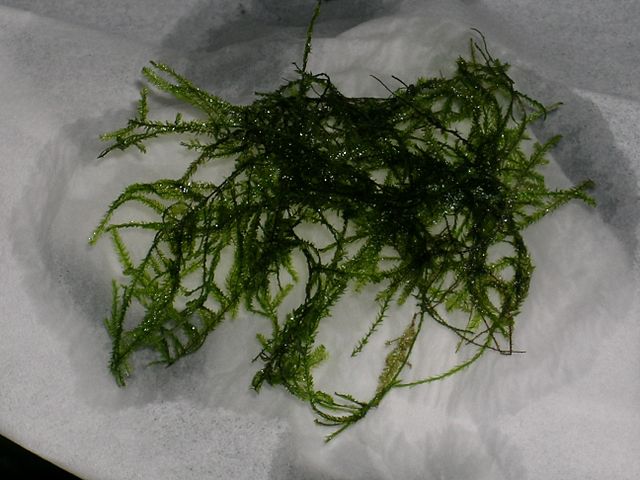
Attachment-Type Aquatic Plants Worth Knowing Beyond Anubias and Bucephalandra
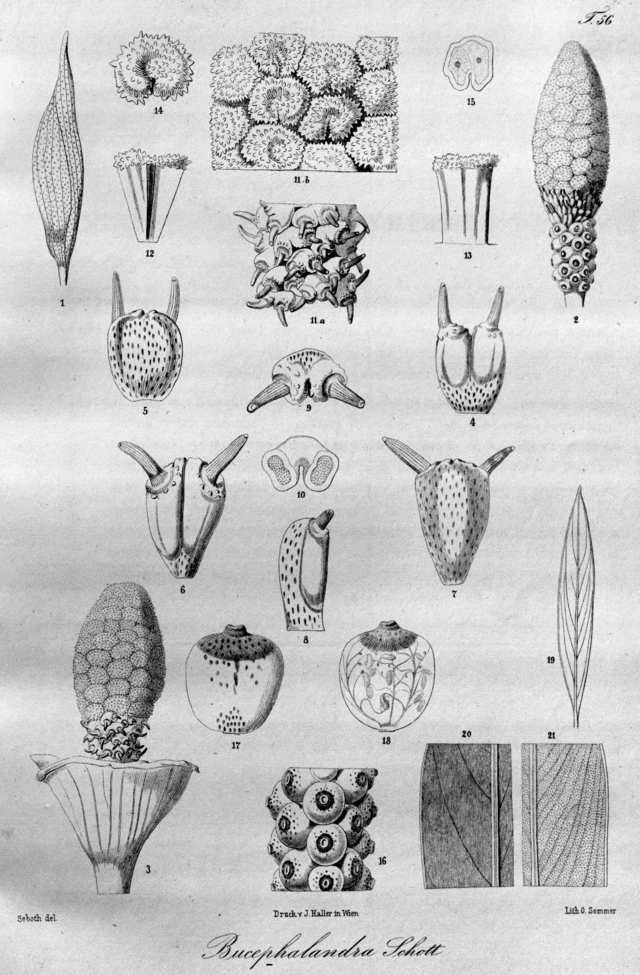
In planted aquariums, when it comes to attachment-type aquatic plants (plants that root onto driftwood or stones), three species are widely known as standards: Anubias, Bucephalandra, and Willow Moss. Prized for their hardiness and ease of care, these versatile plants serve equally well as focal points or supporting elements, making them a popular choice in many aquascapes.
However, the world of attachment-type aquatic plants extends far beyond these three species. Rare attachment-type aquatic plants like Bolbitis offer a unique texture and character that standard varieties cannot provide. This article focuses on attachment-type aquatic plants other than Anubias, Bucephalandra, and Willow Moss, exploring their appeal and key cultivation techniques.
Bolbitis: Delicate Character Born from Lace-like Leaves
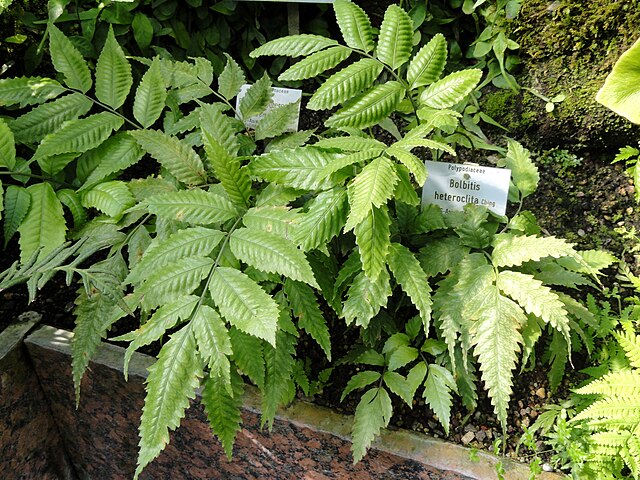
Bolbitis is a fern relative characterized by finely incised foliage and is an attachment-type aquatic plant. While standard attachment plants typically feature rounded or densely clustered leaves, Bolbitis exhibits pinnately lobed, deeply cut leaves that bring an elegant, delicate texture to the aquascape.
Key cultivation points include the following:
- Avoid intense light: Under strong, direct light conditions, leaves tend to curl or become damaged. Moderate to slightly reduced light intensity is ideal.
- Attachment to driftwood or stone: Like Anubias, secure it with thread or specialized attachment adhesive, then wait several weeks to a few months for roots to naturally develop. Attempting to move or adjust before complete attachment will hinder the process.
- Slow growth rate: Since this plant does not proliferate rapidly, there is a particular joy in slowly cultivating it while envisioning the final aquascape. This deliberate pace is part of what makes it rewarding.
Because of its unique leaf form, Bolbitis is valued as an accent when adding variation to a layout. Combining it with standard foreground plants to create three-dimensionality—refer to Aquatic Plant Aquascaping: Basic Techniques for structural composition principles.
Other Notable Attachment-Type Aquatic Plants
Beyond Bolbitis, there are fascinating attachment-type and semi-attachment-type aquatic plants that have not yet received much individual attention.
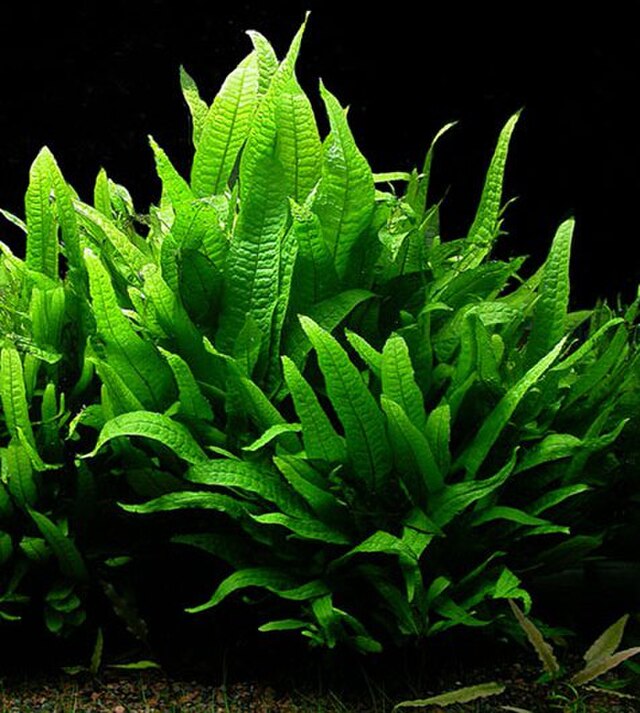
Rare Microsorum varieties display different leaf shapes and growth patterns compared to the standard Microsorum pteropus (Narrow-Leaf Fern). Fine-leafed types, narrow-leaf varieties, and other cultivars within the same genus offer distinct characters that, when combined, can add depth to an aquascape.
Epiphytic ferns and mosses also include species with unique textures beyond Willow Moss. Some grow densely, others drape delicately—even mosses alone can provide varied visual interest.
What these rare species share is a relatively slow growth rate, making them suited to a cultivation style where you gradually shape and refine the plant over time.
Common Cultivation Points for Rare Attachment-Type Aquatic Plants
When cultivating rare attachment-type aquatic plants with limited market availability, several points warrant common attention.
- Avoid abrupt water quality changes: While most attachment-type aquatic plants tolerate gradual shifts in water conditions, they are sensitive to sudden pH fluctuations or hardness changes. Take extra care with water acclimatization after introduction.
- Prioritize algae control: Slow-growing species are prone to weakening if algae overgrows them and blocks light. Avoid excessive light intensity or over-fertilization, and monitor closely for early signs of algae growth.
- Avoid forcing division: Because rare species have limited individuals in circulation, refrain from dividing or moving plants before they are firmly established. Waiting until the plant is well-rooted before considering propagation yields better results.
Combining Rare Varieties with Standard Types in Aquascaping
Rare attachment-type aquatic plants shine when combined with standards like Anubias or Bucephalandra, with each type's individuality becoming more pronounced. By contrasting the rounded leaves of standard varieties with the deeply incised foliage of Bolbitis, the entire layout gains three-dimensionality and rhythm.
Additionally, attachment-type aquatic plants reveal their full potential only when placed on a "foundation"—driftwood or stone. Thoughtfully selecting the shape and placement of these substrates and carefully positioning each plant at different heights and angles is a distinctive pleasure of attachment-type aquascaping. By building the basic composition with standard varieties and adding rare species as accents, you can create a truly unique aquascape unlike any other.
How to Meet Rare Species
Since rare attachment-type aquatic plants have limited stock availability, it is not uncommon to miss out if the timing of a shipment is lost. When searching for plants with textures and characters different from standard varieties, check grower marketplace listings regularly and carefully review plant condition information and whether it is pre-attached before making your selection. By bringing the individuality of rare species into your own layout, the world of planted aquariums will expand further.
The Joy of Long-Term Cultivation
Because most rare attachment-type aquatic plants grow slowly, there is a particular pleasure in nurturing them while envisioning the final aquascape. Unlike standard varieties that quickly develop bushy growth, these species change and mature gradually over months to years—the process itself becomes the focus of cultivation.
As attachment progresses and roots firmly establish on driftwood or stone, the plant gains presence, radiating its unique texture throughout the layout. Building the overall framework with standard varieties while slowly developing rare species over time represents a staged approach to aquascaping that reveals the deep satisfaction unique to attachment-type aquatic plants. Maintaining slow-growing aquatic plants beautifully over the long term requires consistent algae management—refer to Complete Guide to Aquatic Plant Algae Control for cause-specific solutions.