Aquatic Plant Layout (Aquascaping) Basic Techniques | How to Create Convex, Concave, and Triangular Compositions
Explains the basic compositions and practical techniques for aquatic plant layout tanks. Introduces the characteristics and creation methods of convex, concave, and triangular compositions, the use of perspective to create depth, the principles of aquatic plant placement in foreground, midground, and background, and how to use rock arrangements and driftwood for beginners.
Key Takeaways
Explains the basic compositions and practical techniques for aquatic plant layout tanks. Introduces the characteristics and creation methods of convex, concave, and triangular compositions, the use of perspective to create depth, the principles of aquatic plant placement in foreground, midground, and background, and how to use rock arrangements and driftwood for beginners.
Related Species
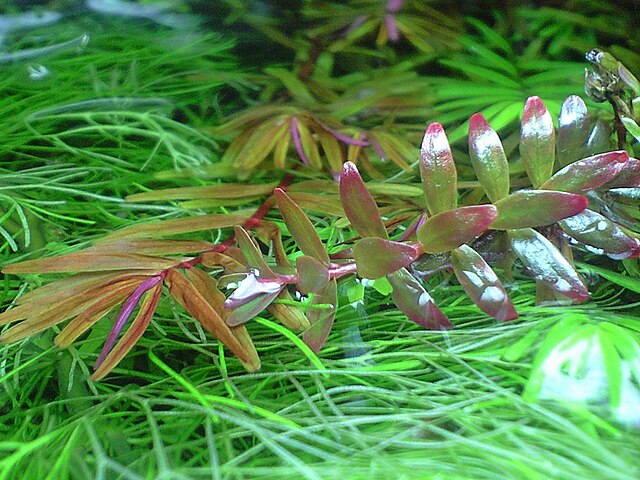
What is Aquascaping Composition?
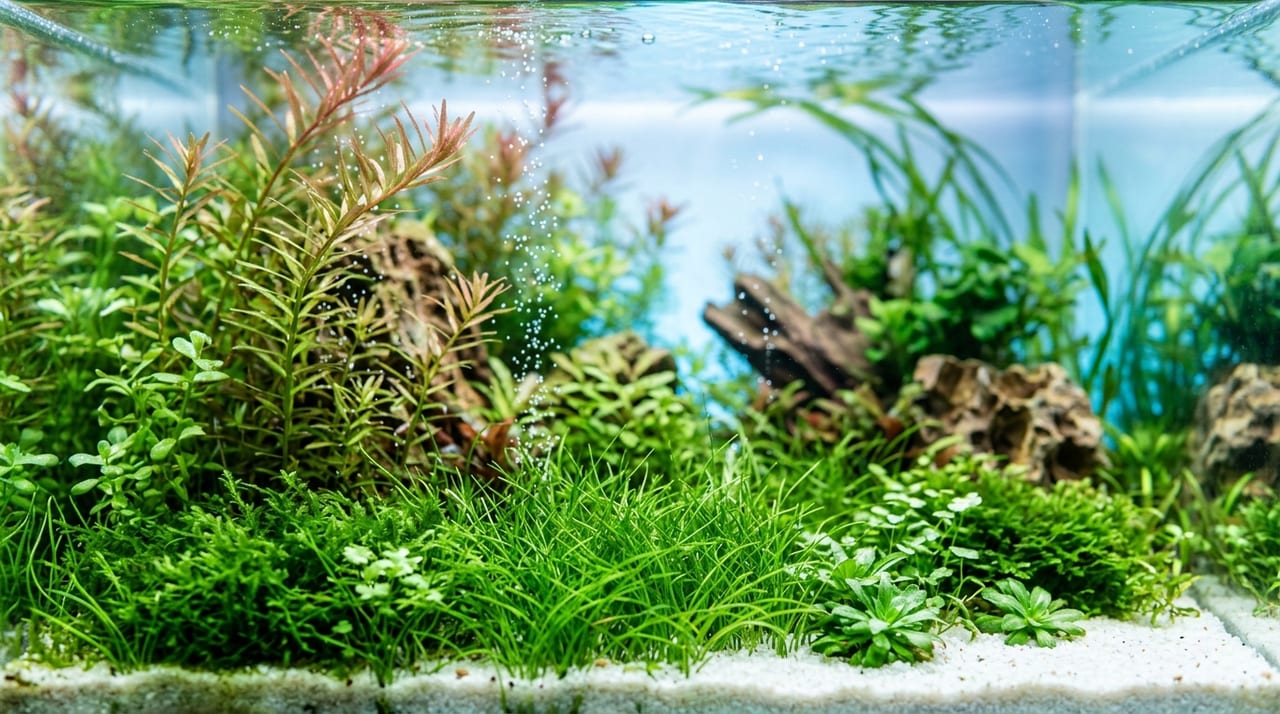
In aquascaping, composition refers to a technique that guides the viewer's eye through differences in height and placement balance within the tank, creating depth and three-dimensionality. Just like in painting or photography, by designing "where to place your viewpoint" and "how to guide the viewer's gaze" within the limited space of a tank, you create a water landscape that evokes emotion in the viewer.
Composition can be broadly divided into three basic patterns:
- Convex (peaked/mountain-shaped): The center is high, with both ends low
- Concave (valley-shaped): The center is low, with both ends high
- Triangular composition (sloped): The apex is placed on either the left or right, creating a diagonal slope
These are merely "basic forms," and in actual layouts, you can combine multiple compositions or create your own arrangements. First, understand the three basic patterns, then choose based on your tank size and preferences. If you'd like to first set up the environmental aspects such as CO2 injection and filtration, please also refer to Guide to Choosing a CO2 Injection System for Aquatic Plant Tanks.
Convex Composition (Peak/Triangular Layout)
Characteristics and Visual Effects
In a convex composition, you create the highest peak in the center of the tank, gradually decreasing in height toward both sides. Its greatest strength is stability and low failure rate even for beginners. The viewer's eye naturally gathers at the center, creating a bold and confident impression.
From the front, it creates a silhouette like "▲", so it's also called a "triangular composition," but here we treat it as "convex" emphasizing left-right symmetry.
Key Points for Creating It
- Stack driftwood or stones in the center: Place the material that will form the skeleton of your composition in the center to create height. Stand up driftwood, stack stones, and create a clear apex.
- Place tall background plants in the center: Densely plant tall, vertically-growing aquatic plants like Rotala, Ludwigia, and Vallisneria in the rear-center.
- Keep foreground plants low in front: Cover the foreground with low-height plants like hairgrass and Glossostigma, emphasizing the height difference.
- Create smooth side slopes: Gradually decrease height from center toward both ends to create a natural flow. Abrupt drops look unnatural, so use midground plants to create gentle slopes.
Suitable Tank Sizes
This layout particularly stands out in tanks 60cm or larger. In small tanks (30cm or less), the central height becomes too pronounced, creating a sense of compression, so aim for a slightly lower peak. Specific methods for small tanks are explained in detail in Complete Guide to Aquatic Plant Layouts in Nano Tanks.
Concave Composition (V-shaped/Valley-shaped)
Characteristics and Visual Effects
Concave composition is the reverse of convex, keeping the center low and both sides high. The space (valley) in the center emphasizes depth and creates a spacious water landscape. It has an open feel and easily accommodates swimming space, making it suitable for layouts where you want to showcase fish as the main focus.
From the front, it creates a "U" or "V"-shaped silhouette, drawing the viewer's gaze toward the center and into the distance.
Key Points for Creating It
- Place materials on the sides and leave the center open: Position driftwood and stones toward the left and right sides, creating a pathway (open space) in the center. Aligning the heights on both sides increases visual stability.
- Concentrate background plants at the sides: Densely plant tall stem plants in the rear left and right, leaving the rear center with low plants or open space.
- Keep the center foreground open: Thinly plant foreground plants or omit them entirely, exposing sand and stones to emphasize openness.
- Depth is key: Gradually narrow the central valley toward the back to create perspective. Be conscious of perspective (depth perception).
Suitable Tank Sizes
This composition truly excels in large tanks 90cm or larger. With sufficient depth (front to back), the valley's perspective becomes more pronounced. It's possible in smaller tanks, but scale down the side materials and maximize the central open space.
Triangular Composition (Sloped/Diagonal Triangular)
Characteristics and Visual Effects
Triangular composition places the highest apex on either the left or right, gradually decreasing in height along a diagonal line. This creates a flowing movement from upper-left to lower-right (or vice versa), giving a dynamic and energetic impression.
This is a composition often used in nature aquariums mimicking natural riverbanks and streams, and is the layout that most easily conveys a natural feel.
Key Points for Creating It
- Decide which side will have the apex: First, choose whether the left or right will be higher. Generally, left-high (right-sloping) configurations are common, but choose based on your preference and tank placement.
- Create slopes along the diagonal: Arrange driftwood and stones along a diagonal line, creating a natural flow from high to low.
- Arrange background plants to match the slope: Densely plant tall aquatic plants on the high side, gradually transitioning to shorter species toward the low side. Conscious gradation looks natural.
- Balance the space: Concentrating materials and plants too much on the high side looks heavy, so add modest accents on the low side (small stones, low driftwood, clusters of foreground plants) to maintain balance.
Suitable Tank Sizes
This is particularly popular in 60-90cm tanks. Even in small tanks it's easy to execute compactly, and in large tanks it creates a majestic natural feel.
Common Techniques for Creating Compositions
Consider the Golden Ratio
Beautiful layouts apply the "golden ratio (1:1.618)" and the "rule of thirds." Divide the tank into thirds both vertically and horizontally, then place visual focal points (driftwood tips, stone peaks) at the intersections to naturally achieve well-balanced composition.
Arrange Materials in Odd Numbers
Arranging driftwood and stones in odd numbers (1, 3, 5, etc.) creates visual stability and a natural impression. Even numbers tend to create left-right symmetry, which can look artificial.
Role Division: Foreground, Midground, and Background
- Foreground: Low, covering the front. The starting point of the viewer's gaze.
- Midground: Bridges height differences and creates dimensionality. The "bridge" of the composition.
- Background: High, covering the back. The endpoint of the viewer's gaze.
Being mindful of this three-layer structure creates depth and dimensionality.
Don't Fear Negative Space
Beginners often feel the need to "fill every gap," but negative space (open areas) are also part of the composition. Exposed sand and stones give the water landscape an "open feel" and "sense of expansiveness."
Common Mistakes and Solutions
Common Mistake 1: Overall Flatness and Monotony
Cause: No height variation; plants are uniformly planted. Solution: Create a skeleton with materials (driftwood/stones), clearly differentiate heights between background and foreground plants. Use midground plants to create gentle transitions.
Common Mistake 2: Unfocused Viewpoint
Cause: Multiple high points scattered throughout, no clear focal point. Solution: Limit the composition's apex to a single location. Make other materials supporting players that highlight the main focal point.
Common Mistake 3: Too Much Symmetry, Looks Unnatural
Cause: Attempting perfect left-right symmetry results in an artificial appearance. Solution: Intentionally create asymmetry. Since perfect symmetry doesn't exist in nature, slight imbalance creates a more natural appearance.
Common Mistake 4: Too Many Materials, Visual Clutter
Cause: Too much driftwood and stone create visual confusion. Solution: Practice the aesthetic of "subtraction." Use minimal materials and respect each element's presence.
Conclusion: Create Your Unique Water Landscape Through Composition
Understanding the three basic patterns—convex, concave, and triangular—significantly improves your aquatic plant layout quality. There is no "correct" composition; choose based on your tank size, the organisms you're keeping, and your personal preferences.
Start by mimicking basic compositions as-is, then gradually add your own arrangements. Layout is not a one-time creation; repeat trimming and repositioning as plants grow to cultivate an increasingly refined water landscape. If you struggle with plant care, 10 Common Mistakes in Aquatic Plant Care and Solutions can also help with troubleshooting.
Master the basics of composition and recreate the beauty of nature within your tank—that is the essence of aquascaping. Using this article as a guide, please challenge yourself to create your own ideal water landscape.