Aquatic Plant Layouts for Small Tanks (30cm or Less) | Recommended Aquatic Plants and Composition
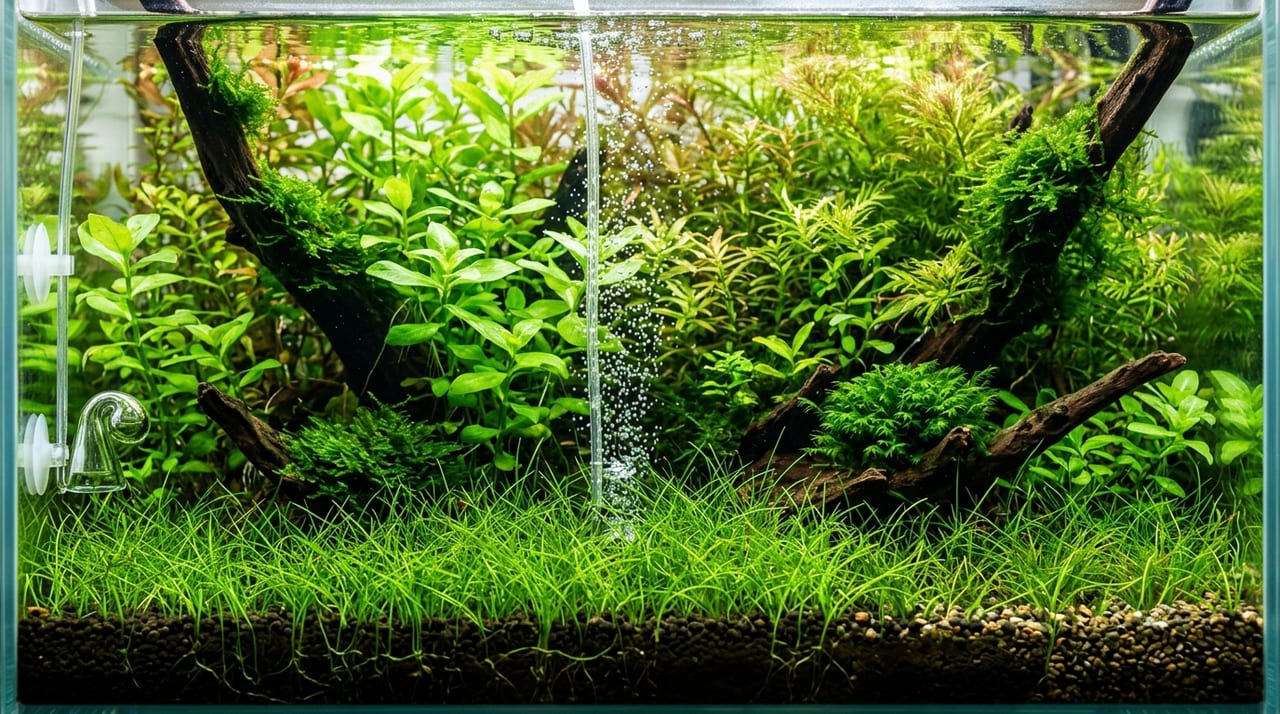
You can create beautiful aquatic plant layouts even in small tanks of 30cm or less. We introduce 10 recommended aquatic plants for small tanks, applications of triangular and concave compositions, and easy-to-manage setups that don't require CO2.
Key Takeaways
You can create beautiful aquatic plant layouts even in small tanks of 30cm or less. We introduce 10 recommended aquatic plants for small tanks, applications of triangular and concave compositions, and easy-to-manage setups that don't require CO2.
Related Species
The Appeal and Basic Concepts for Small Aquarium Tanks
Small aquarium tanks of 30cm or less offer their greatest appeal in allowing you to enjoy authentic aquatic plant layouts even in limited space. Compared to larger tanks, initial costs are lower and maintenance is relatively easier, making them increasingly popular with aquarium beginners. On the other hand, because water volume is small, water quality and temperature change more easily, and you need to carefully consider the composition of your layout.
To succeed with aquatic plant layouts in small tanks, it's important to be mindful of "the aesthetics of subtraction." Rather than cramming in as many aquatic plants as you would in a large tank, you need a composition that makes use of negative space within the limited area and highlights the individuality of each plant.
Choosing Compositions Suited to Small Tanks
Aquatic plant layouts are broadly divided into three basic compositions. Let's understand the characteristics of each and how well they suit small tanks.
Convex composition is a layout where the center of the tank is raised high and becomes progressively lower toward the left and right. In small tanks, this tends to create a visually compact impression, so the key is to carefully plant middle-ground and foreground plants to create a sense of volume.
Concave composition is a layout where you raise height on the left and right while keeping the center low, which emphasizes depth and spatial expansion. Even in a 30cm tank, this creates an effect of depth and is an easy-to-handle composition for beginners. Placing driftwood or stone as anchors on the left and right, then letting foreground plants creep across the center increases the overall polish.
Triangular composition is an asymmetrical layout where one side is high and the other is low, expressing dynamic movement. This composition works especially well with small tanks, making it easy to create a simple yet striking layout, which is why many people choose it as their first tank.
Recommended Foreground, Midground, and Background Plants
In small tanks, you need to strictly manage plant height and growth speed. Choosing species suited to your space is key to long-term maintenance. If you're not confident about CO2 addition or light levels, starting with beginner-friendly aquatic plants that grow without CO2 will help you avoid mistakes.
Foreground Plants (approximately 3–5cm in height)
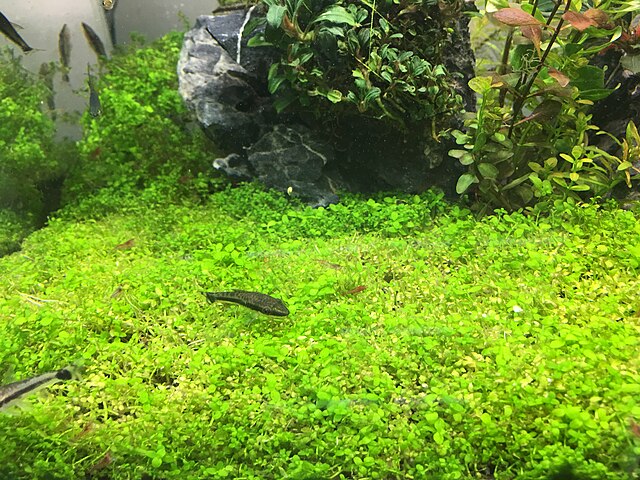
Short hair grass and glossostigma are classic species that create a green carpet if given CO2 addition and strong light. In a small tank, simply carpeting the floor creates a striking presence. Since hair grass grows somewhat tall, regular trimming is necessary to prevent excessive vertical growth. Cuban pearl grass has small, rounded leaves and creates a delicate carpet, but note that it has high requirements for CO2 and light intensity.
Midground Plants (approximately 10–15cm in height)
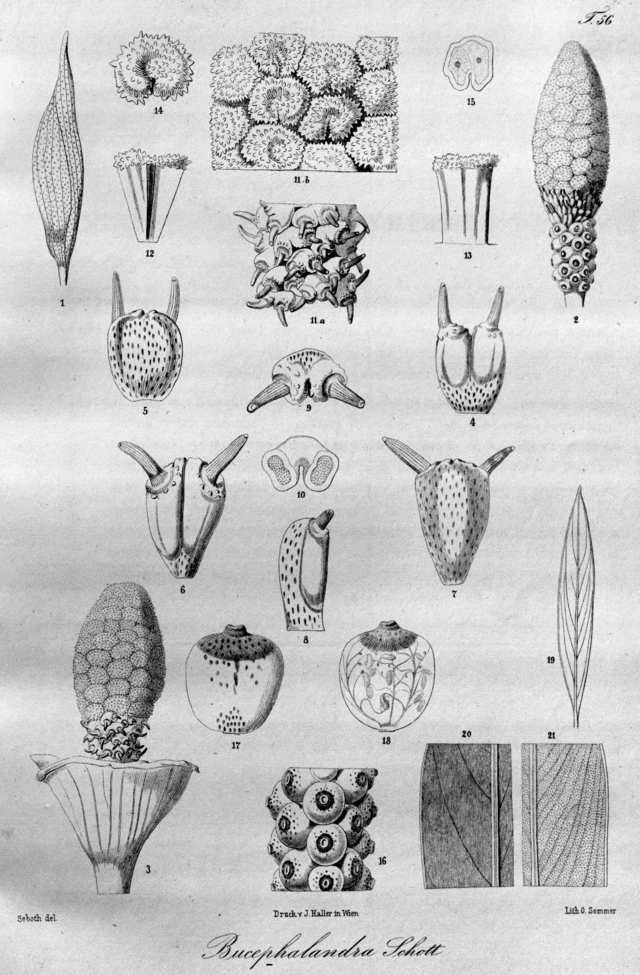
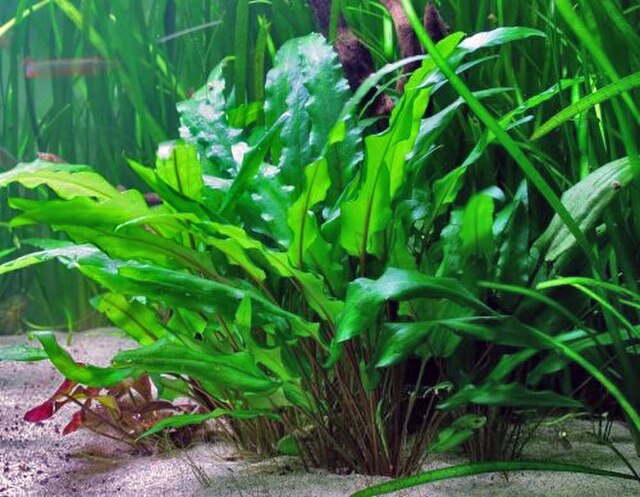
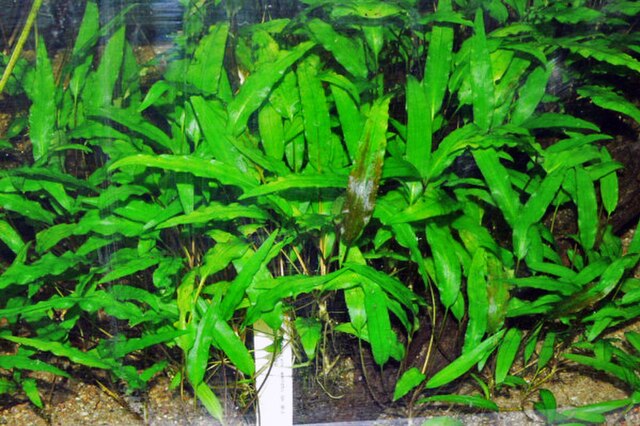
Bucephalandra and anubias nana are easy to grow even without CO2 and remain consistently popular as shade-loving plants. By attaching them to driftwood or stone, you can create a natural impression and add depth to your small tank layout. Cryptocoryne wendtii green has distinctive leaf shapes and becomes a layout accent with just 1–3 plants.
Background and Accent Plants
In a 30cm tank, there often isn't enough space to truly have a "background," but planting a small amount of rotala rotundifolia or ludwigia super red in the rear creates color contrast. Red-toned aquatic plants are effective as accent colors, adding polish to small layouts that tend to be all green.
Essential Equipment and Water Quality Management Points
Choosing appropriate equipment is essential for growing aquatic plants in small tanks.
Lighting — Choose LED lights designed for aquatic plant cultivation. For a 30cm tank, a product with about 8–15W is sufficient, but it's important to check the light coverage and light intensity (lumens). If light is too weak, aquatic plants become etiolated or leaves shrink, so select specs suited to your tank size. Managing illumination time to about 8–10 hours per day with a timer helps prevent algae growth.
CO2 addition — CO2 addition is effective for growing many foreground and stem plants. For small tanks, fermentation-based CO2 (using sugar and yeast) provides some benefit, but if you want stable addition levels, small bottle-type equipment is recommended. If aquatic plants are actively bubbling (photosynthesis bubbles), that's a sign CO2 is reaching adequately. Detailed information on addition amounts and equipment selection is explained in the CO2 Addition Guide for Aquatic Plant Tanks.
Filtration — Be careful not to over-spec relative to water volume. If flow rate is too strong, foreground plants may have difficulty rooting. Hang-on-back filters or small sponge filters are well-suited to small tanks, and choosing one with adjustable flow is convenient.
Water quality — pH 6.5–7.0 and hardness (GH) around 3–6 are optimal conditions for most aquatic plants. Using soil as substrate stabilizes water quality and promotes root growth, so we strongly recommend it for beginners as well.
Maintenance and Tips for Long-term Sustainability
Since small tanks have little water volume, a weekly water change of 30–50% is the foundation of water quality maintenance. When doing water changes, be sure to properly dechlorinate and avoid sudden temperature swings.
Trim plants before they reach the top of the tank. Stem plants like rotala grow quickly, so trim and replant about once every 2–3 weeks to ensure light reaches the lower leaves. See the Aquatic Plant Trimming Guide for specific trimming techniques. If your foreground carpet spreads too wide, thin it out, and regularly disturb the soil to release gases and prevent root compaction.
For algae control, introducing a small number (5–10) of Yamato shrimp or amano shrimp is effective. Shrimp are excellent cleaners that eat algae without damaging plants and give your small tank layout natural vitality.
Summary: Create Your Own Landscape in a Small World
Small tanks of 30cm or less offer a special joy in creating their own unique world, like capturing a single scene of nature within a small frame. The very process of combining plant species with composition and gradually refining your ideal layout is the essence of aquarium keeping.
Start simply with one foreground plant species and a single piece of driftwood, then gradually add more varieties as you gain experience. Please enjoy the concentrated beauty that small tanks uniquely offer in your own home.
Related Articles
- 10 Beginner-Friendly Aquatic Plants That Grow Without CO2 | Failure-Resistant Species and Care Tips — Aquatic plants suitable for your first small tank
- CO2 Addition Guide for Aquatic Plant Tanks | Necessity, Equipment Selection, and Determining Addition Levels — Dosage guidelines for cultivating beautiful foreground plants
- Aquatic Plant Trimming Guide | Cutting Techniques and Tips for Maintaining Beautiful Layouts — Cutting procedures for long-term layout maintenance