10 Beginner-Friendly Aquatic Plants That Grow Without CO2 | Fail-Proof Types and Management Tips
Introducing 10 CO2-free aquatic plants suitable for beginners starting aquatic plant cultivation with minimal risk of failure. Detailed explanation of the characteristics, cultivation methods, and recommended use cases for each type, including Anubias, Microsorum, and Willow Moss.
Key Takeaways
Introducing 10 CO2-free aquatic plants suitable for beginners starting aquatic plant cultivation with minimal risk of failure. Detailed explanation of the characteristics, cultivation methods, and recommended use cases for each type, including Anubias, Microsorum, and Willow Moss.
Related Species
Why Water Plant Cultivation Fails and Choosing CO2-Free Species
Many people have experienced the frustration of starting aquatic plant cultivation only to find their plants dying or dissolving almost immediately. The main causes of failure are three: insufficient light, insufficient CO2, and insufficient nutrients. However, setting up a CO2 injection system from the start requires significant costs. A complete setup including a regulator, cylinder, and diffuser often costs ¥10,000–30,000.
Beginners should start with hardy species that can grow without CO2 injection. These aquatic plants have high capacity to absorb CO2 from the air into the water and can achieve photosynthesis at relatively low light levels. Once you experience the joy of growing plants, you can gradually enhance your equipment. If you're unsure about choosing lighting, be sure to check The Complete Guide to Aquatic Plant Tank Lighting as well for smoother equipment selection.
10 Easy-to-Grow Aquatic Plants Without CO2
1. Anacharis (Egeria densa)
A hardy stem plant that is a staple even in goldfish tanks. It grows well even at low light levels and tolerates water temperatures from 5–30°C and water quality fluctuations. Its vigorous reproduction makes it easy to propagate—simply insert cut stems directly into the substrate. With rapid growth, weekly trimming may be necessary, but this frequent maintenance gives you a strong sense of cultivation success.
Light:Low–Medium / Substrate:Gravel or soil both suitable
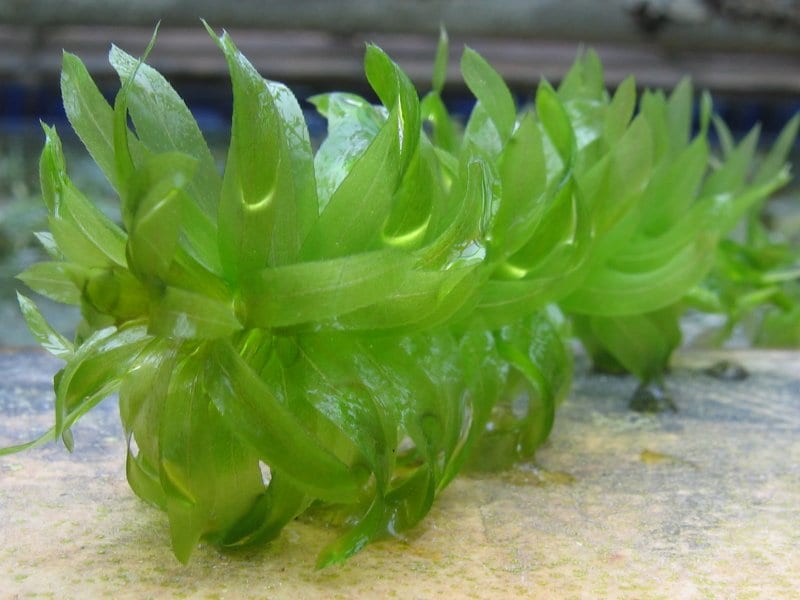
2. Willow Moss
A classic moss attached to driftwood or stones using cotton thread. It grows even without CO2, and dense foliage adds softness to the entire tank layout. As it matures, the densely packed leaves create a natural-looking aquascape. It grows most beautifully at cooler temperatures (20–24°C), so be careful during summer heat.
Light:Low–Medium / Attachment time:2–4 weeks
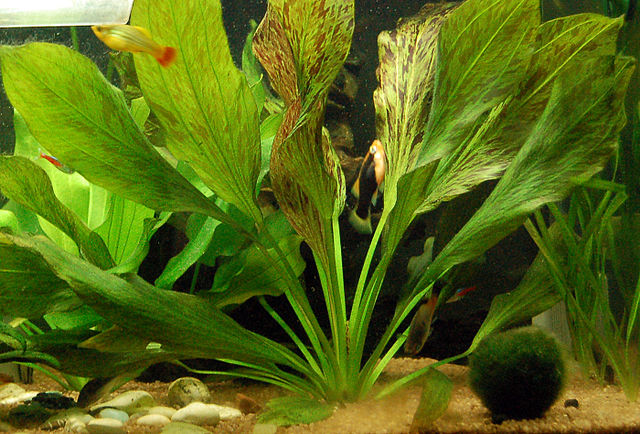
3. Amazon Sword (Echinodorus)
A large rosette-type aquatic plant that serves as the focal point of the background. Since it primarily absorbs nutrients through its roots, burying solid fertilizer in the substrate significantly improves growth. With leaves that can reach 30–50 cm, it is best suited for tanks 60 cm or larger.
Light:Medium–High / Note:Leaves may dissolve soon after planting, but stabilize once new shoots emerge
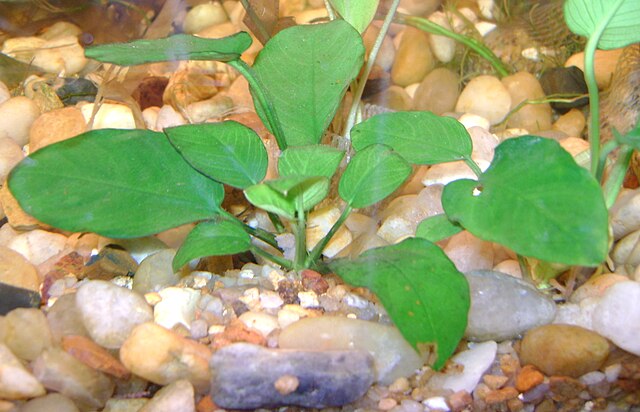
4. Anubias Nana
A representative shade-loving aquatic plant that thrives in low light without direct sun. The basic technique is to attach the rhizome to driftwood or stone rather than bury it in the substrate. Growth is extremely slow, but once established, it is easy to maintain long-term. Algae tends to accumulate on leaves, but this is typically managed by combining with algae-eating organisms. Details on pesticide treatment and compatibility can be found in Aquatic Plants Safe for Shrimp and Management Guide.
Light:Low / Lifespan:Several years or more with proper care
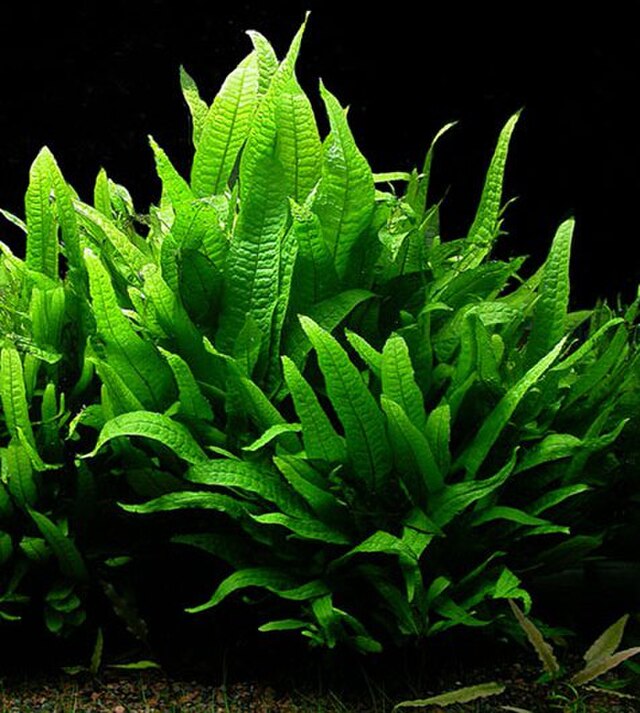
5. Microsorum
A fern-family plant that creates a natural-looking layout when attached to driftwood. Extremely hardy, it tolerates slight water quality degradation and temperature fluctuations. It can also be propagated by the sporangia on the back of leaves, from which plantlets develop. If leaves dissolve, check that water temperature is not exceeding 28°C.
Light:Low–Medium / Optimal temperature:18–26°C
6. Vallisneria (Vallisneria spiralis)
A beautiful aquatic plant with tape-like narrow leaves that sway with water flow. It spreads horizontally via runners and multiplies, creating a natural curtain-like layout when planted in the background. Its vigorous nutrient absorption through roots makes it an excellent match with substrate fertilizers.
Light:Medium / Propagation:Regularly trim runners to manage growth
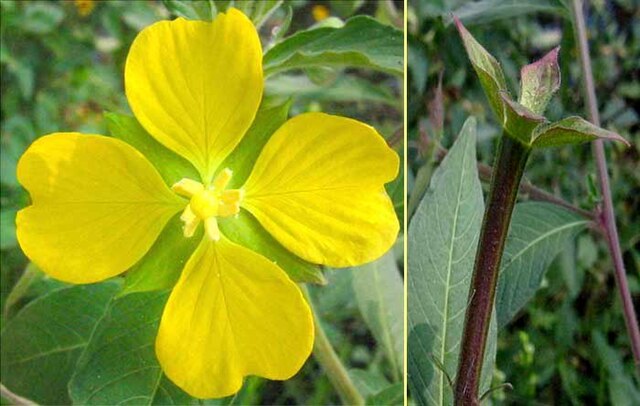
7. Ludwigia Palustris
A beautiful stem plant with reddish leaves. Leaf color becomes more vivid with higher light levels and grows at medium light even without CO2 injection. Adding small amounts of liquid fertilizer containing iron improves coloration.
Light:Medium–High / Improved coloration:Liquid iron supplementation
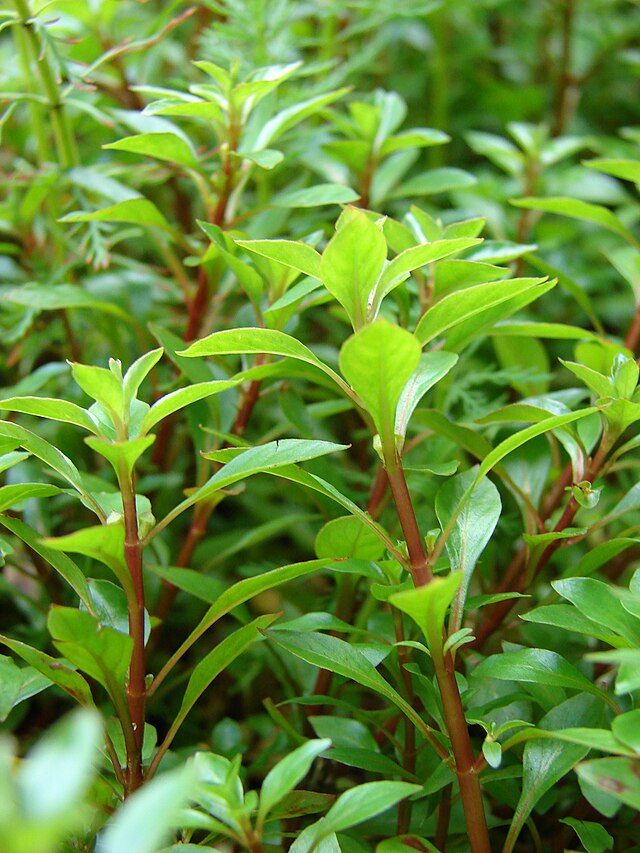
8. Green Rotala
A background stem plant with finely packed foliage. With sufficient light, new shoots grow densely, creating full-bodied planting. Under low light, leaves become thin and sparse, so ensure 8–10 hours of lighting.
Light:Medium–High / Lighting duration:8 hours or more recommended
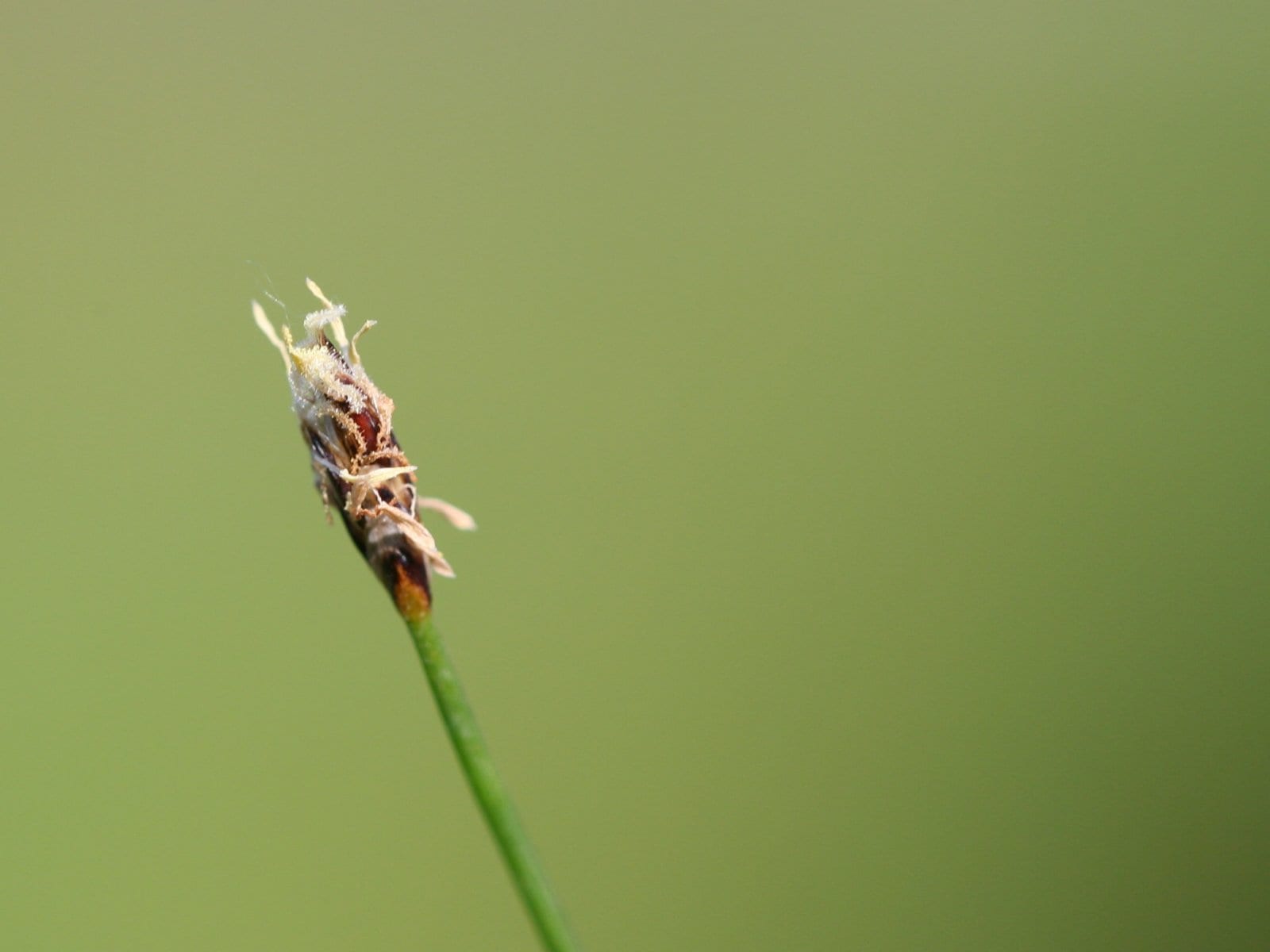
9. Hair Grass (Eleocharis acicularis)
A fine carpet plant that creates a lawn-like layout when planted in the foreground. It grows slowly without CO2 but can be cultivated, and repeated trimming develops a dense carpet. It works particularly well with soil substrates.
Light:Medium–High / Substrate:Nutrient-rich soil recommended
10. Pygmy Chain Sagittaria
A foreground plant that spreads via small runners with hardiness comparable to Anacharis. Growing only 5–10 cm tall, it is ideal for planting in the foreground to mid-ground. Medium light is sufficient, making it beginner-friendly. To propagate easily, refer to How to Use Tissue Culture Aquatic Plants to obtain specimens while minimizing disease risk and unwanted snail introductions.
Light:Medium / Propagation:Naturally spreads via runners
Management Points for Success
Precisely because you are growing without CO2, balance among other elements becomes critical.
- Maintain 8–10 hours of lighting:Too short leads to insufficient photosynthesis; too long causes algae blooms. Automated management with a timer outlet is ideal.
- Start with minimal liquid fertilizer:In a CO2-free environment, plant metabolism is slower, and excessive fertilizer causes algae. Begin at about half the recommended dose and adjust based on observation.
- Do not neglect water changes:The basic routine is one weekly change of about one-third of the total water volume. This removes waste while simultaneously replenishing trace elements from fresh water.
- Watch for summer temperature rise:CO2-free tanks are prone to plant melt and algae blooms during high-temperature periods. Strategies are compiled in Summer Care for Aquatic Plants | Preventing Melt and Algae from High Temperatures, so reviewing early from the rainy season's end through early autumn is reassuring.
- Plant correctly:Bury stem plants 2–3 cm at the base in the substrate; for rosette types, bury only the roots and keep the rhizome above the substrate.
Example Plant Combinations
The combination especially recommended for beginners is Anacharis (background) + Willow Moss (driftwood) + Anubias Nana (mid-ground), a trio with uniform low light and low maintenance difficulty, creating a presentable layout even in 60 cm tanks.
As your confidence in plant cultivation grows, adding red-colored plants like Green Rotala or Ludwigia dramatically expands layout possibilities. You can also consider introducing a CO2 injection system at that point. Building a track record of success by simply "not killing" plants is the greatest key to enjoying aquatic plant cultivation for years to come.