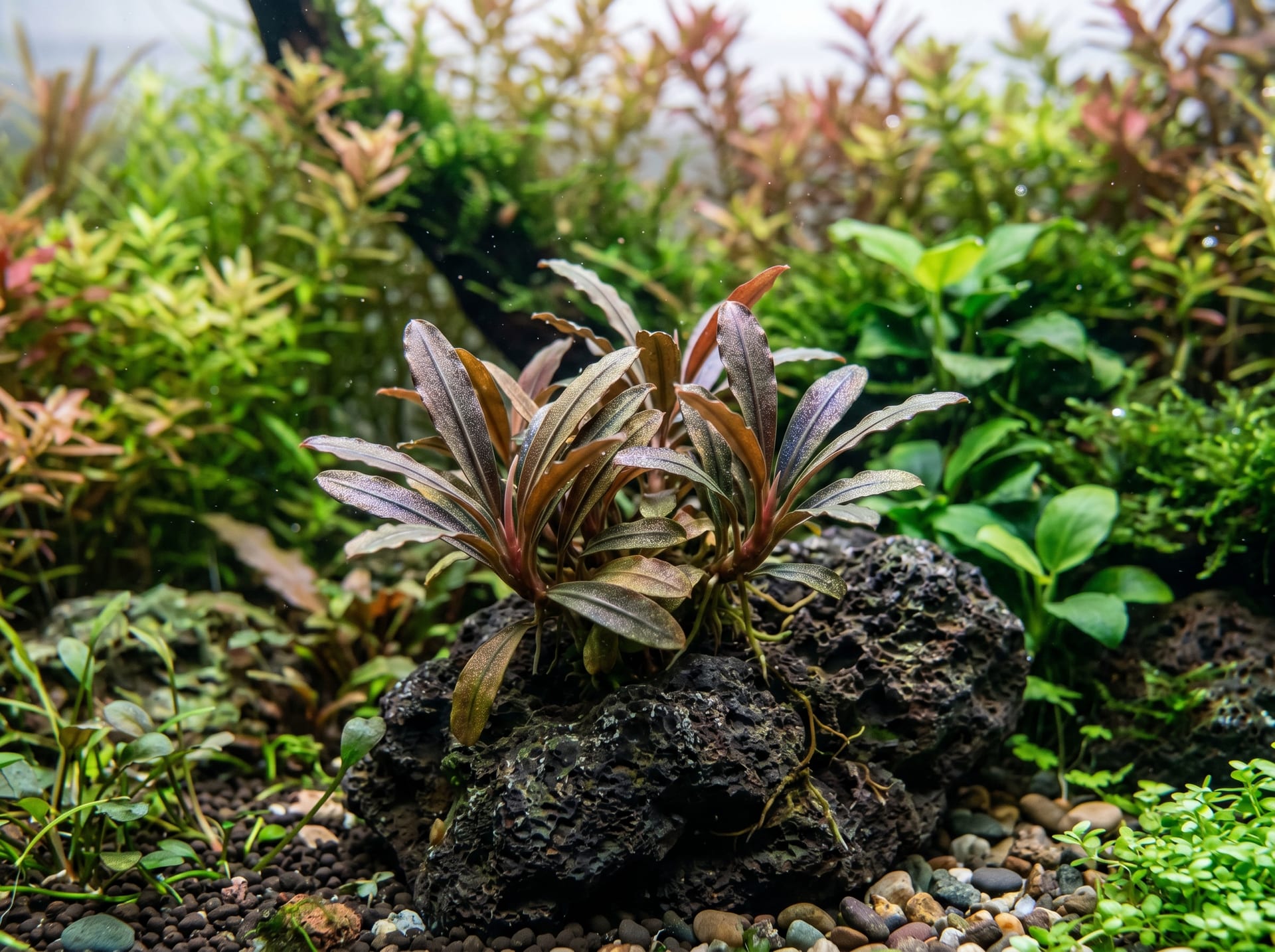
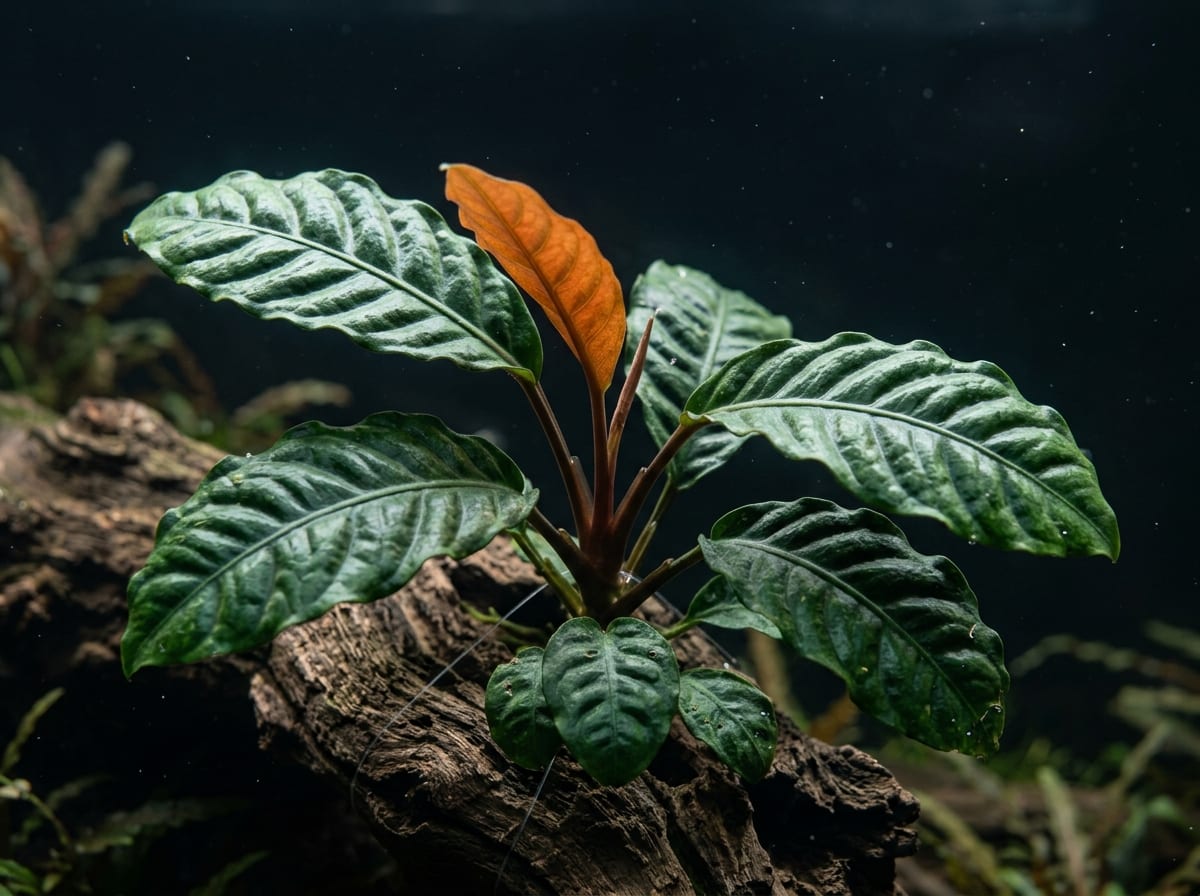
AI-generated image
Bucephalandra 'Brownie Ghost'
IntermediateBucephalandra sp. 'Brownie Ghost'
A popular Bucephalandra variety with ghostly translucent leaves. Epiphytic, attached to driftwood or rocks. Very slow-growing but the unique iridescence is prized by collectors.
Overview
Bucephalandra 'Brownie Ghost' is a popular variety of the epiphytic aquatic plant endemic to Borneo (Malaysia and Indonesia). Ghostly translucent blue-tinged leaves are magical, with a unique iridescence depending on how light hits them. Grows very slowly but stable once established. Highly prized among collectors with many available varieties.
Size of the Bucephalandra 'Brownie Ghost'
The Bucephalandra 'Brownie Ghost' grows to 5-15cm.
Temperature & humidity for the Bucephalandra 'Brownie Ghost'
The ideal temperature for the Bucephalandra 'Brownie Ghost' is 22〜28℃.
Basic Info
Origin
Borneo (Malaysia and Indonesia)
Size
5-15cm
Temperature
22〜28℃
Watering & Fertilizer
Liquid fertilizer 1-2x monthly. Small amounts sufficient
Growing Tips
Lighting
Highly shade-tolerant and grows under low to medium light. Strong light tends to invite algae, so keep the lighting modest.
CO2 & Fertilizer
Grows without CO2, though injection speeds growth. For fertiliser, a small dose of liquid fertiliser once or twice a month is enough.
Water Temperature & Quality
A water temperature of 22-28°C is suitable. Care is similar to Anubias, and the key is not to change conditions suddenly.
Attachment
Attach to driftwood or rocks. Never bury rhizome
Trimming & Propagation
Growth is very slow, unfurling only one or two new leaves a month. Once established it is hardy and easy to keep long-term.
Notes
May melt with environmental changes. Stable water quality is key
Bucephalandra 'Brownie Ghost' FAQ
QWhat is the growing difficulty level for Bucephalandra 'Brownie Ghost'?
Intermediate. A variety suitable for intermediate growers. Requires some cultivation experience and knowledge of environment management. Pay careful attention to temperature and humidity control.
QWhat is the ideal temperature for Bucephalandra 'Brownie Ghost'?
The ideal temperature for Bucephalandra 'Brownie Ghost' is 22〜28℃. Avoid sudden temperature changes and maintain a stable environment.
QHow large does Bucephalandra 'Brownie Ghost' get?
The mature size of Bucephalandra 'Brownie Ghost' is 5-15cm. This may vary slightly depending on cultivation environment and individual differences.
QHow should I water and fertilize Bucephalandra 'Brownie Ghost'?
Bucephalandra 'Brownie Ghost': watering & fertilizer — Liquid fertilizer 1-2x monthly. Small amounts sufficient. Aim for appropriate frequency and amount.
QWhat is the typical price for Bucephalandra 'Brownie Ghost'?
The price of Bucephalandra 'Brownie Ghost' varies significantly by variety, characteristics, size, and lineage. Please check GrowerDirect's price guide for the latest market information.
Last updated: June 23, 2026
References & Sources
Edited & verified by: GrowerDirect Editorial Team
The classifications, regulations, and growing data on this page are created and verified based on the primary information database below.
Regulations & Conservation Status
Sources: Ministry of the Environment Designated Invasive Species List (Invasive Species Act) / CITES Appendix II listed plant taxa (family and genus level)
Regulations may change. Always verify the latest information with the relevant authorities.
Related Species
Find listings for this species
Related Articles
Complete Guide to Growing Bucephalandra | Attachment Methods and Choosing Popular Varieties
Detailed guide on how to cultivate Bucephalandra, an aquatic plant native to Borneo. We introduce attachment methods, water quality management, propagation techniques, and popular varieties' characteristics and selection tips.
Bucephalandra Collection and Care Guide | The Jewel of Borneo Aquatic Plants
A rundown of the Bucephalandra collection and how to grow it, from choosing varieties such as Theia Green, to attaching plants with super glue, to setting up an environment with a water temperature of 22–28°C and a pH of 6.0–7.5. It also covers how leaves tend to melt when temperatures rise above 30°C.
Complete Guide to Aquatic Plant CO2 Systems | Practical Manual from Setup to Daily Maintenance
CO2 is an essential element for aquatic plants to perform photosynthesis. This article covers everything needed to cultivate fast-growing stem plants and red-tinted aquatic plants, from selecting CO2 injection systems, installing solenoid valve regulators, positioning diffusers, to daily maintenance.
Disposal and Recycling Methods for Used Soil and Substrate in Aquatic Plant Tanks | Proper Disposal Methods and Reuse Tips
Explains the correct disposal methods for used substrate in aquatic plant tanks. Introduces the steps for disposal following local government rules and considerations for reuse when the substrate has been used for a short period.
🩺 Common diseases
Can't find the plant you're looking for?
Post your wishes for free and growers with matching plants will contact you with introductions.